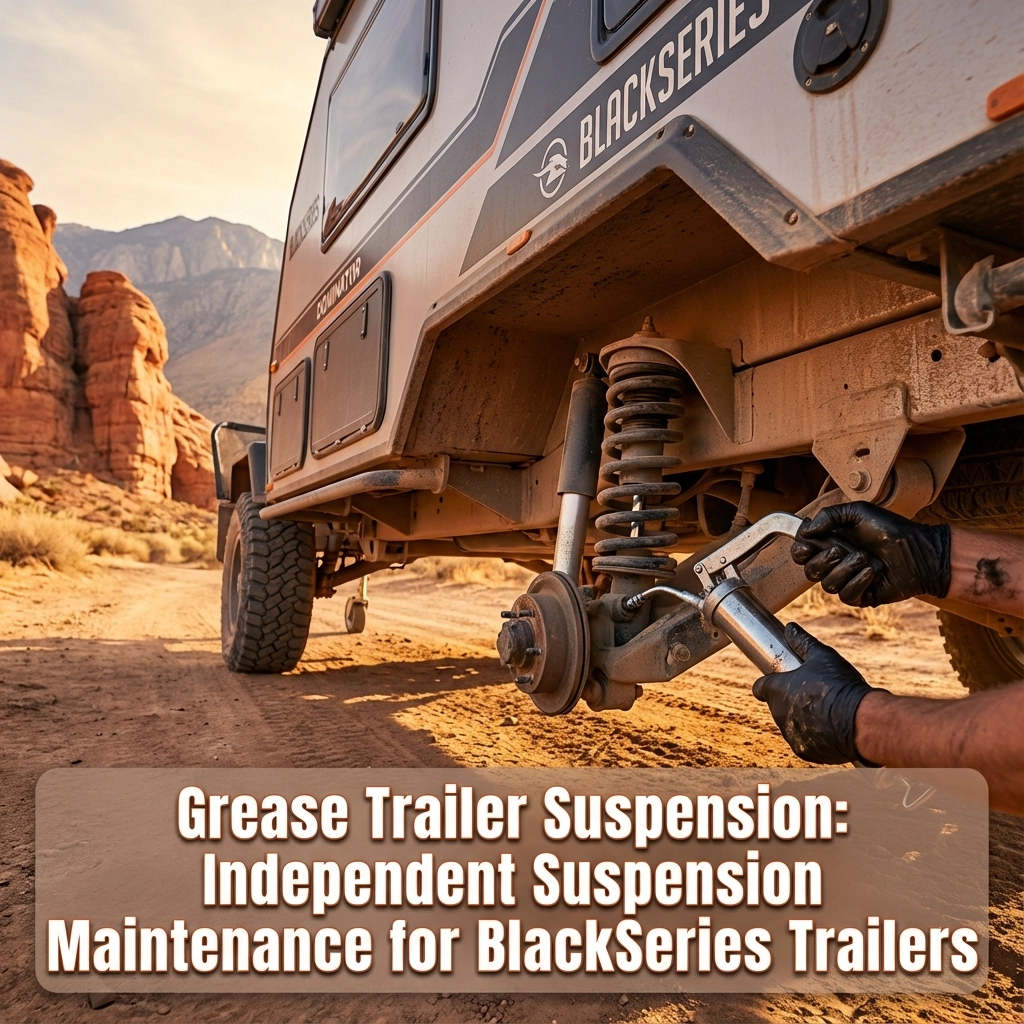
Proper suspension greasing is essential for maintaining your BlackSeries trailer’s off-road performance and preventing costly repairs. Independent suspension systems require greasing at pivot points every 5,000 miles or after dusty conditions, with critical grease points located at torque brackets, bushings, and articulating joints. Regular maintenance takes 30-45 minutes and significantly extends component life while ensuring safe operation on challenging terrain.
Why Greasing Trailer Suspension Matters (U.S. Conditions)
American off-road enthusiasts face some of the harshest conditions on the planet. From the scorching heat and fine dust of Arizona’s Sonoran Desert to the salt-laden coastal roads of California and the brutal washboard roads throughout the Mountain West, your BlackSeries trailer’s suspension system takes a beating that standard RV suspensions simply can’t handle.
Independent suspension systems, unlike traditional leaf spring setups, feature multiple moving parts that require consistent lubrication. When grease fittings go dry, you’re looking at accelerated wear that can lead to:
- Bushing failure requiring $200-500 per corner to repair
- Complete suspension arm replacement costing $800-1,500
- Unsafe handling characteristics that compromise towing stability
- Premature shock absorber failure from excessive stress
The washboard roads common throughout Nevada, Utah, and Colorado create sustained vibration frequencies that systematically work grease out of bushings and joints. Meanwhile, desert conditions in the Southwest introduce fine silica dust that acts like grinding compound, accelerating wear when proper lubrication isn’t maintained.
BlackSeries trailers use independent suspension specifically because it provides superior articulation and durability compared to solid axle designs. However, this advanced engineering requires more frequent maintenance attention to deliver its performance advantages.

What Is an Independent Trailer Suspension?
Independent trailer suspension represents a significant engineering advancement over traditional leaf spring systems. Instead of a solid axle connecting both wheels, each wheel operates independently through its own suspension arm, allowing superior ground contact and articulation over uneven terrain.
The system typically consists of:
- Trailing arms that pivot at the chassis mounting point
- Heavy-duty bushings that allow controlled movement while maintaining alignment
- Pivot points that serve as the fulcrum for suspension articulation
- Shock mounting brackets that control damping forces
BlackSeries engineered their independent suspension with off-road reliability as the primary design goal. The system uses natural rubber springs in some configurations, combined with progressive damping characteristics that provide a smooth ride on highways while maintaining control during challenging off-road conditions.
This design philosophy means your BlackSeries trailer can confidently tackle terrain that would destroy conventional RV suspension systems, but it requires understanding the maintenance requirements that come with sophisticated engineering.
Independent Suspension Grease Points Explained
Understanding where to apply grease is crucial for effective independent suspension maintenance. The system features multiple lubrication points that serve different functions in the overall suspension operation.
Common Grease Points on Independent Trailer Suspension
Torque Bracket Connections: These are the primary pivot points where the suspension arm connects to the trailer chassis. These fittings bear the highest loads and require the most frequent attention. You’ll typically find one or two grease nipples per side, depending on your specific BlackSeries model.
Suspension Arm Bushings: Located within the trailing arm assembly, these bushings allow controlled movement while maintaining proper wheel alignment. They’re often protected by rubber boots but still require regular greasing through dedicated fittings.
Shock Absorber Mounting Points: Upper and lower shock mounts feature bushings that absorb the constant compression and extension cycles. These points experience high-frequency movement and benefit significantly from consistent lubrication.
Grease Nipples (Zerk Fittings): These are the access points for your grease gun. BlackSeries typically uses standard automotive-grade fittings that accept any quality grease gun. They’re strategically positioned for accessibility during routine maintenance.
The key to effective greasing is understanding that each point serves a specific function. Torque brackets handle the primary suspension loads, bushings control movement quality, and shock mounts manage damping effectiveness.
Step-by-Step: How to Grease Independent Trailer Suspension
Proper greasing technique ensures thorough lubrication while preventing damage to seals and bushings. This process should become routine maintenance that you can complete in under an hour.
Step 1: Prepare Tools and Grease
Gather your essential tools before starting: a quality grease gun, high-temperature marine-grade grease rated for heavy-duty applications, and basic safety equipment. Park your BlackSeries trailer on firm, level ground and engage the parking brake.
You’ll also need clean rags for wiping excess grease and potentially a flashlight for inspecting fittings in shadowed areas. Consider having jack stands available if you need to raise the trailer for better access to certain grease points.
Marine-grade grease works exceptionally well for trailer applications because it resists moisture intrusion and maintains consistency across wide temperature ranges, crucial for year-round operation.
Step 2: Locate and Clean Grease Fittings
Before applying fresh grease, clean each fitting thoroughly to prevent forcing contaminants into the suspension components. Desert conditions can coat fittings with fine dust that acts like grinding compound when mixed with grease.
Use a wire brush or clean cloth to remove accumulated dirt from around each grease nipple. This simple step prevents forcing abrasive particles into sensitive bushings and bearing surfaces.
Check that your grease gun coupler seats properly on each fitting. Damaged or worn grease nipples should be replaced before continuing, as they can leak under pressure and fail to retain lubrication.
Step 3: Apply Grease Correctly
Attach your grease gun to the first fitting and pump slowly until you see fresh grease emerging from the bushing or joint. This indicates that old, contaminated grease has been purged and the cavity is filled with fresh lubricant.
Avoid over-pressurizing fittings, as excessive force can rupture seals or damage rubber boots. Stop pumping when you see clean grease emerge, continuing beyond this point wastes material and can cause damage.
The key principle for how to grease independent trailer suspension effectively is consistent, moderate pressure rather than aggressive pumping. Allow the grease to flow naturally into all cavity areas.
Step 4: Final Inspection
After greasing all fittings, wipe away excess grease to prevent dirt accumulation. Excess grease attracts dust and debris, which can work into seals and cause premature wear.
Perform a visual inspection of all suspension components while you have access. Look for signs of unusual wear, loose fasteners, or damaged rubber boots that might indicate developing problems.
Test suspension movement by bouncing the trailer corner gently. You should feel smooth, controlled movement without binding or unusual noises that might indicate insufficient lubrication or worn components.
How Often Should You Grease Trailer Suspension?
Maintenance intervals for independent suspension greasing depend heavily on your usage patterns and operating conditions. BlackSeries recommends a baseline schedule that accounts for typical off-road usage patterns among their customers.
Every 5,000 Miles or After Dusty Conditions: This represents the maximum interval for normal operation. However, if you frequently travel washboard roads or dusty conditions, consider shortening this interval to 3,000 miles.
Every 6 Months for Seasonal Users: If your BlackSeries trailer sees limited annual mileage but sits for extended periods, bi-annual greasing prevents moisture intrusion and maintains component readiness.
Pre-Trip Inspection Before Major Adventures: Before embarking on extended off-road trips, perform complete suspension greasing regardless of mileage. This preventive approach has saved countless BlackSeries owners from trail-side failures in remote locations.
Western U.S. conditions are particularly demanding on suspension components. The combination of extreme temperature swings, fine dust, and rough road surfaces creates an accelerated wear environment that benefits from aggressive maintenance schedules.
Common Trailer Suspension Greasing Mistakes
Even experienced RV owners can make critical errors during suspension maintenance that compromise effectiveness or cause component damage.
Neglecting Hidden Grease Points: Some suspension designs feature grease fittings that aren’t immediately visible. Take time to inspect the entire suspension assembly rather than just greasing obvious, easily accessible points.
Using Incorrect Grease Types: Automotive bearing grease isn’t always appropriate for suspension bushings. Marine-grade or high-temperature grease formulations provide better moisture resistance and temperature stability for trailer applications.
Over-Pressurizing Fittings: Excessive grease gun pressure can rupture seals, especially on older trailers where rubber components may have hardened. Apply steady, moderate pressure and stop when fresh grease appears.
Only Greasing One Side: Suspension loading isn’t always symmetrical, but both sides require equal maintenance attention. Neglecting one side creates uneven wear patterns that can affect handling and component life.
Best Practices for BlackSeries Trailer Suspension Maintenance
Effective suspension maintenance extends beyond simple greasing to include comprehensive inspection and preventive care practices.
Document Your Maintenance: Keep a log of greasing dates, mileage, and any observations about component condition. This record helps identify accelerated wear patterns that might indicate alignment issues or overloading.
Combine with Other Maintenance Tasks: Schedule suspension greasing alongside tire rotation, wheel bearing service, or brake inspection. This efficiency approach ensures nothing gets overlooked during busy travel seasons.
Pre-Trip Safety Inspection: Before departing on any significant trip, perform a complete suspension walk-around. Look for loose fasteners, leaking shock absorbers, or damaged bushings that might fail during travel.
Quality Tools and Materials: Invest in a quality grease gun and premium grease formulations. The cost difference is minimal compared to suspension component replacement, and reliability matters when you’re hundreds of miles from service facilities.
FAQ: Grease Trailer Suspension
Do all independent trailer suspensions need grease?
Yes, virtually all independent suspension systems use greased bushings and pivot points. However, some sealed bearing designs require less frequent service. BlackSeries trailers use conventional grease fittings that require regular maintenance.
Does BlackSeries suspension have grease fittings?
BlackSeries independent suspension systems feature multiple grease fittings at torque brackets, suspension arm bushings, and shock mounting points. Your owner’s manual provides specific locations for your model.
Can I over-grease trailer suspension?
Yes, excessive greasing can rupture seals and attract dirt. Stop pumping when you see fresh grease emerge from the fitting. Over-pressurizing is more harmful than slight under-lubrication.
What happens if I don’t grease suspension?
Unlubricated bushings will harden, crack, and eventually fail. This creates unsafe handling characteristics and requires expensive component replacement that proper maintenance would prevent.
How do I know if my suspension bushings need replacement?
Look for cracking, hardening, or separation from mounting points. Excessive play in suspension components or unusual noises during operation indicate worn bushings requiring replacement.
Proper independent suspension maintenance keeps your BlackSeries trailer ready for any adventure while protecting your investment through consistent preventive care. The reliability and performance advantages of independent suspension justify the modest maintenance requirements, ensuring years of confident off-road exploration.

