
Your cart (0)
Your cart is empty
Tax included and shipping calculated at checkout
Your cart is empty
Tax included and shipping calculated at checkout

Ready to level up your camping game? An RV trade up is your ticket to bigger adventures, better capabilities, and the freedom to explore places your current rig simply can’t handle. Whether you’ve outgrown your starter camper or you’re craving off-grid independence, 2026 is shaping up to be the perfect year to make your move.
This guide breaks down everything you need to know about trading up your RV: from understanding the difference between a trade-in and a trade-up, to timing your upgrade for maximum value, and avoiding the costly mistakes that trip up most buyers.
An RV trade up means exchanging your current RV for a newer, larger, or more capable model: typically by applying your existing RV’s trade-in value toward the upgrade. It’s not just about getting rid of your old camper; it’s about evolving your adventure lifestyle.
Think of it this way: a trade-in is about exit. A trade-up is about growth.
Most RV owners who trade up fall into one of three scenarios:
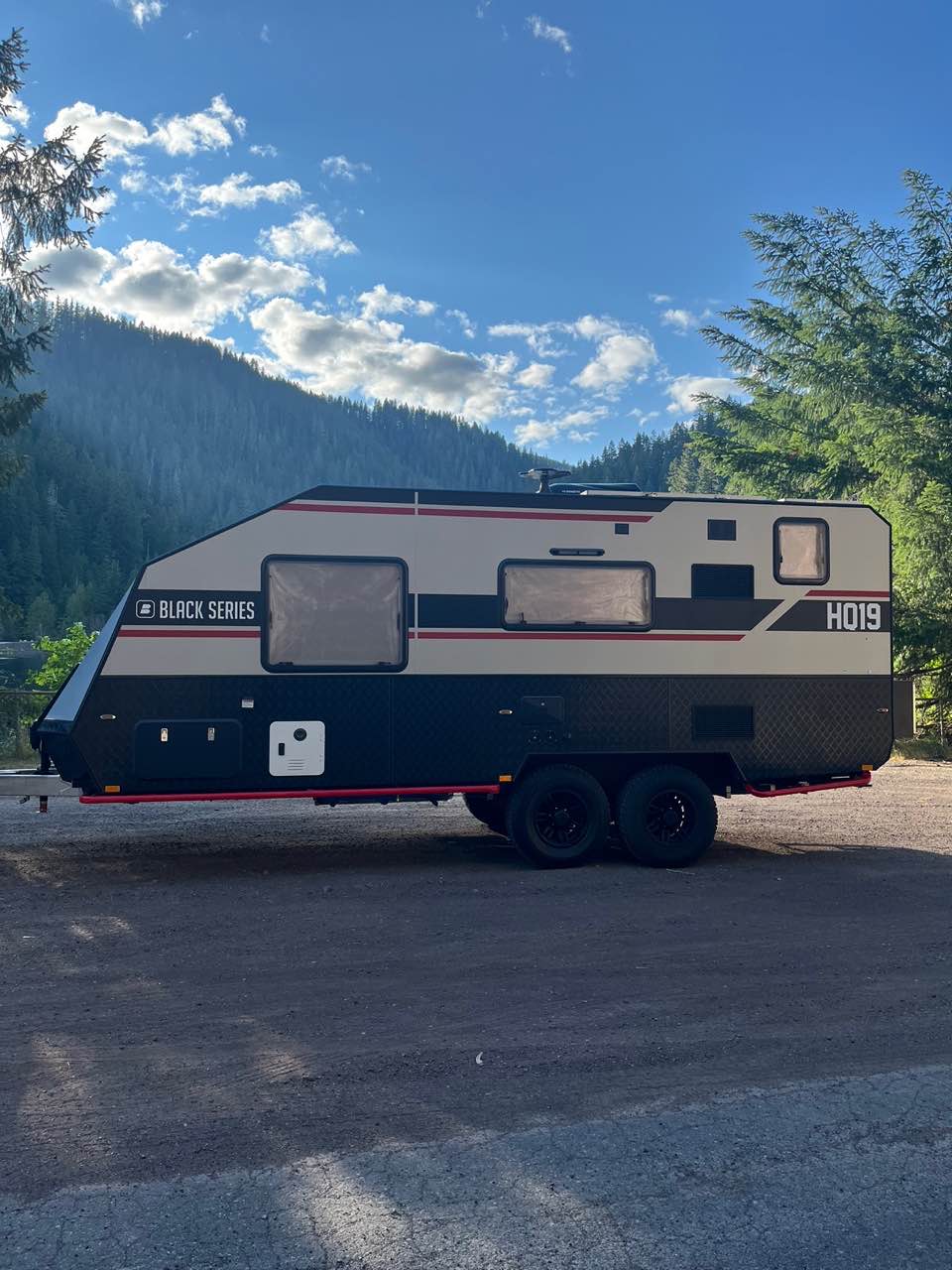
For BlackSeries customers specifically, the trade-up path often looks like this: standard RV → overland-capable rig with independent suspension, solar power, and military-grade construction.
These terms get tossed around interchangeably, but they represent fundamentally different goals. Here’s how they stack up:
The bottom line: If you’re reading this guide, you’re probably a trade-up candidate. You’re not looking to get out of RVing: you’re looking to get more out of it. And that’s exactly who BlackSeries builds for.
Your RV is trying to tell you something. Here are the clearest signals that you’ve outgrown your current setup:
Spring (February through April) is the optimal window for trading up your RV. Dealer demand peaks as families plan summer adventures, which means:
Here’s a 2026-specific tip: New model year units are already hitting lots, which means aggressive discounts on 2025 inventory. If you’re flexible on model year, you can capture significant savings while still getting a nearly-new rig.
Before you start shopping, know what you’re working with. Your trade-in value becomes the foundation of your upgrade budget.
Use these industry-standard resources:
Pro tip: Document any upgrades you’ve made: solar panels, lithium batteries, suspension improvements: with receipts. These add measurable value that dealers might otherwise overlook.
What specific capabilities do you need? Consider:
Trading up isn’t just about the sticker price. Factor in:
Not all dealers support trade-ups equally. Look for:
In most states, you only pay sales tax on the difference between your new RV’s price and your trade-in value. On a $50,000 upgrade with a $20,000 trade-in, that’s tax savings of $1,500-2,000 depending on your state.
The off-road travel trailer segment continues its explosive growth in 2026. Why? Freedom.
Standard travel trailers chain you to RV parks and paved campgrounds. Overland-capable rigs open up:
BlackSeries campers represent what many owners spend years and thousands of dollars trying to achieve through aftermarket upgrades:
Models like the HQ21 deliver the space of a 30 foot RV weight class with genuine off-road capability: a combination that’s nearly impossible to achieve through aftermarket modifications.
The trade-in tax benefit is real and significant. By rolling your current RV’s value into a new purchase, you reduce your taxable amount. This single advantage often makes trading up more cost-effective than selling privately and buying separately.
Used RV prices have normalized to pre-2020 levels. If you purchased during the pandemic boom, your trade-in value may disappoint compared to what you paid. However, focus on the net deal: the total cost of upgrading: rather than dwelling on paper losses.
A well-built overland trailer like a BlackSeries may cost more upfront, but consider:
1. Focusing only on monthly payments
A 7-year loan makes anything look affordable. Calculate total cost of ownership instead.
2. Upgrading size but not capability
A bigger highway trailer is still a highway trailer. If you want off-grid freedom, prioritize suspension, construction, and systems over square footage.
3. Ignoring future resale value
Overland-capable trailers from premium manufacturers hold value dramatically better than mass-market brands. Your trade-up today affects your trade-up options in 5 years.
4. Underestimating tow vehicle requirements
Before falling in love with a trailer, verify your truck can safely handle it. Check both weight ratings and real-world towing reviews.
For most owners, trading up offers significant advantages: tax savings on the price difference, simplified transactions, and immediate equity application. Selling privately may net slightly more cash, but requires more time, effort, and risk.
Yes. The dealer pays off your existing loan from the trade-in value. If you owe more than the trade-in value (negative equity), the difference rolls into your new loan. Get your payoff amount before negotiating.
The “upgrade cost” is your new RV’s price minus your trade-in value, plus tax, title, and fees. A typical trade-up from a standard travel trailer to a BlackSeries overland model runs $30,000-60,000 net, depending on your current rig’s value and your target model.
Yes. BlackSeries dealers regularly accept trade-ins from all manufacturers. Many trade-up customers come from mainstream brands like Jayco, Forest River, or Airstream seeking genuine off-road capability.
Spring (February-April) typically yields the highest trade-in values due to peak seasonal demand. Additionally, shopping when new model years arrive (usually late summer/fall) can unlock discounts on previous-year inventory.
Ready to explore your trade-up options? Browse the full BlackSeries lineup and discover what factory-built overland capability really means.