An RV exchange is a structured process where you replace your current RV with another model, often through a dealer, by applying your RV’s value toward a different rig rather than selling it outright. Unlike a private sale or a basic trade-in, an exchange focuses on matching you with the right next RV based on your evolving needs, not just getting rid of what you have.
If you’ve been researching how to upgrade your rig without the headaches of private listings, lowball offers, or mismatched buyers, you’re in the right place. This guide breaks down exactly how RV exchanges work, when they make sense, and why they’ve become the go-to strategy for owners ready to level up their adventures in 2026.
What Is an RV Exchange?
Let’s clear up some confusion right away. An RV exchange is not the same as posting your camper on Facebook Marketplace and hoping for the best. It’s also different from walking into a dealership, tossing them your keys, and taking whatever credit they offer.
An RV exchange is a structured replacement process designed to:
- Evaluate your current RV’s true market value
- Redefine your camping needs and usage scenarios
- Match you with a rig that actually fits your lifestyle
- Settle the difference through financing or cash
- Handle tax and registration efficiently
Think of it as a curated upgrade path rather than a simple transaction. The goal isn’t just to “get rid of” your current RV, it’s to transition into something better.
This distinction matters because many owners realize their current rig no longer matches their ambitions. Maybe you started with a lightweight 16 ft camper weight trailer for weekend trips, but now you’re chasing remote trails that demand serious off-grid capability. An exchange addresses that evolution directly.
RV Exchange vs Trade-In vs Trade-Up
These three terms get thrown around interchangeably, but they serve different purposes. Here’s how they stack up:
The bottom line: If you’re looking for a quick out, a trade-in works. If you know you want more capability, a trade-up is the play. But if you’re rethinking your entire approach to camping, from weekend warrior to serious overlander, an RV exchange gives you the framework to make a smart switch.
For a deeper dive into valuations, check out our guide on What Is RV Trade-In Value. And if you’re specifically looking to upgrade, our RV Trade-Up guide walks through that process.
How Does an RV Exchange Work?
Here’s the step-by-step breakdown of a typical RV exchange process:
Step 1: Evaluate Your Current RV’s Value
Before anything else, you need an accurate assessment. This goes beyond just year and mileage. Dealers consider:
- RV type: A 30 foot RV weight class fifth wheel depreciates differently than a compact travel trailer
- Condition: Structural integrity matters more than cosmetic wear
- Brand reputation: Premium brands hold value better
- Market demand: Off-road travel trailer demand has surged, affecting valuations
Most dealers reference NADA Guides, JD Power RV Values, or Black Book for baseline pricing.
Step 2: Redefine Your Usage Needs
This is where exchange differs from a basic trade. A good dealer will ask:
- Where do you actually camp? (RV parks vs. dispersed sites)
- How often do you travel?
- What’s your tow vehicle’s capacity?
- Do you need off-grid systems (solar, water, lithium)?
Understanding that your family has outgrown a 24 ft camper weight trailer, or that you need serious ground clearance for BLM land, shapes the entire exchange conversation.
Step 3: Match the Right Replacement RV
This isn’t about showing you what’s on the lot. It’s about identifying which rig actually solves your problems. For many exchangers, this is where the average weight of camper becomes critical. Moving from a lightweight trailer to something like the HQ21 means recalculating tow ratings, storage, and capability.
Step 4: Settle the Difference
Once values are established, you’ll either:
- Pay the difference in cash
- Finance the delta
- Apply additional equity if your current RV exceeds the new one’s value (rare, but it happens)
Step 5: Handle Tax and Registration
In many U.S. states, you only pay sales tax on the difference between your trade and the new RV, not the full purchase price. This can save thousands. Registration transfers are typically handled by the dealer.

When Does an RV Exchange Make Sense?
Not every situation calls for an exchange. Here’s when it’s the smart move:
Your RV Can’t Support Off-Grid Camping
You bought a standard travel trailer for campground hopping. Now you want to chase sunsets on Forest Service roads with no hookups. Your current rig’s electrical system, water capacity, and suspension simply can’t handle it.
Your Usage Frequency Has Increased
What started as four trips a year is now fifteen. Higher usage justifies investing in a more capable, durable platform, especially one built with military-grade materials rather than wood-frame construction.
Family or Lifestyle Changes
A couple becomes a family of four. Weekend trips become month-long adventures. Your spatial and storage needs evolve, making that compact trailer feel cramped.
You Want to Avoid Private Sale Risks
Scammers, no-shows, tire-kickers, and payment fraud are real. An exchange eliminates all of that while often delivering comparable value with far less hassle.
Best Time of Year for an Exchange
Spring (February–April) typically offers the strongest valuations. Dealers are stocking up for peak season, and demand for quality used RVs spikes. If a new model year is about to release, exchanging beforehand often maximizes your current RV’s value.
RV Exchange Programs: What Dealers Offer
Not all dealerships support true exchange programs. Look for dealers that offer:
- Standardized evaluation logic (transparent, not arbitrary)
- Defined upgrade pathways (not just “here’s what we have”)
- Clear capability comparisons (not just price)
- Financing options for the difference
Why BlackSeries Is Ideal for RV Exchange
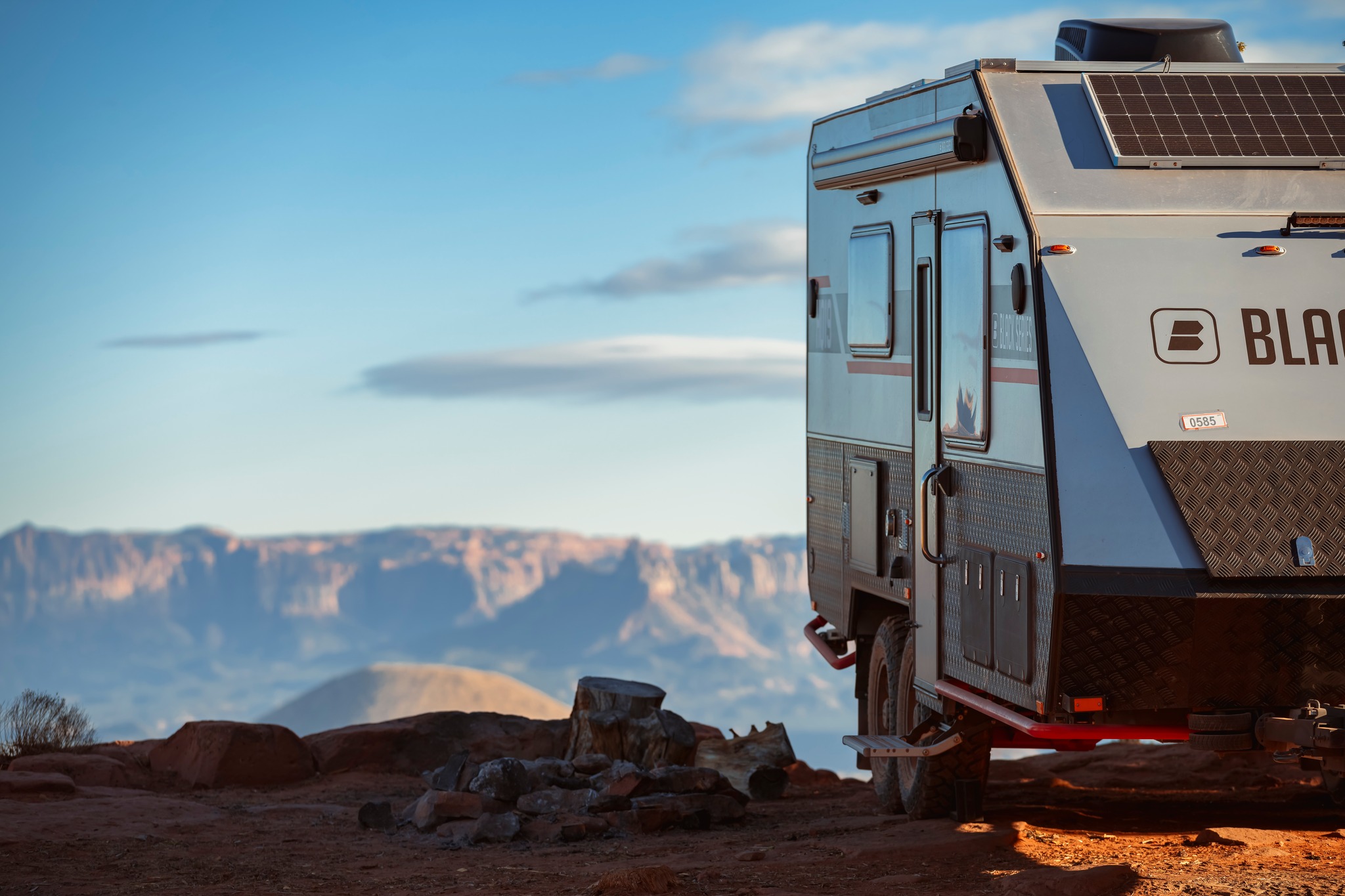
BlackSeries rigs represent a capability jump, not just a lateral move. When you exchange into a BlackSeries off-road travel trailer, you’re gaining:
- All-aluminum, welded chassis (no wood rot, no flex)
- Independent suspension built for rough terrain
- Integrated solar and lithium systems for true off-grid capability
- Military-grade construction that holds value in the secondary market
The secondary market for BlackSeries units is notably tight. Demand consistently outpaces supply, which means your exchange into a BlackSeries isn’t just an upgrade, it’s a long-term value play.
Financial & Tax Considerations
State-Level Tax Advantages
In many states, you pay sales tax only on the net difference between your exchanged RV and the new one. If your current RV is worth $25,000 and your new rig costs $55,000, you’re taxed on $30,000, not $55,000. At a 7% rate, that’s $1,750 saved.
Check your state’s specific rules, as some (like California) have limitations.
Financing the Delta
Most dealers offer financing for the difference. This keeps monthly payments manageable while letting you access a significantly more capable rig immediately. Compare loan terms carefully, credit unions often beat dealer financing.
Total Cost of Ownership (TCO)
A cheaper RV isn’t always the smarter choice. Factor in:
- Maintenance costs (wood frames rot; aluminum doesn’t)
- Depreciation curves (premium off-road rigs hold value better)
- Repair frequency (cheap suspensions fail on rough roads)
- Future exchange value (will anyone want your rig in five years?)
Common RV Exchange Mistakes to Avoid
Treating an exchange like a simple swap. An exchange should be consultative, not transactional. If a dealer isn’t asking about your camping style, find one who will.
Comparing only on price. A $30,000 trailer with particle board construction and a $45,000 all-aluminum overland rig are not comparable. Evaluate capability, durability, and long-term value.
Ignoring future resale/exchange potential. Your next RV will eventually be exchanged too. Choosing a brand with strong secondary market demand protects your investment.
Underestimating usage evolution. Your camping needs in 2026 won’t be your needs in 2030. Choose a rig with room to grow, not one you’ll outgrow in two seasons.
Frequently Asked Questions
Is an RV exchange the same as a trade-in?
No. A trade-in is a simple transaction where you hand over your RV for credit toward a purchase. An exchange is a structured process focused on matching you with the right replacement based on your evolving needs, not just disposing of your current rig.
Can I exchange an RV that is financed?
Yes, in most cases. The remaining loan balance is paid off from your RV’s exchange value. If your RV is worth more than you owe, the equity applies to your new purchase. If you’re underwater, you’ll need to cover the difference.
Do all dealers offer RV exchange programs?
No. Many dealers only offer basic trade-ins. True exchange programs with structured evaluations and capability matching are less common. Look for dealers who specialize in the segment you’re targeting: especially if you’re moving into the off-road travel trailer category.
Can I exchange my RV for a BlackSeries model?
Absolutely. BlackSeries accepts exchanges from owners of other brands looking to upgrade into serious overland capability. Whether you’re coming from a standard travel trailer, a lightweight camper, or another off-road brand, the HQ Series offers a clear upgrade path for capability-focused adventurers.
Ready to explore your exchange options? Browse the BlackSeries HQ lineup to see what a true capability upgrade looks like.

