Clean, safe drinking water is non-negotiable when you’re camping off-grid or staying at remote campgrounds. An RV water filter system transforms questionable water sources into safe, great-tasting drinking water, protecting your family’s health while reducing plastic bottle waste. With 2026 bringing increased awareness of campground water quality issues and environmental impact, investing in a reliable RV water filtration system has become essential for serious RV enthusiasts.
What Is an RV Water Filter System?
An RV water filter system is a multi-stage filtration setup designed specifically for recreational vehicles to remove contaminants from various water sources. Unlike basic household water filters, RV systems must handle inconsistent water pressure, varying water quality, and frequent setup/breakdown cycles.
These systems typically consist of multiple filter canisters, each targeting different contaminants:
- Sediment filters remove dirt, rust, and particles
- Carbon filters eliminate chlorine, chemicals, and odors
- Advanced filtration tackles bacteria, viruses, and heavy metals
The key difference between RV water filtration systems and standard home filters lies in portability, durability, and versatility. RV systems must work with campground hookups, well water, and even questionable municipal sources you might encounter across different states.
Modern RV drinking water filtration systems also address the unique challenges of mobile living – limited space, varying power availability, and the need for quick setup. When your RV’s water system experiences issues like pump pulsing or irregular flow, having clean filtration becomes even more critical for maintaining water quality throughout your plumbing system.
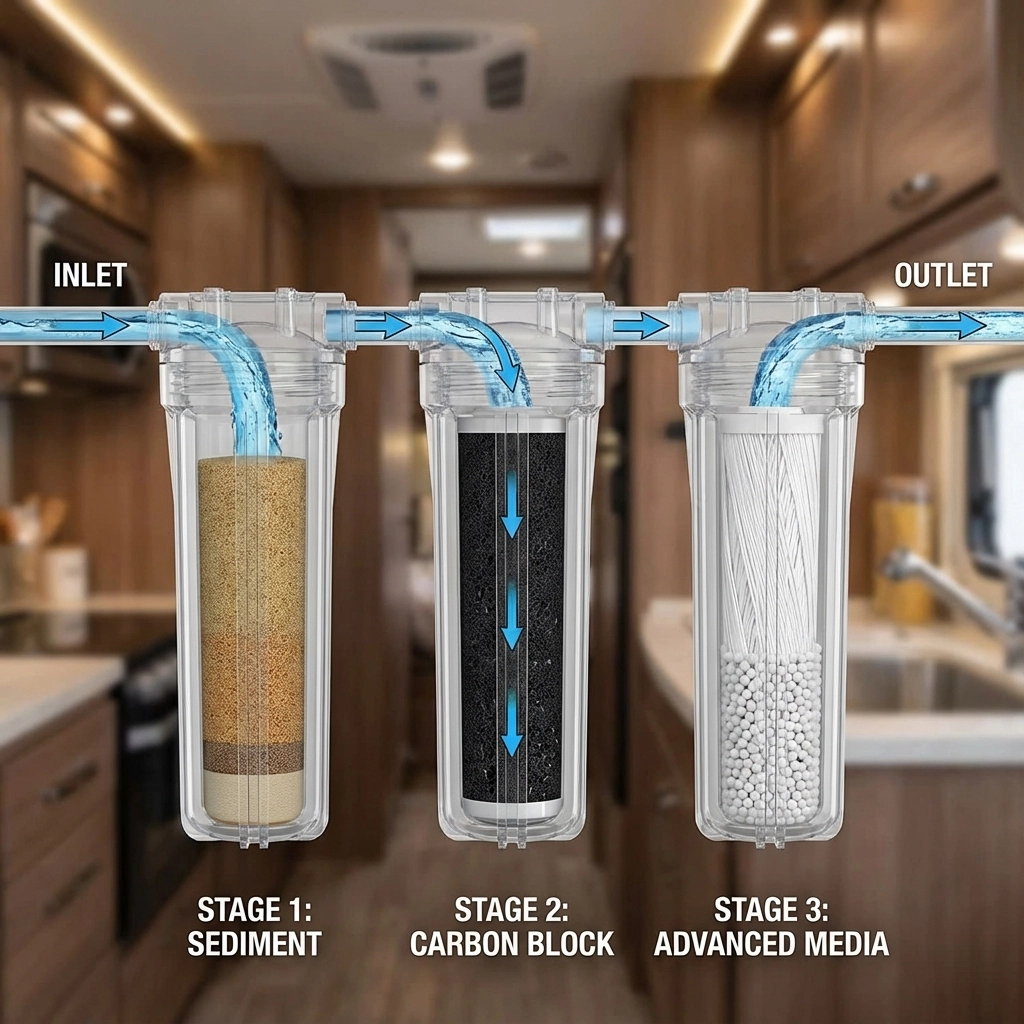
How Does an RV Water Filtration System Work?
Understanding how your RV water filtration system works helps you make informed decisions about setup and maintenance. Most systems use a three-stage approach:
Stage 1: Sediment Filtration
The first stage uses a 1-5 micron sediment filter to capture visible particles like dirt, silt, rust, and debris. This protects downstream filters from clogging and extends their lifespan significantly. Without proper sediment filtration, fine particles can damage your RV’s water pump and create pressure irregularities.
Stage 2: Chemical Removal
Granulated activated carbon (GAC) or carbon block filters remove chlorine, chemicals, pesticides, and volatile organic compounds (VOCs). These filters also improve taste and odor, transforming harsh municipal water into something actually enjoyable to drink.
Stage 3: Advanced Purification
The final stage varies by system but may include:
- KDF media for bacterial control and heavy metal removal
- Ceramic filters for bacteria and virus elimination
- UV sterilization for pathogen destruction
- Reverse osmosis membranes for ultimate purification
Water flow rate and pressure drop are critical considerations. Most RV systems maintain 2-4 GPM flow rates while operating at standard RV water pressures (20-40 PSI). Proper system design ensures adequate water pressure reaches your RV’s fixtures without creating problems with grey water management or water heater operation.
Why You Need a Reliable RV Drinking Water Filtration System
The reality of American campground water quality in 2026 makes filtration essential, not optional. Recent studies show that many older campgrounds still rely on aging infrastructure with minimal water treatment oversight.
Water Quality Challenges
Campground water sources often contain:
- High chlorine levels (up to 4 PPM in some areas)
- Bacterial contamination from cross-connections
- Heavy metals from old piping systems
- Agricultural runoff chemicals
- Inconsistent municipal treatment standards
Geographic variations create additional challenges. Desert Southwest locations may have high mineral content, while Eastern campgrounds near agricultural areas show elevated nitrate levels. Great Lakes region facilities sometimes struggle with algae-related taste and odor issues.
Health and Safety Risks
Untreated campground water can cause immediate issues like stomach upset, but long-term exposure to contaminants poses more serious health risks. Chlorine by-products, heavy metals, and bacterial contamination accumulate over time, particularly problematic for full-time RVers.
Environmental and Economic Benefits
A quality RV water filter system eliminates the need for bottled water, reducing plastic waste and ongoing costs. Full-time RVers can save $1,200-2,000 annually compared to buying bottled water, while significantly reducing their environmental footprint.
When boondocking in remote areas, having reliable water filtration becomes even more critical. Natural water sources require serious purification, and your system integration with conservation practices determines how long you can stay off-grid comfortably.

How to Choose the Best RV Water Filter System
Selecting the best RV water filter system requires evaluating your specific needs, travel patterns, and water quality concerns. Use this comprehensive checklist:
Filtration Requirements Checklist
Micron Rating: Choose systems with multiple micron levels:
- 5-micron sediment filter (minimum)
- 0.5-1 micron carbon filter
- 0.2-micron advanced filter for bacteria/virus protection
NSF Certification: Verify NSF/ANSI Standards 42 (chlorine reduction), 53 (health effects), and 401 (emerging contaminants) certifications.
Flow Rate: Ensure minimum 2-3 GPM to maintain adequate water pressure throughout your RV.
Filter Capacity: Consider filter lifespan based on your travel frequency:
- Weekend warriors: 6-month replacement intervals
- Extended travelers: 3-month intervals
- Full-timers: Monthly to bi-monthly replacement
Installation Considerations
Inline vs. Canister Systems: Inline systems offer portability but limited capacity. Multi-canister systems provide superior filtration but require permanent mounting space.
Power Requirements: Some systems need 12V power for UV sterilization or booster pumps. Ensure compatibility with your RV’s electrical system and consider power consumption when planning off-grid stays.
Maintenance Access: Choose systems with easily accessible filter housings. Quick-connect fittings and tool-free operation save time during replacement cycles.
Travel-Specific Factors
Consider your typical camping style:
- Campground-focused: Standard 2-stage systems handle most municipal water sources
- Boondocking enthusiasts: 3-stage systems with UV or advanced purification
- International travel: Systems capable of handling diverse water sources and higher contamination levels
Best RV Water Filter System for Camping
The best RV water filter system balances effective filtration, ease of use, and reliable performance across various camping environments. Based on 2026 testing and user feedback, here are the top system categories:
Entry-Level Excellence: 2-Stage Inline Systems
Perfect for weekend campers and campground-focused travelers. These systems typically include:
- 5-micron sediment filter
- Carbon block or GAC filter
- Quick-connect fittings for easy setup
- 6-12 month filter life under normal use
Mid-Range Performance: 3-Stage Canister Systems
Ideal for extended travelers and those encountering variable water quality:
- Multi-stage filtration with specialized media
- Higher flow rates (3-4 GPM)
- Longer filter life and lower operating costs
- Permanent mounting options available
Premium Protection: Advanced Multi-Stage Systems
Designed for full-timers and international travelers:
- 4+ stage filtration including specialty media
- UV sterilization or advanced purification
- Real-time water quality monitoring
- Professional-grade components and warranties
BlackSeries Integration Advantages
BlackSeries RV systems are engineered with filtration integration in mind. Key advantages include:
Designed for Durability: Off-road rated components handle vibration and temperature extremes without failure or leakage.
Optimized Installation: Pre-planned mounting locations and utility connections simplify permanent system installation.
Power System Compatibility: Electrical integration works seamlessly with lithium battery systems and solar charging setups for off-grid adventures.
Space Efficiency: Interior layout accommodates filtration systems without compromising living space or storage capacity.
The integrated approach means your water filtration works as part of a complete off-grid living solution, not as an afterthought bolted onto existing systems.
RV Water Filter System Installation – Step-by-Step
Proper RV water filter system installation ensures optimal performance and prevents costly water damage. Follow this comprehensive guide:
Tools and Materials Needed
- Adjustable wrenches (2)
- Teflon tape or pipe thread compound
- Water pressure regulator
- Hose clamps and fittings
- Electrical connections (for powered systems)
- Mounting hardware appropriate for your RV’s construction
Installation Process
Step 1: Choose Installation Location
Select a location that provides:
- Easy access for filter replacement
- Protection from freezing temperatures
- Adequate ventilation for system operation
- Proximity to electrical power (if required)
Step 2: Water Line Integration
Most systems install between the campground water source and your RV’s water inlet:
- Connect water pressure regulator to campground spigot
- Attach filter system input to regulator output
- Connect system output to RV water inlet
- Secure all connections with appropriate fittings
Step 3: Electrical Connections (for powered systems)
UV sterilizers and booster pumps require 12V power:
- Use appropriately rated wiring and fuses
- Install switches for system control
- Ensure proper grounding for safety
- Test electrical connections before pressurizing system
Common Installation Mistakes
Inadequate Pressure Regulation: Excessive water pressure damages filter housings and reduces filter life. Always use a quality pressure regulator.
Poor Drainage Provisions: Install systems where drainage from maintenance won’t damage RV components or electrical systems.
Inadequate Securing: Road vibration loosens improperly secured systems, causing leaks and damage.
Wrong Filter Orientation: Installing filters backward reduces effectiveness and may cause housing failure.
When planning your installation, consider how the system integrates with other RV utilities and maintenance procedures. Proper planning prevents conflicts with electrical troubleshooting, winterization procedures, and routine maintenance tasks.
Maintenance and Replacement Schedule
Maintaining your RV water filtration system ensures consistent performance and extends component life. Develop a maintenance schedule based on your usage patterns:
Filter Replacement Guidelines
Sediment Filters: Replace every 2,000-5,000 gallons or when pressure drop becomes noticeable
- Visual inspection shows brown or grey discoloration
- Flow rate decreases significantly
- Taste or odor changes occur
Carbon Filters: Replace every 3-6 months or per manufacturer specifications
- Chlorine taste/smell returns to filtered water
- Water taste becomes flat or unpleasant
- Filter capacity rating is reached
Advanced Media Filters: Follow manufacturer guidelines strictly
- UV lamp replacement annually or per hour rating
- Reverse osmosis membrane replacement every 2-3 years
- KDF media may last 6-12 months depending on water conditions
Seasonal Maintenance
Spring Startup: After winter storage, sanitize the entire system before use
- Replace all filters regardless of previous service life
- Flush system thoroughly with potable water
- Test system operation and check for leaks
Fall Preparation: Prepare system for winter storage or continued cold-weather use
- Consider filter replacement before storage
- Drain system completely if storing in freezing conditions
- Add RV antifreeze if system cannot be fully drained
Long-Term Storage Considerations
When storing your RV for extended periods, proper water system care prevents contamination and damage:
- Remove and store filters in sealed containers
- Sanitize empty filter housings
- Ensure complete system drainage
- Document filter replacement dates and capacity used
Professional winterization services should include water filtration system preparation to prevent freeze damage and ensure proper startup when camping season returns.
FAQ – RV Water Filtration System
Do RV water filters make water drinkable?
Quality RV water filter systems make most campground and municipal water sources safe to drink. However, water from natural sources like lakes or streams requires more advanced purification including UV sterilization or boiling. Always test unknown water sources and use appropriate filtration levels for the contamination risk.
How long does an RV water filter last?
Filter life varies by type and usage. Sediment filters typically last 2,000-5,000 gallons, carbon filters last 3-6 months of regular use, and specialized filters follow manufacturer guidelines. Heavy use or poor source water quality reduces filter life significantly. Track your usage and replace filters proactively.
Can I use an RV water filter with city water?
Absolutely. RV water filtration systems work excellent with city water connections at campgrounds. Municipal water often contains high chlorine levels and may have taste/odor issues that filtration resolves. Always use a pressure regulator to protect your system from excessive municipal water pressure.
Is a multi-stage RV water filtration system worth it?
Multi-stage systems provide superior protection and water quality compared to single-filter setups. The additional investment pays off through better health protection, improved taste, and reduced plastic bottle consumption. For full-time RVers or those frequently using questionable water sources, multi-stage systems are essential.
How do I know when my RV water filter needs replacement?
Monitor these indicators: decreased water flow rate, return of chlorine taste or odor, visible filter discoloration, and manufacturer-specified capacity limits. Keep a log of filter installation dates and estimated usage. Replace filters proactively rather than waiting for obvious failure signs.
A properly maintained RV water filter system provides years of safe, great-tasting water for all your camping adventures. Regular maintenance, appropriate filter selection, and proper installation ensure your system delivers reliable performance whether you’re at a full-service campground or boondocking in remote wilderness areas.

