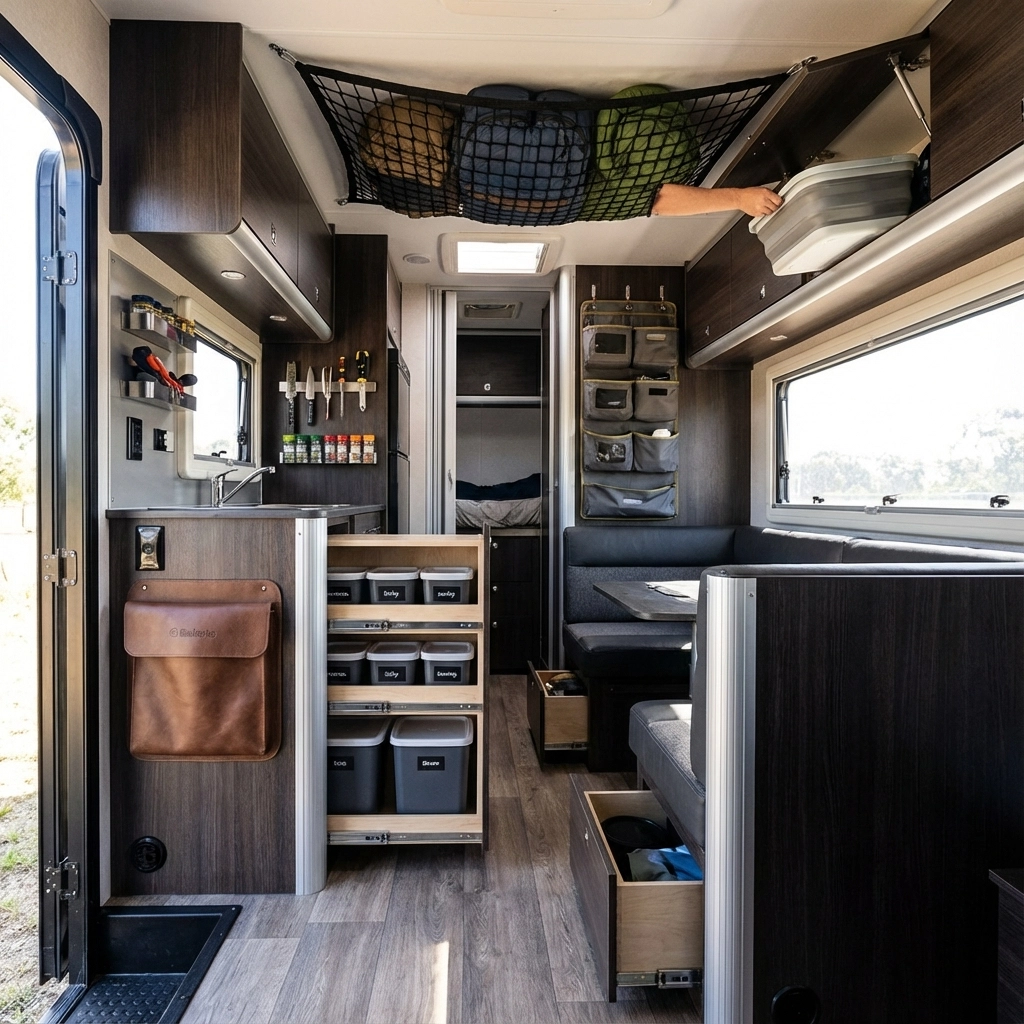
TL;DR: Smart Storage Strategy for 2026
Before diving into complex modifications, follow this priority system: declutter and categorize first, then optimize space. Focus your efforts on high-impact areas: door backs, cabinet interior sides, under-bed/seating storage, and vertical dead space. For safe travel, especially on challenging terrain, prioritize secure mounting, vibration resistance, and proper weight distribution to maintain your RV’s center of gravity.
The golden rule: reduce weight through smart packing decisions, then maximize every cubic inch through strategic storage solutions.
What “RV Storage Hacks” Really Means
Defining Storage Solutions vs. Modifications
Storage hacks refer to clever organizational solutions using aftermarket accessories, containers, and mounting systems that don’t require permanent alterations. Storage mods, on the other hand, involve structural changes like installing custom cabinets or cutting access holes.
Understanding key terminology helps you choose the right approach:
- Vertical storage: Utilizing wall space and cabinet heights
- Dead space: Unused areas like gaps behind doors or under fixtures
- Pass-through storage: Exterior-accessed compartments for bulky items
Real-World Constraints
Every RV storage solution must account for structural limitations. Wall studs may not support heavy loads, especially in lightweight construction. Moisture from condensation affects adhesive mounts. Road vibration loosens poorly secured items, and door hinges have weight limits that aftermarket organizers can exceed.
For BlackSeries owners specifically, the galvanized chassis design provides exceptional structural integrity, allowing for more confident mounting of heavier storage solutions compared to standard aluminum frame trailers.
Quick Win Checklist (10 Minutes to 1 Hour)
These immediate improvements require minimal tools and deliver instant results:
Door-Back Organizers (15 minutes)
- Over-the-door shoe organizers for toiletries, snacks, or cleaning supplies
- Spice racks mounted inside pantry doors
- Towel bars on bathroom door backs
Tension Rod Systems (10 minutes)
- Create vertical dividers in cabinets for cutting boards and baking sheets
- Separate hanging clothes by category
- Hold lightweight items against cabinet backs

Command Hook Solutions (20 minutes)
- Strategic placement for keys, hats, and lightweight gear
- Under-cabinet mounting for mugs and utensils
- Shower caddies in unexpected places
Drawer Organization (30 minutes)
- Adjustable dividers prevent items from sliding
- Stackable bins create compartments
- Non-slip mats keep everything in place
Collapsible Everything (Planning phase)
- Nesting bowls and measuring cups
- Collapsible colanders and storage containers
- Folding cutting boards and dish racks
Time Investment vs. Space Gained
How-To: Add Storage Without Major Remodeling
Step 1: Space Inventory and Documentation
Photograph every storage area from multiple angles. Mark dead spaces with painter’s tape. Measure dimensions carefully, noting any obstacles like plumbing or electrical runs. This visual inventory prevents duplicate purchases and helps prioritize improvements.
Step 2: Frequency-Based Categorization
Sort belongings into three categories:
- Daily: Coffee supplies, toiletries, frequently-used utensils
- Weekly: Cooking equipment, seasonal clothes, books
- Seasonal: Holiday decorations, heavy coats, emergency equipment
Place daily items in the most accessible locations, seasonal items in harder-to-reach areas.
Step 3: Mounting Method Selection
For areas experiencing significant vibration, mechanical fasteners (screws into studs) outperform adhesive solutions. Use toggle bolts for hollow walls, but verify wall construction first. Adhesive solutions work well for lightweight items in climate-controlled areas.
Step 4: Vibration and Noise Prevention
Add felt pads between moving parts. Use bungee cords or adjustable straps to prevent shifting. Magnetic closures work excellently for lightweight cabinet doors. For drawers, soft-close mechanisms reduce slamming and extend hardware life.
Step 5: Weight Distribution Strategy
Heavy items belong low and centered. Distribute weight evenly left-to-right to prevent handling issues. For off-road adventures common with BlackSeries trailers, secure all items with positive retention: nothing should move during aggressive maneuvering.
Best RV Storage Solutions by Zone
Kitchen Optimization
Vertical Pot Lid Storage: Install narrow racks on cabinet sides or use tension rods to create slots. Cutting boards store similarly, keeping counter space clear.
Cabinet Door Maximization: Mount narrow shelves for spices, oils, and frequently-used items. Magnetic strips hold knives securely without taking drawer space.
Nesting and Stacking: Choose cookware that nests completely. Stackable, square containers use 25% less space than round ones and prevent rolling during travel.
Pantry Solutions
Door-Back Systems: Over-the-door organizers with clear pockets make inventory management simple. Heavier items need reinforced door hinges or distributed weight across multiple mounting points.
Stackable Modularity: Clear, airtight containers protect food from pests and moisture while maximizing vertical space. Label everything clearly: poor visibility leads to duplicate purchases.
Inventory Rotation: First-in, first-out systems prevent waste. Angled shelves or slide-out drawers improve visibility and access.
Bedroom Storage Enhancement
Under-Bed Maximization: Sliding drawer systems or wheeled containers make retrieval easy. Vacuum storage bags compress seasonal clothing significantly.
Closet Doubling: Add secondary hanging rods at different heights. Hanging organizers with multiple compartments replace bulky dressers.
Bedside Efficiency: Over-bed organizers with pockets keep reading materials, devices, and personal items within reach without consuming valuable floor space.
Bathroom Space Multiplication
Vertical Door Storage: Bathroom doors handle significant weight when properly reinforced. Multi-tier organizers hold toiletries, towels, and cleaning supplies.
Magnetic Solutions: Metal surfaces accept magnetic containers for small items. Magnetic mirrors provide additional storage surface.
Corner Maximization: Corner caddies in showers and floor corners capture otherwise wasted space.
Pass-Through and Basement Storage
Modular Container Systems: Identical, stackable containers maximize space utilization and simplify loading. Label all sides for easy identification.
Slide-Out Platforms: Deep storage becomes accessible with sliding platforms or drawers on heavy-duty slides.
Category Separation: Use different colored containers or clear labeling systems to separate tools, outdoor gear, emergency supplies, and seasonal items.
Case-Style Examples: Before/After Transformations
Family Camping Scenario
Challenge: Family of four with extensive food supplies and cooking equipment overwhelming limited kitchen storage.
Solution: Implemented door-back spice storage, nested cookware, and modular pantry containers. Added under-dinette storage for bulk items.
Results:
- Food prep time reduced by 40% due to improved organization
- Counter space increased by 60% with vertical storage solutions
- Eliminated duplicate purchases through improved visibility
Long-Distance Travel Setup
Challenge: Extended travel requiring tools, spare parts, and work equipment while maintaining living comfort.
Solution: Pass-through storage with labeled container systems, under-bed tool storage, and workspace organization for digital nomads working from their BlackSeries trailer setup.
Results:
- Equipment access time cut by 70% through systematic organization
- Work efficiency improved with dedicated storage for office supplies
- Reduced stress from finding specific items quickly
Off-Road Adventure Configuration
Challenge: Rugged terrain travel requiring secure storage that withstands significant vibration and movement.
Solution: Eliminated all adhesive mounts in favor of mechanical fasteners. Added positive retention systems (latches, straps, magnetic closures) throughout. Consolidated heavy items in low, central locations.
Results:
- Zero item displacement during aggressive off-road sections
- Reduced noise and rattling by 90%
- Increased confidence in challenging terrain
Common Mistakes to Avoid
Over-Wall Mounting Without Structure Assessment
Many RVers install heavy organizers on walls without understanding the underlying structure. Thin paneling over foam insulation won’t support significant weight. Always locate studs or use appropriate wall anchors rated for the load.
Ignoring Dynamic Loads
Static weight capacity differs from dynamic loads during travel. A shelf holding 10 pounds statically might experience 40+ pounds of force during hard braking or rough roads. Choose mounting hardware accordingly.
Exceeding Door and Drawer Limits
Cabinet doors and drawers have weight limits, often much lower than people assume. Adding heavy organizers to doors can cause hinge failure and alignment problems. Distribute weight or reinforce mounting points as needed.
Creating Maintenance Nightmares
Over-organizing with too many small containers becomes counterproductive. Aim for the minimum number of containers that provide adequate organization. Every additional bin is another item to clean and maintain.
Blocking Emergency Access
Never block access to emergency equipment, electrical panels, or shut-off valves with storage solutions. Plan storage layouts that maintain critical system accessibility.
FAQ – RV Storage Solutions
Do RV storage hacks really add space or just hide clutter?
Effective storage hacks genuinely increase usable space by utilizing previously wasted areas like door backs, vertical cabinet space, and dead corners. However, they only work when combined with decluttering: you can’t organize your way out of too much stuff.
What are the best RV storage solutions for small travel trailers?
Focus on vertical solutions and multi-purpose items. Door-back organizers, under-furniture storage, and collapsible items provide maximum impact in minimal spaces. Avoid bulky storage systems that consume valuable living area.
How do I add storage without drilling holes?
Command strips, tension rods, magnetic solutions, and over-the-door organizers provide substantial storage increase without permanent modifications. However, mechanically fastened solutions handle road vibration and weight better than adhesive methods.
What storage modifications are safest for bumpy roads?
Mechanical fasteners into structural elements provide the most security. Add positive retention (latches, straps, magnetic closures) to prevent opening during travel. Avoid top-heavy configurations and secure all loose items.
How do I prevent items from shifting while driving?
Use non-slip mats, adjustable dividers, and bungee cords to secure items within storage areas. Magnetic strips work excellently for metal items. For critical items, positive retention systems prevent movement even during aggressive maneuvering.
Strategic storage solutions transform RV living from cramped to comfortable. By prioritizing high-impact modifications and understanding your specific needs, you can dramatically increase usable space while maintaining the reliability and safety that makes RV adventures enjoyable. Remember, the best storage system is one you’ll actually use consistently: keep solutions simple, accessible, and appropriate for your travel style.

