Your Quick RV Exterior Lighting Upgrade Guide
RV exterior lighting isn’t just about aesthetics: it’s about safety, functionality, and extending your usable campsite hours. The most impactful upgrades focus on five key areas: awning lighting, entry/step lights, side area illumination, rear utility lighting, and storage access lights. LED technology dominates the 2026 RV lighting market for good reason: lower power consumption, longer lifespan, and superior durability for off-road adventures.
Priority upgrade sequence: Start with entry safety lighting, then awning area lights, followed by utility zones. Always prioritize 12V LED systems compatible with your RV’s electrical setup.
What Is RV Exterior Lighting? (Definitions & Terms)
RV exterior lighting encompasses all illumination systems mounted outside your travel trailer or motorhome, designed for campsite use rather than road travel. Unlike interior lighting that focuses on living space comfort, exterior lighting serves multiple functions: safety, security, work illumination, and ambient campsite enhancement.
Common Types of RV Exterior Lights
Porch/Entry Lights: Mounted near doors and steps to prevent accidents and improve visibility during entry/exit.
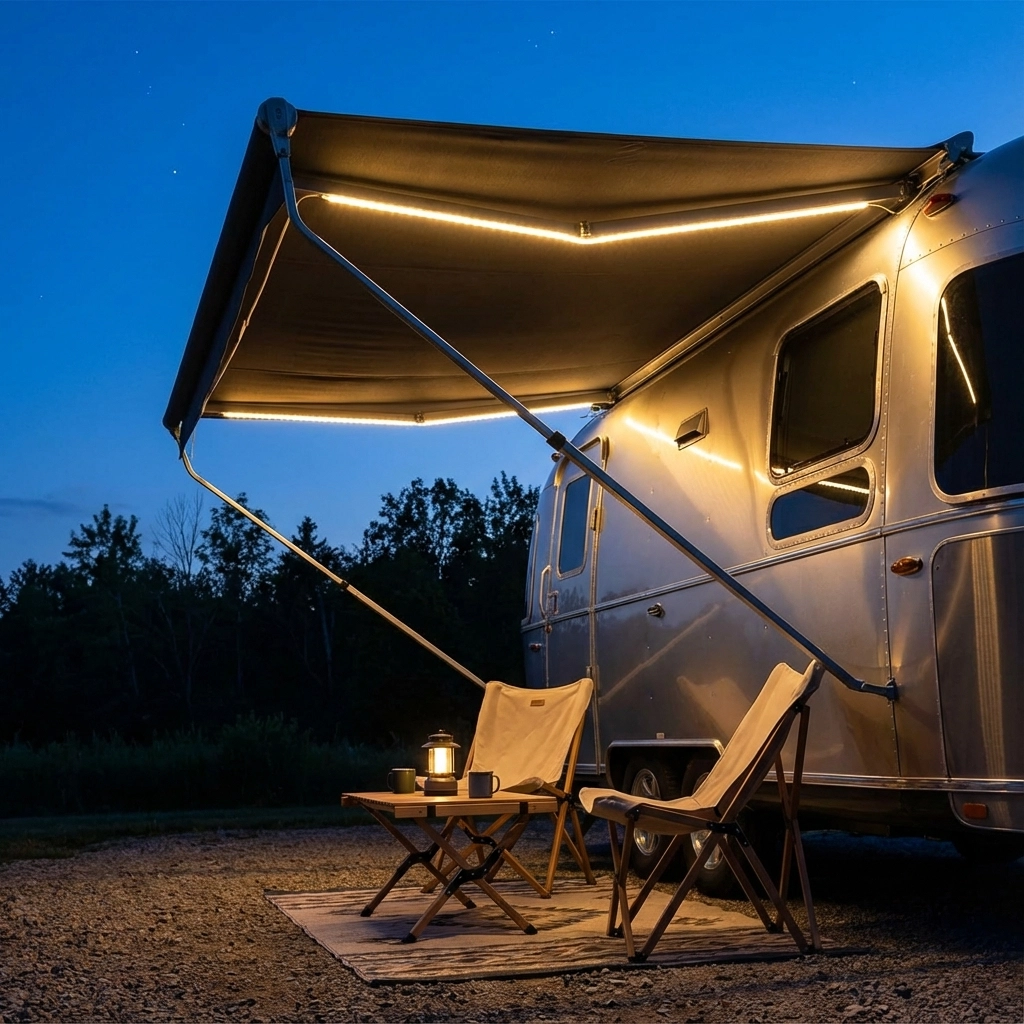
Awning Lights: Linear LED strips or individual fixtures that illuminate the outdoor living area beneath your awning.
Area/Flood Lights: Wide-beam illumination for general campsite visibility and outdoor activities.
Utility/Step Lights: Task-specific lighting for maintenance, storage access, and navigation around the RV.
Key Technical Terms
- Lumens: Brightness measurement (typically 200-3000 lumens for RV exterior use)
- IP Rating: Ingress Protection against dust/water (IP65 minimum recommended)
- Beam Angle: Light spread pattern (narrow spotlight vs. wide floodlight)
- 12V System: Standard RV electrical voltage for exterior lighting
Understanding your RV’s electrical system fundamentals helps ensure safe installation and optimal performance.
Why Upgrade RV Exterior Lighting for Camping?
Safety and Accident Prevention
Poor exterior lighting ranks among the top causes of RV-related injuries. Dark entry areas, invisible steps, and inadequate perimeter lighting contribute to trips, falls, and equipment damage. Quality exterior lighting creates a safety perimeter around your campsite, especially crucial when camping in challenging conditions or unfamiliar terrain.
Extended Campsite Functionality
Proper exterior lighting transforms your campsite into a functional outdoor living space after sunset. Whether you’re preparing meals, setting up gear, or simply relaxing under the stars, adequate illumination extends your usable hours and enhances the camping experience.
Original Equipment Limitations
Most factory RV exterior lights suffer from common issues:
- Insufficient brightness for practical use
- Poor beam patterns that create shadows and dark spots
- Fragile construction prone to vibration damage
- Limited coverage leaving large areas unlit
Campsite Visibility and Security
Enhanced lighting improves visibility for essential camping tasks like leveling your trailer, managing water systems, and performing maintenance. Well-lit campsites also deter unwanted wildlife encounters and provide peace of mind during overnight stays.
RV Exterior LED Lighting vs Traditional Lights
LED Advantages for RV Applications
LED technology dominates 2026 RV exterior lighting upgrades due to several compelling advantages:
Power Efficiency: LEDs consume 75-85% less power than incandescent bulbs, crucial for off-grid power management and extended boondocking.
Durability: Solid-state construction withstands vibration, impacts, and temperature extremes better than filament bulbs. This proves essential for off-road adventures and rough terrain navigation.
Longevity: Quality LEDs provide 25,000-50,000 hours of operation versus 1,000-2,000 hours for traditional bulbs.
Color Temperature Considerations
Warm White (2700K-3000K): Creates comfortable ambiance for relaxation areas but may attract insects.
Cool White (4000K-5000K): Provides better task visibility for work areas and maintenance.
Amber/Yellow (2200K): Reduces insect attraction while maintaining adequate visibility for safety lighting.
12V System Compatibility
Modern RV exterior LED lights integrate seamlessly with standard 12V DC systems, eliminating the need for inverters or voltage conversion. This direct compatibility reduces installation complexity and improves overall system efficiency.
Best RV Exterior Lighting Upgrades by Location
Awning Area Lighting
LED strip lights mounted along awning rails create the most popular and effective outdoor lighting upgrade. Install waterproof strips (IP65 rated minimum) that provide 1000-1500 lumens for adequate dining and relaxation illumination.
Installation tip: Mount strips on the awning’s underside rail with aluminum channels for protection and professional appearance.
Entry and Step Lighting
Motion-activated porch lights enhance safety during nighttime entry/exit. Install fixtures with 500-800 lumens and wide beam angles (120°+) to illuminate steps and entry areas completely.
Step-specific lighting: LED strips beneath steps or motion sensors near the door provide targeted illumination without overwhelming brightness.
Side and Rear Area Lights
Utility area illumination serves outdoor kitchens, storage access, and equipment setup. Mount adjustable flood lights on slide-out mechanisms or rear bumpers for task-specific lighting.
Storage compartment lights: Interior compartment lighting activated by door switches improves organization and reduces fumbling in dark storage areas.

Utility and Maintenance Lighting
Magnetic utility lights offer versatility for temporary task lighting during setup or repairs. Quality magnetic lights attach securely to the RV frame and provide focused illumination where needed.
Underbody lighting creates a safety perimeter while adding visual appeal. Install LED strips beneath the RV frame with proper protection from road debris and water exposure.
For comprehensive off-grid camping setups, coordinate exterior lighting with your overall power management strategy.
How to Install RV Exterior Lights (Step-by-Step)
Pre-Installation Assessment
Electrical System Check: Verify 12V capacity and locate appropriate power sources. Most RV exterior lighting draws 1-5 amps per fixture.
Mounting Location Planning: Identify structural mounting points that can support fixture weight and withstand road vibration.
Weather Protection: Plan wire routing to avoid exposure to road spray, UV damage, and mechanical damage.
Basic Installation Process
Step 1: Turn off power at the main electrical panel and verify circuits are de-energized.
Step 2: Mount fixtures using appropriate hardware for your RV’s construction (aluminum, fiberglass, or wood framing).
Step 3: Route wiring through existing access points or drill new holes with proper sealing.
Step 4: Make electrical connections using marine-grade wire nuts or junction boxes rated for exterior use.
Step 5: Apply sealant around all penetrations and mounting points to prevent water intrusion.
Common Installation Mistakes
- Inadequate sealant application leading to water damage
- Undersized wiring causing voltage drop and poor performance
- Poor mounting resulting in fixture failure during travel
- Incorrect polarity damaging LED fixtures
For complex installations involving roof penetrations, reference our roof sealing guide to maintain weatherproof integrity.
Legal and Safety Considerations (US Market)
Road vs. Campsite Use Regulations
Federal regulations distinguish between lighting used while driving versus stationary camping use. Most exterior RV lighting falls under camping use and faces fewer restrictions, but verify local campground rules regarding light output and operating hours.
Light Direction and Glare Control
Proper beam direction prevents glare that disturbs neighboring campers. Direct lights downward or use shields to contain illumination within your campsite boundaries.
Campground Etiquette
Respect quiet hours and neighboring campsites by using appropriate light levels and avoiding excessive illumination after established quiet times (typically 10 PM).
Maintenance and Power Management
LED Maintenance Requirements
LED fixtures require minimal maintenance but benefit from periodic cleaning and connection inspection. Clean lenses monthly to maintain light output, and check mounting hardware for vibration-related loosening.
Power Consumption Planning
Calculate total lighting load when planning electrical upgrades. Typical LED exterior lighting systems consume 10-25 amps total, requiring adequate battery capacity for extended use.
Integration with Solar and Battery Systems
Coordinate exterior lighting with your overall power system. For extended boondocking, consider separate lighting circuits that can be controlled independently from essential systems.
Reference our power system troubleshooting guide for electrical system optimization strategies.
Long-term Storage Considerations
Protect exterior lighting during storage by covering fixtures and disconnecting battery power to prevent parasitic draw. Inspect all seals and connections before returning to service.
FAQ – RV Exterior Lighting
How many lumens do I need for RV exterior lighting?
Entry areas require 400-800 lumens, awning areas need 1000-1500 lumens, and utility lighting benefits from 500-1000 lumens depending on task requirements.
Can I add exterior lights without drilling holes?
Magnetic mounts, clamp-on fixtures, and adhesive strips offer no-drill options, though permanent mounting provides superior durability for road travel.
Are LED lights safe for RV batteries?
LED lights are ideal for RV use due to low power consumption. A complete exterior lighting system typically draws less power than a single incandescent interior light.
What color exterior light is best for camping?
Warm white (3000K) provides good visibility with minimal insect attraction. Cool white (4000K-5000K) offers better task lighting but may attract more bugs.
Can exterior lights stay on overnight?
LED lights can operate continuously with adequate battery capacity, but consider campground quiet hours and neighboring camper courtesy.
Why BlackSeries RV Exterior Lighting Solutions
BlackSeries designs exterior lighting systems specifically for off-road and remote camping conditions. Our fixtures prioritize durability over aesthetics, featuring enhanced weather sealing, reinforced mounting systems, and components selected for extreme environment performance.
Off-road durability testing ensures our lighting systems withstand vibration, impact, and environmental exposure that exceeds typical RV use. Each component undergoes rigorous testing in Australian outback conditions before integration into BlackSeries designs.
Integrated system design coordinates exterior lighting with our trailers’ electrical architecture, providing optimal performance without compromising other systems. This holistic approach ensures reliable operation during extended off-grid adventures where equipment failure isn’t an option.

