Off-road trailers face significantly higher theft risks than standard RVs due to remote camping locations and extended unattended periods. Standard hitch locks aren’t designed for off-road conditions. Effective protection requires high-strength materials, anti-tamper design, and proper installation techniques specific to rugged environments.
What Is an Off Road Trailer Hitch Lock?
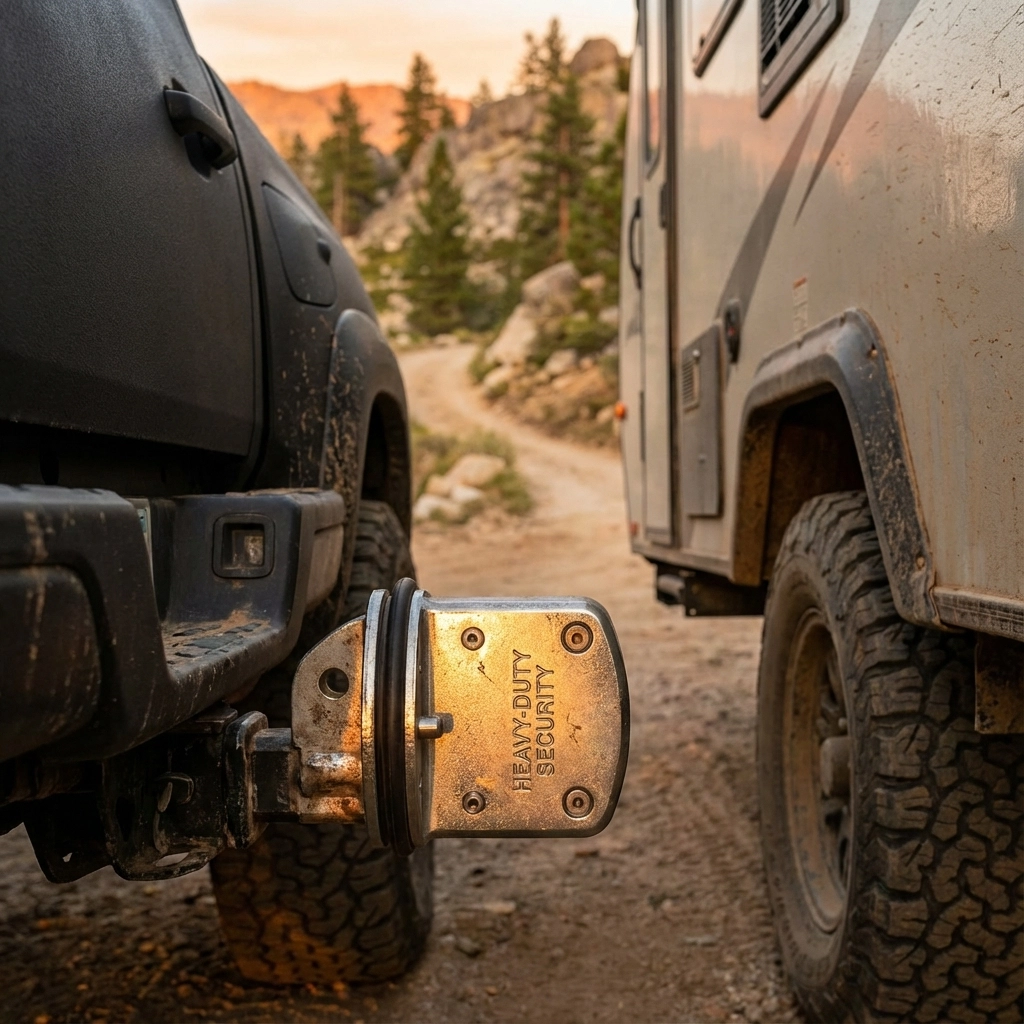
An off-road trailer hitch lock is a specialized security device designed to prevent unauthorized disconnection of your trailer from the towing vehicle. Unlike standard recreational vehicle locks, these heavy-duty mechanisms must withstand extreme vibration, temperature fluctuations, and corrosive environments common in backcountry adventures.
The fundamental difference between off-road and standard hitch locks lies in construction tolerances and materials. Off-road locks feature tighter manufacturing tolerances to eliminate play that could cause failure under constant vibration, hardened steel construction to resist cutting tools, and weather-sealed lock cylinders to function in mud, sand, and extreme temperatures.
Key characteristics include reinforced pin mechanisms, corrosion-resistant coatings, and shock-absorbing designs that maintain security integrity during rough terrain travel. For comprehensive trail preparation, consider reviewing our camping in high winds safety guide for additional security considerations in challenging conditions.
Why Off Road Trailers Are High-Risk for Theft
Off-road trailers present attractive targets for thieves due to their typical usage patterns and environments. Unlike campground RVs with constant supervision, off-road trailers are frequently left unattended at remote trailheads, hunting camps, and dispersed camping sites for extended periods.
Common theft scenarios include:
Trailhead Abandonment: Hikers, hunters, and anglers often leave trailers at remote access points for days or weeks, providing ample opportunity for theft without witnesses.
Quick Disconnection Methods: Experienced thieves can disconnect an unsecured trailer in under two minutes using basic tools, especially when working without time pressure in isolated locations.
Equipment Value: Off-road trailers typically contain high-value gear including camping equipment, tools, spare parts, and outdoor recreation accessories, making them lucrative targets.
Limited Law Enforcement: Remote areas have minimal police presence, extending response times and reducing theft detection likelihood.
The isolation factor significantly amplifies risk. While campground thefts require stealth and speed, backcountry thefts can occur leisurely without interruption, allowing thieves to defeat even moderately secure locking systems.
Key Terms Explained (Security Definitions)
Understanding security terminology helps evaluate protection options effectively:
Hitch Pin Lock: Replaces the standard removable pin securing your ball mount in the receiver tube with a locking mechanism requiring a key for removal.
Coupler Lock: Secures the trailer coupler (the part that attaches to the hitch ball) preventing connection to any unauthorized towing vehicle.
Hardened Steel: Heat-treated steel with increased resistance to cutting, drilling, and impact compared to standard mild steel construction.
Anti-Drill Design: Lock cylinder protection featuring spinning discs, hardened inserts, or reinforced housings that defeat common drilling attacks.
Weather Resistance vs Corrosion-Proof: Weather resistance indicates basic protection from moisture; corrosion-proof suggests long-term exposure capability to salt, chemicals, and extreme humidity.
Tolerance Specifications: Manufacturing precision affecting how tightly components fit together, critical for preventing rattling and stress failures in off-road applications.
How Off Road Trailer Hitch Lock Security Works
Effective hitch lock security relies on creating multiple failure points for potential thieves while maintaining mechanical integrity under stress. The principle centers on controlled access points rather than simply adding bulk or weight.
Lock Cylinder Protection: Quality off-road locks shield the vulnerable lock cylinder using hardened covers, recessed mounting, or anti-pick mechanisms that resist field tampering attempts.
Structural Integration: Rather than relying on the lock alone, effective designs integrate with the hitch receiver structure, distributing stress across multiple contact points and preventing leverage attacks.
Tight Tolerances Matter More Than Weight: A precisely manufactured lock with minimal internal play will outlast heavier units with loose tolerances. Vibration causes gradual loosening and eventual failure in poorly fitted components.
Anti-Leverage Design: Effective locks minimize exposed surfaces that accept pry bars or cutting tools. The best designs nestle flush against the receiver with minimal tool access points.
Common misconception: Heavier locks provide better security. Reality: Precise fit, quality materials, and intelligent design matter more than raw mass. An oversized lock with poor tolerances will work loose and fail faster than a properly engineered lightweight alternative.
Heavy Duty Trailer Hitch Lock – What to Look For
Selecting appropriate off-road hitch lock security requires evaluating multiple factors beyond basic functionality:
Material Quality Checklist
- Hardened Steel Construction: Minimum Rockwell C50 hardness rating for cutting resistance
- Stainless Steel Components: For long-term corrosion resistance in harsh environments
- Sealed Lock Cylinder: Waterproof and dustproof protection for mechanical components
- Anti-Corrosion Coating: Beyond basic paint – look for zinc plating or powder coating specifications
Fit and Function Requirements
- Precise Receiver Tolerance: Maximum 0.010″ play for 2″ receivers to prevent loosening
- Vibration Resistance: Spring-loaded or dampened mechanisms to absorb road shock
- Temperature Range: Operating specifications for -40°F to +120°F conditions
- Coupler Compatibility: Verification of fit with your specific trailer coupler design
Security Features Priority
- Anti-Pick Lock Cylinder: Disc detainer or high-security pin tumbler design
- Hardened Shackle Protection: Cut-resistant materials and minimal exposed surfaces
- Tool-Resistant Housing: Rounded surfaces and recessed mounting to prevent leverage attacks

Best Off Road Trailer Hitch Lock Security Practices
Effective trailer security extends beyond lock selection to encompass positioning, visibility, and layered protection strategies:
Multi-Point Security: Combine hitch locks with wheel locks and coupler protection for comprehensive coverage. Single-point failures are common; redundant systems significantly increase theft deterrence.
Strategic Positioning: Park with the hitch end facing toward camp or against natural barriers when possible. This improves visibility and complicates access for potential thieves.
Visual Deterrence: Bright-colored locks or security stickers signal active protection, often encouraging thieves to seek easier targets. However, balance visibility with avoiding advertising valuable contents.
Terrain Utilization: Use natural features like large rocks, trees, or ditches to limit trailer movement even if security is defeated. Position trailers where escape routes require significant maneuvering.
Community Security: When camping with groups, arrange trailers in defensive positions with shared sight lines. Social pressure and multiple witnesses significantly reduce theft attempts.
For extreme weather preparation that complements security planning, reference our dispersed camping guide for comprehensive backcountry strategies.
How to Use a Trailer Hitch Lock Correctly
Proper installation and operation ensure maximum security effectiveness while preventing premature lock failure:
Pre-Installation Check
- Clean Receiver Tube: Remove dirt, grease, and debris that prevent proper seating
- Inspect Pin Hole Alignment: Verify straight holes without damage or enlargement
- Test Fit Without Lock: Ensure ball mount inserts and removes smoothly
- Check Weight Rating: Confirm lock capacity matches or exceeds tongue weight
Correct Locking Procedure
- Insert Ball Mount Fully: Ensure complete seating with no gap at receiver face
- Align Pin Holes: Verify perfect alignment before forcing lock pin insertion
- Insert Lock Pin Gradually: Avoid forcing; misalignment indicates positioning problems
- Secure and Test: Lock mechanism and attempt removal to verify proper engagement
Common Installation Errors
- Excessive Gap: Space between ball mount and receiver indicates improper seating
- Lock Cylinder Exposure: External-facing cylinders invite tampering attempts
- Over-Torquing: Excessive force during installation can damage internal components
- Neglected Maintenance: Dirt accumulation causes binding and eventual lock failure
Regular cleaning with dry lubricant and periodic operation maintains smooth function and prevents corrosion buildup that could trap the lock in place.
Case Scenarios: Real-World Security Applications
Understanding practical applications helps determine appropriate security levels for different situations:
Solo Remote Camping
Risk Level: Highest due to isolation and single-person vulnerability
Recommended Security: Multi-point locking with hitch lock, coupler lock, and wheel immobilization
Key Consideration: Quick deployment for emergency departure while maintaining overnight security
Time Investment vs Protection: 10-15 minutes setup time for 24-48 hour unattended protection
Group Overlanding Expeditions
Risk Level: Moderate due to multiple vehicles and shared surveillance
Recommended Security: Hitch lock primary protection with visual deterrence
Key Consideration: Balance individual security with group movement coordination
Social Deterrence Factor: Multiple witnesses significantly reduce theft probability
Extended Trailhead Storage
Risk Level: Variable based on location traffic and seasonal patterns
Recommended Security: Maximum protection including locks, positioning, and concealment
Key Consideration: Long-term weather exposure requires enhanced corrosion protection
Discovery Prevention: Position to minimize visibility from roads or popular trails
Security effectiveness increases exponentially with layered approaches rather than linear improvements from single upgrades.
FAQ – Off Road Trailer Hitch Lock Security
Are hitch locks effective against determined thieves?
Hitch locks significantly increase theft difficulty and time requirements, deterring opportunistic theft effectively. Professional thieves with power tools can defeat any lock, but the noise, time, and effort required often redirect them to easier targets. Combining hitch locks with additional security measures creates sufficient deterrence for most scenarios.
Is a coupler lock better than a hitch pin lock for off-road use?
Both serve different purposes and work best together. Hitch pin locks protect attached trailers during travel and short stops. Coupler locks secure unhitched trailers during camp setup or extended storage. Off-road conditions benefit from using both types for comprehensive protection.
Can off-road vibration damage hitch locks over time?
Standard locks may suffer premature failure from constant vibration, but quality off-road rated locks incorporate dampening mechanisms and precise tolerances to handle severe conditions. Regular inspection and maintenance prevent most vibration-related problems.
Should I lock my trailer when it’s attached to my vehicle?
Yes, especially during fuel stops, restaurant visits, or overnight camping. Attached trailers can be stolen faster than starting a vehicle – thieves can disconnect and escape within minutes if no security measures exist.
How do I secure a trailer in completely remote campsites?
Layer multiple security types: hitch locks, coupler locks, wheel immobilization, and strategic positioning. Use terrain features to complicate theft attempts. Consider GPS tracking devices for recovery assistance if primary security fails.
Off-road trailer security requires adapting standard practices to unique environmental challenges while maintaining practical usability for legitimate users. The investment in proper security measures protects both equipment and peace of mind during backcountry adventures.

