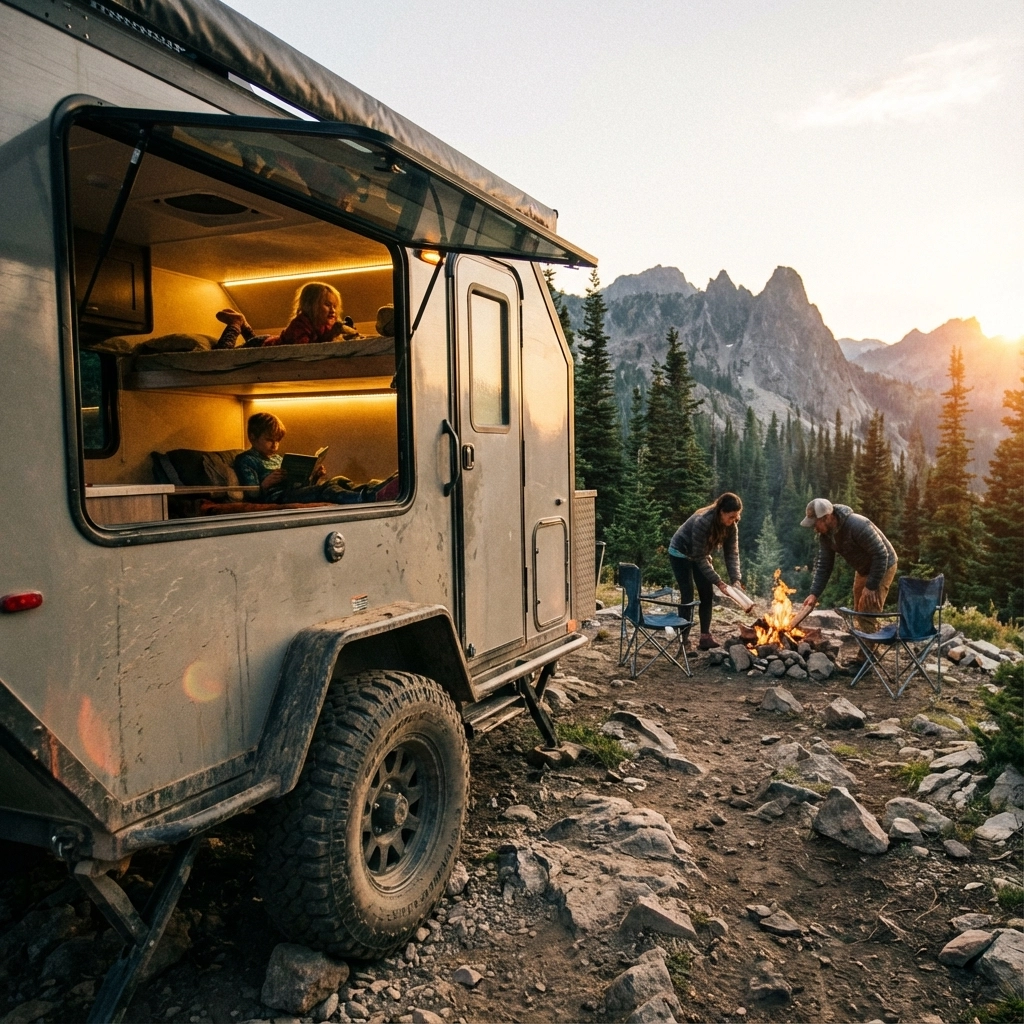
Off-road bunkhouse travel trailers aren’t just regular RVs with bunk beds. The key differences lie in reinforced chassis, independent suspension systems, and family-focused interior layouts designed for both children’s safety and serious terrain capability. True family off-road campers must excel at keeping kids secure while accessing remote destinations that standard trailers simply can’t reach.
What Is an Off Road Bunkhouse Travel Trailer?
An off road bunkhouse travel trailer combines rugged terrain capability with dedicated sleeping quarters that typically feature stacked bunk beds, separate from the main sleeping area. Unlike standard bunk bed travel trailers designed for paved campgrounds, these units integrate reinforced frames, higher ground clearance, and independent suspension systems to handle rocky trails, sandy beaches, and uneven terrain.
The most common configurations include rear bunks (bunks positioned at the trailer’s back) and side bunks (along the trailer’s sidewall). These layouts create distinct zones within the trailer, allowing parents and children separate sleeping areas even in compact floor plans.
For families seeking versatile camping solutions, understanding how off-road kitchen setups integrate with bunkhouse designs becomes crucial. Additionally, families planning extended remote stays should consider boondocking capabilities when selecting their ideal family off road camper trailer with bunks.
Why Families Choose Bunk Bed Off Road Campers
Independent Sleep Zones Reduce Conflicts
Family camping dynamics improve dramatically when children have dedicated sleeping spaces separate from adults. Bunkhouse layouts eliminate the need for converting dinettes or cramming multiple sleeping bags into shared spaces, reducing nighttime disruptions and allowing different family members to maintain varying schedules.
Access to Remote Family Destinations
Off road travel trailers with bunk beds open access to destinations impossible with standard RVs: dispersed camping sites in national forests, remote beach access points, and backcountry trails where families can experience true wilderness without sacrificing sleeping comfort.
Weather Protection and Extended Stays
During inclement weather or multi-day stays, bunkhouse trailers provide structured indoor spaces where children can play, rest, and maintain routines. The dedicated bunk area serves as a retreat space, while adults can utilize common areas without constant space conflicts.
Modern families often incorporate technology and work flexibility into their adventures. Those interested in combining remote work with family travel should explore digital nomad RV setups, while understanding proper leveling techniques ensures comfort regardless of terrain.
Key Terms Explained
Bunkhouse vs Bunk Bed: A bunkhouse refers to the dedicated room or area containing bunks, while “bunk bed” describes the specific sleeping furniture. Bunkhouse layouts typically include storage, privacy features, and sometimes entertainment options.
Dry Weight vs GVWR: Dry weight represents the trailer’s empty weight, while Gross Vehicle Weight Rating (GVWR) indicates maximum safe loaded weight including cargo, water, and passengers.
Independent Suspension: Each wheel moves independently rather than being connected by a solid axle, providing better ride quality and terrain following capability.
Articulating Hitch: A hitch system allowing the trailer to flex independently from the tow vehicle, crucial for maintaining stability over uneven terrain.
All-Terrain Chassis: Reinforced frame construction designed specifically for off-road use, incorporating stronger materials and strategic reinforcement points.
Off Road vs Standard Bunkhouse Trailers
What to Look for in a Best Off Road Camper Trailer for Families
Essential Checklist for Family Off-Road Capability
Reinforced Frame & Suspension: Look for independent suspension with multiple shock absorbers per wheel. The frame should feature reinforced mounting points and galvanized or aluminum construction for corrosion resistance.
Secure Bunk Access: Ladders must be permanently mounted with anti-slip rungs. Safety rails should be minimum 6 inches high with secure mounting hardware that won’t loosen under vibration.
Family Storage Solutions: Bunk areas need individual storage cubbies, reading lights, and personal item organization. Common areas require toy storage, gear organization, and easy-access compartments for daily essentials.
Off-Grid Water Capacity: Minimum 30-gallon freshwater capacity allows extended stays without hookups. Look for efficient pump systems and multiple water access points.
Power Independence: Lithium battery systems with solar charging capability provide quiet, extended power for lighting, fans, and device charging without generator dependence.

Best Layouts for Family Off Road Travel Trailers
2-Bunk Rear Configuration
Ideal for families with 1-2 children, rear bunks provide privacy while maintaining open common areas. This layout typically offers the most storage space and easiest access to bunks.
4-Bunk Side Layout
Perfect for larger families or those hosting friends, side bunks maximize sleeping capacity while preserving rear space for gear storage or entertainment areas.
Convertible Bunk Systems
These innovative designs allow bunks to fold or convert into seating during daytime hours, creating flexible living spaces that adapt to family activities and weather conditions.
Dinette + Bunk Hybrid
Combining a traditional dinette with dedicated bunks provides the best balance of dining space and sleeping capacity, though requires more overall trailer length.
How Families Actually Use Bunkhouse Off Road Trailers
Daytime: Activity and Storage Zones
During active hours, bunk areas often serve as quiet spaces for reading, gaming, or napping while adults prepare meals or organize gear. Lower bunks frequently become staging areas for daily clothing and personal items.
Nighttime: Privacy and Sleep Quality
Separate sleeping zones allow different bedtimes and wake schedules. Parents can read, plan routes, or enjoy adult conversation without disturbing children’s sleep patterns.
Weather Days: Indoor Activity Management
Extended rain or extreme temperatures require thoughtful space utilization. Successful families designate specific areas for different activities: crafts at the dinette, quiet time in bunks, and games in open floor areas.
Common Mistakes When Choosing a Bunk Bed Off Road Camper
Focusing Only on Sleep Count
Many families prioritize maximum sleeping capacity over actual usability. A cramped 6-person trailer often provides less comfort than a well-designed 4-person layout with adequate storage and movement space.
Ignoring Weight and Towing Compatibility
Off road bunkhouse travel trailers typically weigh more than standard units due to reinforced construction. Ensure your tow vehicle can safely handle loaded weight, not just dry weight specifications.
Overlooking Child Safety Features
Standard bunk ladders and minimal safety rails that work fine in stationary campgrounds become dangerous on uneven terrain. Prioritize trailers designed specifically for movement and vibration.
Mistaking “Rugged Appearance” for True Off-Road Capability
Aggressive styling doesn’t equal off-road performance. Focus on suspension systems, ground clearance, and structural reinforcement rather than cosmetic features.
FAQ – Off Road Bunkhouse Travel Trailers
Are bunk beds safe in off-road travel trailers?
Yes, when properly designed with reinforced mounting, secure ladders, and adequate safety rails. Off-road bunkhouse trailers incorporate stronger attachment points and vibration-resistant hardware compared to standard RV bunks.
How many kids can an off-road bunkhouse trailer sleep?
Typical configurations sleep 2-4 children in dedicated bunk areas, plus 2 adults in the main sleeping area. However, comfort and storage space often matter more than maximum capacity for extended trips.
Can bunkhouse trailers really go off road?
Quality units absolutely can, provided they feature independent suspension, adequate ground clearance, and reinforced construction. The key is distinguishing between cosmetically “rugged” trailers and truly capable off-road designs.
What tow vehicle is needed for a family off-road trailer?
Most off-road bunkhouse trailers require trucks or large SUVs with 6,000+ pound towing capacity. Factor in payload for passengers, gear, and trailer tongue weight when calculating requirements.
Is an off-road bunkhouse worth it over a standard trailer?
For families planning remote camping, accessing dispersed sites, or seeking destinations beyond paved campgrounds, the investment pays dividends in expanded possibilities and family memories.
For ongoing trailer maintenance, understanding hitch system care and addressing issues like tank odors ensures your family adventures remain comfortable and worry-free.
Why BlackSeries Builds Family-Ready Off Road Trailers
BlackSeries approaches bunkhouse design with equal emphasis on structural integrity and family functionality. Rather than adding bunks to existing off-road platforms, our engineering team designs integrated systems where safety features, storage solutions, and terrain capability work together seamlessly.
Our family-focused philosophy recognizes that true off-road bunkhouse trailers must protect children while enabling parents to access remarkable destinations. Every structural decision, from reinforced bunk mounting to strategically positioned storage, serves the goal of expanding family adventure possibilities without compromising safety or comfort.
The result: trailers that don’t just accommodate children, but actively enable families to explore further, stay longer, and create lasting memories in places that standard RVs simply cannot reach.

