Secret destination access means reaching remote viewpoints, dispersed camping zones, and off-grid terrain that standard RVs and resort travelers cannot access. It’s the difference between staring at a neighbor’s generator in a crowded park and waking up to a private sunrise over a canyon.
Why Iconic Destinations Feel Overcrowded
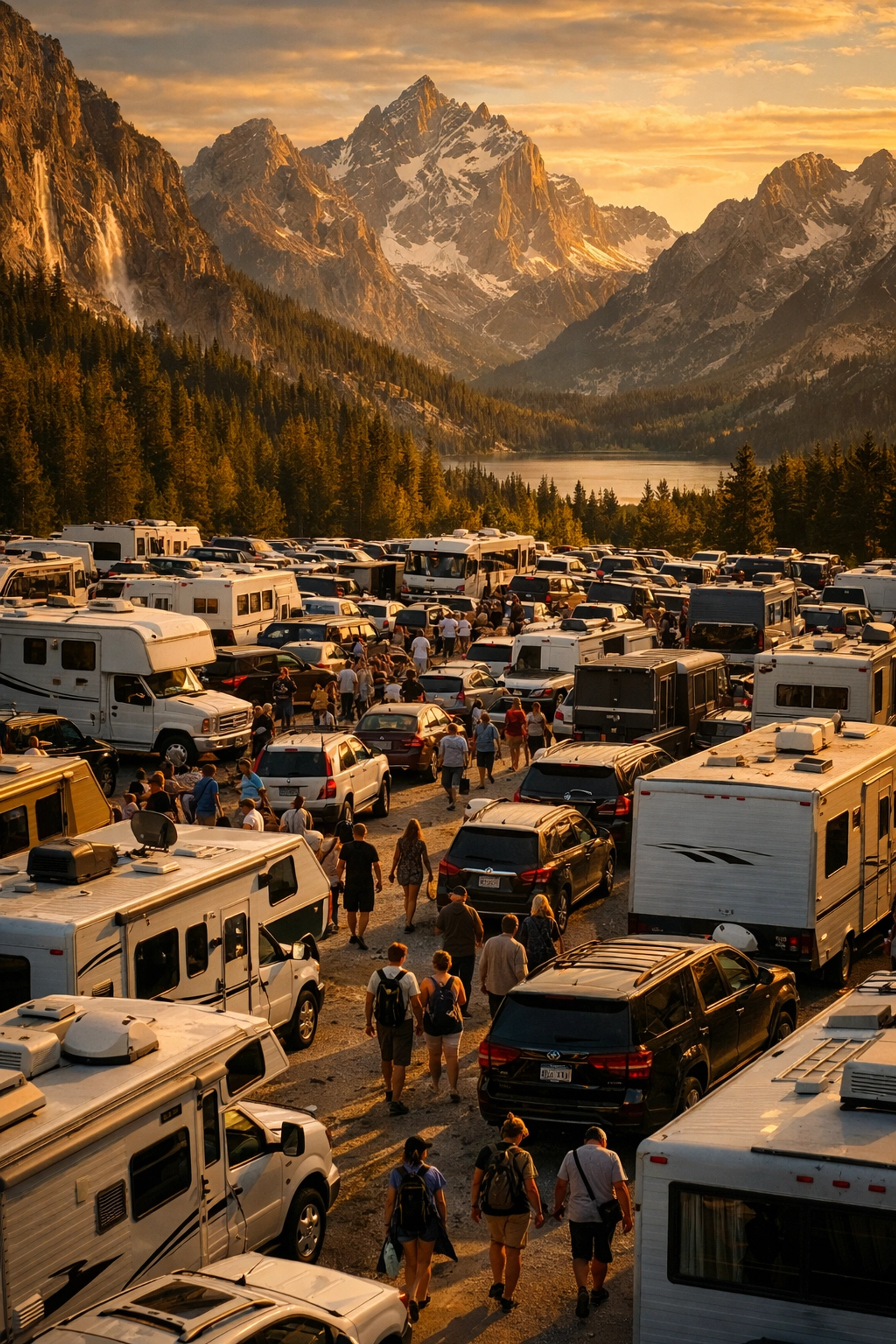
National Parks in the U.S. are seeing record-breaking visitation, and the infrastructure simply hasn’t kept pace. Yellowstone logged over 4.5 million visitors in 2023. Yosemite? Nearly as many. Arches National Park now requires timed entry permits that book out months in advance.
The Problem: Limited campground capacity, reservation systems booked solid, and “tourism clustering” around the same five viewpoints.
The Result: Traffic jams in the middle of nature. RV parks with hookups crammed side-by-side. Zero privacy. Zero silence.
If you’ve ever driven two hours into Yellowstone only to find the parking lot at Old Faithful looks like a Costco on Saturday morning, you know what we’re talking about.
What Are the “Secret” Sides?
There’s a whole world outside the park gates, and most people never see it.
BLM Dispersed Land: The Bureau of Land Management oversees over 245 million acres of public land. Much of it is open for free camping, with no reservations required.
Forest Service Roads: National Forests allow dispersed camping on thousands of miles of unpaved roads. These routes lead deep into backcountry zones where cell service disappears, and so do the crowds.
Remote Ridge Viewpoints: High-clearance access roads lead to overlooks that rival the famous parks, but without the tour buses.
Off-Grid Desert Basins: Utah, Nevada, Arizona, these states have vast expanses of open desert where you can camp legally and privately.
Backcountry Trailheads: Where the pavement ends, the real adventure begins.
Important note: Always verify local regulations. Most BLM and National Forest land allows 14-day stays in dispersed areas, but fire restrictions, vehicle limitations, and seasonal closures apply. Use apps like Gaia GPS or OnX Offroad to confirm legal boundaries.
How to Access Hidden Camping Spots (Step-by-Step)
Getting to these secret locations isn’t just about courage, it’s about preparation.
1. Research Maps: Download offline maps using apps like Gaia GPS, OnX Offroad, or the free Motor Vehicle Use Maps (MVUMs) from the U.S. Forest Service. These show which roads are open to vehicles and which terrain requires permits.
2. Check Road Conditions: Call the local ranger district or BLM office before heading out. Washboard roads, water crossings, and steep grades can destroy a standard trailer’s suspension, or worse, leave you stranded.
3. Evaluate Your Rig: Does your off-road travel trailer have the clearance, suspension, and frame strength to handle 10 miles of rocky trail? If you’re towing a wood-framed box with leaf springs, the answer is probably no.
4. Ensure Off-Grid Power & Water Capacity: You won’t find hookups out here. Make sure your off-grid RVs with solar and lithium batteries are topped off, and that you’re carrying at least 50–75 gallons of fresh water for a week-long trip.
5. Follow Leave No Trace Principles: Pack it in, pack it out. Use established fire rings. Stay on designated roads. Respect closures. The privilege of secret access comes with the responsibility of preservation.

Why Standard Travel Trailers Can’t Reach These Locations
Not all RVs are created equal. Most mass-market travel trailers are designed for paved RV parks, not for the kind of terrain that leads to the best views.
Standard RVs bottom out on rough roads. Their frames flex and crack under stress. Their electrical systems run dry after one night without hookups. And their interiors? Designed for mild weather and paved sites.
If you want secret destination access, you need a rig that’s built for punishment, not just for parking.
Off-Road RV for Remote Destinations – What Matters Most
The Black Series HQ19 and HQ12 were designed specifically for this kind of exploration.
Independent Trailing Arm Suspension: Dual shocks on each wheel absorb impacts that would shake a standard trailer apart. Whether you’re crossing a cattle guard or navigating a rocky descent, the suspension keeps your gear, and your sanity, intact.
Hot-Dipped Galvanized Chassis: The frame is armor. Not just powder-coated steel, but fully galvanized to resist rust, corrosion, and the kind of abuse that comes from driving through creek beds and mud pits.
Off-Grid Autonomy: With 75+ gallon water systems, 300–600W solar arrays, and integrated lithium battery banks, you can stay off-grid for 5–7 days without rationing water or worrying about dead batteries.
Four-Season Insulation: Composite body panels keep you warm in Wyoming winters and cool in Arizona summers. No condensation. No drafts. Just consistent comfort.
Compact, Capable Design: The 16 ft camper weight and 18 ft camper weight classes (around 4,500–5,500 lbs dry) mean you can tow with a mid-size truck, yet still pack the features of a much larger rig.
Case Examples – Secret Access in Iconic Regions
Let’s get specific.
Utah (Moab BLM Land): While the Arches parking lot is full and the Delicate Arch trail is gridlocked, an HQ12 can navigate Forest Road 128 along the Colorado River, leading to rock-rimmed plateaus with unobstructed views of the La Sal Mountains. Sites are first-come, first-served, and often, completely empty.
Wyoming (Yellowstone Perimeter): Skip the $80/night “resort” inside the park. The Bridger-Teton National Forest surrounds Yellowstone and offers hundreds of dispersed sites within 30 minutes of the park gates. Pull off a forest road, level out, and watch elk graze at dawn.
California Sierra Backroads: High-altitude lakes like those near Sonora Pass or Ebbetts Pass are accessible only via narrow, winding forest roads. The average weight of camper rigs over 7,000 lbs simply can’t navigate these tight turns. But a compact, rugged trailer? No problem.
Idaho Sawtooth Wilderness: This underrated gem features jagged granite peaks and turquoise alpine lakes with far fewer visitors than Colorado or Wyoming. Forest roads lead to primitive sites near Redfish Lake and Stanley, where you’ll have dark skies and natural hot springs all to yourself.
Gila National Forest, New Mexico: Remote, rugged, and steeped in history. Dispersed sites near the Gila Cliff Dwellings offer access to canyons, hot springs, and trails that see a fraction of the traffic compared to New Mexico’s more famous parks.
Best Travel Trailer for Off-Grid Exploration Checklist
Before you head out, make sure your rig checks these boxes:
- High-clearance chassis (12″+ ground clearance minimum)
- Off-grid electrical autonomy (3–7 days minimum with solar and lithium)
- Four-season insulation for desert nights and mountain mornings
- Durable, compact construction for tight trails and rough terrain
- Fresh water capacity of at least 50–70 gallons
- Independent suspension to handle washboard roads and rocky terrain
- Corrosion-resistant frame (galvanized steel, not just painted)
If your current trailer doesn’t meet these standards, you’re limited to paved sites and crowded parks. Which means you’re missing out on the best camping in America.
FAQ
Is dispersed camping legal?
Yes, on most BLM and National Forest land for up to 14 days. Always check local regulations, as some areas have seasonal closures or vehicle restrictions.
Can you camp outside national parks?
Absolutely. The “buffer zones” around parks: like the National Forests surrounding Yellowstone, Yosemite, and Grand Teton: often have the best free camping with easier access and fewer crowds.
What is BLM land?
Public land managed by the Bureau of Land Management, open for various recreational uses including camping, hiking, and off-roading. Most BLM land is free to access.
Do you need 4WD to access hidden spots?
Not always, but high clearance and an off-road travel trailer with independent suspension are essential. Four-wheel drive helps, but ground clearance and suspension matter more.
How much water capacity is required?
For a week off-grid, look for at least 50–70 gallons. The HQ12 and HQ19 both exceed this, giving you flexibility to stay longer without resupply runs.
What about the weight of these off-road trailers?
The average travel trailer weights for off-road models range from 4,500 lbs (HQ12) to around 6,500 lbs (HQ19) dry weight. This means they’re towable by most 1/2-ton and 3/4-ton trucks without needing a heavy-duty diesel.
Secret destination access isn’t just a dream: it’s a capability. With the right equipment, preparation, and mindset, you can leave the crowds behind and discover the side of America that most travelers never see. The Black Series HQ12 and HQ19 are built specifically for this mission: rugged enough to get there, comfortable enough to stay, and autonomous enough to make it all worthwhile.
Ready to escape the crowds? Explore Black Series off-road trailers and start planning your next secret destination.

