An off-grid RV can recover its added system cost within 2–4 years by eliminating campground fees, reducing fuel generator use, and increasing long-term resale value. For serious adventurers, the “independence tax” of buying high-end solar and lithium setups actually pays for itself faster than most people realize.
Let’s break down the real numbers behind off-grid capability, and why it’s more than just a luxury feature.
What Does “Off-Grid Capability” Actually Include?
To get a true return on investment, your rig needs to be more than just “solar-ready.” A genuine off-grid setup like those found in the Black Series HQ19 or HQ12 includes:
- Solar Power: 300W–600W roof-mounted panels that generate real power in varied conditions
- Battery Bank: High-capacity lithium (LiFePO4) batteries with 3,000–5,000 cycle lifespans
- Inverter System: To run your 110V appliances without needing a plug
- Water Capacity: Large freshwater tanks (often 50+ gallons) to extend your stays
- Insulation: Four-season composite walls to save on heating and cooling energy
- Independent Suspension: This is key for ROI because it lets you access “free” BLM land that standard trailers can’t reach
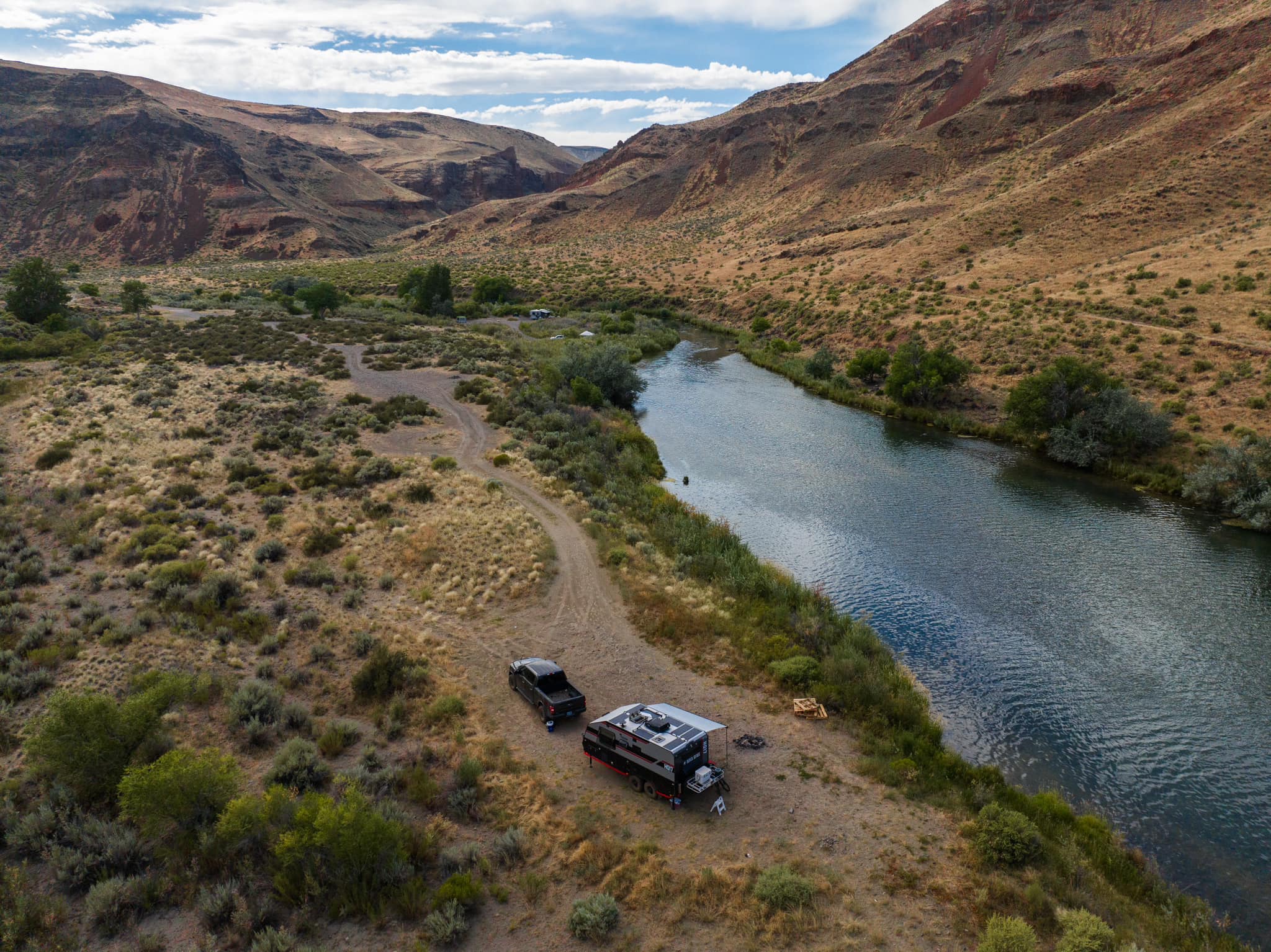
The suspension point matters more than most people think. A trailer that can only handle paved roads limits you to paid campgrounds. A rugged off-road travel trailer opens up millions of acres of free federal land.
Campground Fees vs. Boondocking – The Real Numbers
Let’s look at the average nightly costs across the U.S.:
- Average RV Park: $45–$90 per night
- National Park Hookup: $30–$60 per night
- Private Resorts: $80–$120 per night
The Calculation:
If you camp 60 nights per year and pay an average of $55/night, your annual cost is $3,300.
Over 3 years, that’s $9,900, which essentially covers the entire premium for a high-end solar and lithium package. After year three, your “rent” drops to zero.
Now compare that to boondocking on Bureau of Land Management (BLM) or National Forest land, which is 100% free. The math isn’t complicated. The more you camp off-grid, the faster your system pays for itself.
Generator Fuel vs. Solar ROI
Most RVers don’t realize how much their portable generator actually costs them. Let’s break it down:
By ditching the generator, you save roughly $3,000–$6,000 in fuel and maintenance over 5 years. And that’s not even counting the freedom to camp in quiet-hours zones or the mental peace of not hearing that constant hum.

Solar panels typically last 25+ years, while quality lithium batteries are rated for 3,000–5,000 cycles, which translates to 10+ years of reliable service. That’s a dramatically better investment than constantly feeding a gas-powered generator.
How Off-Grid Capability Increases Resale Value
Here’s something dealers won’t always tell you: an off-road travel trailer with factory-installed lithium systems depreciates much slower than a standard “sticks-and-tin” camper.
Why?
- Tech Demand: Buyers in 2026 and beyond are specifically searching for off-grid RVs with solar and lithium batteries. It’s become a must-have feature, not a luxury add-on.
- Durability: Rugged builds like Black Series retain value because the chassis doesn’t rattle apart on washboard roads. You’re not just selling a camper, you’re selling proven capability.
- Premium Positioning: When you compare average travel trailer weights and build quality, off-grid models command a 15-20% higher resale premium.
Think of it this way: a $12,000 solar and lithium upgrade might add $15,000–$18,000 to your resale value three years later. That’s not just cost recovery, that’s profit.
ROI Timeline – When Does It Break Even?
Your payback period depends entirely on how you use your RV. Here are three real-world scenarios:
1. The Weekend Camper (20 nights/year)
- Annual savings: ~$1,100 in campground fees
- Breaks even in: 4–5 years
2. The Frequent Traveler (50–80 nights/year)
- Annual savings: ~$2,750–$4,400
- Breaks even in: 2–3 years
3. The Remote Worker / Full-Timer
- Annual savings: ~$6,000+ in campground fees plus generator costs
- Breaks even in: 1.5–2 years
The numbers get even better when you factor in avoided generator maintenance, the ability to work remotely from anywhere with reliable power, and the resale premium we mentioned earlier.
Best Off-Grid Travel Trailer for Long-Term Savings
The Black Series lineup is specifically engineered for ROI. Higher water capacity means fewer trips to town for refills. Composite walls mean your furnace isn’t running 24/7 in winter or your AC working overtime in summer.
When you factor in the average weight of camper models in our lineup, you’re also looking at efficient towing compared to massive, heavy fifth-wheels. Less weight means better fuel economy, which adds up over thousands of miles.
Our independent trailing arm suspension isn’t just about comfort, it’s about access. You can reach remote BLM campsites that save you $50–$90 per night compared to developed campgrounds. Over a season, that’s thousands of dollars back in your pocket.
Checklist – How to Calculate Your Own Off-Grid ROI
Want to run your own numbers? Here’s the framework:
- Estimate your annual camping nights (be realistic)
- Multiply by $60 (a safe average for park fees in 2026)
- Add $800/year for estimated generator fuel and maintenance
- Compare that total against your “Off-Grid Package” price
- Factor in the 15-20% higher resale premium you’ll get later
For most frequent campers, the math works out strongly in favor of investing upfront in quality solar and lithium systems rather than paying campground rent forever.
FAQ
How long does an RV solar system last?
Solar panels typically last 25 years with minimal degradation. Lithium batteries are rated for 3,000–5,000 cycles, which translates to 10–15+ years depending on usage patterns.
Is boondocking really free?
On Bureau of Land Management (BLM) and National Forest land, dispersed camping is 100% free for up to 14 days in most areas. You just need a rig capable of accessing those locations.
Does a lithium battery increase resale value?
Absolutely. It’s one of the most requested upgrades in the used RV market. Factory-installed lithium systems can add 15-20% to your resale price.
Can off-grid RVs run air conditioning?
Yes. With enough lithium capacity (200Ah+) and a soft-start A/C unit, you can run climate control without a generator. Most quality systems handle 4–6 hours of A/C on battery alone.
What is the average campground cost in the US?
As of 2026, standard hookup sites range from $45–$75 per night, with premium resorts charging $80–$120. National park campgrounds typically run $30–$60.
The Bottom Line: Off-grid capability isn’t just about adventure: it’s about financial independence. Whether you’re avoiding campground fees, eliminating generator costs, or increasing your resale value, quality solar and lithium systems deliver measurable returns. For serious RVers who understand the benefits of living an RV lifestyle, the investment pays for itself faster than most traditional upgrades.
The question isn’t whether off-grid systems are worth it. It’s whether you can afford to keep paying someone else for the same camping spots you’ve been using for years.

