Rugged off-road glamping is growing because consumers want luxury without limitations, combining overland capability, off-grid systems, and hotel-level comfort in remote terrain. It’s the evolution of camping where you no longer have to choose between a hot shower and a view that isn’t blocked by another RV.
The shift is real. According to industry reports, the luxury off-road RV market has experienced notable growth, with manufacturers increasingly combining high-end amenities with rugged off-road capabilities to serve affluent adventurers. This segment now ranges from vehicles priced at $44,500 to over $1 million, featuring everything from handcrafted leather interiors to advanced suspension systems and self-contained power infrastructure.
The $8 Billion Glamping Boom – What’s Driving It?
The glamping market isn’t just growing, it’s exploding. Current projections show the global glamping industry reaching massive valuations by 2030, with North America leading the charge.
The Post-Pandemic Shift: People aren’t just looking for “outdoors” anymore; they’re looking for “seclusion.” The pandemic fundamentally changed how we think about travel and personal space. Suddenly, sharing a communal bathroom at a resort doesn’t sound as appealing as having your own self-contained unit in the middle of nowhere.
Demographics Matter: Millennials and Gen Xers with high disposable income are ditching traditional hotels for experiential travel. This isn’t your grandfather’s camping trip. These are professionals who spent years grinding in offices and now want their weekends to mean something, without sacrificing comfort.
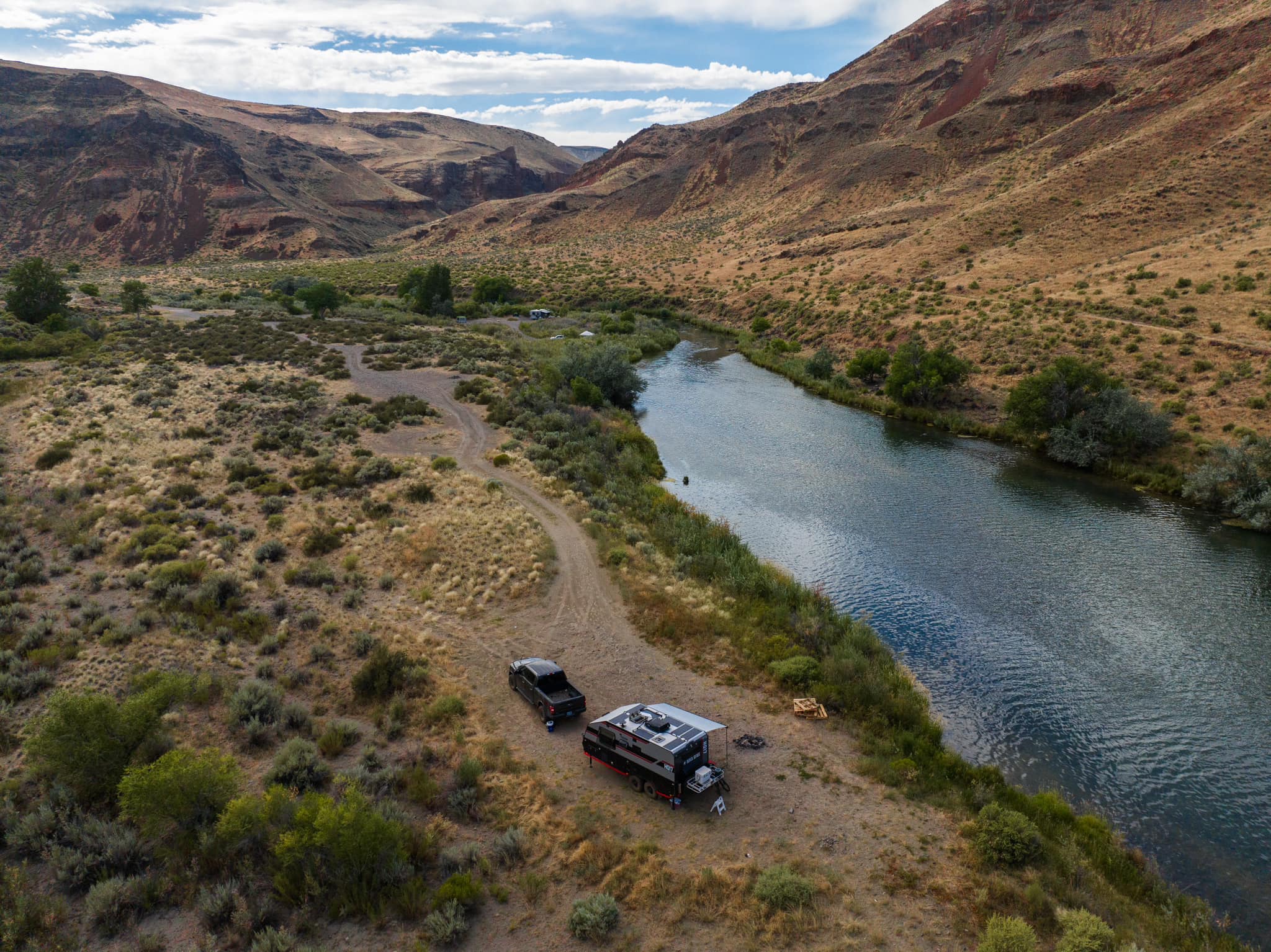
National Park Overcrowding: With popular National Parks reaching capacity and requiring reservations months in advance, savvy travelers are discovering dispersed camping on BLM (Bureau of Land Management) land. This public land offers millions of acres where you can legally camp for free, if you have the right equipment.
The Overlanding Culture: What started as a niche hobby among off-road enthusiasts has evolved into a mainstream luxury movement. The term “overlanding” used to mean dusty adventures in modified 4x4s. Now it means accessing remote locations while maintaining the creature comforts of a boutique hotel.
Why Traditional Glamping Resorts Are Losing Appeal
Fixed resorts are great until you realize you’re still stuck in one spot with shared amenities and none of the freedom that drew you to camping in the first place.
The math is simple: Pay $300/night at a glamping resort for a season, or invest in an off-road travel trailer that you own and can take anywhere, anytime.
What Is Rugged Off-Road Glamping?
It’s not just a fancy tent on a platform. True rugged glamping requires engineering that most traditional RVs simply don’t have.
Hard-Wall Construction: Canvas might work for summer weekends, but it won’t handle a Colorado winter or a Utah summer. Composite hard walls provide real insulation with R-values that keep you comfortable year-round.
Independent Suspension: This is where the “rugged” comes in. Independent trailing arm suspension allows each wheel to move independently, absorbing impacts from rocks, ruts, and washboard roads that would tear apart a standard travel trailer.

Power Independence: Off-grid RVs with solar and lithium batteries aren’t just about being eco-friendly, they’re about freedom. When you can run your air conditioning, microwave, and even a residential refrigerator without plugging in, you’re no longer limited to campgrounds.
Water Capacity: Massive freshwater tanks (75+ gallons) mean you aren’t constantly rationing water or cutting showers short. Combined with efficient gray and black water systems, you can stay out for a week or more.
The Rise of Luxury Overland Campers
The market has responded to this demand with increasingly sophisticated options. High-end examples like the EarthRoamer SX (priced at $1.09 million) feature custom floorplans, 43-inch tires on beadlock wheels, 16,500-pound winches, and lavish interiors designed for extended self-sufficiency.
But you don’t need a seven-figure budget to access this lifestyle. Companies like Oliver, MDC, and Black Series have pioneered the “accessible luxury” segment, trailers that combine military-grade chassis design with high-end interior finishes at price points that make sense for serious adventurers.
The Black Series Difference: While an Airstream is beautiful for highway cruising, it’s essentially a “pavement princess.” A Black Series HQ19 or HQ12 uses a hot-dipped galvanized chassis and independent trailing arm suspension to take that luxury aesthetic into the heart of Moab’s slickrock or the Nevada desert’s backcountry.
Key features include:
- 300W–600W solar packages with lithium battery banks
- Composite body panels that resist denting and corrosion
- 16-inch mud terrain tires for genuine off-road capability
- Enclosed bathrooms with porcelain toilets and hot water showers
- Indoor and outdoor kitchen setups
When you’re comparing options, understanding the average weight of camper models is crucial, especially since many luxury features add significant weight that your tow vehicle needs to handle.
Best Off-Grid Glamping RV Features Checklist
If you’re shopping for the ultimate rig, here’s what separates true off-grid capability from marketing hype:
- High ground clearance: Minimum 16 inches for navigating rough terrain
- All-terrain tires: 16-inch or larger with aggressive tread patterns
- Solar capacity: 300W minimum, with expandable options
- Lithium battery bank: 100Ah minimum, 200Ah+ for extended stays
- Four-season insulation: Composite walls with proper R-value ratings
- Onboard bathroom: Full bathroom with shower, not a porta-potty
- Large water tanks: 75+ gallons fresh, adequate gray and black capacity
- Real kitchen: Not just a cooktop, refrigerator, sink, storage
- Tow vehicle compatibility: Verify the average travel trailer weights against your vehicle’s rating
Case Study – Moab & BLM Land Usage
In places like Utah’s canyon country, “rugged luxury” isn’t just a lifestyle choice, it’s a practical necessity.
The Challenge: Traditional campgrounds around Moab book up months in advance and charge premium rates during peak season. Meanwhile, some of the most stunning viewpoints sit on BLM land that’s completely free and uncrowded.
The Solution: Rugged off-road glamping solves three critical remote camping problems simultaneously:
- Heat Management: Moab can hit 110°F in summer. Without proper insulation and air conditioning that runs on solar power, you’re miserable.
- Water Independence: The nearest water source might be 20 miles away. Large tank capacity means you don’t have to break camp every two days.
- Terrain Access: That perfect cliffside spot overlooking the Colorado River? It’s at the end of a rough 4WD road that would destroy a standard RV.
According to recent RVIA data, dispersed camping on public lands has grown by over 40% in the past five years, with the trend accelerating among high-income demographics who previously favored resort-style accommodations.
Why Black Series Fits the Rugged Glamping Shift
Black Series has been building trailers for the Australian outback for years, terrain that makes American deserts look tame. That engineering expertise translates perfectly to the American backcountry.
HQ19: The flagship model offers hotel-level interiors with genuine off-road capability. With a 30 ft RV weight that’s still towable by modern 3/4-ton trucks, it doesn’t force you to choose between space and portability.
HQ12: For those who want agility on tighter trails, the pop-up design keeps the average weight of camper down to around 4,500 lbs (towable by mid-size trucks) while still offering hard-wall construction and a full bathroom.
Both models share core DNA: hot-dipped galvanized chassis for corrosion resistance, composite construction for weight savings, and electrical systems designed around genuine off-grid use rather than occasional “boondocking.”
For buyers weighing their options, our comprehensive 2025 off-road travel trailer buying guide breaks down the technical specifications that matter for extended remote camping.
Frequently Asked Questions
What is rugged off-road glamping?
Rugged off-road glamping combines extreme off-road capability with luxury interior amenities, think hotel-level comfort in places where traditional RVs can’t go. It requires hard-wall construction, independent suspension, substantial off-grid power systems, and four-season insulation.
Is off-road glamping better than resort glamping?
If you value privacy, mobility, and the ability to change your view every morning, absolutely. Resort glamping ties you to one location with shared facilities. Off-road glamping gives you millions of acres of public land to explore with self-contained luxury.
How much does a luxury off-grid RV cost?
The market ranges from around $45,000 for entry-level off-road trailers to over $1 million for ultra-premium Class A motorhomes. Most serious off-road travel trailers with genuine luxury features fall in the $80,000–$200,000 range, representing a significant but worthwhile investment in durability and capability.
Can you glamp year-round in an off-road RV?
With proper four-season insulation, climate control systems, and off-grid power capability, yes. Black Series trailers feature composite wall construction and heating/cooling systems designed to handle everything from desert summers to mountain winters.
What tow vehicle do I need for off-road glamping?
It depends on the trailer. Lighter models like the HQ12 work with mid-size trucks (Toyota Tacoma, Ford Ranger class). Larger models like the HQ19 require 3/4-ton or heavier trucks. Always verify your vehicle’s towing capacity against both the dry weight and loaded GVWR before purchasing. Check our detailed guide on travel trailer weight for specific recommendations.
The rise of rugged off-road glamping represents more than a trend: it’s a fundamental shift in how we think about outdoor recreation. The ability to access truly remote locations while maintaining modern comforts isn’t just about luxury; it’s about expanding the boundaries of where and how we can explore. As public lands become increasingly valued and traditional campgrounds struggle with overcrowding, the value proposition of self-sufficient, go-anywhere luxury has never been clearer.

