A Slanted Front Facade is a trailer front-end design where the surface angles backward instead of standing vertical. This simple engineering choice makes a significant difference in how air flows around your trailer during highway travel. The result? Lower wind resistance, better fuel economy, and a more stable towing experience across America’s diverse road conditions.
For anyone towing trailers regularly: whether for work, adventure, or cross-country RV trips: understanding how front-end design affects performance can save thousands in fuel costs over time. Studies suggest that aerodynamic front designs can improve fuel economy by 1 to 2 mpg, and the differences become even more pronounced at highway speeds.
In this guide, we break down everything you need to know about slanted front facades: what they are, how they work, and why they represent one of the smartest upgrades for modern trailer owners.
What Is a Slanted Front Facade?
A Slanted Front Facade refers to a trailer’s front panel that angles backward from bottom to top, rather than standing straight up like a wall. This design principle borrows from decades of automotive and aerospace engineering, where reducing frontal area and directing airflow has always been essential for performance.
Definition and Basic Concept
Traditional trailers often feature flat, vertical front ends. While simple to manufacture, these designs act like giant sails on the highway: catching wind and creating significant drag behind the tow vehicle. A slanted front facade changes this equation by allowing air to flow up and over the trailer more smoothly.
The angle typically ranges from 10 to 30 degrees, depending on the trailer type and intended use. This seemingly small adjustment can dramatically reduce the turbulent wake behind the tow vehicle, improving overall system efficiency.
How It Differs from Traditional Vertical Designs
The key difference lies in how each design interacts with oncoming air:
- Vertical front ends force air to make a sharp 90-degree turn, creating high-pressure zones and turbulence
- Slanted facades guide air gradually upward, reducing pressure buildup and smoothing airflow
- Rounded or V-nose designs share similar benefits but may sacrifice interior cargo space
Real-world comparisons show substantial differences. Some owners report up to 50% better fuel economy when comparing aerodynamically optimized trailers to less efficient designs: though results vary based on speed, load, and conditions.
Common Applications in the US Market
Slanted front facades appear across multiple trailer categories:
- Enclosed cargo trailers – Popular for commercial hauling and moving
- RV travel trailers – Essential for long-distance camping trips
- Utility trailers – Used in landscaping, construction, and general transport
- Specialty haulers – Car haulers, equipment trailers, and more
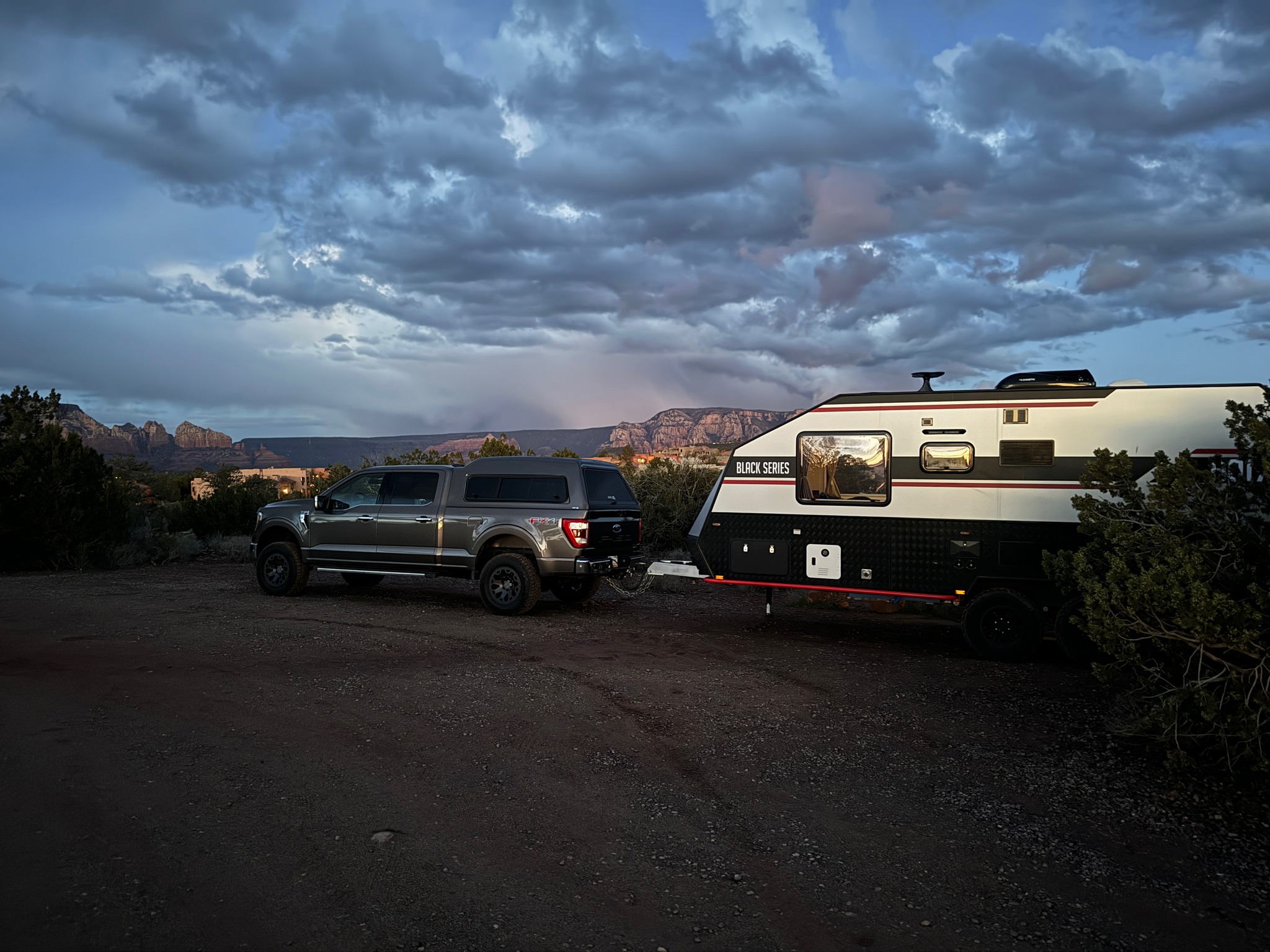
How a Slanted Front Facade Improves Aerodynamics
Understanding the physics behind aerodynamic slanted front facade design helps explain why this upgrade delivers real results.
The Physics of Air Resistance
When a vehicle moves through air, it must push that air out of the way. This requires energy: energy that comes directly from your tow vehicle’s engine and fuel tank. The faster you go, the more energy required, because air resistance increases exponentially with speed.
At 65 mph, aerodynamic drag accounts for a significant portion of the total resistance your tow vehicle must overcome. Any reduction in this drag translates directly to fuel savings.
Reducing Turbulence and Wake
A slanted facade works by:
- Reducing the stagnation point – The area where air pressure builds highest
- Creating smoother flow attachment – Air follows the surface rather than separating
- Minimizing the wake zone – Less turbulent air behind the trailer
- Improving crosswind stability – Angled surfaces deflect side winds more effectively
When air separates from a surface (called flow separation), it creates chaotic turbulence that increases drag. A properly designed slanted front keeps air attached longer, reducing this effect.
Comparison with Other Front-End Designs
The slanted front facade offers an excellent balance: significant aerodynamic improvement without sacrificing too much interior space or requiring complex manufacturing.
Key Benefits of a Slanted Front Facade
The benefits of slanted front facade designs extend beyond simple fuel savings. Here’s what you gain:
Better Fuel Efficiency
This is the headline benefit. By reducing drag, your tow vehicle doesn’t work as hard to maintain highway speeds. Over thousands of miles, even a 1-2 mpg improvement adds up to substantial savings. For commercial operators, this directly impacts the bottom line.
Improved Vehicle Stability
Less aerodynamic interference means:
- Reduced trailer sway in crosswinds
- Better tracking behind the tow vehicle
- More predictable handling during lane changes
- Less driver fatigue on long hauls
Reduced Wind Drag
Lower drag means less strain on your entire towing setup: from the hitch to the suspension to the tires. This can extend component life and reduce maintenance costs over time.
Lower Noise Levels
Turbulent airflow creates noise. A smoother aerodynamic profile means a quieter cabin experience in your tow vehicle, making long trips more comfortable.
More Modern Appearance
Beyond function, slanted facades simply look better. They signal intentional design and engineering consideration: qualities that matter for both personal pride and resale value.

Slanted Front Facade Trailer Design Considerations
Creating an effective slanted front facade trailer design involves more than just angling a panel. Several factors determine success.
Angle Selection
The optimal angle depends on:
- Typical travel speeds – Higher speeds benefit from steeper angles
- Trailer height – Taller trailers may need different approaches
- Interior space requirements – Steeper angles reduce usable cargo volume
- Aesthetic preferences – Visual proportions matter too
Most effective designs use angles between 15 and 25 degrees as a practical compromise.
Structural Strength
An angled surface experiences different stress patterns than a vertical wall. Proper slanted front facade trailer design accounts for:
- Wind load distribution at highway speeds
- Impact resistance for road debris
- Mounting points for accessories
- Long-term fatigue and durability
Material Selection
Common materials include:
- Aluminum alloy – Lightweight, corrosion-resistant, excellent strength-to-weight ratio
- Composite panels – Modern option with good insulation properties
- Fiberglass – Smooth finish, can be molded into complex shapes
- Steel with coatings – Durable but heavier
The BlackSeries Design Philosophy
At BlackSeries, engineering decisions prioritize real-world performance. This means:
- Industrial-grade structural strength that handles off-road punishment
- Durable coatings that resist UV, moisture, and temperature extremes
- Easy-maintenance construction that owners can service themselves
- Aesthetics that complement the rugged, adventure-ready brand identity
Custom Slanted Front Facade Solutions
Not every trailer comes with optimal aerodynamics from the factory. That’s where custom slanted front facade for trailers solutions become valuable.
Custom Sizing Options
Whether you’re upgrading an existing trailer or specifying a new build, custom sizing ensures:
- Perfect fit to your specific trailer model
- Optimal angle for your typical use case
- Integration with existing mounting systems
- No gaps or misalignments that could catch wind
Branding and Color Options
For commercial users, custom facades can incorporate:
- Company logos and graphics
- Brand-specific color matching
- Reflective safety elements
- Professional finishing that builds customer confidence
The BlackSeries Custom Process
Working with BlackSeries on custom solutions typically follows this flow:
- Needs assessment – Understanding your trailer, usage patterns, and goals
- Measurement and evaluation – Ensuring precise fit and compatibility
- Design proposal – Options for materials, angles, and features
- Manufacturing – Built to specification with quality controls
- Installation support – Guidance or professional fitting
Explore our travel trailer options to see how integrated aerodynamic design enhances the complete package.
Is a Slanted Front Facade Worth the Investment?
Let’s look at the numbers objectively.
Cost-Benefit Comparison
Long-Term Value Calculation
Consider a trailer owner who drives 15,000 miles annually at highway speeds:
- Without optimization: Baseline fuel consumption
- With slanted facade: 1-2 mpg improvement
- Annual savings: Potentially $300-600 depending on fuel prices
- Payback period: Often 2-4 years for the upgrade cost
For commercial operators with multiple trailers or higher annual mileage, the numbers become even more compelling.
The Verdict
For anyone who regularly tows at highway speeds, a slanted front facade represents smart engineering. The investment pays itself back through fuel savings while delivering immediate benefits in stability, comfort, and appearance.
Why Choose BlackSeries for Slanted Front Facade?
BlackSeries approaches trailer design with engineering rigor that sets our products apart.
US Market Focus
Our designs account for American driving conditions:
- Interstate highway speeds
- Diverse climate zones from desert to mountain
- Long-distance travel requirements
- DOT compliance and safety standards
Road-Tested Validation
Every design element undergoes real-world testing, not just computer simulation. This means our aerodynamic features perform as expected when you’re actually on the road. Check out our 2025 buying guide to see how these principles apply across our lineup.
Premium Materials and Construction
We use materials selected for durability, not just initial cost savings. This translates to trailers that maintain their performance and appearance for years of demanding use.
Professional Support
From initial consultation through years of ownership, BlackSeries provides the expertise you need. Our warranty program demonstrates our confidence in build quality.
Frequently Asked Questions
Q1: What is a slanted front facade on a trailer?
A slanted front facade is a front-end design where the surface angles backward rather than standing vertical. This engineering approach reduces air resistance and improves overall towing efficiency at highway speeds.
Q2: Does a slanted front facade save fuel?
Yes. By lowering aerodynamic drag, trailers with slanted front facades typically improve tow vehicle fuel economy by 1-2 mpg. Over thousands of miles, this adds up to meaningful savings.
Q3: Can any trailer use a slanted front facade?
Most enclosed trailers can be upgraded or customized with a slanted front facade, provided the modification accounts for structural requirements and proper mounting. Open trailers benefit less since air flows through rather than around them.
Q4: Is a custom slanted front facade expensive?
Costs vary based on size, materials, and complexity. However, the long-term fuel savings often offset the initial investment within a few years of regular use. For commercial operators, the payback period is typically even shorter.
For trailer owners serious about performance, the slanted front facade represents proven engineering applied to practical challenges. Whether you’re hauling cargo across the country or setting out on your next off-road adventure, this upgrade delivers measurable benefits every mile you travel.

