Solo RV travel is growing across the U.S., driven by remote work, flexible lifestyles, and overlanding culture. Off-road, off-grid trailers make independent travel safer and more practical by providing the durability and power needed to explore without a backup team.
Why Solo RV Travel Is Rising in the U.S.
The American road trip is being redefined by individuals seeking solitude, and the numbers back it up. Several key drivers are fueling this trend:
Remote Work Flexibility has untethered thousands of professionals from office desks. Digital nomads are swapping cubicles for campfire views, choosing “trailer life” as their new normal. When your office is wherever you park, the entire country becomes your workspace.
Overlanding Growth reflects a cultural shift away from crowded National Parks toward dispersed camping on BLM land and National Forest Service roads. Search interest for “solo overlanding with a travel trailer” has surged as adventurers realize they don’t need a convoy to hit the backcountry.
Solo Female Travelers represent one of the fastest-growing segments in the RV market. Women are increasingly prioritizing empowerment and independent exploration, choosing rugged off-grid setups that offer both freedom and security.
What Solo Travelers Need That Groups Don’t
When you’re traveling alone, you wear every hat: driver, mechanic, navigator, and camp cook. The equipment requirements shift dramatically.
In group travel, you get divided labor, multi-person safety backup, and shared energy consumption. Someone can spot you while backing up. Someone else can troubleshoot the solar panel while you level the trailer.
In solo travel, you need total equipment reliance and complete self-sufficiency. The best RV for solo adventure travel is one that’s easy to hitch, tow, and manage without a spotter. You can’t afford mechanical drama 40 miles down a washboard road.
Key solo requirements include:
- Easy Towability: Compact footprints and manageable weight for solo hitching
- Lightweight Yet Rugged: Built tough without requiring a heavy-duty tow vehicle
- Self-Sufficient Power: No reliance on generators or external hookups
- Strong Safety Systems: Breakaway brakes, reinforced frames, and reliable suspension

Off-Grid Specs That Make Solo Travel Practical
Power Independence
A solo traveler can’t afford a dead battery in the middle of nowhere. A robust solar array paired with lithium batteries ensures your laptop, phone, GPS, and fridge stay charged indefinitely. Look for trailers with 200W–400W solar capacity and DC-to-DC charging systems that top up batteries while you drive.
Safety First
For the lone explorer, a reinforced chassis isn’t optional, it’s insurance. A high-quality breakaway brake system provides peace of mind if something goes wrong on a steep descent. And here’s a game-changer: 360° camera compatibility makes backing into tight spots alone significantly less stressful.
Ease of Operation
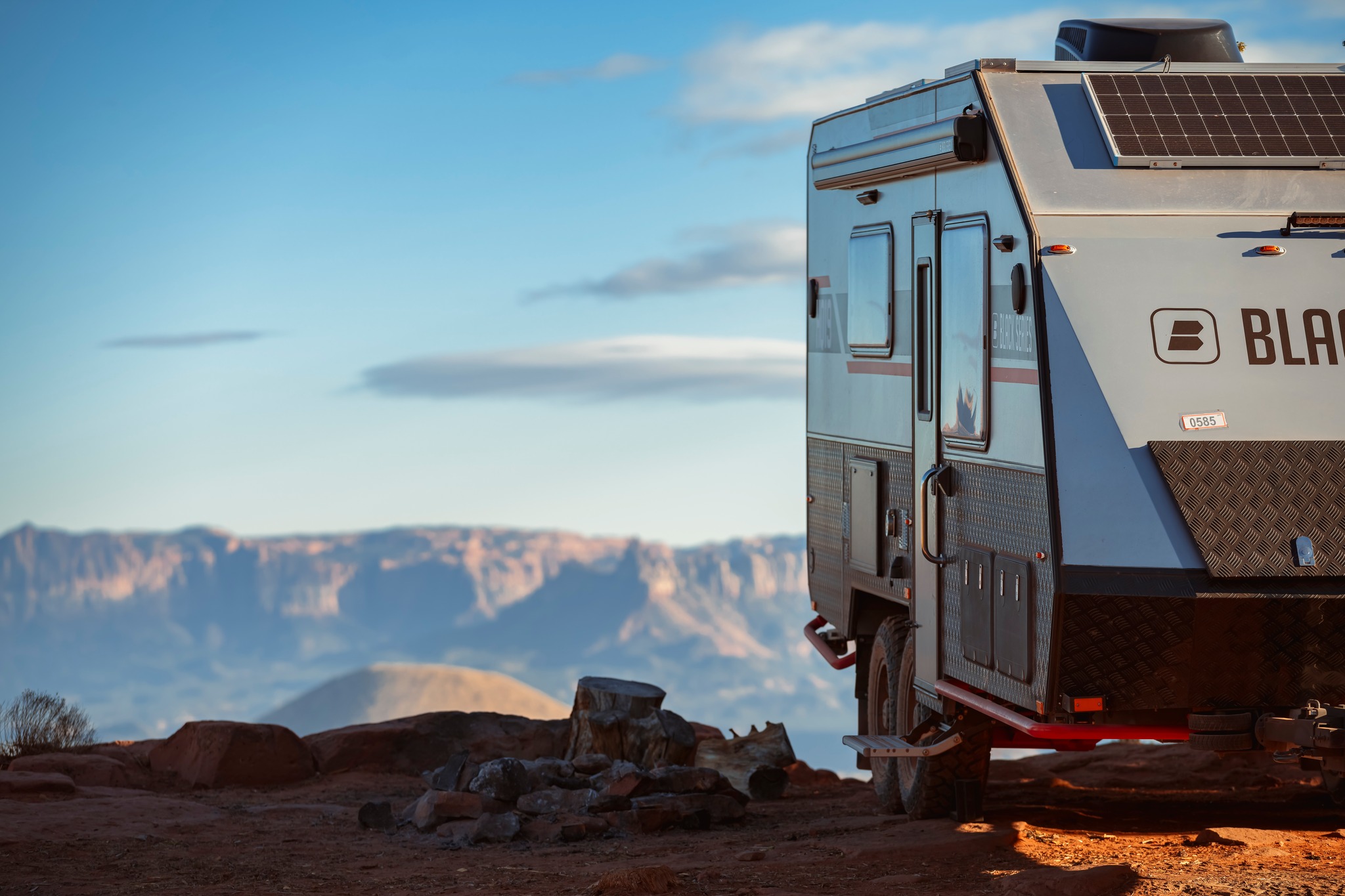
Compact models like the Black Series HQ12 and HQ15 feature articulating hitches that prevent binding on uneven ground. This means you won’t get stuck trying to execute a three-point turn on a narrow forest service road. The independent suspension handles rocky terrain without transferring every bump into the cabin, which matters when you’re driving solo for hours.
For more on choosing the right trailer setup, check out our 2025 off-road travel trailer buying guide.
Step-by-Step – How to Prepare for Solo Trail Travel
1. Choose Dispersed Areas: Focus on BLM land where you can find privacy but stay within reach of help if needed. Research your route using satellite elevation profiles to avoid surprises.
2. Share Your Plan: Always leave your GPS coordinates with a trusted contact. Set check-in times. If you don’t check in, they know where to send help.
3. Carry Satellite Communication: A Garmin InReach or similar device is non-negotiable for areas without cell service. It’s your lifeline.
4. Pre-Check Everything: Inspect your suspension, verify tire pressure, and confirm your trailer brake controller is working properly before you leave pavement.
5. Manage Power Daily: Monitor your battery usage so you never wake up with a flat battery. Track your solar input and adjust consumption accordingly.
Best U.S. Regions for Solo Off-Road RV Travel
Moab, Utah: A hub for overlanding where solo travelers can find like-minded community members if they want them, or total isolation if they don’t. High clearance is required for most trails, but the payoff is otherworldly red rock scenery.
Colorado Alpine Loop: High-altitude trails that require a high-clearance, compact off-grid camper for solo travelers. Narrow access roads and steep grades mean you’ll be glad you’re in a nimble trailer, not a 30-foot motorhome.
Arizona BLM Desert Land: Open, flat desert that offers low crowd density and perfect solar charging conditions. You can camp legally on most BLM land for up to 14 days without a permit, making it ideal for extended solo stays.
Case Study – Solo Traveler Setup with an Off-Road Trailer
Standard travel trailers are built for campground life. They’re “hookup dependent,” requiring 30-amp shore power, water connections, and paved sites. They also have larger turning radiuses that make technical trails nearly impossible.
A solo off-road setup flips that model. Compact design and solar power enable “dispersed camping”, meaning you can stop where the road ends, not where the pavement does. Your power comes from the sun. Your water lasts days, not hours. Your suspension handles terrain that would bottom out a conventional trailer.
This independence changes the entire travel experience. Instead of planning around RV park availability, you plan around weather and scenery. You’re not competing for reservations six months in advance. You’re not paying $60/night for a gravel pad next to a highway.
Is Solo RV Travel Safe?
The short answer: Yes, if properly equipped.
Safety is a function of location choice, communication tools, and equipment reliability. Having a trailer that won’t break down on a washboard road is the first step in staying safe. That means:
- Hot-dipped galvanized chassis that won’t rust out after a few years
- Independent suspension that keeps your axles planted on uneven terrain
- All-terrain tires rated for the abuse of gravel, rock, and sand
Beyond the equipment, smart location choices matter. Start with well-traveled BLM roads before heading into deep backcountry. Avoid traveling during extreme weather. Carry recovery equipment, traction boards, a shovel, and a high-lift jack, even if you hope you never need them.
Solo female travelers often ask if they should carry extra security. Many choose to keep their campsite locations private on social media until after they’ve left. Others carry bear spray or personal alarms. The key is feeling confident in your setup so you can focus on enjoying the experience, not worrying about “what if” scenarios.
For those looking at the broader lifestyle shift, our post on benefits of living an RV lifestyle covers the emotional and practical upsides in depth.
FAQ
What is the best RV size for solo travel?
12 to 15 feet is usually the “sweet spot” for maneuverability and comfort. You get a real bed, a functional galley, and enough storage without the bulk of larger trailers.
How much solar do I need for solo off-grid camping?
200W–400W is typically plenty for one person’s electronics, LED lighting, and a 12V fridge. If you’re running a microwave or air conditioning, you’ll need a larger battery bank and possibly 600W+ solar.
Are off-road trailers hard to tow alone?
No, especially with an articulating hitch that prevents binding on uneven ground. Most solo travelers tow with mid-size trucks or SUVs without issue. Check your vehicle’s towing capacity and match it to your trailer’s loaded weight.
Can beginners try solo overlanding?
Absolutely. Start with well-traveled BLM roads before heading into deep backcountry. Practice setting up camp in your driveway a few times so you know the routine. Build your confidence gradually, and you’ll be taking on technical trails in no time.
Solo RV travel isn’t just a trend: it’s a movement toward intentional living and genuine independence. Off-grid trailers like those from Black Series provide the self-sufficiency, durability, and ease of operation that make solo adventure not just possible, but practical. Whether you’re a digital nomad chasing sunsets or a weekend warrior escaping the city, the right off-grid setup unlocks a level of freedom that traditional RVs simply can’t match.

