Sustainable RV camping becomes practical when solar power, lithium storage, water efficiency, and off-road access reduce reliance on hookups, generators, and crowded infrastructure. It’s not about giving up comfort, it’s about using smarter systems that let you camp longer, travel farther, and leave less behind.
The good news? Modern off-road travel trailers like the Black Series HQ19 and HQ12 are built specifically for this purpose. They combine rugged capability with renewable energy systems, turning “eco-friendly camping” from a marketing buzzword into an actual, functional reality.
What Does “Low-Impact Camping” Actually Mean?
Low-impact camping is about leaving the land exactly as you found it, or better. In the RV world, this means:
- Reduced Fossil Fuel Use: Ditching the loud, gas-guzzling generator
- Lower Infrastructure Strain: Not relying on overtaxed power grids at crowded resorts
- Minimized Noise Pollution: Keeping the wilderness quiet for wildlife (and neighbors)
- Water Conservation: Managing resources effectively to stay out longer
- Leave No Trace: Following strict protocols for waste and terrain protection
The difference between “marketing green” and “functional sustainability” comes down to systems. A standard RV hooked up to shore power at a packed campground isn’t low-impact. But an off-grid RV with solar and lithium batteries parked on dispersed BLM land? That’s a totally different story.
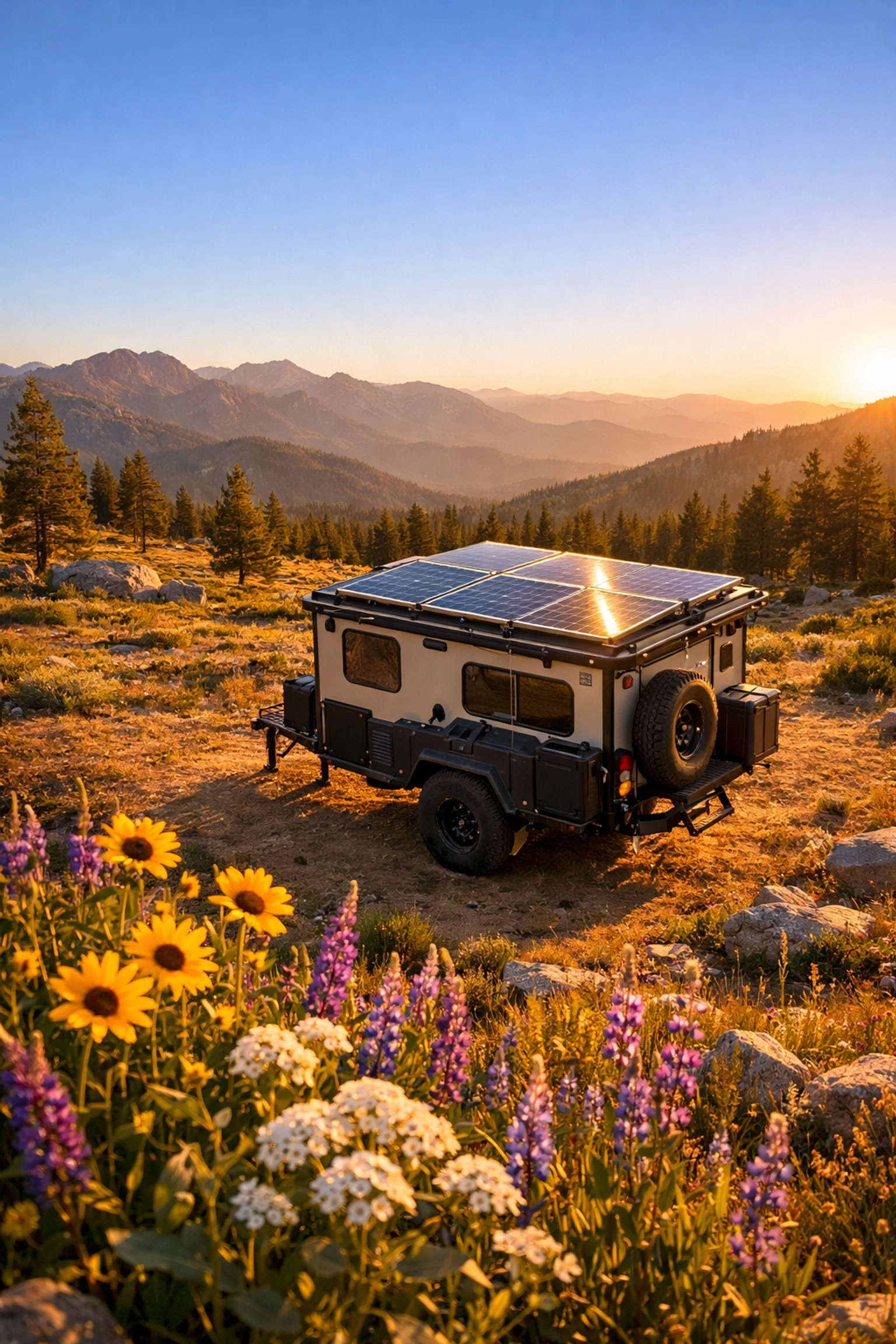
Solar Power vs. Generator Dependency
Here’s the reality check: generators are convenient, but they’re not sustainable. They burn fuel, make noise, require maintenance, and pump out emissions. Solar systems, on the other hand, are silent, renewable, and virtually maintenance-free once installed.
Over a five-year period, a generator can cost $3,000–$6,000 in fuel alone. A properly sized solar array pays for itself while giving you true energy independence.
Lithium Battery Systems & Energy Efficiency
The Black Series HQ19 and HQ12 are engineered for energy independence. Here’s why lithium matters:
- Higher Cycle Life: Lithium batteries last years longer than lead-acid, meaning less waste in landfills
- Lighter Weight: Reducing the average travel trailer weights improves your towing vehicle’s fuel efficiency
- Faster Recharge: Catching a few hours of sun is all you need to top off
- Reduced Replacement Frequency: Fewer batteries over the trailer’s lifetime = lower manufacturing footprint
A 300–600W solar array paired with a lithium bank can power lights, a fridge, water pumps, and even an inverter-driven AC unit in the right conditions. That’s serious capability without burning a drop of fuel.

Water Capacity & Responsible Usage
Water efficiency isn’t just about saving, it’s about enabling longer stays in remote locations without needing to resupply.
- Fewer Refills: With 75+ gallon freshwater capacities, you aren’t driving back and forth to town, saving fuel
- Efficient Pumps: Optimized flow reduces waste during showers and dishwashing
- Outdoor Shower: Cleaning gear and boots outside keeps interior water use minimal
- Grey Water Awareness: Large holding tanks allow you to properly dispose of waste at approved stations rather than straining local ecosystems
The math is simple: fewer trips to dump stations = less driving = lower emissions.
Off-Road Access as a Sustainability Factor
By using an off-road travel trailer, you can access dispersed camping on BLM or Forest Service land. This spreads the “human footprint” out, reducing the massive environmental pressure on over-crowded National Park campgrounds.
Millions of acres of public land are available for free, legal dispersed camping, but only if your rig can handle the terrain. The independent trailing arm suspension and hot-dipped galvanized chassis on Black Series trailers make that access possible without damaging fragile ecosystems.
How to Camp Sustainably in an RV (Step-by-Step)
- Use Solar as Primary Power Source: Rely on your inverter and battery bank for daily energy needs
- Limit Generator Usage: Save it for emergencies or extreme weather only
- Monitor Water Consumption: Keep an eye on your tank levels and be mindful of grey water output
- Choose Dispersed Camping Responsibly: Camp on durable surfaces and follow local BLM/Forest Service regulations
- Pack Out All Waste: Every bit of trash, recyclables, and grey water goes home with you or to proper disposal sites
- Plan Routes Efficiently: Reducing unnecessary towing miles lowers fuel consumption and wear on roads
Environmental Cost Comparison – Resort vs. Off-Grid
While resorts offer luxury, they require massive amounts of energy and infrastructure. Off-grid camping in a Black Series relies on the environment itself for power, drastically reducing your total carbon output per trip.
Resort camping clusters hundreds of RVs into small areas, straining water systems, power grids, and waste facilities. Dispersed camping spreads that impact across millions of acres, allowing natural systems to absorb and recover without overwhelming local resources.
The behavioral shift matters too. When you’re self-sufficient, you naturally become more conscious of consumption. You check battery levels. You measure water use. You plan smarter. That mindset alone reduces waste.
Best Eco-Friendly Travel Trailer Features Checklist
When shopping for a sustainable rig, look for these core features:
- ✅ High-output roof solar (300W+)
- ✅ Integrated Lithium battery bank
- ✅ Insulated composite walls (reduces need for AC/Heat)
- ✅ High ground clearance (prevents dragging and damaging terrain)
- ✅ Durable galvanized chassis (long lifespan = lower manufacturing footprint)
- ✅ Large freshwater and grey water tanks
- ✅ Efficient appliances and LED lighting
The average weight of a camper also impacts fuel efficiency. A well-designed off-road trailer balances durability with smart weight distribution, so you’re not towing more than necessary.
FAQ
Is RV camping environmentally friendly?
It can be, especially when using solar power and practicing dispersed camping instead of staying in high-density RV resorts. The key is reducing reliance on generators, conserving water, and following Leave No Trace principles.
Does solar power run AC?
In a Black Series with a proper lithium setup and inverter system, yes! A 600W solar array with sufficient battery storage can power an air conditioning unit during sunny conditions, though most campers rely on good insulation and ventilation first.
Are lithium batteries sustainable?
Their long lifespan (5–10 years vs. 2–3 for lead-acid) and high efficiency make them much greener than traditional lead-acid options. They also charge faster and weigh less, improving overall towing fuel economy.
Is dispersed camping legal everywhere?
It is legal on millions of acres of BLM and National Forest land in the US, but regulations vary by location. Always check local rules before parking, stay on durable surfaces, and respect fire restrictions and wildlife closures.
How much solar do you need for off-grid camping?
Most adventurers find 300W–600W to be the sweet spot for total independence. This provides enough power for lighting, fridge, water pumps, device charging, and occasional inverter use without needing a generator.
Sustainable RV camping isn’t about sacrificing comfort: it’s about building systems that let you stay out longer, access better locations, and leave less impact behind. With the right off-grid RVs with solar and lithium batteries, you’re not just camping. You’re proving that adventure and responsibility can go hand-in-hand.
Ready to explore responsibly? Check out the Black Series lineup and see how off-road capability meets renewable energy.

