The freedom to camp wherever you want, for as long as you want, without hunting for shore power or running a noisy generator, that’s the promise of a truly sustainable power system for travel trailers. But what does “sustainable RV power” actually mean in practice? And more importantly, how do you build a system that works in the real world, not just on a spec sheet?
In this article, we’re breaking down the technology behind modern off-grid RV power systems, from solar arrays and lithium batteries to smart inverters and charge controllers. Whether you’re planning your first boondocking trip or upgrading your current setup, understanding how these components work together is the key to unlocking true energy independence.
Sustainable RV power combines high-efficiency solar panels, lithium battery banks, smart charge controllers, and inverter systems to create a self-sustaining energy ecosystem.
What “Sustainable RV Power” Actually Means
Let’s start with the basics. Sustainable power isn’t just about being “green”, it’s about shifting from consumption to generation.
Traditional RV power setups rely on three things: noisy generators, outdated lead-acid batteries, and constant access to shore power at campgrounds. These systems are expensive to run, require frequent maintenance, and keep you tethered to developed areas.
An eco-friendly off-road camper power setup flips that model entirely. Instead of consuming fuel and grid electricity, a sustainable system generates its own power from the sun and stores it in advanced lithium batteries. The result? An autonomous energy loop that reduces your carbon footprint while dramatically increasing your freedom to explore remote locations.
This is what makes off-grid travel possible for weeks, or even months, at a time.
Core Components of a Sustainable Off-Grid System
A sustainable RV power system isn’t just one piece of gear, it’s an integrated ecosystem. Here are the core components that make it work.
Solar Array Technology
Modern solar panels have come a long way in the past decade. We use high-efficiency monocrystalline panels because they generate more power per square foot than older polycrystalline models. Paired with an MPPT (Maximum Power Point Tracking) charge controller, these panels can squeeze every drop of energy out of the sun, even in low-light or partially shaded conditions.
Why does this matter? Because real-world camping isn’t always sunny. An MPPT controller adjusts voltage and current in real-time to maximize energy harvest, up to 30% more efficient than older PWM controllers.
Lithium Battery Architecture
When it comes to energy storage, lithium battery technology for RVs has revolutionized what’s possible off-grid. Specifically, LiFePO4 (Lithium Iron Phosphate) batteries are the gold standard for RV applications.
Here’s why:
- Deeper Discharge: You can safely use 80–100% of a lithium battery’s capacity, compared to just 50% with traditional lead-acid batteries.
- Longer Lifespan: Lithium batteries last 10+ years and handle 3,000+ charge cycles, while lead-acid batteries wear out after 500–800 cycles.
- Built-In Protection: A sophisticated Battery Management System (BMS) monitors each cell in real-time, preventing overcharging, overheating, and deep discharge damage.
In practical terms, a 200Ah lithium battery gives you the same usable energy as a 400Ah lead-acid bank, at half the weight.
Smart Inverter & Energy Management
The final piece of the puzzle is the inverter and energy management system. A pure sine wave inverter converts DC power from your batteries into clean AC power for your outlets, ensuring sensitive electronics like laptops and medical devices run safely.
Modern systems also include:
- DC-to-DC charging: Your tow vehicle’s alternator can top off the batteries while driving.
- Shore power auto-switching: When you plug into a campground, the system automatically switches to grid power.
- Real-time monitoring: Touchscreen displays or smartphone apps show you exactly how much power you’re generating, storing, and using.

How Off-Grid RV Solar Systems Work (Step-by-Step)
If you’re new to solar, understanding how off-grid RV solar systems work can feel overwhelming. But the basic energy flow is actually pretty straightforward. Here’s the process:
- Generation: Solar panels collect sunlight and generate DC (direct current) power.
- Regulation: The MPPT charge controller regulates that voltage and current, optimizing it for battery storage.
- Storage: The lithium battery bank stores the energy for later use, at night, on cloudy days, or during high-demand periods.
- Conversion: When you need AC power for outlets, the inverter converts stored DC power to AC (alternating current).
- Distribution: The smart energy management system distributes power to your refrigerator, lights, water pump, and devices based on priority and demand.
This closed-loop system means you’re generating, storing, and using your own power, no fuel required.
Real-World Efficiency Factors
Lab specs are one thing. Real-world performance is another. Here are the factors that actually affect your system’s efficiency in the field:
- High Heat: Extreme temperatures can reduce battery capacity and solar panel output. This is why thermal management matters, especially in desert environments.
- Shading: Even a small shadow across one panel can drop total array output by 20–40%. Panel placement is critical.
- Load Peaks: Running high-draw appliances like microwaves or hair dryers all at once can strain your system. Stagger usage to avoid voltage dips.
- Altitude: Higher elevations often mean clearer air and better solar radiation, but also colder nights that require more heating power.
Understanding these variables helps you size your system correctly and manage energy usage in different conditions.
Comparing Sustainable RV Power vs Generator-Based Systems
Let’s be honest: generators have their place. They’re great for short-term emergency power or running heavy-draw appliances like rooftop air conditioners in extreme heat. But for everyday off-grid living, sustainable solar + lithium systems win in almost every category.
If you’re boondocking on public land or staying in national forests, running a generator is often prohibited or frowned upon. A solar system lets you camp in peace, and stay longer.
Best U.S. Regions for Sustainable Off-Grid Performance
Not all camping destinations are created equal when it comes to solar efficiency. Here are the top regions for maximizing your sustainable RV power system:
Arizona Desert (BLM Land)
Arizona offers 5–6+ peak sun hours per day in winter, making it ideal for solar generation. The clear skies and low humidity mean consistent, predictable power output. Just watch for high heat in summer, which can reduce battery efficiency.
Utah Canyon Country
Utah’s canyonlands provide stunning scenery and strong solar conditions. However, heat management becomes critical in summer, battery temperatures can climb fast on exposed desert floors. Park in shade when possible and consider active ventilation for your battery compartment.
Colorado High Altitude Camping
Cooler temperatures at altitude actually improve solar panel efficiency, and the thin air means more direct solar radiation. The trade-off? Shorter days in the valleys and more cloud cover during monsoon season. Plan for 3–4 effective sun hours and size your battery bank accordingly.
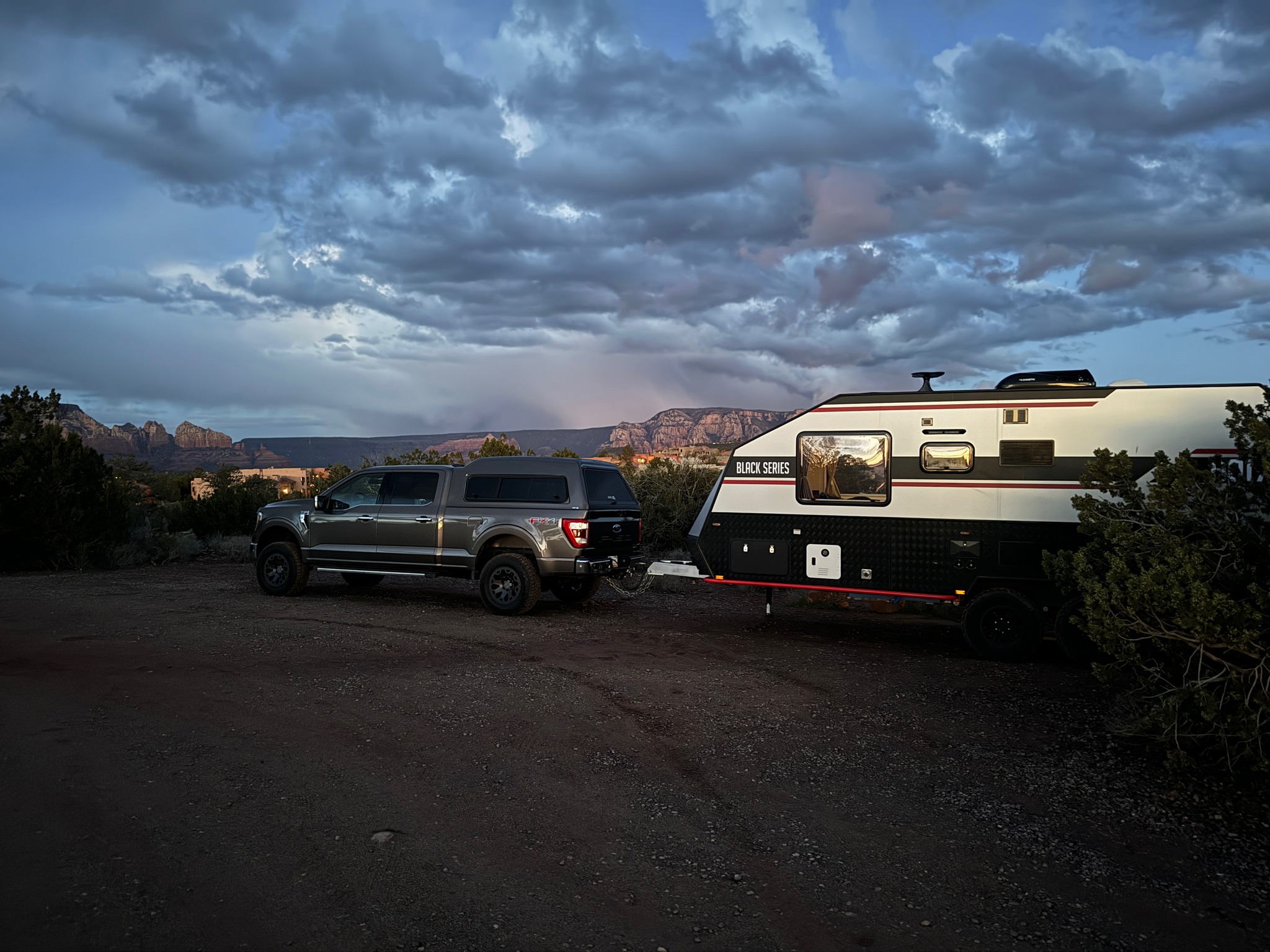
Case Study – Integrated Power System in a BlackSeries Trailer
Let’s look at a real-world example. A typical BlackSeries trailer, like the HQ15 or HQ19, comes equipped with a fully integrated off-grid power system designed for extended remote camping.
Here’s what that looks like:
- 400–600W solar array: Roof-mounted monocrystalline panels with an MPPT controller.
- 200–400Ah lithium bank: Enough storage for 2–3 days of autonomy without sun.
- 2000W pure sine wave inverter: Powers everything from laptops to microwaves.
- Remote monitoring system: Track energy usage and battery health from your phone.
This setup allows a family of four to run a 12V refrigerator, LED lighting, Starlink internet, a diesel heater, and daily water pump use, indefinitely, as long as solar input matches consumption.
The key difference? System integration. Every component is sized to work together under a rugged, off-road chassis. It’s not just a collection of parts, it’s a cohesive energy ecosystem built for the backcountry.
Sustainability Beyond Power
It’s worth noting that sustainable RV living extends beyond just the power system. A truly eco-friendly off-road camper power setup considers the entire footprint:
- Water management: Large freshwater tanks (50+ gallons) and efficient greywater systems reduce the need for resupply trips.
- LED efficiency: Modern LED lighting uses 75% less power than incandescent bulbs.
- Lightweight chassis design: A lighter trailer requires less towing fuel, reducing your overall carbon emissions on the road.
At BlackSeries, we design our trailers with all of these factors in mind, because true sustainability isn’t just about solar panels. It’s about building a complete, off-grid lifestyle that respects the environment while maximizing your freedom to explore it.
FAQ
How many solar watts do I need for full off-grid RV living?
For comfortable, full-time off-grid living, 400W–600W of solar is the standard. This assumes you’re running a 12V fridge, LED lights, a laptop, and basic water pump use. If you plan to run a microwave or charge power tools regularly, consider 600W–800W.
Are lithium batteries worth the investment?
Absolutely. Lithium batteries cost more upfront, but they last 10+ years (vs. 3–5 years for lead-acid) and offer twice the usable capacity. Over the lifespan of your RV, lithium is significantly cheaper per kilowatt-hour stored.
How long do sustainable RV power systems last?
Solar panels typically last 25+ years with minimal degradation (about 0.5% per year). Lithium batteries last 10+ years or 3,000+ charge cycles. Inverters and charge controllers have a 10–15 year lifespan. Proper maintenance extends all of these timelines.
Can solar fully replace a generator?
For most users, yes. A properly sized solar + lithium system can handle all daily power needs, including cooking, lighting, refrigeration, and electronics. The only exception is running high-draw air conditioning for extended periods in extreme heat: though even that’s becoming possible with modern, efficient mini-split systems and larger battery banks.
Sustainable RV power isn’t just about adding a few solar panels to your roof. It’s about designing an integrated energy ecosystem that generates, stores, and distributes power efficiently: so you can camp wherever you want, for as long as you want, without compromise.
If you’re ready to explore what true off-grid freedom looks like, check out our full lineup of BlackSeries trailers built for the backcountry.

