

What Is an Off Road Trailer Camper and Why America’s Going Wild for Them
An off road trailer camper is a specialized recreational vehicle designed to handle rough, unpaved terrain while providing comfortable living quarters for extended backcountry adventures. Unlike standard travel trailers built for campgrounds with hookups, these rugged units feature reinforced chassis, independent suspension systems, higher ground clearance, and comprehensive off-grid capabilities.
The surge in demand across American markets: particularly in the Southwest deserts, Rocky Mountains, and National Forest regions: stems from a growing desire to escape crowded campgrounds and access remote, pristine locations. Post-pandemic, Americans increasingly seek solitude and self-sufficiency in their outdoor adventures.
Black Series trailers deliver exceptional value for U.S. overlanders through military-grade construction, advanced independent suspension systems, and superior impact resistance. Built to withstand washboard roads, rock crawling, and extreme weather conditions, these Australian-engineered trailers offer the durability and safety American adventurers demand for serious backcountry exploration.
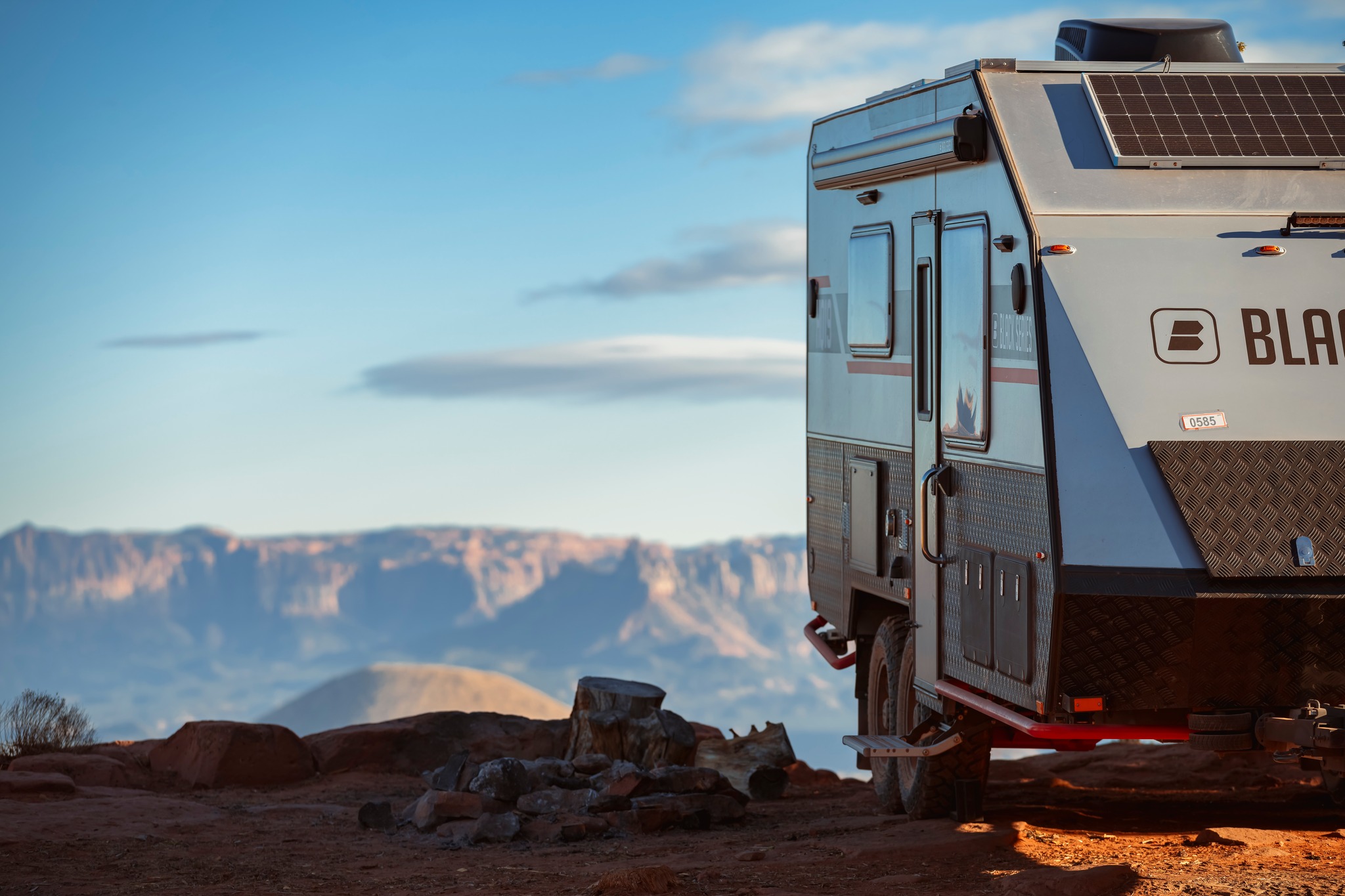
Off Road Trailer Camper: Complete Definition and U.S. Applications
Core Specifications That Define True Off-Road Capability
A legitimate off road trailer camper must meet specific engineering standards:
- Chassis clearance: Minimum 12+ inches ground clearance with skid plates
- Suspension system: Independent trailing arm or torsion axle with dual shocks
- Frame construction: Hot-dipped galvanized steel or marine-grade aluminum
- Tire specifications: All-terrain or mud-terrain tires (typically 31″ minimum)
- Departure angles: 35+ degrees for obstacle clearance
Understanding the Terminology
All-terrain trailers handle gravel roads and light off-pavement camping but lack heavy-duty suspension for serious rock crawling.
Off-grid trailers focus on self-sufficiency (solar, batteries, water systems) but may not have robust off-road engineering.
Off-road trailers combine rugged construction with off-grid capabilities, handling everything from forest service roads to technical 4WD trails.
U.S. Use Case Scenarios
American off-road trailer enthusiasts typically pursue three main activities:
- Boondocking: Extended camping without hookups in National Parks and state parks
- Overlanding: Long-distance travel combining on-road and off-road segments
- Remote camping: Accessing dispersed camping sites on BLM land and National Forest service roads
Step-by-Step Buying Guide: Choosing Your Off Road Trailer Camper
Step 1: Assess Your Terrain Requirements
Rocky Mountain trails demand maximum ground clearance and articulating suspension. Desert environments require dust sealing and solar capacity. Forest roads need width considerations and tree branch clearance. High-altitude camping requires four-season insulation and reliable heating systems.
Step 2: Suspension and Chassis Selection
Independent suspension systems provide superior wheel articulation over obstacles compared to solid axles. Black Series utilizes independent trailing arm suspension with dual shock absorbers, offering 8+ inches of wheel travel for maximum traction and comfort.
Hot-dipped galvanized steel frames resist corrosion better than painted steel, crucial for coastal or high-humidity environments. Aluminum construction saves weight but requires careful engineering to maintain strength.
Step 3: U.S. Build Standards Verification
Ensure NATM (National Association of Trailer Manufacturers) compliance and DOT lighting standards. Check frame welding quality: look for continuous welds rather than spot welding. Verify electrical systems meet 12V automotive standards for compatibility with American tow vehicles.
Step 4: Tow Vehicle Matching
Calculate total loaded weight including water, gear, and supplies. Your tow vehicle’s payload capacity must exceed tongue weight (typically 10-15% of trailer weight). Consider trailer braking systems: electric brakes are standard in the U.S. market.
Step 5: Off-Grid Power and Water Systems
Solar capacity should provide 400-800 watts depending on usage patterns. Lithium battery banks offer superior performance in temperature extremes. Water capacity of 40+ gallons supports extended backcountry stays. Grey and black water tanks must meet local dump station requirements.

Best Off Road Trailer Campers for American Adventurers
Best for Families: Black Series HQ17
The HQ17 delivers family-friendly features with serious off-road capability. Sleeping four comfortably, it includes bunk beds, full kitchen, and bathroom facilities. The independent suspension handles rough terrain while maintaining interior comfort for children.
Best for Long-Term Off-Grid: Black Series HQ21
For extended backcountry expeditions, the HQ21 offers maximum self-sufficiency. Large water tanks, extensive solar arrays, and spacious interior support weeks of independent camping. The robust chassis handles the additional weight while maintaining excellent off-road performance.
Best for Desert Adventures: Black Series HQ19
The HQ19 strikes the perfect balance for Southwest desert exploration. Moderate weight, excellent cooling systems, and dust-sealed construction excel in arid environments. The compact size navigates narrow desert trails while providing couple-sized comfort.
Best for Mountain Trails: Black Series HQ12
The lightweight HQ12 excels on technical mountain trails where every pound matters. Despite compact dimensions, it maintains full off-road capability and essential amenities. Perfect for accessing high-altitude camping spots with weight restrictions.
Essential Off Road Trailer Operation Guide
Safe Towing Techniques
Weight distribution is critical: ensure proper tongue weight and load distribution. Speed management prevents trailer sway: maintain 10-15 mph below normal highway speeds. Brake controller adjustment should match terrain: increase gain for steep descents.
Legal Camping on U.S. Public Lands
BLM (Bureau of Land Management) lands typically allow 14-day camping periods with specific distance requirements from water sources and roads. National Forest Service areas offer dispersed camping with similar time limits but varying local restrictions.
Check fire restrictions and waste disposal requirements before departing. Download offline maps as cellular coverage is often limited in remote areas.
Critical Maintenance for Off-Road Performance
Suspension components require regular inspection: check for loose bolts, worn bushings, and shock absorber leaks. Tire pressure monitoring prevents sidewall damage on rocky terrain. Brake system maintenance includes magnet adjustment and breakaway battery testing.

Market Trends and Data: America’s Off-Road Camping Revolution
Industry data shows 47% growth in off-road trailer sales from 2020-2024, with the western states leading demand. Consumer preferences have shifted dramatically from lightweight, basic trailers to heavy-duty, fully-equipped units capable of extended off-grid operation.
Black Series engineering resonates with American buyers because it addresses specific U.S. terrain challenges. The independent suspension system, originally developed for Australia’s harsh outback conditions, excels on American washboard roads, rocky trails, and steep mountain passes.
Western state buyers particularly value the combination of rugged construction and luxury amenities: they want to access remote locations without sacrificing comfort and safety.
Black Series Product Value: Real American Adventures
Case Study: Colorado High Country
A Colorado family successfully navigated 11,000-foot mountain passes with their Black Series HQ19, accessing remote alpine lakes impossible with standard trailers. The independent suspension handled boulder-strewn trails while the sealed electrical system functioned flawlessly in sub-freezing temperatures.
Technology Spotlight: Independent Suspension Advantage
Black Series’ independent trailing arm suspension provides several critical advantages over traditional leaf-spring systems:
- Individual wheel articulation maintains traction on uneven surfaces
- Reduced chassis stress prevents frame cracking on rough terrain
- Superior ride quality protects interior contents and passenger comfort
- Adjustable ride height accommodates various load conditions
Western States Performance
The hot-dipped galvanized chassis proves essential for Western adventures, resisting corrosion from road salt, coastal moisture, and alkaline desert conditions. The robust construction handles extreme temperature variations from desert heat to mountain snow without structural compromise.
Frequently Asked Questions
What’s the main difference between off road trailer campers and regular travel trailers?
Off road trailer campers feature independent suspension, higher ground clearance, reinforced chassis, all-terrain tires, and comprehensive off-grid systems. Regular travel trailers prioritize interior space and hookup compatibility over terrain capability.
Do I need a 4×4 truck to tow an off road trailer?
While 4WD isn’t mandatory, it’s highly recommended for accessing remote locations where you’ll camp. The trailer’s off-road capability is only useful if your tow vehicle can reach the destination. Proper weight distribution and trailer brakes are more critical than drive configuration.
How do state towing laws affect off road trailers?
Most states require trailer brakes for units exceeding 3,000 pounds gross weight. Some western states have specific regulations for trailer lighting, safety chains, and breakaway systems. Check individual state requirements, especially for interstate travel.
What features should beginners prioritize in an off road trailer?
Start with proven suspension systems, reliable electrical components, and comprehensive owner support. Black Series provides detailed operation manuals and responsive technical support, crucial for new off-road enthusiasts learning system operation and maintenance.
How do I know if Black Series is right for my camping style?
Black Series excels for serious off-road access, extended off-grid stays, and four-season camping. If you primarily camp in developed campgrounds or avoid challenging terrain, a standard travel trailer may better suit your needs and budget.
What’s the typical lifespan of an off road trailer with proper maintenance?
Quality off-road trailers like Black Series can provide 20+ years of service with proper maintenance. The key factors are chassis material (galvanized steel resists corrosion), suspension component quality, and electrical system reliability.
Schema Markup Implementation Notes
For development teams, implement FAQPage schema for the FAQ section, Product schema for specific Black Series models mentioned, Article schema for the overall content, and BreadcrumbList schema for navigation enhancement.
This comprehensive guide positions your Black Series purchase decision within the broader American off-road camping landscape, ensuring you select the right trailer for your specific adventure requirements and terrain challenges.
The Ultimate Off Road Trailer Camper Guide for U.S. Adventures最先出现在Black Series RV | Off-Road Travel Trailers, Toy Haulers & Camper Trailers | Off road rv | Off grid rv | Overland rv | Off road trailer | Off road travel trailer | Overland travel trailer。