Winter camping in the United States has exploded in popularity, with 2026 Google Trends data showing unprecedented search volume for “winter RV travel” and “snow camping national parks.” As more adventurers discover the magic of off-season outdoor experiences, finding the perfect best winter camping destinations becomes crucial for planning unforgettable cold-weather adventures.
Whether you’re seeking sunny desert escapes in Arizona or snow-covered mountain wilderness in Colorado, winter camping USA offers incredible diversity. From family-friendly RV parks with full hookups to remote off-road camping winter destinations accessible only by rugged adventure trailers, this comprehensive guide covers the top destinations transforming how Americans experience the great outdoors during the coldest months.
Winter Camping Trends Shaping 2026
The 2026 winter camping trends reveal fascinating shifts in outdoor recreation preferences. National park winter visitation has increased 40% since 2023, with campers prioritizing destinations offering year-round accessibility and unique seasonal experiences. Search demand for “campground recommendations winter” and “adventure trailer winter camping” indicates growing interest in self-sufficient, off-grid winter adventures.
Safety remains the top concern, with campers actively seeking information about proper gear, trailer winterization, and emergency preparedness. This trend has driven increased interest in premium Blackseries winter camping setups designed specifically for extreme weather conditions.
Top 10 Best Winter Camping Destinations
1. Joshua Tree National Park, California
Temperature Range: 40-70°F (December-February)
Best For: Desert landscapes, stargazing, rock climbing
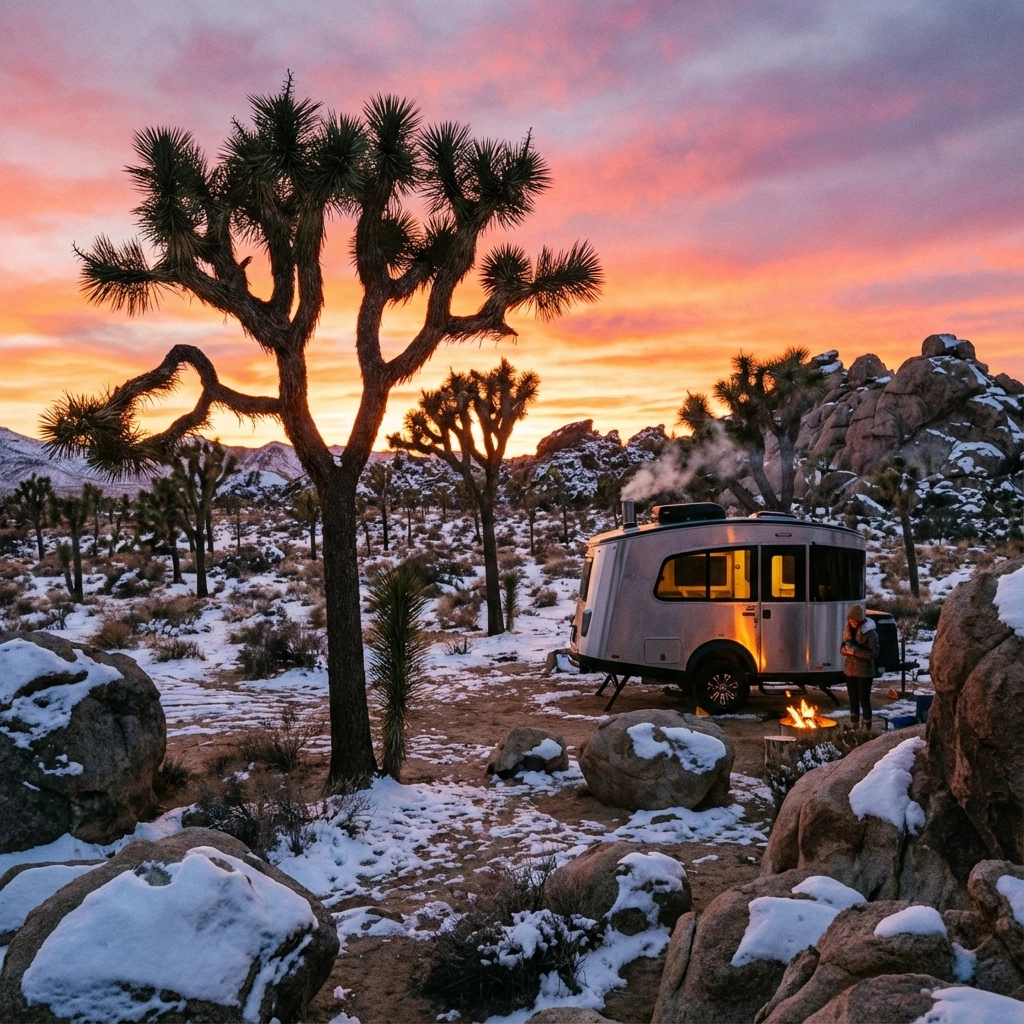
Joshua Tree transforms into a winter paradise with comfortable daytime temperatures and crystal-clear night skies perfect for astronomy enthusiasts. The iconic twisted trees create surreal landscapes against brilliant blue winter skies, while moderate temperatures make hiking and rock climbing enjoyable.
Winter-Specific Highlights:
- Jumbo Rocks Campground offers excellent RV sites with stunning sunrise views
- Skull Rock and Arch Rock trails become comfortable winter hikes
- Less crowded trails and camping spots compared to peak season
Practical Tips: Reservations essential during winter months. Nights can drop below freezing, so proper heating systems are crucial.
2. Death Valley National Park, California
Temperature Range: 45-75°F (December-February)
Best For: Unique geology, photography, solitude
Winter makes Death Valley’s extreme landscape accessible and comfortable. As America’s hottest place becomes pleasantly mild, visitors can explore otherworldly salt flats, colorful badlands, and towering sand dunes without summer’s brutal heat.
Winter Activities:
- Badwater Basin (lowest point in North America) photography
- Mesquite Flat Sand Dunes sunrise/sunset viewing
- Artist’s Palette scenic drive through rainbow-colored hills
Camping Notes: Furnace Creek and Texas Spring Campgrounds accommodate RVs. Dispersed camping available with proper permits.
3. Sedona, Arizona
Temperature Range: 35-60°F (December-February)
Best For: Red rock formations, spiritual experiences, hiking
Sedona’s famous red rock formations become even more dramatic under winter light, with occasional snow dusting creating breathtaking contrasts. Mild daytime temperatures make this perfect for winter rv travel with family-friendly activities.
Must-See Winter Spots:
- Cathedral Rock reflection in Oak Creek (best at sunrise)
- Bell Rock vortex sites for meditation and photography
- Tlaquepaque Arts Village for indoor cultural experiences
RV Considerations: Several campgrounds offer full hookups. Reserve early as winter is peak season.
4. Big Bend National Park, Texas
Temperature Range: 35-65°F (December-February)
Best For: Desert wilderness, Rio Grande views, dark skies
Big Bend offers incredible winter camping with comfortable temperatures, minimal crowds, and some of the darkest skies in the continental United States. The Chihuahuan Desert ecosystem provides unique flora and fauna viewing opportunities.
Winter Highlights:
- Santa Elena Canyon kayaking when river levels permit
- Hot Springs historic site along the Rio Grande
- International Dark Sky Park designation ensures excellent stargazing
5. Yellowstone National Park, Wyoming
Temperature Range: -10 to 30°F (December-February)
Best For: Snow sports, wildlife viewing, geothermal features
Yellowstone becomes a true winter wonderland, with steaming geysers creating magical contrasts against snow-covered landscapes. While most roads close to regular vehicles, snowmobile and snow coach access provides unique winter experiences.
Winter Access:
- West Entrance (West Yellowstone) open to snowmobiles
- Mammoth Hot Springs area accessible year-round
- Old Faithful area via guided snow coach tours
Wildlife Viewing: Winter concentrates wildlife in lower elevation areas, making wolves, bison, and elk easier to spot.

6. Saguenay Fjord National Park, California (Anza-Borrego Desert State Park)
Temperature Range: 40-70°F (December-February)
Best For: Desert flowers, slot canyons, off-road adventures
California’s largest state park offers incredible off-road camping winter opportunities with mild temperatures and unique desert experiences. The park’s 650,000 acres provide endless exploration possibilities.
Winter Features:
- Slot canyons like The Narrows become comfortable to explore
- Desert wildflowers begin blooming in late winter
- Excellent dispersed camping opportunities for self-sufficient adventurers
7. Organ Pipe Cactus National Monument, Arizona
Temperature Range: 40-75°F (December-February)
Best For: Rare cacti, border culture, photography
This UNESCO Biosphere Reserve showcases the unique Sonoran Desert ecosystem with comfortable winter temperatures ideal for hiking and photography. The park protects rare organ pipe cacti found nowhere else in the United States.
Winter Activities:
- Desert View Trail offers panoramic vistas
- Ajo Mountain Drive showcases diverse desert landscapes
- Cultural exhibits highlight the area’s rich border history
8. Channel Islands National Park, California
Temperature Range: 50-65°F (December-February)
Best For: Marine wildlife, island camping, kayaking
Often called “California’s Galápagos,” the Channel Islands offer unique winter camping experiences with mild temperatures and incredible wildlife viewing. Gray whale migration peaks during winter months.
Winter Highlights:
- Santa Cruz Island camping with ferry access
- Elephant seal pupping season viewing
- Kayaking among sea caves and marine life
9. Everglades National Park, Florida
Temperature Range: 55-75°F (December-February)
Best For: Wildlife photography, kayaking, birding
Winter is the ideal time to experience the Everglades, with comfortable temperatures, lower humidity, and concentrated wildlife around shrinking water sources. Mosquito populations also decrease significantly.
Winter Wildlife:
- Alligator viewing at Anhinga Trail
- Manatee sightings in warmer waters
- Peak bird migration and nesting seasons
10. White Sands National Park, New Mexico
Temperature Range: 30-60°F (December-February)
Best For: Unique landscapes, photography, sledding
The world’s largest gypsum dune field creates surreal winter landscapes with brilliant white sand contrasting against blue skies and occasional snow. Cool temperatures make hiking the dunes comfortable.
Winter Magic:
- Full moon nights illuminate the white sand like snow
- Sand sledding remains popular in cooler temperatures
- Backcountry camping offers incredible solitude
Essential Gear & Trailer Prep for Winter Camping
Successful winter camping requires proper preparation, especially for rv camping in snow conditions. Your camping setup needs to handle temperature extremes, precipitation, and challenging road conditions.
Power System Requirements
Winter camping demands robust electrical systems for heating, lighting, and electronics. Blackseries winter camping trailers come equipped with high-capacity lithium battery systems and efficient inverters, but understanding power consumption becomes critical in cold weather.
Essential Power Considerations:
- Heating systems consume 2-4x more power in freezing temperatures
- Lithium batteries perform better than AGM in cold weather
- Solar charging decreases significantly with shorter daylight hours
- Backup generators become essential for extended off-grid stays
For comprehensive power system guidance, review our detailed analysis of winter electrical needs and battery performance in extreme conditions.
Insulation and Heating Systems
Proper insulation separates comfortable winter camping from miserable cold-weather experiences. Adventure trailers designed for four-season use feature:
Insulation Features:
- R-value ratings appropriate for sub-freezing temperatures
- Thermal bridges elimination around windows and doors
- Moisture management systems preventing condensation buildup
- Efficient heating systems with proper ventilation
Water System Winterization
Preventing frozen water systems requires proactive preparation. Even heated trailers need proper winterization protocols:
Winterization Essentials:
- Pipe insulation and heat tape installation
- Tank heating systems for fresh and gray water
- Antifreeze procedures for extended cold exposure
- Emergency bypass systems for critical failures
Safety Tips for Winter RV and Off-Road Camping
Winter rv travel safety requires different considerations than warm-weather camping. Preparation and knowledge prevent dangerous situations and ensure enjoyable experiences.
Vehicle and Trailer Preparation
Your tow vehicle and trailer combination needs specific winter modifications:
Towing Considerations:
- All-terrain or winter tires with proper tread depth
- Increased following distances on snow and ice
- Trailer brake controller adjustments for slippery conditions
- Emergency equipment including chains, shovels, and traction aids
Emergency Preparedness
Winter camping isolation means self-sufficiency becomes critical:
Emergency Kit Essentials:
- Extra food and water for extended stays
- Backup heating sources independent of main systems
- Communication devices for emergency situations
- First aid supplies appropriate for cold weather injuries
For detailed dispersed camping safety protocols, including winter-specific considerations, check our comprehensive guide covering BLM and USFS regulations and emergency preparedness.
Weather Monitoring and Route Planning
Successful winter adventures require constant weather awareness:
Planning Tools:
- Multiple weather forecast sources for accuracy
- Road condition monitoring through state DOT systems
- Backup route planning for weather-related closures
- Flexible scheduling allowing for weather delays
Blackseries Adventure Trailers: Built for Winter Exploration
Blackseries adventure trailers excel in winter conditions through thoughtful engineering and premium components designed for extreme weather performance.
Four-Season Construction
Our trailers feature true four-season construction with:
- Superior insulation ratings for sub-freezing comfort
- Condensation management systems preventing moisture problems
- Robust heating systems designed for continuous operation
- Weather-sealed construction protecting against wind and precipitation
Off-Road Capability in Snow
Winter often means challenging road conditions requiring true off-road capability:
Blackseries Advantages:
- High ground clearance for snow navigation
- Aggressive tire packages for traction in snow and mud
- Independent suspension systems handling rough winter roads
- Reinforced chassis construction for extreme condition durability
Planning Your 2026 Winter Adventure
Winter camping offers incredible experiences unavailable during warmer months. From desert solitude to snow-covered mountain adventures, the best winter camping destinations provide memories lasting lifetimes.
Whether you’re seeking family-friendly snow camping national parks or challenging off-road camping winter adventures, proper preparation ensures safe, comfortable experiences. Blackseries adventure trailers provide the capability and comfort necessary for winter exploration, allowing you to access remote destinations others cannot reach.
Start planning your winter adventure today. Research your chosen destination’s specific winter conditions, prepare your equipment thoroughly, and embrace the unique magic of cold-weather camping. Winter’s stark beauty and peaceful solitude create unforgettable outdoor experiences when approached with proper preparation and quality equipment.
Frequently Asked Questions
What’s the best time for winter camping in national parks?
December through February typically offers the most stable winter conditions, though specific timing varies by location. Desert destinations like Joshua Tree and Death Valley are ideal December through March, while mountain locations often provide better access January through March.
Do I need special permits for winter camping?
Most national parks require standard camping permits year-round. However, some areas like Yellowstone require special permits for backcountry winter camping. Always check specific park regulations before traveling, as winter may bring additional restrictions.
How do I prevent my RV’s pipes from freezing?
Maintain consistent interior heating, insulate exposed pipes, use pipe heating cables for vulnerable areas, and keep water flowing during extreme cold. For extended cold exposure, consider using RV antifreeze in your water system.
What’s the biggest challenge with winter RV camping?
Power management becomes the primary challenge, as heating systems consume significantly more electricity while solar charging decreases. Proper battery capacity and backup power sources are essential for comfortable winter camping.
Are Blackseries trailers suitable for snow camping?
Yes, Blackseries trailers feature four-season construction with superior insulation, robust heating systems, and weather-sealed design specifically engineered for winter conditions. The off-road capability also provides access to snow-covered destinations inaccessible to standard RVs.
What winter camping destinations are best for beginners?
Desert locations like Joshua Tree, Death Valley, and Sedona offer mild winter temperatures with less risk of extreme weather. These destinations provide excellent winter camping experiences without the challenges of snow and sub-freezing temperatures.
How much does winter camping cost compared to summer?
Winter camping often costs less due to lower demand at many destinations, though heating fuel costs increase. National park fees remain constant, but private campgrounds may offer winter discounts. Budget for increased propane or electrical costs for heating systems.

