Subzero Camping Essentials: Your Complete Preparation Guide
When temperatures drop below zero, your camping vehicle becomes your lifeline. The five most vulnerable systems in subzero conditions are your 4WD drivetrain, tires, heating system, electrical power, and water lines. Proper preparation in these areas can mean the difference between an epic winter adventure and a dangerous emergency situation.
The three pillars of subzero readiness are: system winterization, equipment upgrades, and emergency preparedness. BlackSeries RV builds every trailer with reinforced insulation, military-grade electrical systems, and robust heating solutions specifically designed to handle America’s harshest winter conditions: from Montana’s -30°F nights to Colorado’s high-altitude freeze-thaw cycles.
Why Subzero Readiness Matters: Winter Hazards Explained
Winter camping in the United States presents unique challenges that vary dramatically by region. In the Pacific Northwest, you’ll face prolonged moisture and freezing rain. The Rocky Mountain states deliver sudden temperature drops and high-altitude conditions that can drain batteries 50% faster than sea level. Desert regions like Nevada and Utah experience extreme temperature swings: 80°F days followed by -10°F nights.
The leading causes of winter camping emergencies include battery failure (43% of incidents), heating system malfunction (31%), and traction loss due to inadequate tires (22%). These statistics from the National Park Service’s winter rescue data show why comprehensive vehicle preparation isn’t optional: it’s survival insurance.
BlackSeries owners consistently report fewer weather-related issues because our trailers are engineered for year-round adventure. Our integrated approach means every system: from the reinforced chassis to the sealed electrical compartments: works together to maintain performance when other RVs fail.
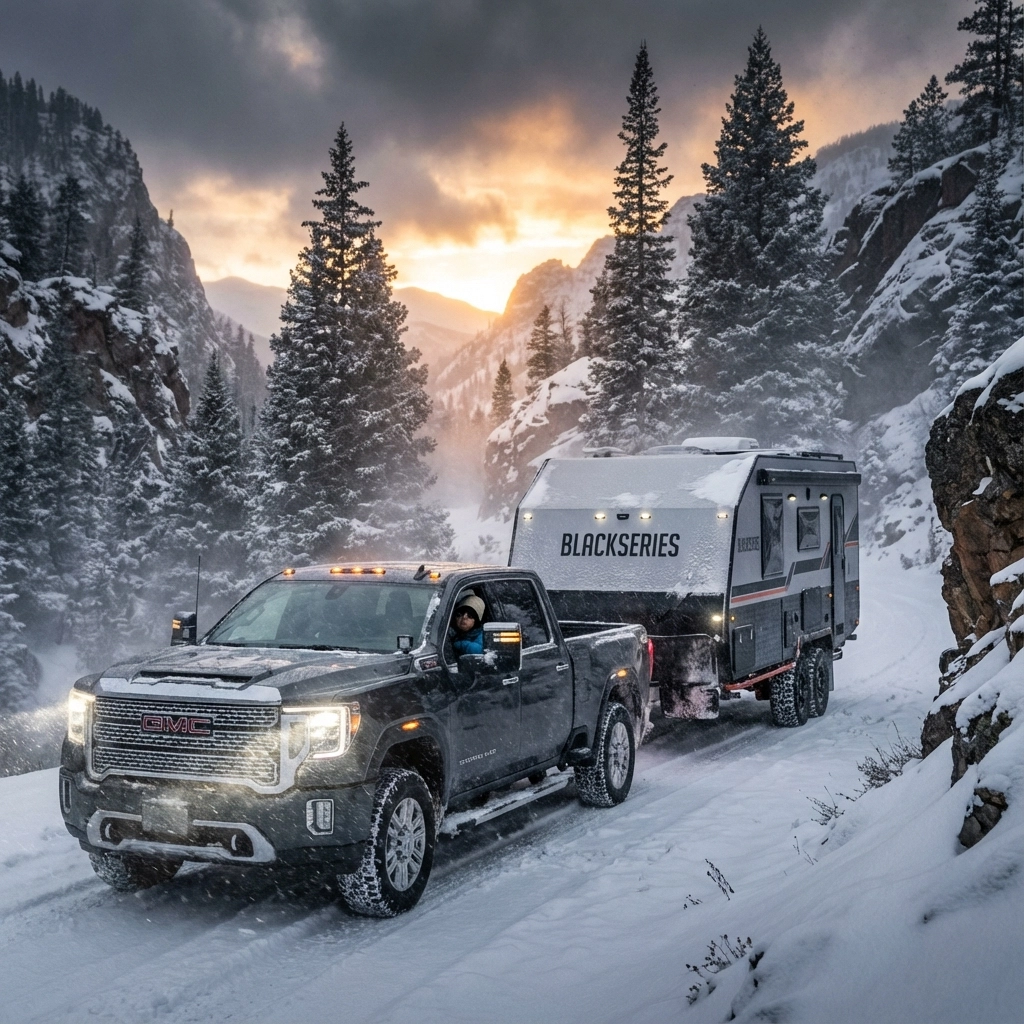
Essential 4WD Systems for Extreme Terrain
Your 4WD system faces its greatest test in subzero conditions when fluids thicken and metal contracts. Start with a proper warm-up protocol: allow your vehicle to reach operating temperature slowly, then drive gently for the first 10-15 minutes. This gradual process lets transmission fluid, differential oil, and wheel bearing grease reach optimal viscosity.
Differential and transfer case maintenance becomes critical below 20°F. Switch to winter-grade lubricants with lower viscosity ratings. Most manufacturers recommend 75W-90 synthetic gear oil for subzero conditions, compared to standard 80W-90 summer weights.
BlackSeries trailers feature independent suspension systems that maintain stability even when tow vehicles experience reduced traction. Our reinforced A-frame construction distributes weight evenly, preventing the rear-end lightness that plagues conventional travel trailers in snow conditions.
Traction control integration is where many campers fail. Modern 4WD systems rely on wheel speed sensors that can freeze or become snow-packed. Clean sensors regularly and apply dielectric grease to electrical connections. For extended winter travel, consider upgrading to heated differential covers: a modification that pays dividends in reliability.
Choosing and Prepping Tires for Winter Camping
Tire selection for subzero camping requires understanding three performance categories: traction, cold-weather flexibility, and durability. All-season tires lose 50% of their grip below 45°F as rubber compounds stiffen. Winter tires use specialized compounds that remain flexible down to -40°F.
For tow vehicles: Dedicated winter tires are mandatory. Load-rated tires (often E-range for heavy trailers) in winter compounds provide the best combination of traction and durability. Popular choices include the Toyo Open Country W/T and Continental TerrainContact A/T in winter compounds.
Tire pressure management requires constant attention in changing temperatures. For every 10°F temperature drop, tires lose 1-2 PSI. Slightly reduce pressure by 3-5 PSI for better snow traction, but never exceed manufacturer load limits. Under-inflation causes dangerous heat buildup and premature failure.
Snow chain considerations: Carry two types: standard link chains for deep snow and cable chains for ice. Practice installation in good weather. BlackSeries owners often report success with automatic traction devices like AutoSocks for quick deployment in emergency situations.

Heating Solutions: Keeping Your Camper Warm
Propane remains the gold standard for RV heating because it maintains consistent BTU output regardless of outside temperature. Butane systems fail below 32°F as the fuel won’t vaporize, making propane the only viable option for true subzero camping.
BlackSeries heating systems integrate multiple heat sources for redundancy and efficiency. Our Combi units provide both space heating and hot water from a single, efficient system. The sealed combustion design draws outside air for burning while heated air circulates inside: preventing moisture buildup that plagues cheaper systems.
Auxiliary heating options include diesel air heaters like Webasto and Espar units. These systems excel in extended cold-weather camping because they’re extremely efficient and can run continuously without depleting propane supplies. BlackSeries offers factory-installed Webasto systems with interior and exterior mounting options.
Insulation upgrades multiply heating system effectiveness. Our trailers feature closed-cell foam insulation with vapor barriers, but additional improvements include thermal window coverings, door seals, and floor insulation mats. The goal is maintaining a 40-50°F temperature differential between inside and outside without overworking heating systems.
Ventilation remains critical even in subzero conditions. Proper air circulation prevents condensation buildup that can freeze and damage interior surfaces. BlackSeries ventilation systems include both intake and exhaust fans that can operate even when outside temperatures require supplemental heating.
Power System Upgrades for Freezing Conditions
Battery performance drops dramatically in cold weather: lithium batteries lose 20% capacity at 32°F, while lead-acid batteries can lose 50% at 0°F. This makes power system planning critical for subzero success.
Lithium iron phosphate (LiFePO4) batteries with built-in heating elements represent the current gold standard for winter camping. These systems automatically warm the battery before charging begins and maintain optimal temperature during discharge. BlackSeries partners with leading battery manufacturers to offer heated lithium systems sized for extended off-grid camping.
Solar charging faces unique winter challenges. Snow and ice reduce panel output by 80-90%, while shorter days limit charging hours. The solution is oversized solar arrays: typically 2-3 times summer capacity: combined with manual panel clearing and optimal tilt angles. BlackSeries roof-mounted systems include manual tilt capabilities for winter optimization.
Shore power becomes invaluable during extended winter camping. Our electrical systems include advanced battery chargers that can operate in staged charging modes, maintaining batteries without overcharging while powering heating systems directly from campground power.
Generator backup systems provide insurance against extended cloudy periods or equipment failure. Portable generators should be rated for subzero operation with appropriate oil viscosities and cold-weather starting procedures.
Real-World Case: BlackSeries Owners Surviving Subzero Expeditions
Case Study 1: Montana Backcountry, -22°F
BlackSeries HQ19 owner Jake Morrison spent 12 days winter camping in Montana’s Bob Marshall Wilderness during a record cold snap. “The Webasto heater ran continuously for 72 hours straight without missing a beat. Our heated lithium system maintained full power even when neighboring RVs couldn’t start their engines.”
Morrison’s preparation included oversized solar panels, auxiliary battery bank, and emergency propane supply. Key success factor: redundant systems. When his primary heater developed a minor issue, the backup electric heating system maintained comfort while repairs were made.
Case Study 2: Colorado High Country, 10,000+ Feet
The Peterson family tackled winter camping above treeline with their BlackSeries HQ21. At altitude, they faced 60 MPH winds and -15°F temperatures. “The trailer never budged in winds that were moving full-size trucks. The insulation kept us comfortable while using minimal propane.”
Their success strategies included:
- Pre-trip system testing at home
- Extra propane bottles and battery capacity
- Emergency communication devices
- Comprehensive tool kit for minor repairs
These real-world examples demonstrate that proper equipment combined with thorough preparation enables safe, comfortable subzero camping adventures that would be impossible with conventional RVs.
FAQ
What temperature rating should I look for in winter camping equipment?
Look for equipment rated to at least -20°F for serious winter camping. This includes sleeping bags, heating systems, and battery components. Always plan for temperatures 20-30°F below forecast minimums as a safety margin.
How do I prevent my RV’s water system from freezing?
Drain all water lines completely when temperatures drop below 25°F. Use RV antifreeze in P-traps and holding tanks. Install tank heaters and insulated fresh water lines for extended winter camping. Never use automotive antifreeze in potable water systems.
Can I run my RV air conditioner as a heat pump in winter?
Most RV air conditioners lose efficiency below 40°F and stop working entirely around 20°F. Heat pump systems work down to about 25°F but become extremely inefficient. Propane heating is far more reliable and cost-effective for winter camping.
How much extra battery capacity do I need for winter camping?
Plan for double your normal battery capacity in winter conditions. Cold weather reduces battery performance while heating systems dramatically increase power consumption. A typical summer setup might need 200Ah capacity, while winter camping often requires 400-600Ah.
What’s the difference between winter tires and all-season tires for towing?
Winter tires use rubber compounds that stay flexible below 45°F, providing significantly better traction. All-season tires become stiff and lose grip in cold conditions. For heavy towing, winter tires can improve braking distances by 30-40% on ice and snow.
Should I use tire chains on both my tow vehicle and trailer?
Install chains on your tow vehicle’s drive wheels first. Trailer chains are only necessary for extreme conditions or steep grades. Over-chaining can cause handling problems and unnecessary wear. Most winter camping situations require chains only on the tow vehicle.
How often should I check my propane system in winter?
Inspect propane connections weekly during winter camping and after any temperature extreme. Cold weather can cause fittings to contract and develop leaks. Keep spare regulators and fittings as emergency replacements. Test all appliances before each trip.
Is it safe to run a generator inside my RV during winter storms?
Never run generators inside any enclosed space. Generators produce deadly carbon monoxide and require adequate ventilation. Set up generators outside with proper weather protection, maintaining at least 10 feet distance from RV windows and vents. Consider permanent generator installations with proper ventilation systems.

