
Your cart (0)
Your cart is empty
Tax included and shipping calculated at checkout
Your cart is empty
Tax included and shipping calculated at checkout

This guide walks you through how to properly match a tow vehicle and travel trailer in the U.S. , from understanding GVWR and tow ratings to choosing the right SUV or truck for off-road Blackseries trailers.
Getting your tow vehicle and trailer match wrong isn’t just inconvenient, it’s dangerous and expensive. In the U.S., improper vehicle-trailer combinations contribute to thousands of towing-related accidents annually, with consequences ranging from jackknifing to complete loss of control.
Legal and Financial Risks: Exceeding your vehicle’s towing capacity can void warranties, invalidate insurance claims, and result in citations. Many states enforce strict towing regulations, and overweight combinations face hefty fines during DOT inspections.
Safety Concerns: Mismatched combinations create longer braking distances, reduced steering control, and increased sway. Off-road trailers like Blackseries models add complexity due to their heavier construction and independent suspension systems designed for extreme terrain.
Vehicle Longevity: Consistently towing beyond capacity accelerates transmission wear, engine stress, and cooling system failures, repairs that often exceed the cost difference between a properly-rated vehicle and your current setup.
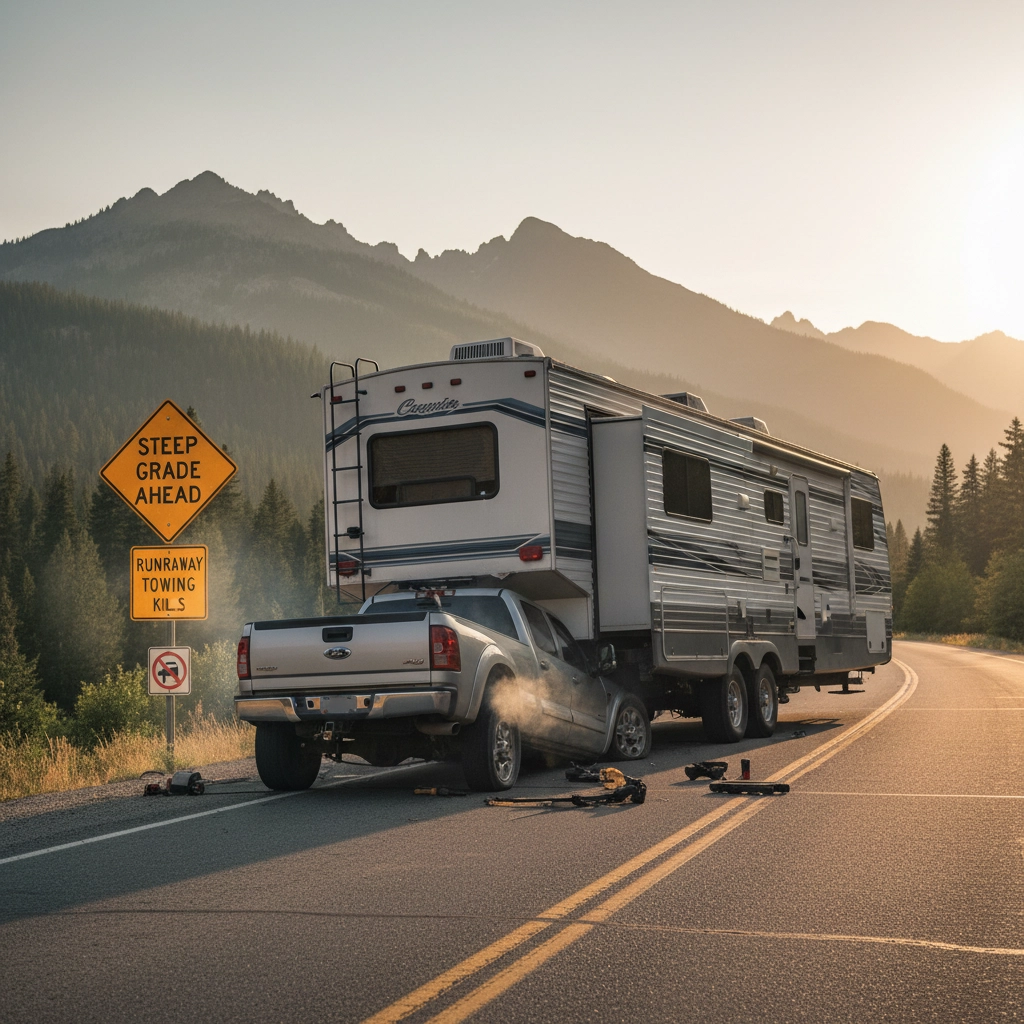
Understanding these critical specifications forms the foundation of safe GVWR matching and proper tow planning:
Gross Combined Weight Rating (GCWR): The maximum allowable weight of your loaded tow vehicle plus loaded trailer. This is your absolute ceiling, exceed it, and you’re operating illegally and unsafely.
Towing Capacity: Your vehicle’s maximum trailer weight rating, assuming proper hitch equipment and weight distribution. This number appears in owner’s manuals and manufacturer specifications.
Payload vs Towing Capacity: Payload includes passengers, cargo, and travel trailer tongue weight (typically 10-15% of trailer weight). Many owners mistakenly think tongue weight counts toward tow capacity, it doesn’t.
Gross Vehicle Weight Rating (GVWR): For trailers, this includes dry weight plus all cargo, water, propane, and gear. Real-world loaded weights often exceed manufacturer “dry weight” specifications by 1,000-2,000 lbs.
Tongue Weight: The downward force your trailer exerts on the hitch ball. Proper tongue weight (10-15% of trailer weight) ensures stability, while insufficient tongue weight causes dangerous sway.
Curb Weight vs Dry Weight: Your vehicle’s curb weight includes all fluids and standard equipment. Trailer dry weight excludes water, propane, cargo, and accessories, always calculate realistic loaded weights.
Start by locating your vehicle’s tow rating guide information on the driver’s door frame sticker, owner’s manual, or manufacturer website. Record these critical numbers:
Pro Tip: Don’t rely on generic online calculators. Vehicle configurations (engine, transmission, axle ratio) significantly affect towing capacity within the same model year.
Move beyond manufacturer “dry weights” and estimate realistic loaded weights:
For Blackseries travel trailer towing, expect 15-20% weight increases over dry specifications due to robust construction and extensive standard equipment.
Calculate tongue weight as 10-15% of total loaded trailer weight. This weight must fit within your vehicle’s payload capacity alongside passengers and cargo.
Example: A 6,000 lb loaded trailer generates 600-900 lbs tongue weight. If your truck’s payload is 1,500 lbs and you carry 400 lbs of passengers/gear, you need 900+ lbs remaining payload capacity.
Match your hitch system to trailer requirements:
Consider your intended use beyond basic towing capacity:

Best for: Mid-size trailers up to 8,500 lbs GVWR
Popular models like the Ford F-150, Chevrolet Silverado 1500, and RAM 1500 offer the sweet spot for most travel trailer applications. When properly equipped with tow packages, these trucks typically provide:
Recommended for: Blackseries HQ15, HQ17, and HQ19 models with careful attention to loaded weights and proper hitch systems.
Best for: Any travel trailer configuration without weight concerns
Ford F-250/350, Chevrolet Silverado 2500/3500, and RAM 2500/3500 eliminate towing capacity as a limiting factor:
Recommended for: Blackseries HQ21, fully-loaded expedition setups, or users prioritizing maximum capability margins.
Best for: Families needing passenger space with moderate towing needs
Chevrolet Tahoe, Ford Expedition, and GMC Yukon balance family utility with respectable towing:
Recommended for: Blackseries HQ12 and compact models, with careful payload management when fully loaded with passengers.
Best for: Compact trailers under 6,000 lbs
Toyota Tacoma, Chevrolet Colorado, and Jeep Gladiator offer adequate capability for entry-level towing:
Recommended for: Blackseries HQ12 only, with minimal cargo loading.
Many owners focus exclusively on towing capacity while overlooking payload limits. Payload vs towing capacity confusion leads to overloaded vehicles that handle poorly and risk mechanical failure.
Solution: Calculate total payload usage including passengers, cargo, and tongue weight before shopping for trailers.
Manufacturer dry weights exclude water, propane, gear, and accessories. Real-world loaded weights typically exceed dry specifications by 15-25%.
Solution: Add 1,500-2,000 lbs to advertised dry weights for realistic planning, especially with well-equipped models like Blackseries trailers.
Using weight-carrying hitches beyond their safe capacity creates dangerous sway and poor handling. The weight distribution hitch requirement above 5,000 lbs isn’t optional, it’s essential for safety.
Solution: Invest in properly-rated weight distribution systems and professional installation.
Identical model trucks can have dramatically different towing capacities based on engine, transmission, and axle ratio combinations.
Solution: Verify your specific vehicle’s towing capacity using VIN-specific manufacturer data, not generic model specifications.

Blackseries travel trailer towing demands special consideration due to the brand’s robust construction philosophy. These trailers feature:
This construction excellence means Blackseries trailers often weigh 10-15% more than comparable “lightweight” alternatives, requiring more capable tow vehicles.
Blackseries trailers excel in challenging terrain, but your truck for heavy travel trailer applications must match this capability:
Ground Clearance: Ensure your tow vehicle maintains adequate clearance when the trailer’s higher profile is considered. Standard passenger vehicles may scrape on terrain the trailer handles easily.
Approach and Departure Angles: SUV for off-road camper combinations require careful angle matching to prevent high-centering on steep approaches.
Cooling Systems: Off-road towing generates additional heat stress. Heavy-duty cooling packages become essential rather than optional for sustained off-road performance.
HQ12 (2,900 lbs dry): Mid-size trucks like Toyota Tacoma or Jeep Gladiator provide adequate capacity with excellent trail maneuverability.
HQ15-HQ19 (4,500-6,500 lbs dry): Half-ton trucks with tow packages offer optimal balance of capability and everyday usability.
HQ21 (7,000+ lbs loaded): Heavy-duty trucks provide necessary capacity margins for extended off-grid adventures with full gear loads.
Profile: Couple with occasional off-road camping, 3-4 day trips
Recommended Setup: Mid-size truck + Blackseries HQ12
Key Considerations: Compact size for trail access, adequate comfort for short trips
Profile: Experienced overlanders planning multi-week expeditions
Recommended Setup: Heavy-duty truck + Blackseries HQ19 or HQ21
Key Considerations: Maximum self-sufficiency, robust construction for remote areas
Profile: Family of four seeking accessible outdoor experiences
Recommended Setup: Full-size SUV + Blackseries HQ15
Key Considerations: Passenger space, moderate off-road capability, manageable size

Proper weight distribution hitch installation requires professional calibration. The system should:
Electric brake controllers require proper installation and adjustment for trailer-specific braking. Blackseries trailers benefit from proportional controllers that modulate braking force based on deceleration rates.
Consider suspension upgrades for vehicles near their towing limits:
Q: Can a half-ton truck safely tow a Blackseries HQ19?
A: Yes, when properly equipped with a tow package and weight distribution hitch. Verify your specific truck’s towing capacity exceeds the trailer’s loaded weight by at least 15% for safe operation.
Q: How much tongue weight should I expect from a Blackseries trailer?
A: Plan for 12-15% of total loaded trailer weight. A 6,000 lb loaded HQ19 generates approximately 720-900 lbs tongue weight, which must fit within your vehicle’s payload capacity.
Q: Do I need a heavy-duty truck for off-road towing?
A: Not necessarily. Mid-size and half-ton trucks handle most off-road towing when properly matched to trailer size. Heavy-duty trucks provide capability margins for extended expeditions and maximum cargo loading.
Q: What’s the difference between towing capacity and payload capacity?
A: Towing capacity is the maximum trailer weight your vehicle can pull. Payload capacity includes passengers, cargo, and tongue weight. Both limits must be respected simultaneously.
Q: How do I calculate if my vehicle can safely tow a specific trailer?
A: Add the trailer’s loaded weight to your vehicle’s loaded weight. This total must not exceed your GCWR. Additionally, tongue weight plus passengers and cargo must not exceed payload capacity.
Proper tow vehicle and trailer match planning ensures safe, enjoyable adventures while protecting your investment in both vehicle and trailer. Take time to verify specifications, plan for realistic loads, and invest in proper equipment: your safety and peace of mind depend on it.
Tow Vehicle & Trailer Match Guide | Weight & Compatibility最先出现在Black Series RV | Off-Road Travel Trailers, Toy Haulers & Camper Trailers | Off road rv | Off grid rv | Overland rv | Off road trailer | Off road travel trailer | Overland travel trailer。