Winter camping across the United States has exploded in popularity, with northern states like Montana, Colorado, and Minnesota seeing unprecedented demand for cold-weather RV adventures. As more Americans embrace full-time RV winter living and extended cold-weather trips, the need for properly insulated travel trailers has never been more critical.
The harsh reality? Most standard RVs simply aren’t designed for sustained sub-zero temperatures. Frozen pipes, interior condensation, and sky-high energy costs plague unprepared winter campers. This comprehensive guide will help you understand, evaluate, and optimize travel trailer insulation for safe, comfortable winter camping across the U.S.
The Growing U.S. Winter Camping Market
Winter RV camping is no longer a niche activity. Data from the RV Industry Association shows a 23% increase in winter camping participation since 2020, driven largely by remote work flexibility and a desire for unique seasonal experiences. Northern and mountain states lead this trend, with Colorado reporting a 35% increase in winter campground reservations.
The most common pain points facing winter campers include:
- Frozen water systems – pipes, tanks, and faucets failing in sub-zero temperatures
- Interior condensation – leading to mold, mildew, and structural damage
- Excessive energy consumption – propane and battery depletion from inefficient heating
- Uneven heating – cold spots and thermal bridging causing comfort and safety issues
Off-road travel trailers with robust construction typically outperform standard RVs in winter conditions, thanks to stronger insulation packages and weather-resistant designs built for extreme environments.
Understanding Winter Insulation: Key Terms Explained
Before evaluating trailers, it’s essential to understand the technical terminology that separates truly winter-capable units from basic models with marketing claims.
R-Value measures thermal resistance – higher numbers mean better insulation. Look for minimum R-21 wall insulation and R-35+ roof insulation for serious winter camping.
Closed-Cell Foam vs. Fiberglass – Closed-cell foam provides superior moisture resistance and consistent R-values, while fiberglass can settle and lose effectiveness when wet.
Thermal Bridging occurs when metal framing conducts cold through walls, creating interior cold spots. Premium trailers use thermal breaks or composite construction to eliminate this issue.
Enclosed & Heated Underbelly refers to a fully sealed compartment beneath the trailer that houses plumbing with dedicated heating to prevent freezing.
Double-Pane Windows reduce heat loss and condensation compared to single-pane units standard in most RVs.
Four-Season Package typically includes upgraded insulation, enclosed underbelly, heated tanks, and improved windows – though definitions vary by manufacturer.
Reflective/Foil Insulation works by reflecting radiant heat back into the living space, often used in combination with traditional insulation.
Ducted vs. Radiant Heat – Ducted systems distribute warm air throughout the trailer, while radiant systems heat surfaces directly.
How to Evaluate a Travel Trailer’s Winter Insulation
1. Inspect Wall, Roof, and Floor Construction
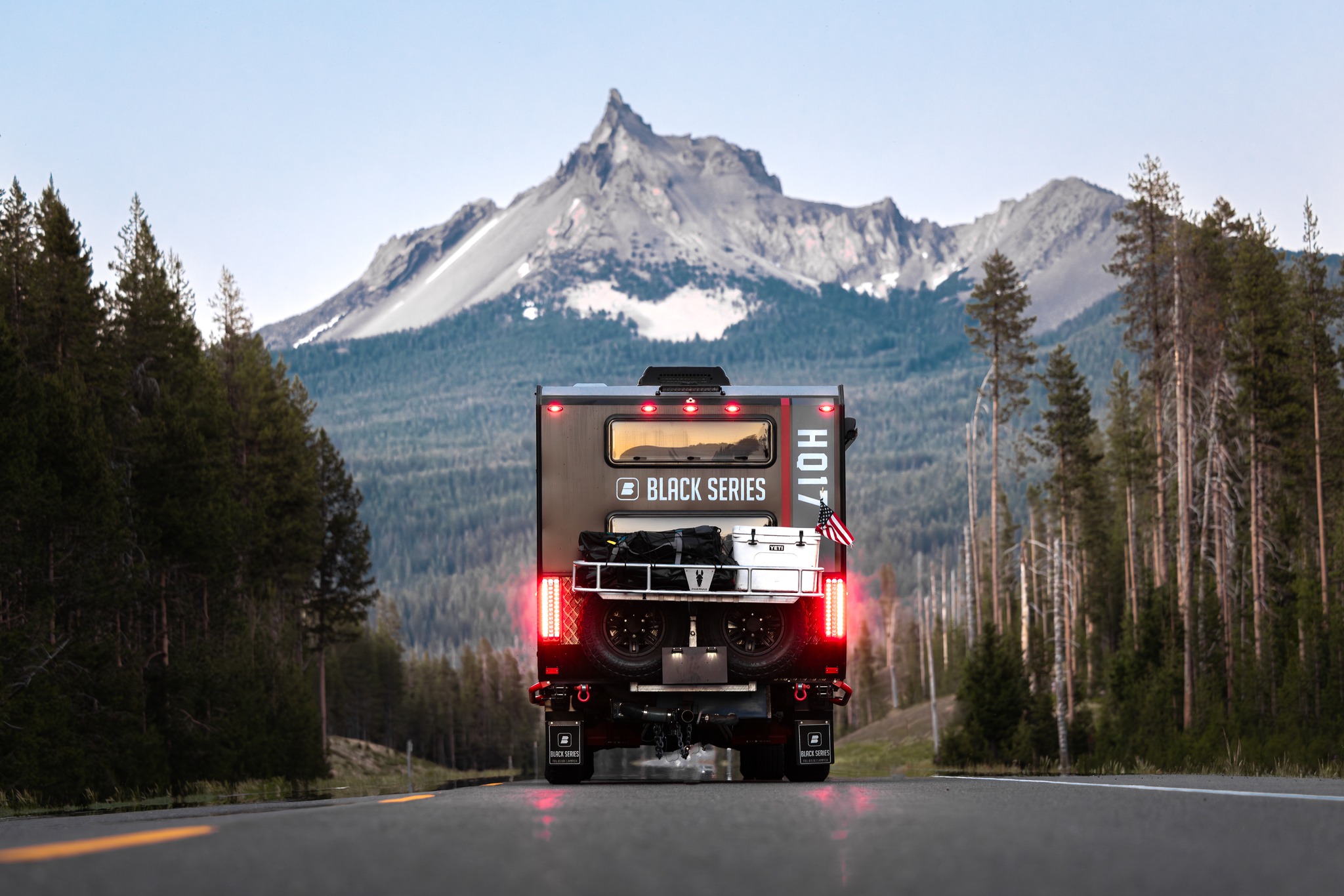
The foundation of winter performance lies in the insulation system. Look for closed-cell foam insulation rather than fiberglass batting. Quality manufacturers like Blackseries use aluminum composite walls with foam core construction that eliminates air gaps and thermal bridging.
Quick Check: Ask for specific R-values and insulation types. Avoid trailers that only mention “winter package” without technical specifications.
2. Examine the Underbelly System
This is arguably the most critical component for winter capability. The underbelly must be:
- Fully enclosed with no gaps or openings
- Heated with dedicated systems for tanks and plumbing
- Insulated to protect freshwater, grey, and black tanks
- Accessible for maintenance without compromising the thermal envelope
Winterizing your travel trailer becomes much easier with a properly designed underbelly system.
3. Window and Door Quality Assessment
Double-pane windows significantly outperform single-pane units for heat retention and condensation control. Check door seals and gaskets for tight closure – gaps here cause major heat loss and moisture infiltration.
4. Heating System Efficiency
Evaluate the furnace BTU rating against trailer square footage. Look for systems offering both propane and electric heating options for flexibility. Ducted heat distribution ensures even temperatures throughout the living space.
5. Ventilation and Moisture Control
Proper ventilation prevents the condensation that plagues winter RVers. Check for insulated vent covers and fans designed for four-season use. MaxxFan roof vents should have insulated winter covers to prevent heat loss.

Step-by-Step Winterization Guide
Essential Winterization Checklist:
- Drain all water systems completely, including hot water heater and low points
- Add RV antifreeze to all plumbing lines and traps
- Install or inspect underbelly insulation and check for gaps or damage
- Add trailer skirting to create a thermal barrier around the base
- Install insulated vent cushions on all exterior vents
- Use heated water hoses and heat tape for hookups
- Service and test furnace and carbon monoxide detectors
- Apply reflective window insulation to reduce heat loss through glass
- Calculate propane consumption and stock adequate supplies
- Implement battery protection strategies for off-grid scenarios
For off-grid winter camping, plan for reduced solar efficiency and increased battery heating needs.
Download our comprehensive Winter Prep Checklist PDF for a printable reference guide.
Best Insulated Travel Trailers for Winter 2025
Blackseries Off-Road Trailers
- Insulation: Aluminum composite walls with closed-cell foam core
- Underbelly: Fully enclosed and heated
- Windows: Double-pane with thermal breaks
- Best For: Off-grid mountain camping and extreme conditions
- Average Weight Range: 3,500-5,500 lbs
Lance Travel Trailers
- Insulation: Fiberglass walls with upgraded R-values
- Underbelly: Enclosed on most models
- Windows: Double-pane standard
- Best For: Lightweight towing with good winter performance
Arctic Fox by Northwood
- Insulation: True four-season construction with high R-values
- Underbelly: Heated and enclosed
- Windows: Triple-pane available
- Best For: Extended winter living and harsh climates
Airstream
- Insulation: Double-wall aluminum construction
- Underbelly: Varies by model
- Windows: Single or double-pane depending on year
- Best For: Style-conscious winter camping with modifications
Keystone Montana
- Insulation: Residential-style insulation packages
- Underbelly: Enclosed on winter models
- Windows: Double-pane with some triple options
- Best For: Family winter camping with home-like comfort
When evaluating best insulated travel trailers for cold weather, consider your specific use case and target temperatures.
Blackseries Winter Advantages
Blackseries trailers offer distinct structural advantages for winter camping:
Construction Benefits:
- Aluminum composite walls eliminate thermal bridging common in stick-frame construction
- Heavy-duty chassis provides stability for winter road conditions and high winds
- Independent suspension improves handling on icy or uneven terrain
Winter-Specific Features:
- Factory-integrated solar and lithium battery systems support off-grid winter camping
- Reinforced door and window seals exceed standard RV specifications
- Designed for mountain pass travel and sub-zero temperatures
Ideal Applications:
- Colorado Rocky Mountain winter camping
- Utah backcountry boondocking in snow
- Northern state extended winter travel (Montana, Wyoming, Minnesota)
The robust construction and premium insulation packages make Blackseries trailers particularly well-suited for serious winter adventurers who venture beyond established campgrounds.
Real-World Winter Camping Case Studies
Case Study 1: Mountain Pass Camping (-10°F)
Location: Rocky Mountain National Park, Colorado
Challenge: Sustained sub-zero temperatures with high winds
Solution Focus: Double-pane windows with reflective insulation and heated underbelly prevented pipe freezing while maintaining comfortable interior temperatures. Ducted heating system provided even heat distribution.
Case Study 2: Full-Time Winter Living
Location: Minnesota/Wisconsin border region
Challenge: 4-month winter with temperatures to -25°F
Solution Focus: Humidity control through proper ventilation and moisture management prevented condensation issues. Strategic furnace operation and supplemental heating maintained livability without excessive propane consumption.
Case Study 3: Off-Grid Winter Boondocking
Location: Utah high desert, no hookups
Challenge: Week-long stay with limited solar generation
Solution Focus: Lithium battery heating, careful power management, and adequate propane reserves enabled comfortable off-grid winter camping despite reduced solar efficiency.
Frequently Asked Questions
How cold is too cold for a travel trailer?
Most standard RVs become problematic below 20°F. Properly insulated four-season trailers can handle temperatures down to -20°F or lower with adequate heating and winterization.
What R-value is considered good for winter camping?
Minimum R-21 for walls and R-35 for roofing. Premium winter trailers often exceed these values significantly.
How do I prevent my travel trailer pipes from freezing?
Use heated underbellies, insulated hoses, heat tape, and keep plumbing routed through heated interior spaces. Multiple protection methods work better than relying on any single solution.
Is a four-season package enough for full-time winter RVing?
It depends on the manufacturer’s definition and your target conditions. Research specific components rather than relying on marketing terms.
Are Blackseries trailers insulated for winter?
Yes, Blackseries uses aluminum composite construction with closed-cell foam cores and enclosed heated underbellies, making them well-suited for winter conditions.
Does skirting really help in freezing weather?
Absolutely. Proper skirting creates a thermal barrier that can raise underbelly temperatures by 20-30°F, significantly reducing freezing risk.
What is the cheapest way to improve trailer insulation?
Adding reflective window coverings, installing proper skirting, and sealing air leaks provide the most cost-effective improvements for existing trailers.
Can solar panels work effectively in winter?
Solar efficiency drops 40-60% in winter due to shorter days and snow cover, but properly sized systems with adequate battery storage can still support winter camping needs.
Winter camping with a travel trailer opens up incredible opportunities across the U.S., from snow-covered national parks to peaceful winter boondocking spots. Success depends on choosing the right equipment, understanding the technical requirements, and preparing thoroughly for the unique challenges of cold-weather RVing.
Whether you’re considering sub-zero off-road trailers for extreme adventures or simply want to extend your camping season into the shoulder months, proper insulation and winterization make all the difference between a memorable adventure and a miserable experience.

