
Your cart (0)
Your cart is empty
Tax included and shipping calculated at checkout
Your cart is empty
Tax included and shipping calculated at checkout

Off-grid camping, particularly “boondocking” and “off-grid RVing,” is experiencing rapid growth across western states including California, Arizona, Utah, and Colorado. Rising hook-up fees at traditional RV parks and campgrounds are driving more outdoor enthusiasts toward self-sufficient camping experiences.
American RV users face several key off-grid power challenges:

Before diving into system components, let’s clarify key terms every off-grid camper should know:
Solar Wattage (W): The power output rating of your solar panels
Battery Capacity: Measured in amp-hours (Ah), watt-hours (Wh), or kilowatt-hours (kWh)
Battery Types: Lithium (LiFePO4), AGM, and traditional Lead-acid
Charge Controllers: MPPT (Maximum Power Point Tracking) vs PWM (Pulse Width Modulation)
Inverters: Pure sine wave vs modified sine wave
DC vs AC Loads: Direct current appliances vs alternating current household items
Shore Power: Connection to grid electricity at campsites
Generator Backup: Portable or built-in backup power source
System Voltage: 12V, 24V, or 48V configurations for advanced setups
Solar panels form the foundation of most off-grid power systems. You have two main options:
Roof-mounted panels provide permanent, aerodynamic installation ideal for full-time travelers. Portable panels offer flexibility for positioning and are popular among American users who prefer optimizing sun angles throughout the day.
Most BlackSeries-compatible systems range from 200W for light usage to 600W for extended boondocking adventures.
Your battery choice dramatically impacts system performance:
Lead-acid batteries offer the lowest upfront cost but provide poor performance, especially in cold weather. They’re heavy and require regular maintenance.
AGM (Absorbed Glass Mat) batteries deliver better performance and durability than standard lead-acid but remain heavy and expensive for their capacity.
Lithium LiFePO4 batteries represent the best choice for serious off-grid camping. They’re lighter, last longer, perform better in extreme temperatures, and provide consistent power output. Typical capacities range from 100Ah for weekend trips to 400Ah for extended adventures.
For winter camping in places like Colorado, lithium batteries maintain performance in freezing temperatures where lead-acid batteries fail.
MPPT charge controllers improve efficiency by 15-30% compared to PWM controllers. This technology is crucial for maximizing solar harvest, especially during shorter winter days or cloudy conditions common in mountain regions.
Your inverter converts 12V DC battery power to 120V AC power for household appliances. Pure sine wave inverters provide stable, clean power for sensitive electronics like laptops, TVs, and modern appliances.
Size your inverter to handle:
Despite advances in solar and battery technology, many American RV users still rely on generators for backup power. The Honda EU2200i remains the most popular choice, offering reliable power with relatively low noise levels.
Modern battery monitors with Bluetooth connectivity and smartphone apps allow real-time tracking of power consumption, solar production, and battery status.
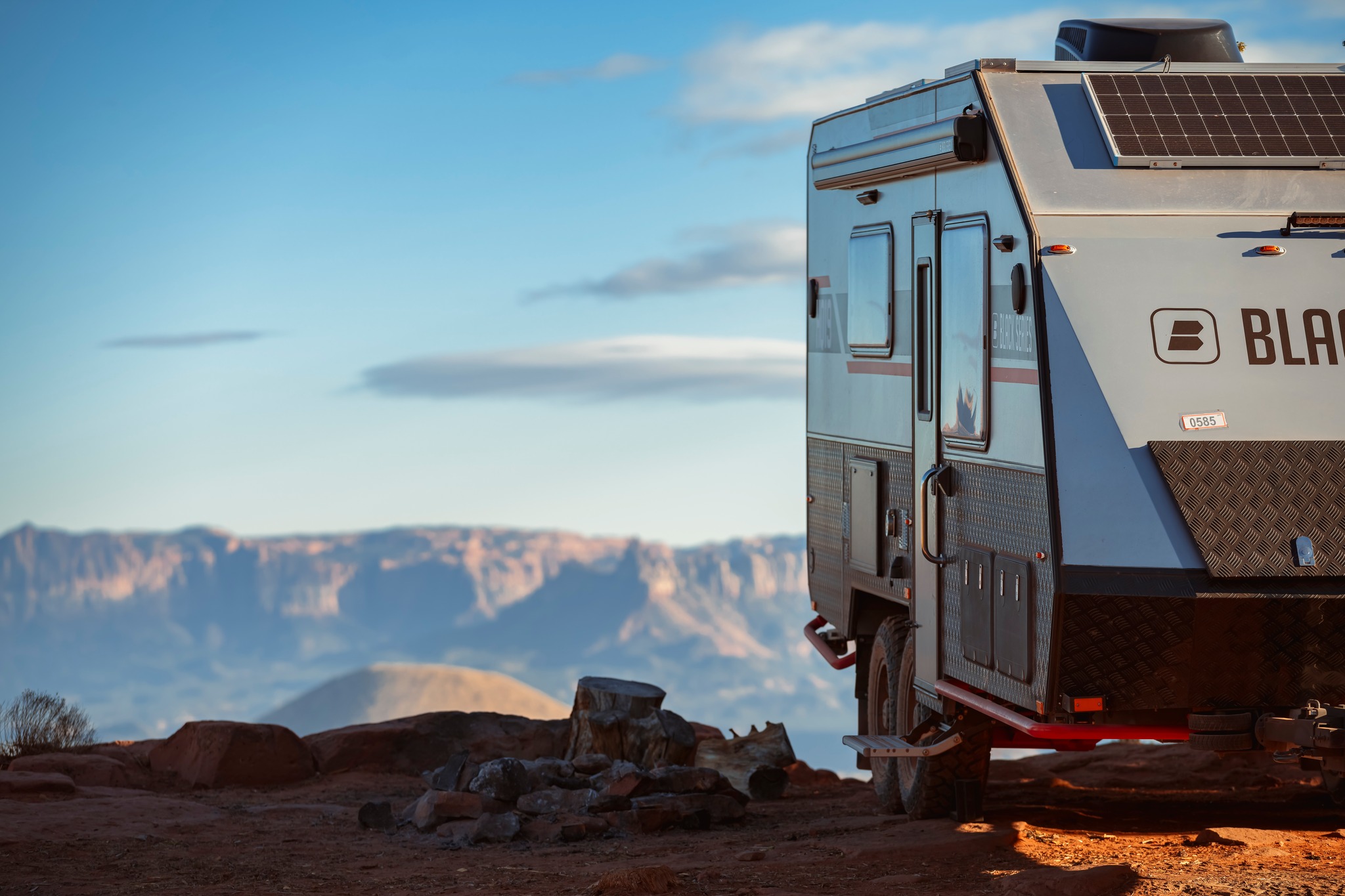
Start by listing all electrical devices and their daily usage:
Use this formula: Total Daily Wh × Days Off-grid ÷ 0.85 (system losses)
For example, if you use 2,000Wh per day and want 3 days of autonomy:
2,000Wh × 3 days ÷ 0.85 = 7,059Wh required battery capacity
Solar needs vary dramatically by location and season:
Arizona provides excellent solar conditions year-round, while Washington State requires larger arrays to compensate for frequent cloudy weather and shorter winter days.
Use appropriate wire gauge (AWG) for your current loads, install proper fusing, and ensure all connections are secure and weatherproof.
This configuration provides excellent performance for most American camping scenarios and works particularly well with BlackSeries trailers’ robust electrical systems.
Good for occasional off-grid camping but limited by battery weight and performance.
Suitable for short trips but noisy and fuel-dependent.
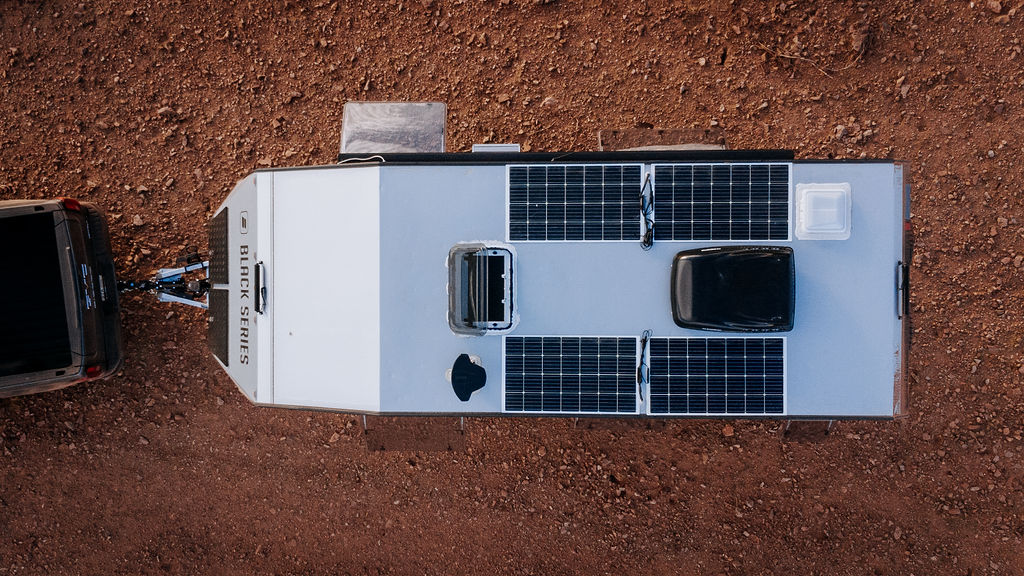
BlackSeries trailers are engineered with off-grid camping in mind, offering several advantages:
Roof-ready solar layout with pre-wiring and mounting points for easy panel installation
Extra-large battery compartments designed to accommodate high-capacity lithium battery banks
Robust chassis construction supports heavier electrical components without compromising towing stability
Independent suspension and high ground clearance protect electrical systems during off-road adventures
These design elements make BlackSeries trailers particularly well-suited for serious off-grid enthusiasts exploring remote areas of the American West.
With excellent solar conditions and moderate temperatures, a 400W solar array with 200Ah lithium easily supports full electrical loads including refrigeration, lighting, and electronics.
Reduced solar efficiency and increased heating demands require larger systems. Successful winter camping typically needs 600W+ solar with 400Ah+ lithium, plus generator backup for extended cloudy periods.
Permanent off-grid residents often run 800Ah+ lithium systems with 800W+ solar arrays, providing complete energy independence.
How much solar do I need for off-grid travel trailer camping?
Most weekend campers need 200-400W, while extended boondocking requires 400-600W or more.
Is lithium worth it for off-grid trailers?
Yes, especially for serious off-grid camping. Lithium batteries provide better performance, longer life, and weight savings despite higher upfront costs.
Can I run an AC unit off-grid with solar?
Running AC requires substantial power (1,500+ watts continuous). It’s possible with large solar arrays (800W+) and battery banks (400Ah+), but challenging.
How long can a trailer stay off-grid with 200Ah lithium?
Depending on usage, 2-4 days typically, assuming moderate electrical loads and no solar charging.
Do I need a generator if I have lithium batteries?
For extended trips or winter camping, generators provide valuable backup despite having lithium batteries.
Off-grid camping offers unprecedented freedom to explore America’s most remote and beautiful locations. With proper planning and the right power system, you can enjoy all the comforts of home while maintaining complete energy independence. Whether you’re planning weekend desert adventures or full-time RV living, understanding these power system fundamentals will help you make informed decisions for your specific camping style and needs.
Off-Grid Power Systems for Trailers | Solar & Lithium Setup Guide最先出现在Black Series RV | Off-Road Travel Trailers, Toy Haulers & Camper Trailers | Off road rv | Off grid rv | Overland rv | Off road trailer | Off road travel trailer | Overland travel trailer。