Trading in your towable RV is the most efficient way to swap your current travel trailer or camper for a more capable rig without the headaches of private sales. Whether you’re towing a compact 16 ft camper or a full-size fifth wheel, understanding how the trade-in process works in 2026 can save you thousands of dollars and weeks of frustration.
This guide breaks down everything you need to know, from valuation factors to common mistakes, so you can maximize your trade-in value and upgrade to the adventure rig you actually want.
What Is a Towable RV Trade-In?
A towable RV trade-in allows you to apply the value of your current towable RV, such as a travel trailer, fifth wheel, or camper, toward another RV through a dealer, without selling it privately.
Here’s what makes it different from other options:
- Towable RV ≠ Motorhome: Trade-in processes for towables focus on structural integrity, suspension, and towing specs rather than drivetrain and engine condition.
- Dealer handles everything: The dealership manages inspection, valuation, paperwork, title transfer, and resale, removing the burden from you.
- Mainstream upgrade path: In the United States, dealer trade-ins remain the most common way towable RV owners upgrade their rigs in 2026.
The process is straightforward: you bring in your current unit, receive a trade-in offer based on market value, and that amount gets deducted from your new purchase price. Simple, fast, and tax-advantaged in most states.
Types of Towable RVs You Can Trade In
Not sure if your rig qualifies? Here are the main towable categories dealers accept:
Travel Trailers
The most common towable RV type, ranging from compact units with a 16 ft camper weight around 2,500 lbs to larger models where 24 ft camper weight can exceed 5,500 lbs. Check out our detailed travel trailer weight guide for specifics.
Fifth Wheels
Larger units that connect via a hitch in the truck bed. These typically have higher average travel trailer weights and can be more challenging to sell privately due to their size.
Off-Road and Overland Campers
Purpose-built for rough terrain with reinforced frames, independent suspension, and off-grid capabilities. The off-road travel trailer segment is growing rapidly in 2026.
Lightweight and Hybrid Towables
Compact units under 5,000 lbs that can be towed by SUVs and midsize trucks. These often command strong trade-in values due to accessibility.
How Does a Towable RV Trade-In Work?
The trade-in process follows a predictable sequence. Here’s what to expect:
Step 1: Submit Your Towable RV Information
Provide the dealer with basic details: type, brand, model year, length, and current condition. Photos help speed up initial estimates.
Step 2: Professional Valuation
Dealers use NADA Guides as a baseline, then adjust based on regional market demand, seasonal timing, and your unit’s specific condition. Factors like average weight of camper, structural soundness, and upgrade history all play into the final number.
Step 3: Trade-In Offer
You’ll receive a formal offer. This is negotiable, especially if you’ve done your homework on comparable listings.
Step 4: Apply Credit Toward New RV
The agreed trade-in value gets deducted from your new purchase price. In most states, you only pay sales tax on the difference.
Step 5: Title, Tax, and Loan Processing
The dealer handles title transfer and coordinates payoff with any existing lender. Processing times vary by state, but most transactions close within 1-2 weeks.
Towable RV Trade-In Value: What Affects It?
Understanding what drives your trade-in value helps you set realistic expectations, and negotiate better.
Core Factors
Weight and Size Matter
Market demand correlates strongly with towing accessibility. Units with an 18 ft camper weight under 4,000 lbs are highly sought after because they’re compatible with popular midsize trucks. Meanwhile, 30 foot RV weight often exceeds 7,500 lbs, limiting the buyer pool to those with heavy-duty tow vehicles.
Original Insight: In the secondary market, structural durability consistently outweighs flashy interior features. A well-maintained aluminum-frame trailer with basic amenities will often fetch a higher trade-in percentage than a feature-loaded unit with wood-frame water damage.

Where to Trade In a Towable RV
You have options. Here’s how they compare:
Bottom Line: If your goal is upgrading to a better towable RV, dealer trade-in is the most practical choice. You avoid months of tire-kickers and get same-day credit toward your new rig.
Can I Trade In a Towable RV With a Loan?
Yes. An outstanding loan doesn’t disqualify you from trading in.
Here’s how it works:
- Positive Equity: Your trade-in value exceeds your loan balance. The difference becomes credit toward your new RV.
- Negative Equity: You owe more than the RV is worth. The dealer can roll the difference into your new loan, though this increases your financing amount.
Watch Out: Large fifth wheels are more prone to negative equity situations due to their higher purchase prices and faster depreciation. If you’re significantly underwater, consider paying down the principal before trading in.
Is Trading In a Towable RV Worth It?
Evaluate these factors before deciding:
For many owners, trading a standard towable for a more capable, lighter, or more durable unit isn’t a lateral move, it’s a genuine upgrade in lifestyle flexibility.
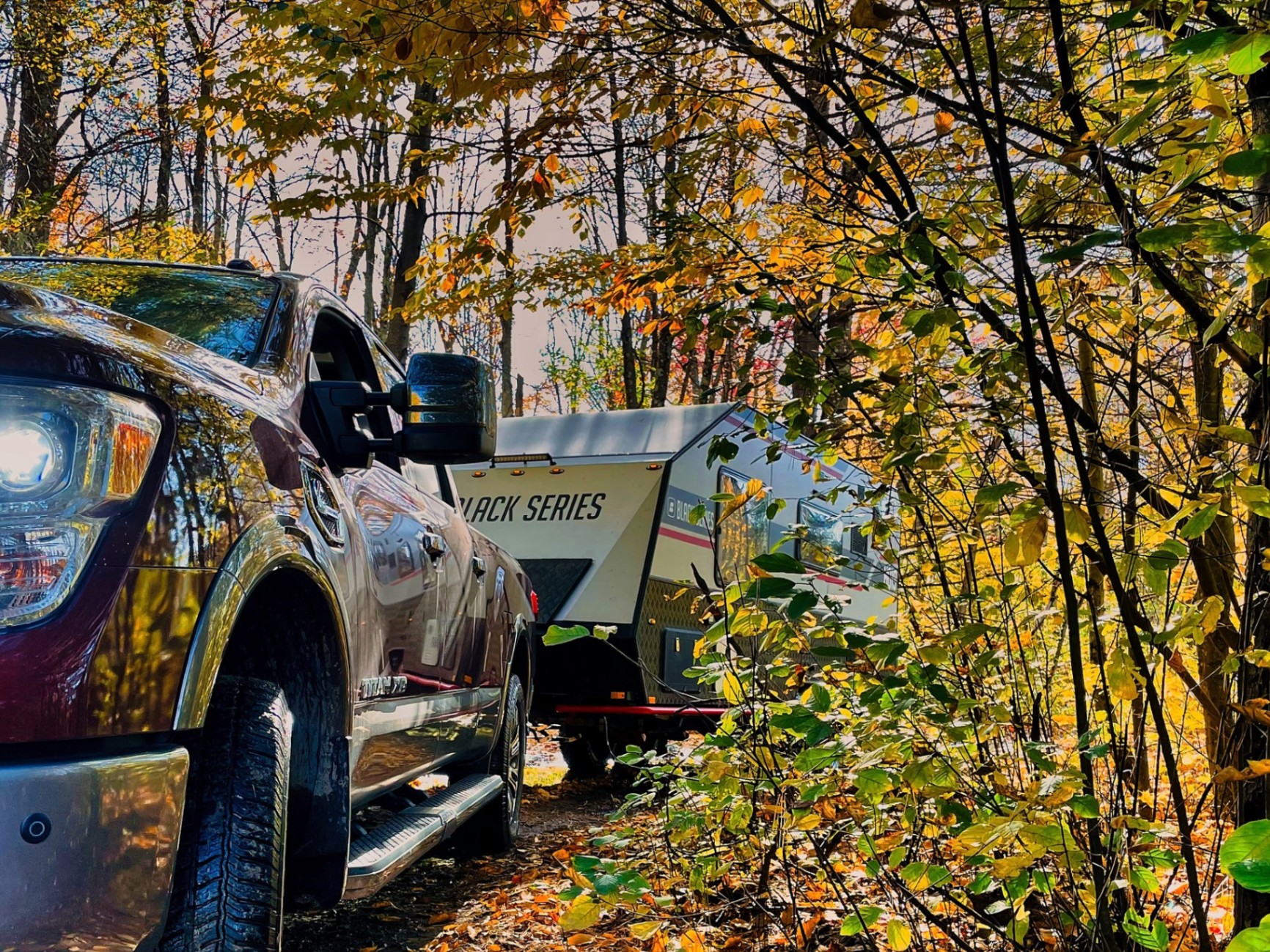
Why Many Owners Trade In Towable RVs for BlackSeries
The shift we’re seeing in 2026 isn’t just about swapping one trailer for another, it’s about upgrading from a “standard towable” to a “capability-driven towable.”
Here’s why BlackSeries models attract trade-in customers:
- All-Aluminum Construction: Eliminates wood-frame rot and water damage concerns that plague traditional trailers
- Independent Suspension: Smoother towing and genuine off-road capability, not just marketing claims
- Standard Off-Grid Systems: Solar, lithium batteries, and onboard water systems come ready to go
- Designed for Overland Use: Access locations that standard travel trailers simply can’t reach
- Strong Resale Position: Limited inventory means BlackSeries units hold value better than mass-market brands
Explore the HQ21 to see what capability-focused engineering looks like.
Common Towable RV Trade-In Mistakes to Avoid
Don’t leave money on the table. Avoid these errors:
- Treating Fifth Wheels and Travel Trailers the Same
They have different buyer pools, depreciation curves, and valuation factors. Research your specific category. - Focusing Only on the Trade-In Number
A slightly lower trade-in offer paired with a better deal on your new RV can net you more savings overall. - Ignoring Tax Benefits
Most states only tax the price difference after trade-in credit. This can save you hundreds or thousands. - Horizontal Upgrading
Trading one standard towable for another standard towable keeps you in the same cycle. Consider whether a purpose-built off-road travel trailer might serve you better long-term. - Trading in Off-Season
RV demand peaks March through June. Trading in during spring typically yields 5-15% better offers.
Frequently Asked Questions
How does a towable RV trade-in work?
You submit your RV’s information, receive a dealer valuation based on NADA guides and market conditions, negotiate an offer, and apply that credit toward your new purchase. The dealer handles title transfer and any loan payoff.
What is the average towable RV trade-in value?
Values vary widely based on type, age, and condition. A well-maintained 5-year-old travel trailer typically trades for 40-55% of its original MSRP. Factors like 18 ft camper weight, brand reputation, and structural condition significantly impact final offers.
Can I trade in any type of towable RV?
Most dealers accept travel trailers, fifth wheels, off-road campers, and lightweight hybrids. Specialty units may require dealers with relevant expertise.
Does BlackSeries accept non-BlackSeries towable RVs for trade-in?
Yes. Many owners trade in travel trailers, fifth wheels, and other brands when upgrading to a BlackSeries off-road travel trailer. Contact a dealer to discuss your specific situation.
Ready to explore your trade-in options? Start by researching your current RV’s value, then reach out to dealers who specialize in the type of upgrade you’re seeking. The right trade-in can transform your camping experience from “good enough” to genuinely exceptional.

