Are you feeling stuck in your massive Class A? You’re not alone. Thousands of RV owners are discovering that bigger doesn’t always mean better, especially when your dream destinations require getting off the beaten path. Here’s your complete guide to trading in that Class A motorhome for a more capable adventure in 2026.
What Is a Class A Motorhome Trade-In?
A Class A motorhome trade-in allows you to apply the value of your existing motorhome toward another RV through a dealer, simplifying the process of upgrading or downsizing without the hassle of selling privately.
Unlike trading in a standard travel trailer, Class A trade-ins involve additional complexities. These large motorhomes have engines, transmissions, and drivetrains that require professional inspection. The dealer handles all evaluation, transfer of title, and compliance requirements, taking that burden off your shoulders.
This process has become the mainstream method for Class A owners looking to transition their RV lifestyle. Whether you’re upgrading to a different motorhome or switching to a more versatile off-road travel trailer, the trade-in route offers speed, security, and simplicity.
How Does a Class A Motorhome Trade-In Work?
The Class A trade-in process follows a structured path from initial contact to driving away with your new rig:
Step 1: Submit Your Motorhome Information
Provide the dealer with details about your Class A, including:
- Length and floor plan
- Chassis manufacturer (Freightliner, Spartan, Ford)
- Engine type (Diesel Pusher vs. Gas)
- Model year and current mileage
- Overall condition and maintenance history
Step 2: Professional Valuation
The dealer conducts a thorough assessment using NADA guides combined with regional market demand. Class A motorhomes require more extensive evaluation than towable RVs due to their mechanical components.
Step 3: Trade-In Offer
You’ll receive a formal trade-in quote. This amount typically sits below retail value to allow the dealer margin for reconditioning and resale.
Step 4: Price Deduction
Your trade-in value is applied directly against the purchase price of your new RV. This can significantly reduce your out-of-pocket expense or financing amount.
Step 5: Paperwork and Settlement
The dealer handles title transfer, loan payoff coordination, and state-specific tax documentation. Many states offer sales tax benefits when you trade rather than sell privately.
Class A Motorhome Trade-In Value: What Affects It?
Understanding what impacts your Class A’s trade-in value helps you set realistic expectations and maximize your return.
Chassis Type: Diesel Pusher vs. Gas
Diesel pushers generally command higher values but also depreciate in larger dollar amounts. Gas Class A units are more affordable initially but face steeper percentage depreciation.
Mileage and Engine Condition
Unlike travel trailers where the average weight of camper matters most, Class A values hinge heavily on drivetrain health. High mileage (100,000+) significantly reduces trade-in offers.
Slide-Outs and Structural Integrity
Multiple slide-outs increase living space but also introduce potential failure points. Dealers inspect seals, motors, and structural integrity carefully, water damage is a deal-breaker.
Brand and Market Position
Premium brands like Newmar and Tiffin retain value better than entry-level manufacturers. However, even luxury Class A units face challenging resale markets.
Market Seasonality
Spring and early summer see peak RV demand. Trading in during winter months typically yields 10-15% lower offers.
> Original Insight: Class A motorhomes often suffer from fast depreciation and low secondary market liquidity compared to rugged travel trailers. Current data shows Class A units retain only 45-50% of their value after five years, while well-built off-road trailers can maintain 60-70% value in the same timeframe.
Where to Trade In a Class A Motorhome
The reality: Private sales for Class A motorhomes are notoriously difficult. These units appeal to a narrow buyer pool, require significant storage during the sales process, and often sit on the market for 6-12 months. For owners ready to transition to a new adventure, dealer trade-in remains the most practical path forward.
Can I Trade In a Class A Motorhome With a Loan?
Yes, having an outstanding loan doesn’t disqualify you from trading in. However, Class A owners face unique challenges here.
Understanding Equity Position
- Positive equity: Your motorhome is worth more than you owe. The surplus applies to your new purchase.
- Negative equity: You owe more than the trade-in value. This “underwater” situation is common with luxury diesel Class A units that depreciated faster than the loan balance decreased.
Handling Negative Equity
Most dealers can roll negative equity into your new RV financing. However, this increases your new loan amount and monthly payments. For substantial negative equity ($15,000+), consider:
- Making additional payments before trading
- Waiting until market conditions improve
- Exploring refinancing options

Is Trading In a Class A Motorhome Worth It?
This decision extends beyond simple dollars and cents. Consider the full picture:
Usage Frequency vs. Ownership Costs
Many Class A owners discover they’re paying $800-1,500 monthly (loan, insurance, storage, maintenance) for a rig they use 15-20 days per year. That’s $50+ per night of actual use, before fuel and campground fees.
The “Bus Lifestyle” Limitations
Class A motorhomes restrict where you can go:
- Most national forest roads are inaccessible
- BLM dispersed camping becomes challenging
- Fuel costs ($400-600 per fill-up) limit spontaneous trips
- Clearances prevent access to remote destinations
The Transition Narrative
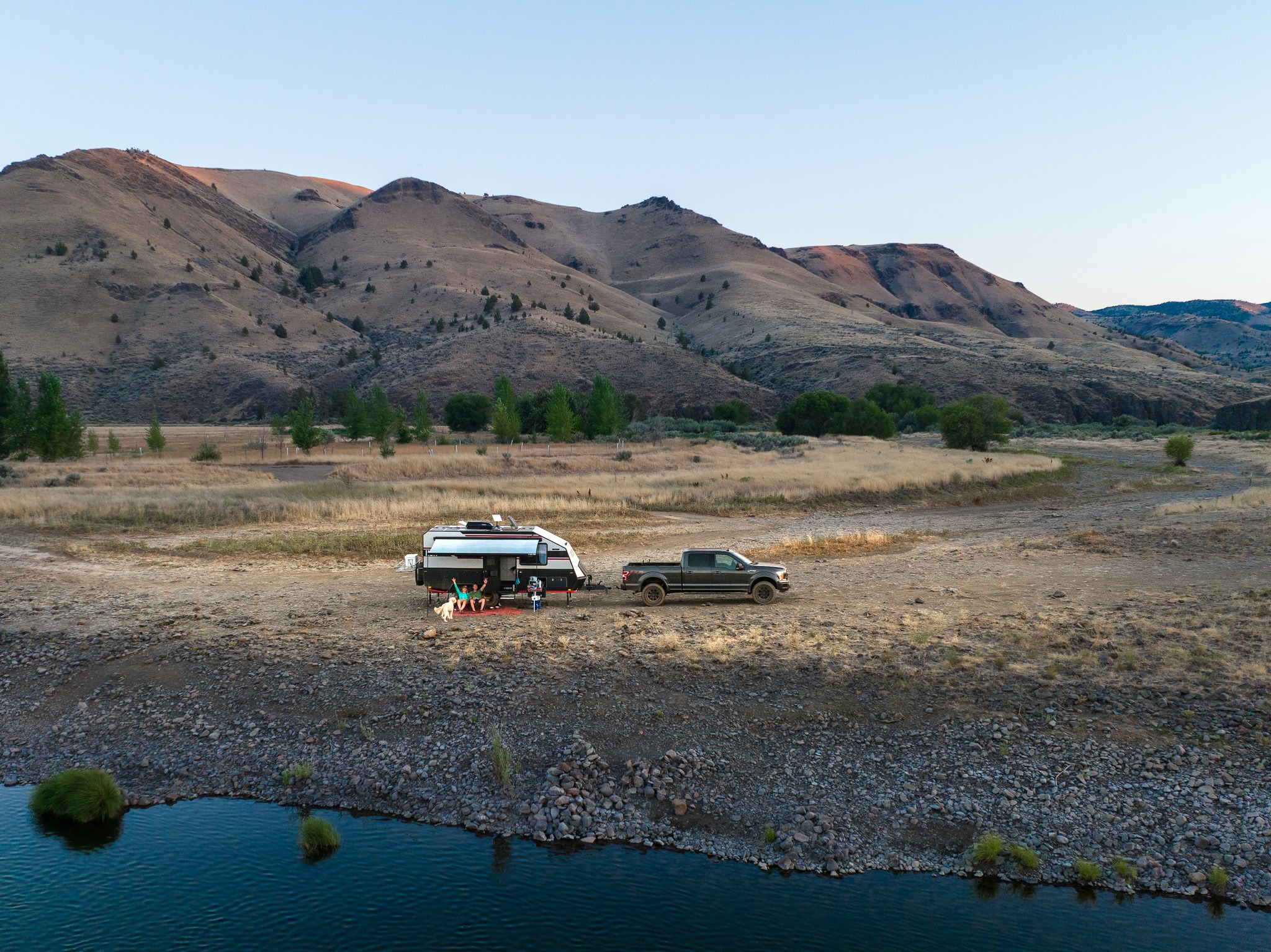
For many owners, moving from a 35-foot Class A to a capable off-road travel trailer isn’t downsizing, it’s upgrading their capability. When you compare average travel trailer weights to Class A specifications, the difference in accessibility becomes stark.
A well-equipped 24 ft camper weight comes in around 5,500-7,000 pounds, towable by most half-ton trucks. Compare that to a 35-foot diesel pusher at 30,000+ pounds, and the freedom equation shifts dramatically.
Why Many Class A Owners Trade In for BlackSeries
The transition from Class A to BlackSeries represents a philosophical shift: from luxury size to luxury capability.
From RV Parks to Anywhere
Class A ownership often means reservation-dependent camping at crowded RV parks. BlackSeries owners access remote canyons, mountain meadows, and coastal bluffs that no Class A could reach.
The Truck + Trailer Advantage
Separating your living space from your vehicle creates flexibility. Run errands, explore trails, or scout campsites without breaking down your entire setup. This modular approach is why many owners view trading their Class A as an upgrade, not a compromise.
All-Aluminum Construction
Unlike traditional RVs with wood-frame construction prone to rot and delamination, BlackSeries trailers feature full aluminum structures. This means dramatically lower long-term maintenance and superior resale value, addressing the exact depreciation concerns that plague Class A ownership.
Off-Grid Independence
Standard BlackSeries features include solar arrays, lithium batteries, and water systems designed for extended boondocking. No more planning trips around electrical hookups or dump stations.
Whether you’re considering a compact 16 ft camper weight option or a larger 30 ft camper weight configuration, the off-grid capability transforms how you travel.
Common Class A Motorhome Trade-In Mistakes to Avoid
Overestimating Market Demand
Class A buyers are scarce. Unlike travel trailers with broad appeal, Class A motorhomes target a narrow demographic. Don’t assume your unit will generate bidding wars.
Ignoring Total Ownership Costs
When calculating whether to trade, factor in storage ($150-400/month), insurance ($2,000-4,000/year), and preventive maintenance. These costs continue whether you’re using the rig or not.
Trading During Off-Season
Winter trade-ins typically yield 10-15% less than spring transactions. If possible, time your trade for March through June when dealer inventory needs peak.
Swapping for Another Restrictive RV
Some owners trade their Class A for a Fifth Wheel or another large unit, only to face similar accessibility limitations. If freedom is your goal, consider how the 30 foot rv weight of various options impacts where you can actually go.
Frequently Asked Questions
How does a Class A motorhome trade-in work?
You submit your motorhome details to a dealer, receive a professional valuation based on NADA guides and market conditions, then apply that value toward your next RV purchase. The dealer handles all title transfer, loan payoff, and compliance paperwork.
What is the average Class A motorhome trade-in value?
Values vary dramatically based on age, condition, and brand. Generally, expect 45-50% of original MSRP after five years. Diesel pushers may retain slightly higher values but depreciate in larger absolute dollars.
Can I trade in an older Class A motorhome?
Yes, though units over 15 years old may receive minimal trade-in offers due to limited resale demand. Dealers may still accept older units to facilitate a new sale, especially if you’re purchasing a premium product.
Does BlackSeries accept Class A motorhomes for trade-in?
BlackSeries works with dealer networks that can facilitate Class A trade-ins toward the purchase of our off-road travel trailers. Contact your nearest dealer to discuss your specific situation and receive a customized trade-in evaluation.
Ready to explore what true freedom looks like? Browse the BlackSeries lineup and discover why thousands of former Class A owners have made the switch to capability-focused adventure.

