A travel trailer checklist is your essential roadmap to safe, comfortable, and worry-free RV adventures. Every U.S. RV owner needs a comprehensive checklist to avoid forgotten essentials, ensure towing safety, and maximize their camping experience, whether you’re planning weekend getaways or full-time off-grid living.
Quick Travel Trailer Checklist Overview:
• Tow vehicle documents and registration
• Hitch system and safety chains inspection
• Brake and light functionality check
• Water, power, and propane systems
• Kitchen essentials and cooking gear
• Bedding, clothing, and personal items
• Emergency kit and repair tools
• Entertainment and outdoor gear
Blackseries trailers excel in long-distance travel and off-grid scenarios thanks to their reinforced chassis, independent suspension systems, and enhanced storage capacity, making them perfect companions for adventurous travelers who demand both durability and comfort.
What Is a Travel Trailer Checklist and Why You Need One
A travel trailer checklist serves as your comprehensive preparation system covering three critical areas: safety inspections, essential packing, and maintenance protocols. Unlike simple packing lists, these checklists ensure your trailer systems function properly, your towing setup meets safety standards, and you’re prepared for various camping scenarios.
American RV culture spans diverse use cases, from weekend state park visits to cross-country adventures, holiday family gatherings, and extended boondocking experiences. Each scenario demands different preparation levels, but all require systematic organization to prevent costly mistakes or dangerous oversights.
Using a structured travel trailer checklist delivers three core benefits:
Safety First: Reduces pre-departure oversights including brake checks, tire pressure verification, hitch inspections, and electrical connections. A single missed safety step can lead to accidents, breakdowns, or equipment damage.
Enhanced Comfort: Ensures you pack essential items for cooking, sleeping, entertainment, and weather protection. Nothing ruins a camping trip faster than forgetting crucial comfort items or discovering missing gear at your destination.
Operational Efficiency: Creates reusable templates for different trip types, saving time and mental energy while building confidence in your preparation process.
For beginners especially, a travel trailer checklist for beginners becomes invaluable. New RV owners often underestimate the complexity of travel trailer preparation, leading to forgotten safety checks, inadequate packing, or mechanical issues that could have been prevented with systematic preparation.
Travel Trailer Checklist for Beginners
Starting your RV journey requires mastering fundamental systems and safety protocols before tackling complex adventures. This travel trailer checklist for beginners covers essential categories that new trailer owners must address for safe, successful trips.
Documents and Legal Requirements
Begin every trip by securing proper documentation. Your driver’s license should be current and valid for trailer towing in your state. Vehicle registration and insurance papers must be accessible, along with your trailer’s registration and title documents. Many states require special endorsements or restrictions for trailer towing, so verify your licensing meets local requirements.
Download camping apps like Campendium, FreeRoam, or GaiaGPS for route planning and campground reservations. Research your route beforehand, identifying fuel stops, steep grades, bridge height restrictions, and emergency services along the way.
Tow Vehicle and Hitch Setup Verification
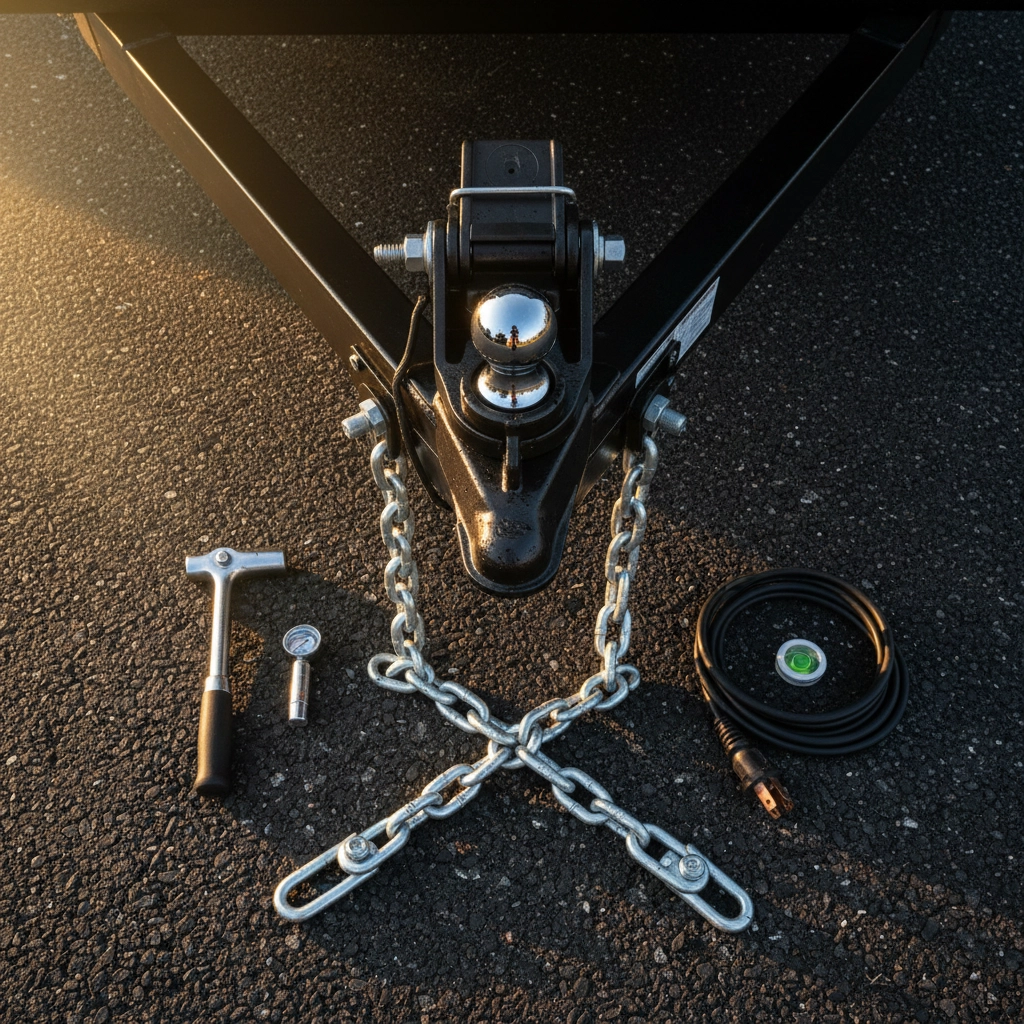
Proper hitch setup forms the foundation of safe towing. Check that your hitch ball diameter matches your trailer coupler exactly, mismatched sizes create dangerous connections. Verify the hitch ball is torqued to manufacturer specifications and inspect for wear, rust, or damage.
Safety chains must be properly rated for your trailer’s gross weight and attached in a crossed pattern beneath the coupler. The chains should be long enough to allow turning but short enough to prevent the trailer tongue from touching the ground if uncoupled.
Test your brake controller settings if your trailer is equipped with electric brakes. Start with conservative settings and adjust based on your trailer’s weight and towing conditions.
Basic Safety Equipment
Every beginner should carry essential safety equipment including a properly rated fire extinguisher, comprehensive first aid kit, and warning triangles or flares for roadside emergencies. A basic toolkit containing adjustable wrenches, screwdrivers, tire pressure gauge, and jumper cables can resolve common roadside issues.
Blackseries trailers provide enhanced safety margins for beginners through their robust engineering. The reinforced chassis and advanced independent suspension systems deliver superior stability on rough roads, giving new towers increased confidence when navigating challenging terrain or adverse weather conditions.
Full-Time Travel Trailer Checklist
Full-time travel trailer living demands comprehensive organization systems that go far beyond weekend camping preparation. Full-timers must balance space limitations with lifestyle necessities, creating efficient storage solutions and backup systems for extended independence.
Living and Comfort Essentials
Full-time RVers need weather-appropriate bedding including warm comforters for winter camping and lightweight options for desert travel. Pack clothing for multiple seasons and activities, utilizing vacuum storage bags to maximize space efficiency. Essential kitchen appliances should include a pressure cooker, coffee maker, and compact food processor for meal preparation versatility.
Invest in quality folding furniture that serves multiple purposes, tables that convert to work surfaces, chairs that store compactly, and storage ottomans that provide seating and organization.
Systems and Maintenance
Long-term living requires proactive maintenance supplies. Stock extra water pump filters, backup faucet parts, and plumbing repair kits. Carry engine oil, transmission fluid, and coolant for your tow vehicle, along with basic mechanical tools for routine maintenance.
Keep detailed maintenance logs tracking tire rotations, brake inspections, and system service dates. This documentation proves invaluable for warranty claims and helps prevent costly breakdowns through preventive care.
Power and Off-Grid Capability
Full-time RVers benefit enormously from solar power systems, high-capacity battery banks, and efficient inverters for energy independence. Battery monitoring systems help track power consumption and optimize charging cycles.
Blackseries trailers excel in full-time scenarios with their enhanced electrical systems, larger fresh water capacity, and robust construction designed for continuous use. Their off-grid capabilities align perfectly with the growing trend toward remote work and location-independent lifestyles.

Family Travel Trailer Packing Checklist
Family travel trailer packing requires careful coordination of adult and children’s needs while maintaining organized storage systems. Successful family camping depends on balancing comfort, entertainment, and safety across multiple age groups.
Parent-Focused Items
Adults need quality coffee equipment, comfortable seating options, and efficient cooking tools for meal preparation. Pack folding chairs with good back support, portable tables for food prep and games, and a well-stocked spice kit for flavorful camp cooking.
Include adult entertainment like books, tablets loaded with offline content, and portable speakers for evening relaxation after children are asleep.
Children’s Essentials
Kids require age-appropriate entertainment including travel games, coloring books, tablets with downloaded movies, and outdoor toys like frisbees, balls, and sidewalk chalk. Pack comfort items such as favorite stuffed animals, blankets, and nightlights for unfamiliar sleeping environments.
Safety items for children include properly fitting life jackets for water activities, first aid supplies for minor scrapes, and any necessary medications stored in clearly labeled containers.
Shared Family Equipment
Organize outdoor games suitable for various ages, cornhole, card games, board games, and sports equipment that encourages family interaction. Pack outdoor lighting for evening activities and portable shade structures for daytime comfort.
Zone-Based Organization Strategy
Implement a zone-based packing system:
- Kitchen Zone: Cookware, utensils, food storage, and cleaning supplies
- Bedroom Zone: Linens, clothing, and personal care items
- Entertainment Zone: Games, books, electronics, and charging cables
- Outdoor Zone: Chairs, tables, sports equipment, and weather protection
- Emergency Zone: First aid, tools, and safety equipment
Blackseries trailers feature thoughtfully designed interior storage that supports family organization. Multiple cabinet spaces, under-bed storage, and exterior compartments help families maintain organization throughout their travels while providing easy access to frequently used items.
Off-Grid Travel Trailer Checklist
Off-grid travel trailer adventures require self-sufficiency planning for extended periods without hookups or services. Successful boondocking depends on careful resource management and backup systems for essential needs.
Water Management Systems
Plan for 1-2 gallons of fresh water per person per day for drinking, cooking, and minimal washing. Pack gravity-fed water filters or portable purification systems for refilling from natural sources. Bring collapsible water containers for extra storage when good water sources are available.
Gray water management becomes critical during extended off-grid stays. Use biodegradable soaps minimally and consider gray water recycling systems for longer adventures.
Power Independence
Solar panel systems provide the most reliable off-grid power generation. Calculate your daily power consumption including lights, fans, water pumps, and device charging to properly size your solar array and battery capacity. Portable generators offer backup power but require fuel storage and noise considerations.
LED lighting dramatically reduces power consumption compared to traditional bulbs. Install 12V outlets throughout your trailer for efficient device charging without inverter losses.
Food Storage and Cooking
Off-grid cooking relies on propane, solar ovens, or wood-fired equipment. Pack non-perishable foods in sealed containers to prevent pest issues. Consider a 12V refrigerator for extended off-grid capability without propane dependence.
Plan meals around ingredients that don’t require refrigeration and pack backup cooking methods in case your primary system fails.
Navigation and Emergency Communication
Cell service disappears quickly in remote areas, making paper maps and offline GPS navigation essential. Download detailed topographic maps to your devices before departing cellular coverage.
Pack emergency communication devices like satellite messengers or personal locator beacons for serious emergencies. These devices can summon help when traditional communication fails.
Blackseries trailers are specifically engineered for off-grid excellence. Their reinforced construction, enhanced ground clearance, and superior suspension systems enable access to remote locations that challenge conventional RVs. Combined with thoughtful electrical systems and increased storage capacity, they provide the perfect platform for extended dispersed camping adventures.
Step-by-Step: How to Use Your Travel Trailer Checklist
Creating a systematic approach to your travel trailer checklist transforms preparation from stressful scrambling into confident, efficient planning. Follow this proven process to maximize your checklist’s effectiveness.
Step 1: Choose Your Checklist Template
Download or create digital templates for different trip types, weekend getaways, extended adventures, family trips, and off-grid expeditions. Digital formats allow easy customization and sharing between family members.
Google Sheets or printable PDFs work excellently for checklist management. Digital versions sync across devices while printed copies serve as reliable backups without battery dependence.
Step 2: Customize for Your Travel Style
Adapt the base checklist to match your specific trailer model, family size, and adventure preferences. Blackseries owners might emphasize off-road gear and recovery equipment, while families prioritize entertainment and comfort items.
Create separate sections for items stored in your trailer year-round versus items packed for each trip. This distinction streamlines preparation by focusing on variable elements.
Step 3: Three-Day Preparation Timeline
Begin checklist preparation three days before departure. This timeline prevents last-minute panic while allowing time to acquire forgotten items or address mechanical issues.
Day three focuses on vehicle and trailer mechanical checks. Day two handles packing and system testing. Day one covers final verification and departure preparation.
Step 4: Departure Day Final Verification
Execute a complete walk-around inspection covering all trailer systems, connections, and security. Test lights, brakes, and hitch connection one final time. Verify interior items are secured and all exterior compartments are locked.
Step 5: Post-Trip Review and Updates
After each adventure, review your checklist performance. Note items you forgot, things you packed but didn’t use, and any issues that arose during travel. Update your master template based on these learnings.
This continuous improvement process creates increasingly effective checklists customized to your specific needs and preferences.
Travel Trailer Safety and Maintenance Checklist
Travel trailer safety begins with systematic inspections performed before every departure. Professional preparation prevents accidents, mechanical failures, and costly emergency repairs during your adventures.
Pre-Departure Safety Inspection
Tire condition and pressure require careful attention before every trip. Check all trailer tires plus your tow vehicle tires, including spares. Proper inflation improves fuel economy, prevents blowouts, and ensures even wear patterns. Inspect tread depth and look for signs of sidewall damage, cracking, or irregular wear.
Examine your entire hitch system including the ball, coupler, safety chains, and breakaway brake cable. Clean and lubricate the coupler mechanism, ensuring it locks securely onto the hitch ball. Safety chains should cross under the trailer tongue and attach to your vehicle’s hitch with adequate slack for turning.
Test all lighting systems including running lights, brake lights, turn signals, and hazard flashers. Clean electrical connections and apply dielectric grease to prevent corrosion. Faulty lighting creates serious safety hazards and legal liability during travel.
Brake System Verification
Electric trailer brakes require regular inspection and adjustment. Test brake controller functionality by engaging manual brake activation while stationary. Listen for unusual noises, grinding sounds, or inconsistent engagement that indicate needed maintenance.
Hydraulic surge brakes need brake fluid level checks and periodic bleeding to remove air from the system. Inspect brake lines for leaks, damage, or excessive wear.
Propane System Safety
Propane leaks pose serious safety risks requiring systematic inspection. Use soapy water to check all connections, valves, and fittings for bubbles indicating gas leaks. Replace any questionable components before departure.
Ensure propane detectors inside your trailer function properly and have fresh batteries. Test alarm systems and verify family members understand emergency procedures.
Periodic Maintenance Schedule
Implement regular maintenance intervals regardless of usage frequency:
Monthly: Tire pressure, battery voltage, propane levels, and exterior inspection
Quarterly: Brake adjustment, bearing lubrication, and electrical system testing
Annually: Complete system inspection, seal maintenance, and professional service review
Blackseries trailers feature robust construction that withstands demanding use while requiring standard maintenance practices. Their reinforced chassis and quality components provide excellent durability when properly maintained through systematic care.
U.S. RV Market Trends and Data Insights
The American RV industry continues robust growth with travel trailers leading market expansion. Recent industry data shows travel trailer sales increasing 15-20% annually as younger demographics embrace outdoor recreation and remote work flexibility.
Demographic Shifts
Millennials and Gen X buyers now represent over 60% of new RV purchases, driving demand for technology integration, off-grid capabilities, and adventure-focused features. These buyers prioritize quality construction and versatility over traditional luxury amenities.
Adventure Travel Growth
Dispersed camping and boondocking popularity have surged 40% in recent years as travelers seek solitude and authentic outdoor experiences. This trend drives demand for self-sufficient trailers capable of extended off-grid operation.
Technology Integration
Modern RV buyers expect integrated solar systems, lithium battery technology, and smart monitoring systems. These technologies enable extended independence while maintaining connectivity for remote work and entertainment.
The growing emphasis on travel trailer checklists reflects increased awareness of preparation importance among new RV owners entering the market with limited experience but high expectations for safe, enjoyable adventures.
Frequently Asked Questions
What should be on a basic travel trailer checklist?
A basic travel trailer checklist should include safety inspections (tires, brakes, lights, hitch), essential packing items (bedding, cooking equipment, tools), and system checks (water, propane, electrical). Focus on safety first, then comfort and convenience items.
How early should I start packing for a travel trailer trip?
Begin your travel trailer preparation three days before departure. This timeline allows adequate time for vehicle inspections, acquiring forgotten items, and addressing any mechanical issues without last-minute stress.
What extra items do I need for off-grid camping with a travel trailer?
Off-grid camping requires additional water storage, solar power systems, non-perishable food supplies, paper maps, emergency communication devices, and extended tool kits. Plan for complete self-sufficiency including backup systems for critical needs.
Is there a different travel trailer checklist for winter camping?
Yes, winter camping requires specialized equipment including heated water hose, tank heaters, extra propane, warm bedding, emergency food supplies, and cold-weather tools. Winterization procedures become critical for preventing freeze damage.
What tools are essential for travel trailer maintenance on the road?
Essential road maintenance tools include tire pressure gauge, lug wrench, basic socket set, adjustable wrenches, electrical testing equipment, duct tape, zip ties, and spare fuses. Include trailer-specific items like bearing grease and brake fluid.
How can I store my checklist and reuse it for every trip?
Digital checklists in Google Sheets, apps, or cloud storage provide easy access and updating capability. Create templates for different trip types and customize based on destinations, duration, and travel companions. Print backup copies for situations without device access.
Your travel trailer checklist serves as the foundation for safe, enjoyable RV adventures. Whether you’re a beginner learning the basics or an experienced traveler planning extended off-grid expeditions, systematic preparation through proven checklists ensures you’re ready for whatever adventures await. Remember that every successful RV journey begins with thorough preparation( start building your personalized checklist system today.)

