The U.S. RV market continues its explosive growth trajectory, with over 11.2 million households owning recreational vehicles as of 2025. As more Americans embrace outdoor adventures and remote camping, the demand for reliable travel trailer stabilizers has surged dramatically. Whether you’re dealing with uneven campgrounds, gusty winds, or the unique challenges of off-road terrain, a quality stabilizer system can transform your camping experience from frustrating to fantastic.
Modern travel trailers, especially rugged off-road models like Blackseries units, face increasing stabilization demands as owners push into more remote and challenging terrain. This comprehensive guide will walk you through everything you need to know about travel trailer stabilizer systems, from basic definitions to advanced off-road upgrades.
What Is a Travel Trailer Stabilizer?
A travel trailer stabilizer is a mechanical support system designed to minimize movement, rocking, and swaying once your trailer is parked and leveled. Unlike leveling jacks that adjust your trailer’s position, stabilizers focus purely on reducing motion caused by wind, people moving inside, or uneven weight distribution.
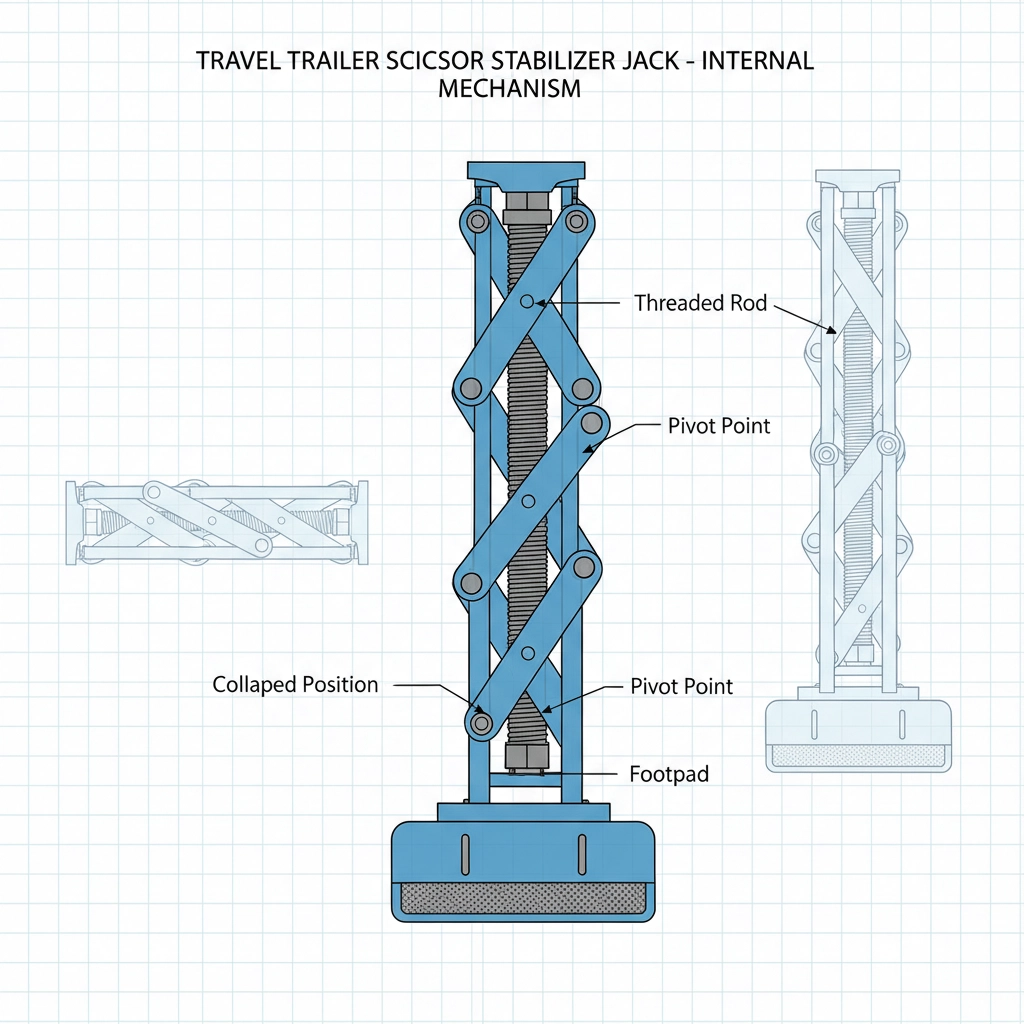
The primary functions include:
- Reducing interior movement during cooking, sleeping, and daily activities
- Protecting trailer frame integrity by minimizing stress from constant motion
- Enhancing comfort for a more home-like camping experience
- Preventing appliance damage from excessive vibration
Stabilizer vs Sway Control: Understanding the Difference
Many new RV owners confuse stabilizers with sway control systems, but they serve completely different purposes:
Types of Travel Trailer Stabilizers
Understanding the different stabilizer jack for travel trailer options helps you choose the right system for your specific needs and terrain challenges.
1. Scissor Stabilizer Jacks
The most popular choice among RV owners, scissor stabilizers use a cross-brace mechanism for reliable support. These units typically extend 24-30 inches and offer excellent stability for most camping situations. Modern versions feature double-threaded designs for faster deployment and power drill compatibility.
2. Electric Stabilizer Jacks
Electric travel trailer stabilizers represent the premium convenience option. With 12-volt DC motors, these systems deploy at the touch of a button, dramatically reducing setup time. They’re particularly valuable for frequent travelers or those with mobility limitations.
3. Stack Jacks
Lightweight and compact, stack jacks work well for smaller trailers and tight storage situations. They’re manually operated and offer reliable support for lighter-duty applications.
4. Tripod Stabilizers
Common on fifth-wheel setups, tripod stabilizers can also benefit certain travel trailer configurations, especially those requiring additional front-end support.
5. Wheel Chock Stabilizers
Wheel chock stabilizers address lateral movement that traditional frame-mounted jacks can’t prevent. These specialized chocks prevent side-to-side rolling and complement your primary stabilizer system.
6. Off-Road Heavy-Duty Systems
Designed for challenging terrain, these robust stabilizers feature extended travel, reinforced construction, and larger footpads for soft ground stability. They’re essential for off-road camping where standard systems fall short.

How to Use a Travel Trailer Stabilizer
Proper stabilizer deployment follows a specific sequence for maximum effectiveness and safety:
Step 1: Achieve Proper Leveling
Level your trailer first using blocks and your tongue jack. Stabilizers support, they don’t level. Attempting to use stabilizers for leveling can damage both your trailer and the stabilizer system.
Step 2: Set Parking Brake and Wheel Chocks
Engage your parking brake and place wheel chocks before deploying any stabilizers. This prevents dangerous movement during setup.
Step 3: Deploy Corner Stabilizers
Extend each stabilizer jack until it contacts solid ground. Avoid over-tightening, you want firm contact, not lifting force.
Step 4: Add Wheel Stabilizers (Optional)
Deploy wheel chock stabilizers to eliminate any remaining lateral movement.
Step 5: Test Interior Stability
Walk through your trailer, testing movement in the kitchen, bedroom, and bathroom areas. Additional adjustment may be needed.
Step 6: Use Footpad Blocks on Soft Ground
Place wooden blocks under stabilizer feet when camping on soft surfaces to prevent sinking.
Best Travel Trailer Stabilizer Systems for 2025
Selecting the best travel trailer stabilizer depends on your trailer size, camping style, and terrain preferences:
Best Overall: Ultra Fab Heavy-Duty Scissor System
- Weight Capacity: 6,500 lbs per jack
- Extension: 24 inches
- Features: Large footpads, double-thread design, power drill compatible
- Best For: Heavy trailers and challenging terrain
Best Budget Option: BAL Classic Scissor Jack
- Weight Capacity: 5,000 lbs per jack
- Extension: 24 inches
- Features: Straight-line extension, anti-binding design
- Best For: Standard camping and moderate use
Best Electric: Lippert High-Speed Power System
- Operation: 12-volt DC motor
- Speed: 50% faster than manual systems
- Features: One-touch deployment, weather-resistant
- Best For: Frequent travelers prioritizing convenience
Best for Wheel Stability: X-Chock Wheel Stabilizer
- Design: Ratcheting tensioner system
- Compatibility: Fits most wheel configurations
- Installation: No drilling or permanent mounting
- Best For: Eliminating lateral movement
Off-Road Stabilization for Blackseries Trailers
Blackseries and other off-road travel trailers face unique stabilization challenges that standard systems can’t address effectively. The combination of higher ground clearance, independent suspension, and extreme terrain use demands specialized solutions.
Why Off-Road Trailers Need Heavy-Duty Stabilizers
Uneven Terrain Frequency: Off-road campers regularly encounter slopes, rocks, and soft ground that challenge standard stabilizer systems.
Enhanced Suspension Travel: Independent suspension systems provide excellent ride quality but require robust stabilization to prevent excessive movement when parked.
Higher Center of Gravity: Increased ground clearance creates more leverage for wind and internal movement, demanding stronger stabilization.
Blackseries Owner-Recommended Combinations
Based on extensive field testing and owner feedback, the most effective stabilizer combinations for Blackseries trailers include:
- Heavy-duty scissor jacks with 6,500+ lb capacity per corner
- Extended-travel stabilizers for challenging terrain
- Large footpad systems to prevent ground penetration
- Wheel X-chocks for complete movement elimination
Troubleshooting Common Stabilizer Problems
Even the best systems occasionally encounter issues. Here’s how to diagnose and resolve common problems:
Stabilizer Won’t Extend Fully
- Check for bent components or debris
- Verify adequate ground clearance
- Lubricate moving parts with marine-grade grease
Uneven Stabilization
- Ensure trailer is properly leveled before deployment
- Check for broken or bent footpads
- Verify equal extension on all corners
Continued Movement Despite Stabilizers
- Add wheel stabilizers to address lateral motion
- Check stabilizer capacity against trailer weight
- Consider upgrading to higher-capacity system
Crank Handle Binding
- Clean and lubricate thread mechanisms
- Check for cross-threading or damaged threads
- Replace worn components promptly
Essential Safety Tips
Never Use Stabilizers as Lifting Devices: Stabilizers support, they don’t lift. Use proper bottle jacks for maintenance requiring wheel removal.
Monitor Weight Limits: Exceeding capacity damages stabilizers and creates safety hazards. Match stabilizer ratings to your trailer’s gross vehicle weight rating.
Use Footpad Blocks: Wooden blocks distribute weight and prevent sinking on soft ground. This simple step prevents damage and improves stability.
Regular Maintenance: Inspect stabilizers monthly for rust, loose bolts, or worn components. Marine-grade lubricants protect against corrosion in harsh environments.
When to Upgrade Your Stabilizer System
Several scenarios indicate it’s time for stabilizer upgrades:
- Excessive Movement: If your trailer rocks more than 1-2 inches despite properly deployed stabilizers
- Off-Road Transition: Moving from campground camping to dispersed camping requires more robust systems
- Component Wear: Rust, bent components, or binding mechanisms necessitate replacement
- Trailer Modifications: Adding solar panels, battery banks, or other equipment increases weight and stability requirements
FAQ: Travel Trailer Stabilizer Guide
What type of stabilizer is best for a travel trailer?
Scissor-type stabilizers offer the best balance of reliability, cost, and effectiveness for most travel trailers. Heavy-duty models with 5,000+ lb capacity per jack handle most camping situations effectively.
Do stabilizers stop sway while driving?
No, stabilizers only work when parked. For driving stability, you need a separate sway control system installed on your hitch setup.
How many stabilizer jacks does a trailer need?
Most travel trailers use four corner-mounted stabilizers for optimal stability. Longer trailers may benefit from additional mid-frame stabilizers.
Can you use stabilizer jacks to lift a trailer?
Never use stabilizers for lifting. They’re designed for support only. Use proper bottle jacks rated for your trailer’s weight for maintenance requiring wheel removal.
How do I make my trailer more stable on uneven ground?
Use wooden blocks under stabilizer footpads, ensure proper leveling before stabilizer deployment, and consider upgrading to longer-travel stabilizers designed for challenging terrain.
Are wheel chocks required if I use stabilizers?
Yes, wheel chocks prevent rolling movement that stabilizers can’t address. They’re essential safety equipment regardless of your stabilizer system.
Investing in the right travel trailer stabilizer system transforms your camping experience from frustrating movement to rock-solid stability. Whether you’re upgrading your current setup or outfitting a new Blackseries off-road trailer, understanding these systems ensures you’ll enjoy comfortable, stable camping for years to come.

