
Your cart (0)
Your cart is empty
Tax included and shipping calculated at checkout
Your cart is empty
Tax included and shipping calculated at checkout

Tire load range indicates how much weight a travel trailer tire can safely carry. Most travel trailers use Load Range C, D, or E depending on their GVWR, axle weight, and where you're taking them. Think of it like shoe sizes for tires, except if you pick the wrong one, it's not just uncomfortable, it's dangerous.
Let's clear something up: when you see "10-ply rated" on a tire sidewall, that doesn't mean there are actually 10 layers of rubber stacked like a birthday cake. Modern tires use advanced materials, so the "ply rating" is more of a strength grade than a literal layer count.
Load range is the modern letter system (C, D, E, etc.) that tells you how much weight the tire can handle at maximum inflation. It's tied to PSI (pounds per square inch), and that combo determines whether your tire will carry your gear, or become a road pancake at 70 mph.
Here's why this matters more than the brand name on the sidewall: A fancy tire with the wrong load range is still a liability. Whether you're towing a compact 16 ft camper weight setup or a heavy-duty 30 foot rv weight beast, the load range determines if you're cruising confidently or white-knuckling it to the next rest stop.
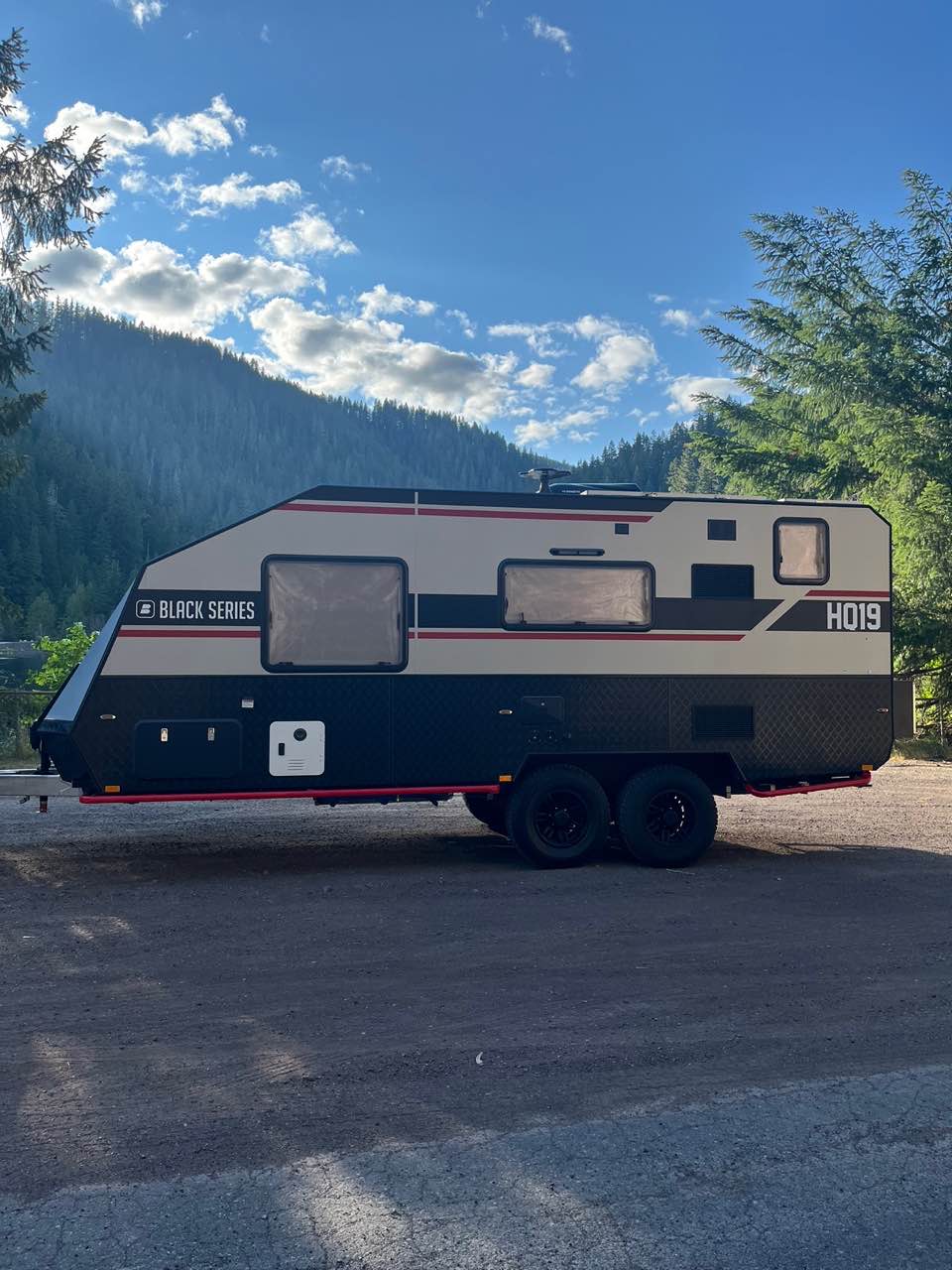
Let's break down the three most common load ranges you'll see on travel trailer tires.
Load Range C is the baseline. It's perfectly fine for smaller, lighter trailers that aren't loaded down with gear, water tanks, and a second fridge full of craft beer. If your trailer's dry weight is under 3,000 lbs and you're not planning on hauling rocks, C-rated tires will do the job.
The catch? If you're near the upper limit of what C can handle, you're playing a risky game. Add a little extra weight (or forget to check your PSI), and you're one pothole away from a blowout.
Load Range D is the Goldilocks zone for many travel trailer owners. It offers better stability at highway speeds without making your ride feel like you're towing a tank. If your trailer's GVWR (Gross Vehicle Weight Rating) is between 5,000 and 7,500 lbs, D-rated tires are often the sweet spot.
Stability vs. Comfort: D-rated tires have stiffer sidewalls than C-rated, which reduces trailer sway on windy days or when semi-trucks blast past you. The tradeoff? A slightly firmer ride.
If you're towing a 30 ft camper weight or 30-foot camper weight setup, Load Range E is your friend. These tires are built for punishment, high PSI, heavy loads, and the kind of terrain that makes other tires cry for mercy.
Why Many Go "One Higher": Even if your math says you could get away with D-rated tires, a lot of experienced RVers upgrade to E for peace of mind. The extra capacity means you're not riding the edge of your tire's limits, which is especially important if you're carrying extra water, solar batteries, or enough camping chairs to seat a small village.
Here's the part where we do math, but don't worry, it's easy math.
Your GVWR (Gross Vehicle Weight Rating) is stamped on a metal plate somewhere on the front of your trailer, usually near the door. Do not use the "dry weight" listed in the sales brochure. That number is a fantasy, it doesn't include water, propane, food, gear, or the weight of your regrets about overpacking.
Take your GVWR and divide it by the number of tires on your trailer.
Example: If you have a 6,000 lb GVWR and a dual-axle trailer with four tires:
This is where most people mess up. Your tires should be rated for more than the calculated load. Add at least 15% as a buffer.
In this case, you'd want a tire rated for at least 1,725 lbs, which means Load Range D (at minimum). If you're hauling through hot climates (Arizona, Nevada, Texas), or plan to do any off-roading, bump up to Load Range E.

Most trailers come with the cheapest tires that legally meet the specs. After 2–3 years (or 10,000 miles), it's time to upgrade. Factory tires are like the mystery meat at a gas station, technically edible, but you shouldn't trust them.
A tire might be the right diameter and width, but if the load index is too low, you're still toast. Always check the load rating stamped on the sidewall.
If you're towing empty (no water, minimal gear), you don't need max PSI. But when you're fully loaded? Inflate to the max PSI listed on the tire sidewall. Under-inflation causes heat buildup, which is the #1 cause of blowouts.
Don't do this. Ever. We'll talk about why in the next section.
ST (Special Trailer) tires are designed specifically for trailers. They have stiffer sidewalls to reduce sway and are built to handle vertical loads better than regular passenger or truck tires.
LT (Light Truck) tires are designed for trucks, but some off-road trailer owners prefer them because they have even tougher sidewalls and better puncture resistance.
For most travel trailers on paved roads, ST tires are the standard. They're purpose-built for the job and usually cheaper. But if you're running an off-road travel trailer and plan to tackle gravel roads, rocky trails, or "washboard" surfaces, LT tires can be a better choice.
At BlackSeries, we often see customers upgrade to LT tires when they're heading into remote areas where a flat tire isn't just an inconvenience, it's a multi-day problem.
One rule: Never mix ST and LT tires on the same axle. They handle loads differently, and mismatched tires can cause uneven wear, sway, and even axle damage.
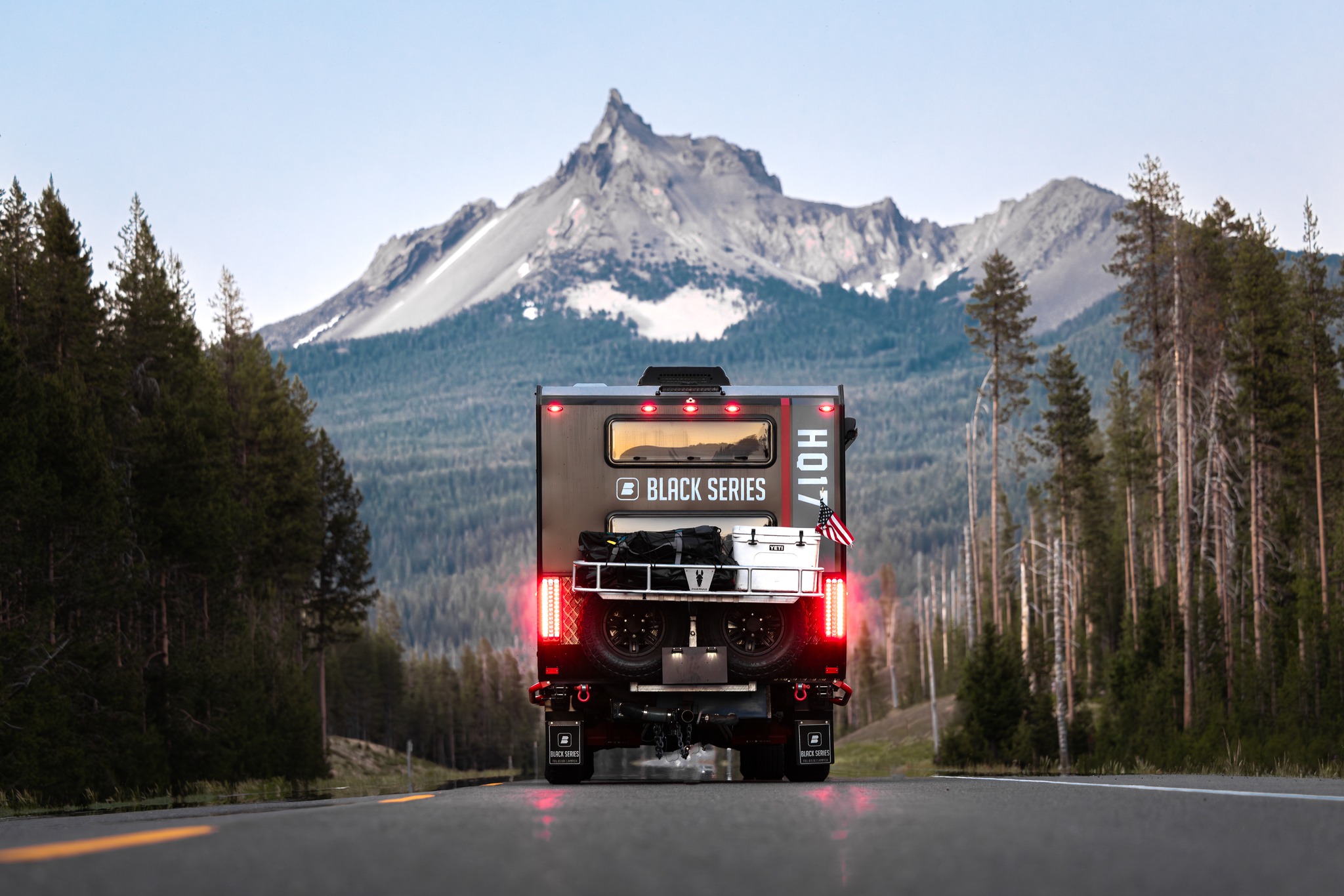
If you're buying an off-road travel trailer, the conversation shifts. Off-road doesn't mean you need less capacity, it means you need more durability.
Some people assume that because they're driving slower on trails, they can get away with a lower load range. Wrong. Off-road conditions, rocks, ruts, sudden impacts, put more stress on your tires, not less.
When you're navigating rocky terrain, the sidewall takes a beating. Load Range E tires have the reinforcement to handle side impacts without puncturing or deforming.
Our customers regularly take trailers into places where cell service is a memory and the nearest tire shop is 100 miles away. In those conditions, Load Range E tires (preferably LT-rated) are non-negotiable. We've seen too many trips cut short because someone tried to "save money" with C-rated tires on a remote trail.
For more on tire setup for off-road conditions, check out our guide on off-road trailer maintenance and tire pressure setup.
Before your next trip, run through this quick checklist:
✔ Load Capacity Check: Is your tire's max load rating ≥ (actual trailer weight per tire × 1.15)?
✔ PSI Match: Is your tire pressure set to the max PSI for your current load?
✔ Wheel Rating: Does your rim support the PSI of your tires? (Check the wheel's stamped rating.)
✔ Consistent Load Range: Are all tires on the same axle the same load range?
✔ Tire Age: Are your tires less than 5 years old? (Check the DOT code on the sidewall.)
Most travel trailers in the 20–28 ft range use Load Range D. Smaller trailers (under 20 ft) often run Load Range C, while larger or off-road trailers (28+ ft) typically require Load Range E.
Not necessarily. Load Range E tires have stiffer sidewalls, which can reduce ride comfort slightly. However, if you're towing a lighter trailer (like a 16 ft camper weight rig), the extra stiffness is usually minimal and offers better stability.
Yes, as long as your wheel rims are rated for the higher PSI that comes with Load Range E tires. Check the wheel's maximum PSI rating before upgrading.
Absolutely. A higher load range gives you more capacity headroom, which means your tires aren't maxed out. This reduces heat buildup, lowers the risk of blowouts, and improves handling: especially at highway speeds.
Every 3–5 years, regardless of tread depth. Trailer tires sit in the sun and weather more than they roll, which causes dry rot. Even if they look fine, UV damage and age weaken the rubber. Check the DOT code on the sidewall to see the manufacture date.
Still unsure which load range is right for your setup? If you're shopping for a trailer built to handle serious weight and serious terrain, browse the BlackSeries off-road travel trailer lineup: we spec our rigs with the right tires from day one.
Explore the Black Series lineup
Ready for the trail? See the Black Series off-road trailers for sale — and browse the full lineup.
Related reading:
Have questions about Black Series running gear? Request a personalized quote for current pricing, availability, and delivery options — or reserve yours with a refundable $500 deposit. Prefer to talk first? Call (833) 822-6737 or email info@blackseries.net.
Explore the models: HQ19 Luxury Off-Road Travel Trailer · HQ21 Premium Off-Road Camper · HQ15 Off-Road Travel Trailer