Regular Truma water heater maintenance prevents scale buildup, ensures efficient heating, and extends the lifespan of Truma Combi systems, especially in RVs using hard water. Without proper maintenance, mineral deposits can reduce heating efficiency by up to 30% and significantly shorten your system’s operational life.
What Is Truma Water Heater Maintenance?
Truma water heater maintenance encompasses a comprehensive care routine designed to keep your RV’s heating system operating at peak performance. Unlike simple cleaning, true maintenance involves systematic descaling, component inspection, and preventive care.
The Truma Combi system works by circulating water through internal heating elements and heat exchangers. Over time, minerals from water, particularly calcium and magnesium, accumulate on these surfaces, creating scale deposits that act as insulation barriers. This buildup forces your system to work harder, consume more propane or electricity, and eventually leads to component failure.
Maintenance includes three critical elements: descaling to remove mineral buildup, system inspection to identify potential issues early, and proper winterization procedures. Descaling stands as the most crucial aspect because it directly impacts heating efficiency, energy consumption, and system longevity.
Why Descaling a Truma Water Heater Is Important
Hard water affects over 85% of American households, with particularly high mineral content in states like Arizona, Nevada, Utah, and parts of Texas and California. When hard water flows through your Truma system, it leaves behind microscopic mineral deposits that accumulate over time.
Scale buildup creates multiple problems for your RV water heater. First, it reduces heat transfer efficiency by creating an insulating layer between heating elements and water. A system with moderate scale buildup can take 40-60% longer to heat water to desired temperatures, directly increasing your propane consumption and operating costs.
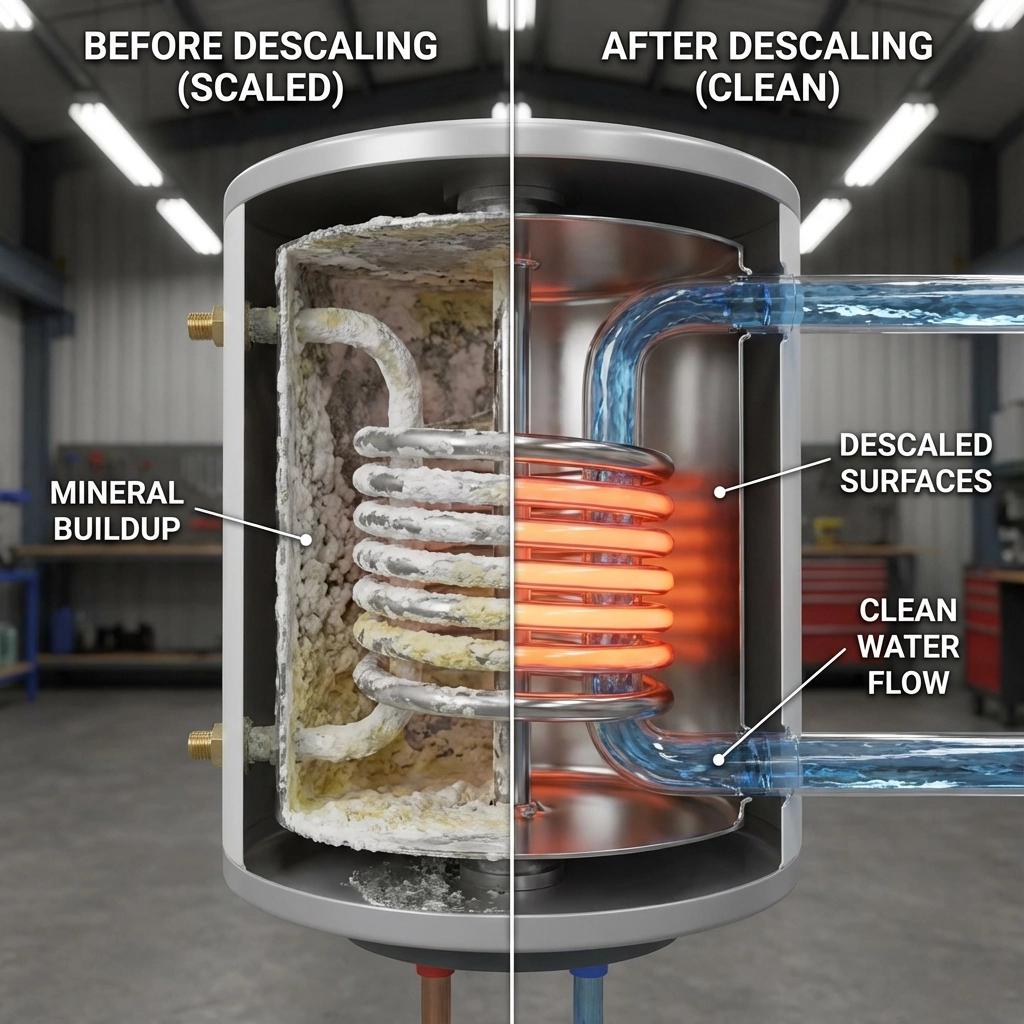
Second, scale deposits cause uneven heating patterns that stress internal components. This thermal stress leads to premature wear on heating elements, circulation pumps, and control systems. The result is costly repairs or complete system replacement years before normal end-of-life.
Finally, severe scale buildup can cause complete system blockages, preventing water circulation and potentially damaging expensive internal components. Regular rv water heater scale removal prevents these issues while maintaining optimal performance throughout your system’s lifespan.
Signs Your Truma Water Heater Needs Descaling
Recognizing early warning signs helps prevent serious damage and ensures timely maintenance. The most common indicator is extended heating times, if your water takes noticeably longer to reach comfortable temperatures, scale buildup is likely restricting heat transfer efficiency.
Water temperature inconsistency represents another clear warning sign. If your hot water fluctuates between scalding and lukewarm during normal use, mineral deposits may be interfering with temperature sensors or creating hot spots within the heating chamber.
Unusual noises during operation often indicate scale-related issues. Crackling, popping, or gurgling sounds suggest that mineral deposits are interfering with normal water circulation patterns. These sounds occur when water tries to flow around or through accumulated scale deposits.
For Truma AquaGo systems, pay attention to error codes or indicator lights. The system automatically tracks water usage and illuminates a cleaning indicator after processing approximately 1,585 gallons, roughly equivalent to annual usage for most RV owners.
How to Descale Truma Water Heater (Step-by-Step)
Proper descaling requires careful preparation and systematic execution. Begin by powering off your Truma system and allowing it to cool completely, attempting to descale a hot system can cause thermal shock and component damage.
Preparation Phase:
Turn off the water pump and disconnect city water connections. Open hot water faucets to depressurize the system and drain residual water. Remove any inline water filters to prevent clogging during the descaling process.
Solution Preparation:
For traditional Truma systems, prepare a descaling solution using white wine vinegar diluted at a 1:5 ratio (2 liters vinegar to 10 liters fresh water). Alternatively, use citric acid at 1 tablespoon per liter of water, many technicians prefer citric acid for its superior mineral-dissolving properties.

System Filling:
Introduce the descaling solution through your RV’s water inlet connection. Open hot water taps to draw solution through the entire system, ensuring complete coverage of internal components. You should see solution flowing from all hot water outlets.
Contact Time:
Allow the solution to remain in the system for 4-6 hours. This contact time is crucial for effective mineral dissolution, rushing this step significantly reduces descaling effectiveness.
Flushing Process:
After contact time expires, drain the descaling solution completely. Flush the system thoroughly with fresh water, running at least 15-20 gallons through all hot water outlets to remove dissolved minerals and solution residue.
For AquaGo systems, follow the manufacturer’s semi-automated cleaning cycle using official descaling tablets, which simplifies the process while ensuring proper chemical concentration and contact time.
Truma Water Heater Descaling Checklist
Successful descaling requires proper preparation and the right materials. Create this checklist before starting your maintenance routine:
Required Materials:
- White wine vinegar (2 liters) or citric acid powder (100 grams)
- Fresh water (15-20 gallons for flushing)
- Measuring containers for solution preparation
- Protective gloves and eyewear
- Timer for tracking contact time
Safety Equipment:
- Non-slip footwear for wet conditions
- Adequate lighting for inspection tasks
- First aid kit for emergency situations
- Ventilation fan if working in enclosed spaces
Documentation:
- Maintenance log for tracking descaling dates
- System manual for reference during procedures
- Contact information for technical support
- Warranty documentation if issues arise
This systematic approach ensures you have everything needed for effective, safe descaling while maintaining proper maintenance records for warranty purposes.
How Often Should You Service a Truma Water Heater?
Maintenance frequency depends on water quality, usage patterns, and operating conditions. Truma recommends descaling after every 1,585 gallons of water usage, which typically translates to annual maintenance for most RV owners.
However, hard water areas require more frequent attention. If your RV regularly encounters water with total dissolved solids (TDS) above 300 parts per million, consider descaling every six months. Areas with extremely hard water, above 500 PPM TDS, may require quarterly maintenance.
Usage patterns also influence truma combi water heater service intervals. Full-time RV living, extended boondocking with questionable water sources, or frequent operation in dusty conditions accelerate maintenance needs. These scenarios introduce additional contaminants that compound normal mineral accumulation.
For BlackSeries RV owners who frequently venture into remote locations with varying water quality, maintain a conservative maintenance schedule. The investment in frequent descaling pays dividends in system reliability when you’re far from service facilities.
Common Truma Water Heater Maintenance Mistakes
Many RV owners inadvertently damage their Truma systems through well-intentioned but incorrect maintenance practices. The most common mistake involves using inappropriate cleaning chemicals, never use CLR, Lime-Away, or other aggressive descaling products not specifically approved for RV water systems.
Another frequent error is insufficient flushing after descaling. Residual cleaning solution can corrode internal components and create taste/odor issues. Always flush with at least 15 gallons of fresh water, continuing until no chemical taste or smell remains.
Improper timing represents another critical mistake. Attempting to descale a hot system risks thermal shock damage, while insufficient contact time fails to dissolve accumulated minerals effectively. Follow manufacturer timing recommendations precisely.
Finally, many owners neglect post-descaling system testing. Always verify proper operation, check for leaks, and ensure normal heating performance before considering maintenance complete. Document any unusual observations for future reference.
Why Proper Truma Maintenance Matters for BlackSeries RVs
BlackSeries RVs are engineered for extreme off-road adventures, often accessing remote locations with challenging water sources. This operational environment places additional demands on your Truma water heating system, making proper maintenance even more critical.
Remote camping often means relying on questionable water sources, mountain streams, desert springs, or municipal supplies with unknown mineral content. These water sources can introduce unexpected contaminants that accelerate scale formation and stress system components.
The vibration and motion inherent in off-road travel can also accelerate wear on Truma systems. Proper maintenance ensures all connections remain secure and internal components function reliably despite challenging operating conditions.
BlackSeries designs incorporate robust mounting systems and vibration dampening specifically to protect your Truma investment. Regular maintenance ensures these protective features continue providing optimal system protection throughout your adventures.
Most importantly, system failure in remote locations can end adventures prematurely and create safety concerns. Consistent maintenance prevents these situations while ensuring your BlackSeries RV provides comfortable basecamp facilities wherever your adventures lead.
FAQ
How often should I descale a Truma water heater?
Descale your Truma water heater after every 1,585 gallons of water usage, typically annually for most users. Hard water areas may require more frequent descaling, every 6 months in high-mineral regions.
Can I use vinegar to descale a Truma heater?
Yes, white wine vinegar diluted at 1:5 ratio (2 liters vinegar to 10 liters water) is Truma’s recommended descaling solution. Alternatively, citric acid at 1 tablespoon per liter provides effective mineral removal.
Does hard water damage Truma Combi systems?
Hard water doesn’t immediately damage Truma systems, but accumulated mineral deposits reduce efficiency, increase energy consumption, and accelerate component wear. Regular descaling prevents these issues.
What happens if I don’t descale my Truma heater?
Neglecting descaling reduces heating efficiency by 30-60%, increases propane consumption, causes premature component failure, and may void warranty coverage. Severe buildup can cause complete system blockages.
Is Truma water heater maintenance DIY-friendly?
Basic descaling and maintenance are DIY-friendly with proper preparation and adherence to manufacturer procedures. Complex repairs or component replacement should be performed by certified technicians to maintain warranty coverage.

