RV water pump pulsing usually indicates pressure loss in the water system. Common causes include air leaks, faulty check valves, or incorrect pump pressure settings. This frustrating issue can turn your relaxing camping trip into a maintenance nightmare, but understanding the root causes and solutions will get you back to enjoying consistent water pressure.
What Does RV Water Pump Pulsing Mean?
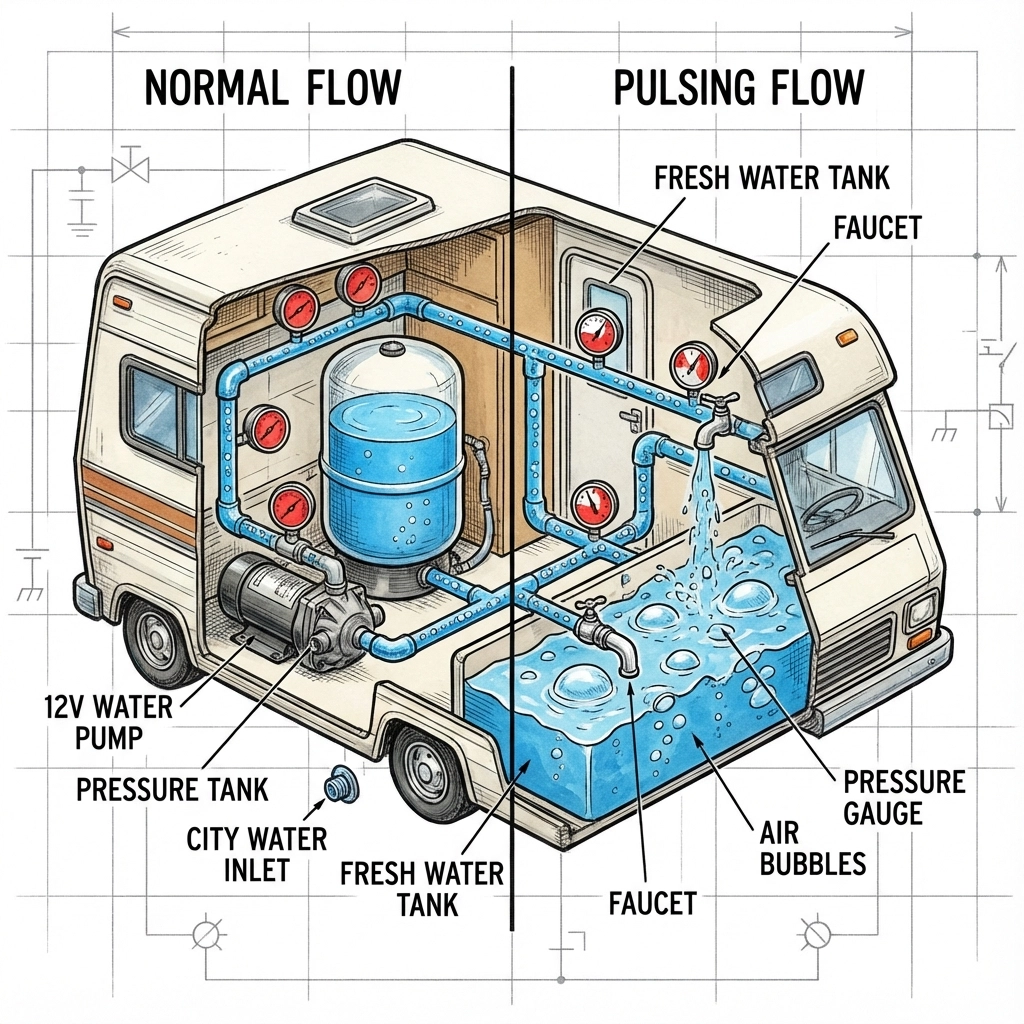
RV water pump pulsing refers to the irregular, rhythmic cycling of your water pump that creates noticeable fluctuations in water pressure and flow. Unlike normal RV water pump cycling, which occurs when you turn faucets on and off, pulsing happens continuously and creates an annoying surging effect at your taps.
Normal pump operation involves the pump turning on when you open a faucet, building pressure, then shutting off when you close the faucet. The pump should remain quiet when no water is being used. Pulsing, however, creates a constant on-off pattern that you can both hear and feel through inconsistent water flow.
This cycling behavior indicates your RV’s water system cannot maintain steady pressure, forcing the pump to work overtime trying to compensate for pressure loss somewhere in the system.
Common Symptoms of RV Water Pump Problems
Recognizing the early warning signs of pump issues can save you from more serious problems down the road. Here are the most common symptoms:
Fluctuating Water Pressure: Your shower alternates between strong flow and weak trickle, making temperature control nearly impossible. This inconsistency is especially noticeable when washing dishes or showering.
Pump Activation Without Water Use: The most telling sign is hearing your water pump turn on when all faucets, toilets, and appliances are off. This indicates a leak or internal pump problem.
Pulsating Water Flow: Water comes out in surges rather than a steady stream, creating an unpleasant experience at every faucet.
Unusual Pump Noises: Beyond normal operational sounds, you might hear grinding, squealing, or excessive vibration that wasn’t there before.
These symptoms often worsen over time, so addressing them quickly prevents more expensive repairs.
Top Causes of RV Water Pump Pulsing
Understanding what causes RV water pump pressure problems helps you diagnose issues faster and implement the right solutions.
Air Leaks in Water Lines: The most common culprit, air leaks occur at loose fittings, cracked hoses, or damaged seals. Even small leaks allow air into the system, disrupting the pressure balance your pump needs to function properly.
Loose Fittings or Cracked Hoses: Vibration from road travel can loosen water line connections over time. Hoses exposed to extreme temperatures may crack, creating entry points for air and exit points for water pressure.
Faulty Check Valve: This one-way valve prevents water from flowing backward into your fresh water tank. When it fails, water bypasses the valve, causing continuous pressure loss that triggers constant pump cycling.
Pressure Switch Misadjustment: Your pump’s pressure switch tells it when to start and stop based on system pressure. If set incorrectly or malfunctioning, it creates erratic cycling patterns.
Water Heater Backflow: Some RV water heaters can cause pressure issues if their internal components allow water to flow backward, disrupting the system’s pressure balance.

RV Water Pump Troubleshooting Checklist (Step-by-Step)
Follow this systematic approach to RV water pump troubleshooting and identify the source of your pulsing problem:
Step 1: Turn Off the Pump and Inspect Fittings
Start with your pump switched off. Visually inspect all visible water line connections for obvious leaks, corrosion, or loose fittings. Pay special attention to areas where lines connect to the pump, tank, and major appliances.
Step 2: Check the Inlet Strainer
Locate the small strainer or filter on your pump’s inlet side. Remove and clean it thoroughly, as debris can restrict flow and cause pressure irregularities. Replace if damaged.
Step 3: Test for Air Leaks
Fill your fresh water tank completely, then turn on the pump. Starting with the faucet closest to your pump, open each tap until water flows steadily without air bubbles. Work your way through the entire system, including hot water taps.
Step 4: Inspect the Check Valve
Listen carefully near your pump when it’s running. If you hear water flowing back toward the tank, your check valve may be stuck open or damaged. This component usually requires replacement rather than repair.
Step 5: Verify Pressure Switch Settings
Locate your pressure switch (usually mounted near the pump) and check if the pressure settings match your pump’s specifications. Most RV pumps operate between 25-40 PSI. Consult your owner’s manual for specific settings.
How to Stop RV Water Pump from Turning On and Off
When your RV water pump keeps turning on and off, you need both immediate solutions and long-term fixes to prevent recurring problems.
Temporary Solutions:
Switch to city water hookup if available, bypassing your pump entirely while you diagnose the problem. This gives you consistent water pressure while preventing pump damage from continuous cycling.
Long-term Fixes:
Replace faulty check valves, tighten all fittings, and repair any damaged water lines you discovered during troubleshooting. Consider upgrading to a higher-quality pressure switch if yours fails frequently.
When to Replace Your Water Pump:
If your pump continues pulsing after addressing external causes, internal damage likely requires complete pump replacement. Signs include unusual noises, reduced flow capacity, or inability to build adequate pressure even with perfect external conditions.
Most RV water pumps last 5-10 years with proper maintenance, but harsh conditions or poor water quality can shorten this lifespan significantly.
Is RV Water Pump Pulsing Dangerous?
While not immediately dangerous to your health, pump pulsing creates several risks that worsen over time.
Water Pump Lifespan Impact: Continuous cycling dramatically reduces pump life by forcing the motor to start and stop hundreds of times more than normal. This constant stress on electrical components and mechanical seals leads to premature failure.
Plumbing System Stress: Pressure fluctuations stress your entire water system, potentially loosening fittings, damaging seals, and creating new leak points throughout your RV’s plumbing.
Off-Road Amplification: If you enjoy boondocking or off-road adventures, the constant vibration and movement amplify these pressure issues. What starts as minor pulsing can quickly become complete system failure in remote locations where repairs are difficult.
Best Practices to Prevent RV Water Pump Issues
Preventing problems is always easier and cheaper than fixing them. Follow these maintenance practices to keep your water system running smoothly.
Regular Inspection Schedule: Check all visible water connections monthly, especially before and after trips. Look for signs of moisture, corrosion, or loose fittings.
Proper Pump Operation: Never run your water pump dry, as this damages internal seals and components. Always ensure adequate water in your fresh tank before operating the pump.
Winterization Protocols: Before storing your RV, properly winterize your water system to prevent freeze damage that commonly causes leaks and pressure problems.
Off-Road Considerations: For those pushing into remote areas with rugged terrain, consider installing additional support brackets for water lines and upgrading to more robust fittings that can withstand increased vibration and stress.
Why BlackSeries RVs Are Designed to Reduce Pump Pulsing
BlackSeries RVs incorporate several design elements specifically engineered to minimize water system problems common in off-road applications.
Strategic Water Line Routing: Rather than running water lines through areas prone to damage, BlackSeries routes plumbing through protected channels with proper support brackets every 18 inches, reducing vibration-induced failures.
Vibration-Resistant Installation: Water pumps and pressure switches mount with heavy-duty isolation brackets that absorb road shock and off-road impacts, preventing the loose connections that commonly cause pressure loss.
Enhanced Pressure System Design: BlackSeries RVs often include larger accumulator tanks and premium pressure switches calibrated for the demands of extended off-grid camping, where consistent water pressure is essential for comfort and functionality.
These design improvements become especially valuable when you’re camping miles from the nearest repair shop, where a simple pulsing pump can end your adventure early.
FAQ
Why does my RV water pump pulse with no water running?
This indicates either a leak in your water system or a faulty internal component like a check valve. The pump detects pressure loss and cycles on to compensate, even though no faucets are open.
Can air in the lines cause pump cycling?
Yes, air in water lines is one of the most common causes of pump pulsing. Air disrupts the pressure balance your pump needs to operate efficiently, causing irregular cycling patterns.
Should I adjust the RV water pump pressure switch?
Only adjust pressure switches if you’re confident about the correct settings for your specific pump. Incorrect adjustments can worsen pulsing problems or damage your pump. Consult your owner’s manual or a qualified technician.
How long should an RV water pump last?
With proper maintenance, most RV water pumps last 5-10 years. However, harsh water conditions, frequent use, or neglected maintenance can significantly shorten this lifespan.
When should I replace my RV water pump?
Replace your pump if it continues pulsing after addressing all external causes, produces unusual noises, fails to build adequate pressure, or shows signs of internal damage like water in the motor housing.

