Quick Answer: Choosing a winter off-grid camping trailer requires four-season insulation, heated and enclosed underbelly systems, low-temperature lithium batteries with BMS protection, and robust off-grid power capacity. This comprehensive Blackseries guide covers essential configurations, setup steps, and maintenance protocols for safe US winter camping.
Jump to Section: 📋 Checklist | 🔧 How-to Setup | 🏆 Best Configurations | ❓ FAQ
US Winter Camping Market: Growing Demand for Four-Season Capability
The American RV industry shows remarkable resilience in winter camping segments. RVIA reports indicate 2025 first-quarter shipments increased 13.9% year-over-year, with March showing a robust 15.8% gain. This growth signals sustained interest in outdoor recreation despite economic uncertainties.
KOA’s 2025 Camping & Outdoor Hospitality Report reveals North American camping families have grown 67% since 2014, adding 11 million new camping households from 2019 to 2024. Significantly, these newer participants show higher willingness to invest in specialized equipment, including winterized travel trailers and four-season RV systems.
The off-grid camping segment demonstrates particular strength. Market research indicates the global off-road trailer market will grow from $27.83 billion in 2024 to $49.85 billion by 2031, representing a 7.56% compound annual growth rate. Winter-capable trailers drive this expansion as adventurers seek year-round access to America’s remote landscapes.
Why Winter Off-Grid Now? Three converging factors fuel demand: overcrowded summer camping seasons pushing enthusiasts toward shoulder seasons, improved trailer technology making winter camping more accessible, and growing appreciation for solitude and pristine snow-covered wilderness areas.
Essential Terminology: Understanding True Four-Season Capability
True Four-Season vs. “Winter Package”
Four-Season RV designation lacks industry standardization, but genuine winter-capable trailers incorporate integrated cold-weather engineering rather than add-on packages. True four-season units feature:
- Heated & Enclosed Underbelly: Sealed, insulated compartments with active heating for water tanks, valves, and plumbing lines
- Thermal Management Systems: Comprehensive climate control addressing both interior comfort and critical system protection
- Cold-Weather Electrical: Low temp lithium batteries with Battery Management Systems (BMS) preventing damage from sub-freezing charging
Critical Winter Terminology
Ground Clearance: Minimum 12+ inches for snow navigation and underbelly protection from road debris and ice buildup.
R-Value Insulation: Thermal resistance rating: winter trailers require R-13+ walls, R-19+ floors, and R-21+ ceilings for sub-zero performance.
Boondocking: Extended camping without hookups (electricity, water, sewer), requiring complete self-sufficiency through solar power, battery storage, and water management.
BMS Protection: Battery Management Systems preventing lithium battery damage during low-temperature charging: critical for off-grid power system longevity.
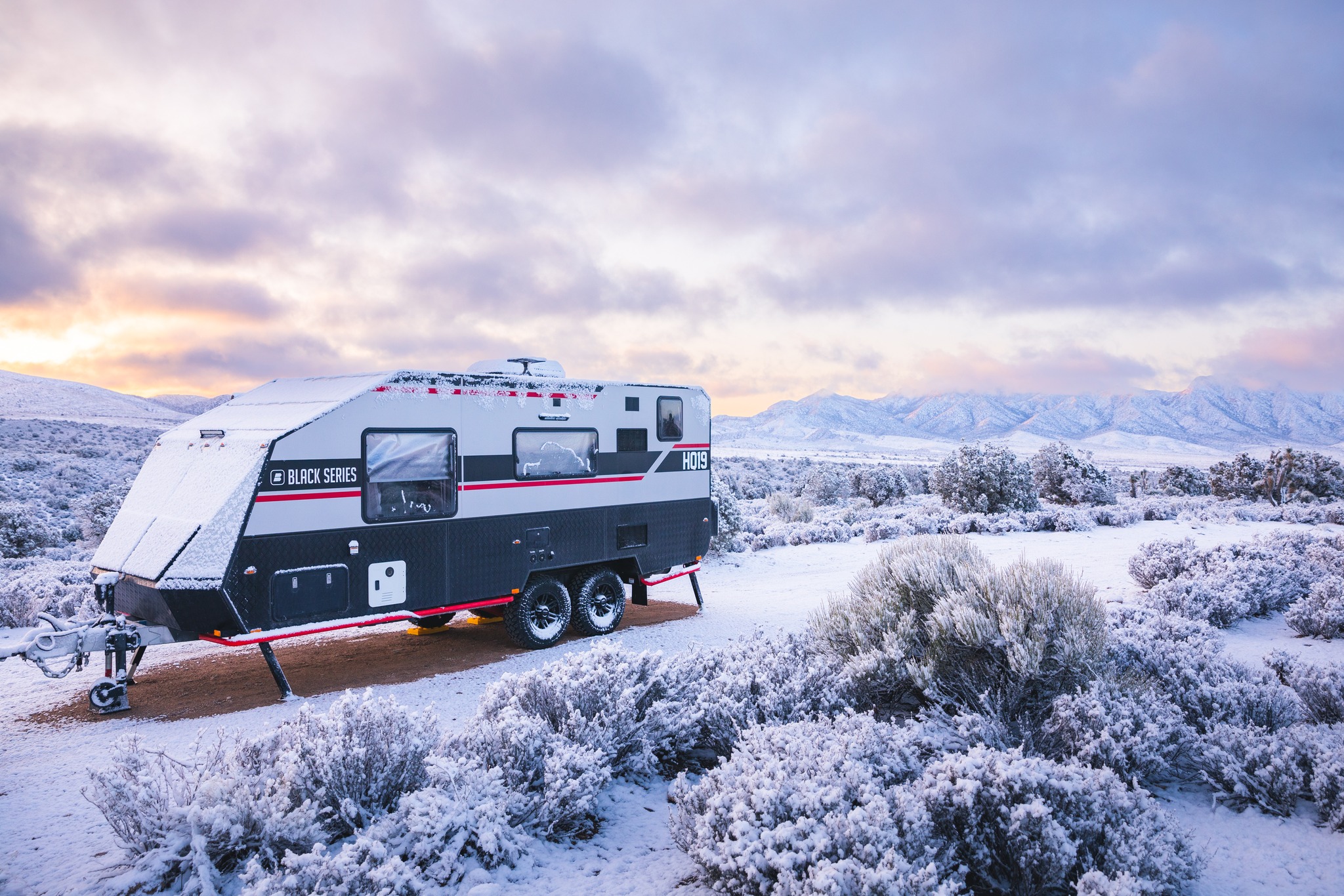
Winter Trailer Checklist: Essential Features for Cold-Weather Success
Structural Foundation Requirements
✅ Enhanced Chassis & Suspension
- Reinforced A-frame construction rated for winter road stresses
- Independent suspension with dual shocks for snow/ice traction
- All-terrain or winter-rated tires with adequate tread depth
- Electric brake systems with cold-weather controller compatibility
✅ Thermal Envelope Protection
- Walls: R-13 minimum insulation value with vapor barrier
- Floor: R-19+ with thermal bridging elimination
- Ceiling: R-21+ with proper ventilation management
- Windows: Double-pane or Low-E coated for heat retention
Critical Water System Components
✅ Freeze-Protection Infrastructure
- Heated fresh water tank (minimum 40-gallon capacity)
- Heated gray/black water tanks with monitoring sensors
- Enclosed, heated wet bay with PEX plumbing in warm zones
- Tank drain valves accessible from interior during extreme cold
- Fresh water inlet with heated connection and shut-off valve
✅ Climate Control Integration
- Forced-air furnace (minimum 20,000 BTU) with ducted heating to all areas
- Furnace air circulation to underbelly and wet bay compartments
- Supplemental electric heating options for battery-powered warmth
- Proper ventilation systems preventing condensation buildup
Power System Specifications
✅ Winter-Grade Electrical Systems
- Lithium battery minimum 400Ah capacity (preferably LiFePO4 chemistry)
- Battery thermal management or self-heating capability for sub-32°F operation
- Solar panel array minimum 600 watts (accounting for winter efficiency loss)
- MPPT charge controller with temperature compensation
- Pure sine wave inverter (3000W minimum) for high-demand appliances
Interior Comfort Features
✅ Living Space Optimization
- Adequate interior height for winter layering and gear storage
- Multiple sleeping configurations adaptable to cold-weather needs
- Interior kitchen with propane cooking and adequate ventilation
- Bathroom facilities with composting toilet or heated black tank system
- Ample storage for winter clothing, food supplies, and emergency equipment

Setup Guide: Preparing Your Trailer for Winter Off-Grid Adventures
Pre-Departure System Verification
Step 1: Power System Testing
Verify battery state-of-charge reaches 100% and maintains voltage under load. Test solar panel cleaning procedures and ensure MPPT controller displays proper charging parameters. Confirm inverter operates high-draw appliances without triggering low-voltage shutoff.
Step 2: Water System Winterization Check
Fill fresh water tank completely and verify heated tank function maintains above-freezing temperatures. Test all faucets, shower, and toilet for proper flow and temperature. Check gray/black tank heating elements and verify dump valve operation.
Step 3: Climate Control Calibration
Run furnace through complete heating cycle, checking thermostat accuracy and air circulation to all areas including underbelly. Test any supplemental heating systems and verify propane tank levels support extended cold-weather operation.
Cold-Weather Arrival & Setup Protocol
Step 4: Site Selection & Positioning
Choose level ground with southern solar exposure when possible. Position trailer to minimize wind exposure on entry door side. Ensure adequate clearance for slideouts and awning operation in potential snow accumulation.
Step 5: Utility Connection & Monitoring
Connect shore power if available, but maintain off-grid readiness. Monitor battery voltage and solar production throughout daylight hours. Establish propane consumption baseline for heating demand estimation.
Step 6: Interior Climate Establishment
Pre-heat interior space before nightfall to reduce overnight heating demands. Set thermostat conservatively (65-68°F) to balance comfort with energy consumption. Monitor interior humidity levels and adjust ventilation to prevent condensation.
Daily Operations & Monitoring
Morning Routine: Check battery voltage before high-draw appliance use. Verify water system function and tank levels. Assess weather conditions for day’s power generation potential.
Evening Protocol: Secure exterior storage and awning components against wind/snow load. Set thermostat for overnight comfort while monitoring battery reserve capacity. Ensure adequate ventilation without excessive heat loss.
Best Configurations: Matching Trailers to Winter Scenarios
Heavy-Duty Cold Weather Exploration
Target Use: Extended sub-zero camping, remote locations, multi-week adventures
Key Requirements: Maximum thermal performance, oversized power systems, comprehensive heating
Recommended Specifications:
- 800+ Ah lithium battery capacity with heating elements
- 800-1200W solar array with adjustable mounting
- Dual-zone forced air heating with underbelly circulation
- 60+ gallon fresh water capacity with full heating integration
- Enhanced insulation package (R-15+ walls, R-23+ ceiling)
Ideal Models: Blackseries HQ21 with winter package, premium manufacturers with proven arctic testing
Family Winter Camping
Target Use: Weekend trips, established campgrounds, moderate cold exposure
Key Requirements: Comfort, convenience, reliable basic systems
Recommended Specifications:
- 400-600 Ah battery capacity with BMS protection
- 600-800W solar with portable supplemental panels
- Single-zone heating with adequate BTU capacity (25,000+)
- Standard water capacity (30-40 gallons) with heated tanks
- Comfortable sleeping for 4+ occupants
Ideal Models: Mid-range offerings with proven winter packages, focus on reliability over extreme capability
Lightweight Winter Adventure
Target Use: Couple travel, moderate climates, occasional cold exposure
Key Requirements: Towability, efficiency, essential winter protection
Recommended Specifications:
- 200-400 Ah lithium with temperature management
- 400-600W solar generation capacity
- Compact heating system with strategic placement
- Efficient water usage with heated essential systems
- Streamlined interior maximizing storage and comfort
Advanced Winter Maintenance & Troubleshooting
Battery System Winter Optimization
Low-Temperature Charging Protection: Lithium batteries suffer permanent damage when charged below 32°F at high current rates. Quality BMS systems prevent charging in freezing conditions, but self-heating battery systems allow safe charging to -4°F or lower. Monitor battery temperature during charging cycles and reduce charge rates in cold conditions.
Capacity Management: Expect 10-20% capacity reduction in sub-freezing temperatures. Plan power consumption accordingly and maintain higher reserve capacity during winter operations. Consider supplemental charging through generator or vehicle alternator during extended overcast periods.
Water System Cold-Weather Protocols
Freeze Prevention Strategies: Beyond heated tanks and lines, implement multiple protection layers. Use tank heater pads with thermostatic controls, insulate exposed plumbing with pipe wrap, and maintain interior temperature above 50°F in all areas containing water lines.
Emergency Thaw Procedures: If systems freeze despite precautions, never use open flames or excessive heat. Gradually warm affected areas with hair dryers or space heaters, monitoring for pipe damage. Carry backup water supplies and know emergency system bypass procedures.
Propane System Winter Considerations
Cold Weather Performance: Propane pressure drops significantly in cold temperatures, affecting appliance performance. Use dual-tank systems allowing continuous operation while switching tanks. Consider propane tank heaters or insulation wraps for extreme cold applications.
Ventilation Balance: Proper ventilation prevents carbon monoxide buildup and interior moisture accumulation, but excessive air exchange reduces heating efficiency. Install and monitor CO detectors, crack roof vents slightly for air circulation, and use exhaust fans strategically.
Data Visualization: Winter Performance Metrics
[Placeholder for Chart 1: Power Consumption vs. Temperature]
Visual showing typical daily power usage across temperature ranges from 50°F to -10°F, illustrating increased heating demands and reduced solar efficiency
[Placeholder for Chart 2: Market Growth – Winter-Capable RV Segment]
Graph displaying year-over-year growth in four-season RV sales, highlighting the expanding winter camping market from 2020-2025
Frequently Asked Questions
Q: How cold can a true four-season trailer handle safely?
A: Quality four-season trailers with proper setup can maintain comfortable interior conditions down to -20°F or lower. Critical factors include adequate heating capacity (30,000+ BTU), comprehensive insulation (R-15+ walls), and heated water systems. Blackseries trailers undergo testing in extreme conditions to verify cold-weather performance.
Q: What’s the minimum battery capacity needed for winter boondocking?
A: Plan for 400-600 Ah minimum lithium capacity for moderate winter conditions, scaling to 800+ Ah for extended sub-zero camping. Cold weather increases heating demands while reducing solar charging efficiency. Include battery heating systems for temperatures below 20°F to maintain charging capability.
Q: Can I convert a regular RV for winter camping?
A: While possible, retrofitting lacks the integrated engineering of purpose-built four-season trailers. Essential upgrades include underbelly insulation and heating, water system protection, enhanced wall/ceiling insulation, and upgraded electrical systems. Professional installation and thorough testing are critical for safety.
Q: How do heated underbelly systems work?
A: Heated underbelly systems create an enclosed, heated environment protecting water tanks, valves, and plumbing from freezing. They typically use forced air from the main furnace or dedicated heating elements, maintaining above-freezing temperatures even in extreme cold. Proper installation and maintenance are essential for reliable operation.
Q: What maintenance schedule should I follow for winter camping?
A: Inspect heating systems monthly during cold seasons, checking filters, thermostats, and ventilation. Test all water system components weekly, including tank heaters and freeze sensors. Monitor battery health closely, cleaning terminals and checking electrolyte levels if applicable. Annual professional inspection of propane systems and heating components ensures safe operation.
Conclusion: Unlock Year-Round Adventure
Winter off-grid camping transforms harsh conditions into comfortable basecamp experiences through proper equipment selection and preparation. True four-season trailers like those in the Blackseries lineup provide the foundation for safe, enjoyable cold-weather exploration across America’s most spectacular winter landscapes.
Success requires matching your trailer’s capabilities to intended conditions, maintaining critical systems through proper protocols, and developing skills through progressive experience. The solitude, beauty, and challenge available during winter months: when crowds disappear and snow-covered peaks become accessible: create unique opportunities impossible during traditional camping seasons.
Ready to explore winter’s possibilities? Browse Blackseries’ complete lineup of four-season capable trailers, each engineered for the demands of year-round adventure. Download our comprehensive winter camping guide or schedule a consultation to match the perfect trailer to your cold-weather ambitions.
The winter wilderness awaits; properly equipped, it becomes your most rewarding season for outdoor exploration.

