A bespoke off-road camper is a custom-engineered vehicle designed for specific adventure needs, offering modifications in layout, self-sufficiency systems, and materials that go beyond standard factory options. Unlike production models with preset configurations, a bespoke build is a complete rethink of how your rig handles extreme conditions, long-term travel, and remote environments. It’s ideal for overlanders who demand precision, adventurers facing four-season climates, and anyone who’s outgrown the limitations of mass-produced trailers.
If you’ve ever pulled up to a BLM campsite and realized your factory rig can’t handle the heat, the cold, or the rough two-track you just crossed, this guide is for you.
What Does “Bespoke” Mean in Off-Road Campers?
Let’s clear something up: bespoke is not an “options list.” It’s not about checking boxes for a sunroof or upgrading your countertop color. A true bespoke off-road camper is a ground-up design process built around three core variables:
1. Layout (Spatial Logic)
Every inch of your trailer should serve your specific use case. Are you a solo photographer who needs gear storage and a mobile workstation? A couple planning multi-month overland trips? A family of four who needs bunk beds and a real bathroom? Factory layouts are designed for the average user. Bespoke builds are designed for you.
2. Systems (Power, Water, Climate)
This is where bespoke builds separate from the pack. Your electrical architecture, water capacity, heating strategy, and refrigeration all get tailored to match your travel profile. A weekend warrior doesn’t need 600 amp-hours of lithium and 80 gallons of fresh water. But if you’re spending three weeks in the Mojave in July? You absolutely do.
3. Materials & Finishes (Durability vs. Aesthetics)
Bespoke doesn’t always mean “fancy.” Sometimes it means reinforced aluminum skinning for high-speed washboard roads. Other times, it’s marine-grade cabinetry that won’t rattle apart after 10,000 miles of corrugation. The goal is function-first design with aesthetics that match your priorities.
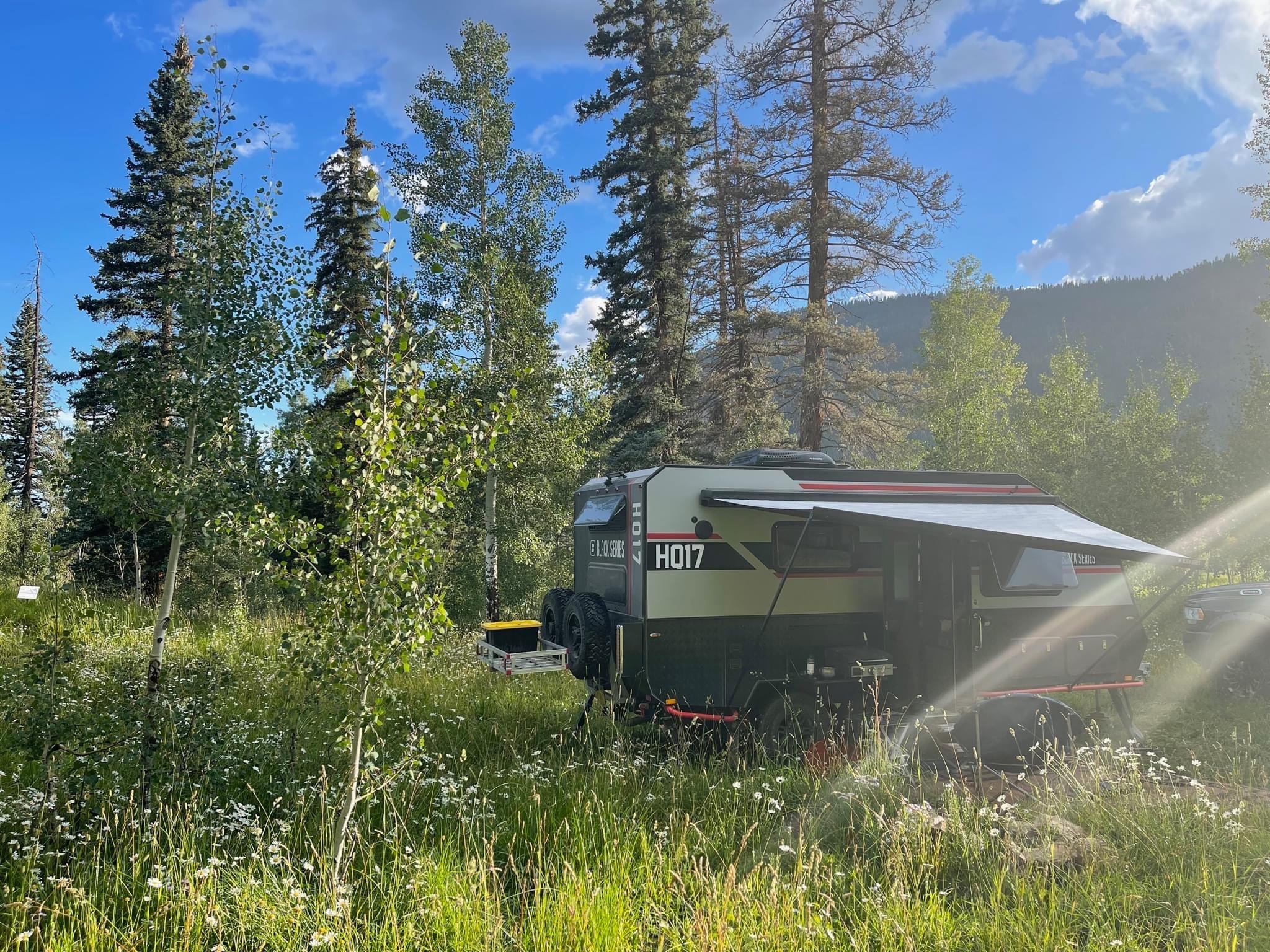
Why Choose a Bespoke Off-Road Camper?
Factory-built campers are optimized for volume. Bespoke builds are optimized for your specific reality. Here’s when custom makes sense:
Long-Term Remote Travel
If your adventure spans months instead of weekends, you need systems that won’t fail 400 miles from the nearest dealer. Custom electrical redundancy, oversized freshwater tanks, and reinforced chassis components aren’t luxuries, they’re necessities.
Extreme Climate Camping
Standard insulation might work in spring. It won’t cut it at 110°F in Death Valley or -20°F in the Tetons. A bespoke build lets you spec closed-cell foam insulation, diesel heating, and thermal management strategies that turn your camper into a legitimate four-season habitat.
Specialized Equipment Needs
Remote workers need Starlink mounts, inverter systems, and workspace ergonomics. Photographers need vibration-isolated storage and darkroom-style layouts. Extreme sports athletes need bike racks, board storage, and quick-access gear bays. Factory builds force you to retrofit. Bespoke builds integrate these from day one.
The Trade-Off
Custom depth comes with cost and time. A factory trailer can be yours in weeks. A bespoke build might take 6–12 months depending on complexity. But if you’re planning a Pan-American Highway run or a year-long National Forest circuit, that’s time well spent. Learn more about upgrading to a true adventure RV and how to maximize value.
Bespoke Off-Road Camper Design Process (How-To)
Here’s how the build process actually works, broken into four decision stages:
Step 1 – Define Your Travel Profile
Start with the fundamentals:
- Road conditions: What’s your paved-to-dirt ratio? 70/30? 30/70? All dirt?
- Trip duration: Are you doing week-long excursions or 90-day expeditions?
- Climate exposure: Single-season use or true four-season capability?
This isn’t just about preference. It’s about engineering decisions. A rig built for technical rock crawling in Moab has different suspension tuning than one built for high-speed dirt roads in Nevada.
Step 2 – Layout & Ergonomics
Custom layouts solve real problems:
- Bed orientation: East-west beds maximize interior space. North-south beds reduce sway on rough roads and improve livability for taller folks.
- Kitchen position: Interior kitchens work in bad weather. Exterior kitchens save interior space and keep cooking smells outside.
- Storage zoning: Where do tools go? Recovery gear? Water filtration? Dirty boots? Every item needs a designated, vibration-proof home.
A well-designed layout reduces daily friction. A bad one makes every trip feel like a chore.

Step 3 – Systems Engineering
This is where bespoke builds justify their cost. Let’s break down the big three:
Power Architecture
Standard campers come with 100–200 amp-hours of lead-acid battery. That’s fine for running lights. It won’t run an air conditioner, induction cooktop, or laptop workstation for days on end. A bespoke system might include 400–600 amp-hours of lithium, 500+ watts of solar, DC-to-DC charging from your tow vehicle, and smart inverters that prioritize critical loads. If you’re serious about off-grid power, check out our guide on off-grid power systems for travel trailers.
Water Capacity & Filtration
Factory trailers average 20–40 gallons of fresh water. Bespoke builds can integrate 60–100 gallons with filtration systems that let you refill from questionable sources. Grey water management, heated tanks for winter use, and strategically placed tank locations (low and centered for stability) all factor into the design.
Heating / Cooling Strategy
Diesel heaters provide reliable warmth without draining your battery. Mini-split AC units offer efficient cooling. Four-season insulation (closed-cell foam, thermal breaks, insulated windows) turns your camper into a climate-controlled environment instead of a metal box that amplifies outside temperatures.
Step 4 – Chassis & Suspension Matching
Here’s where weight management becomes critical.
While a standard 30 foot RV weight (or 30-foot camper weight) might be fixed at 7,500–9,000 lbs dry, a bespoke build lets you optimize a 24 ft camper weight or 18 ft camper weight for your exact payload needs. This is huge. Instead of carrying the average weight of camper with features you’ll never use, you’re engineering a rig that only includes mission-critical systems.
For example:
- A custom 16 ft camper weight might actually be heavier than a factory equivalent if you’ve reinforced the frame for extreme terrain, added a second axle, or upgraded to independent suspension.
- Conversely, a well-designed 24-footer built with aluminum construction could weigh less than average travel trailer weights in its class because you’ve eliminated unnecessary cabinetry, appliances, and decorative features.
The goal isn’t “lightest” or “heaviest.” It’s precisely matched to your tow vehicle’s capability and your adventure profile. This is especially critical if you’re towing with an EV or planning technical trails where every 100 lbs affects handling. For more on weight considerations, see our deep dive on travel trailer weight.
Common Custom Options in Bespoke Off-Road Campers
Here’s a feature-to-value breakdown of what bespoke builders commonly offer:
Want to upgrade your current rig? Explore RV lithium power upgrade options or check out best RV upgrade deals for 2026.
Bespoke vs Standard Off-Road Campers
Let’s be honest about the trade-offs:
Flexibility: Bespoke wins. You get exactly what you need. Factory builds force compromises.
Weight Efficiency: Bespoke can win, if you design it right. Factory builds often include features you’ll never use, adding dead weight. But poorly planned custom builds can balloon in weight with “just one more feature.”
Maintenance Accessibility: Factory builds have the edge. Standardized parts, dealer networks, and warranty support make repairs easier. Bespoke systems might require custom fabrication or specialty knowledge.
Resale Considerations: Factory builds are easier to sell because buyers understand them. Bespoke builds appeal to a smaller market but can command premium prices if your custom features align with buyer needs. A rig built for Arctic exploration won’t sell well in Arizona.
Bespoke Off-Road Camper Checklist
Before you commit to a custom build, work through this checklist:
Design Confirmation (Before Production)
- Travel profile documented (road conditions, duration, climate)
- Layout finalized with 3D renderings or mockups
- Electrical load calculations completed (AC, fridge, inverter, etc.)
- Water capacity and filtration strategy confirmed
- Chassis and suspension specs matched to tow vehicle
- Weight estimate vs. payload margin verified
During Production
- Regular progress updates with photos
- Mid-build walkthrough (if possible)
- System testing (electrical, plumbing, HVAC)
Pre-Delivery Shake-Down
- Full weight check (loaded for travel)
- Road test on varied terrain
- Leak test (roof, windows, plumbing)
- All systems operational under load
This process protects you from costly surprises and ensures your rig performs as designed.
FAQ
How long does it take to build a bespoke off-road camper?
Expect 6–12 months depending on complexity and builder workload. Simpler layouts with standard systems might finish in 4–6 months. Full custom builds with one-off fabrication, specialized electrical systems, and exotic materials can stretch to 18 months. Always pad your timeline, especially if you’re coordinating delivery with a specific trip.
Are bespoke campers heavier than standard models?
Not necessarily. A custom 16 ft camper weight might be heavier if you’ve reinforced the frame, added dual axles, or installed a diesel heater and oversized battery bank. But a well-designed bespoke build can also be lighter than average travel trailer weights because you eliminate unnecessary features. It all depends on how you prioritize your build.
Is bespoke worth it for weekend travel?
Probably not. If you’re doing 2–3 weekend trips per year on established campgrounds, a factory build will serve you well. Bespoke makes sense when you’re pushing boundaries, long-duration trips, extreme climates, or specialized use cases like remote work or expedition photography. The ROI comes from reliability and capability over thousands of miles, not occasional use.
Can bespoke campers be upgraded later?
Yes, but with limitations. Electrical systems, storage solutions, and accessories are relatively easy to modify. Structural changes (suspension, frame reinforcement, chassis modifications) are much harder and more expensive after the build is complete. That’s why getting the foundation right during the design phase is critical. For more on evolving your setup, see our guide on off-road travel trailers for rugged adventures.
Bottom line: A bespoke off-road camper isn’t for everyone. But if your adventures demand precision, durability, and self-sufficiency beyond what factory builds offer, it’s not just an upgrade: it’s a total rethink of what’s possible on and off the road.

