Residential-style off-grid living means bringing the comfort and stability of home, full-size beds, reliable climate control, continuous power, and real kitchens, to remote locations like BLM land, National Forests, and dispersed camping sites across the U.S. It’s not just about “roughing it” anymore; it’s about living well while being completely disconnected from the grid. Think of it as your house, just on wheels, parked wherever you want.
In 2026, more people are realizing they can work remotely from a mesa in Utah or a forest road in Oregon without sacrificing hot showers, cold refrigeration, or the ability to cook a proper meal. This isn’t traditional RV living where you’re constantly chasing hookups or rationing water. This is engineered independence with home-level comfort.
What Does “Residential-Style” Mean in Off-Grid Living?
Let’s be clear: residential-style doesn’t just mean “luxury” or “fancy finishes.” It’s about three core pillars that fundamentally change how you live on the road.
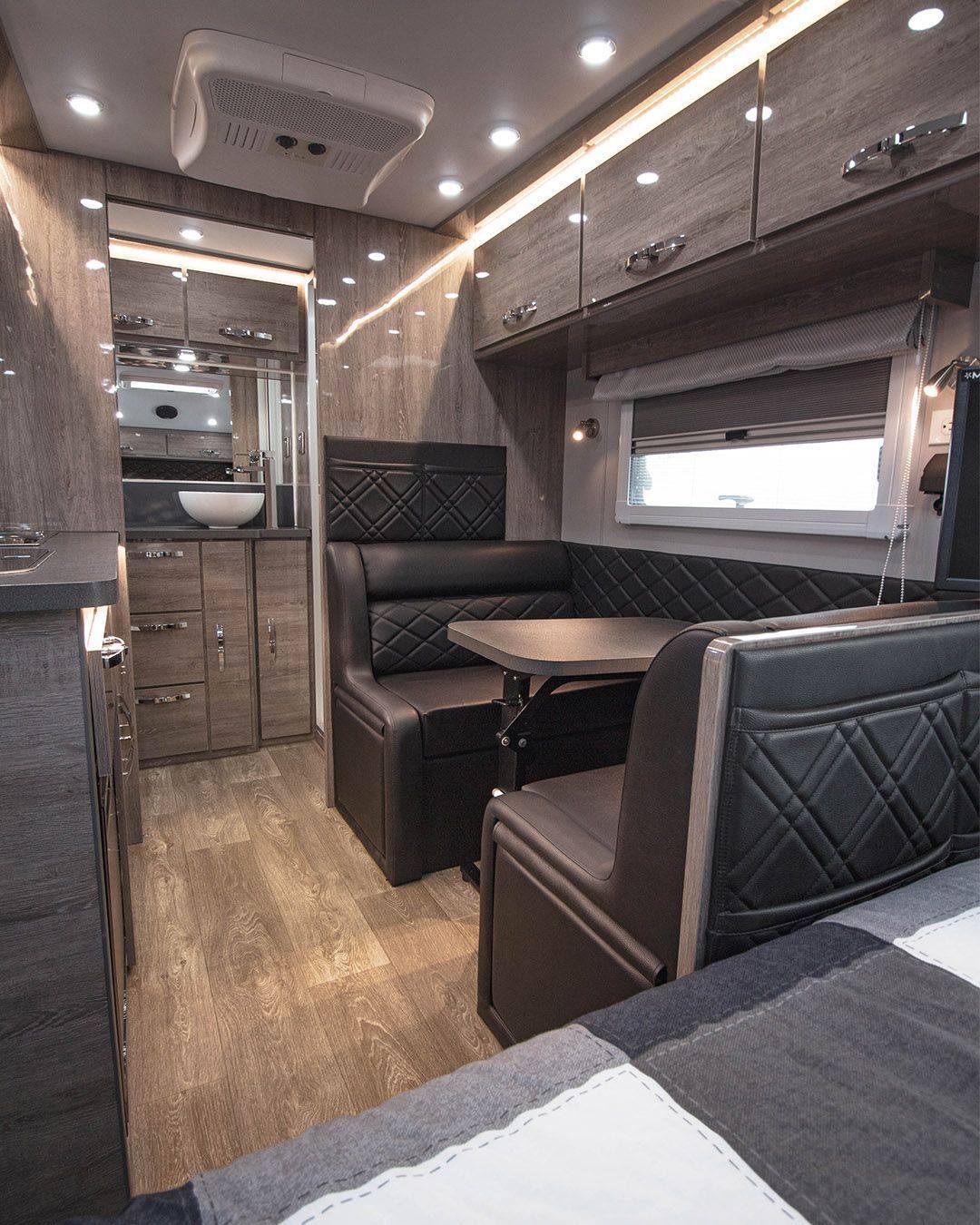
Spatial Comfort means actual beds, not cramped RV dinettes that convert into beds. We’re talking queen-size mattresses, real counter space for meal prep, and living areas where you’re not constantly bumping into things. The layout feels like a small apartment, not a hallway with appliances.
Systems Stability is where residential-style separates itself from weekend camping setups. Your power doesn’t fluctuate. Your water pressure is consistent. Your heating and cooling run continuously without draining batteries overnight. These systems are designed for weeks of use, not days.
Daily-Life Continuity is the game-changer. You can shower every morning. Run a coffee maker, blender, or laptop charger without thinking twice. Work a full remote job with stable Wi-Fi and climate control. Cook multi-course meals. In other words, your daily routine doesn’t have to change just because you’re parked on a Forest Service road.
Why Residential-Style Off-Grid Living Is Growing in the U.S.
The 2020s brought a massive shift in how Americans think about work and travel. Remote work isn’t a temporary trend anymore, it’s permanent for millions of people. And when you can work from anywhere, “anywhere” starts looking a lot more appealing than a suburban office park.
Dispersed camping on public lands has exploded in popularity. BLM land and National Forests allow you to camp for free (usually 14 days per site) in some of the most stunning locations in the country. But here’s the catch: there are no hookups. No water spigots. No electrical pedestals. No sewer connections. If you want to stay comfortable for more than a long weekend, you need residential-level systems.
The difference between short-term off-grid (a 3-day camping trip) and long-term off-grid (living remotely for weeks or months) is massive. Short-term off-grid is about packing enough supplies. Long-term off-grid is about regenerating those supplies, capturing solar energy, filtering water, managing waste, and maintaining a stable indoor environment regardless of outside conditions.
People are choosing this lifestyle for flexibility. You can chase good weather, explore new regions every few weeks, and still meet work deadlines. You’re not tied to a lease, a mortgage, or a fixed location. And if you build your systems right, you’re not tied to RV parks either.
Core Systems Behind Residential-Style Off-Grid Living
Here’s where engineering meets everyday life. These aren’t optional upgrades, they’re the foundation of making residential-style off-grid work.
Residential-Level Power Systems
Forget the 100-amp-hour battery and single solar panel. Residential power systems use large lithium battery banks (400–800+ amp-hours) that can run air conditioning, refrigeration, computers, and kitchen appliances simultaneously. We’re talking about the same capacity you’d expect in a small home.
Solar arrays on residential-style setups are typically 800–1,200 watts or more, often paired with alternator charging systems that replenish batteries while driving. High-wattage inverters (2,000–3,000 watts) convert DC power to AC so you can plug in anything you’d use at home, hair dryers, microwaves, power tools.
For a deeper dive into how these systems work, check out our guide on Off-Grid Power Systems for Travel Trailers & RVs, which breaks down sizing, component selection, and real-world performance. If you’re upgrading an existing setup, our RV Lithium Power Upgrade article covers cost-benefit analysis and installation best practices.

Water & Sanitation for Long-Term Living
Residential-style water systems hold 60–100+ gallons of fresh water, compared to the 20–40 gallons in standard RVs. But capacity alone isn’t enough, you need filtration and recycling to extend your time off-grid.
Many residential setups include water filtration systems that allow you to refill from natural sources (with proper treatment). Greywater management systems help you reuse shower and sink water for tasks like flushing toilets or washing gear. Some advanced builds even integrate composting toilets to eliminate the need for black water dumping entirely.
Residential-style showers and toilets use standard fixtures with real water pressure, not the anemic trickle you get in budget RVs. Hot water systems are sized for back-to-back showers, not just a quick rinse.
Climate Control & Insulation
Four-season insulation is non-negotiable. Residential-style builds use spray foam insulation, thermal barriers, and double-pane windows to maintain stable interior temperatures. This isn’t just about comfort, it’s about energy efficiency. A well-insulated trailer can run AC or heating for a fraction of the battery draw compared to a poorly insulated one.
High-efficiency mini-split AC units and diesel or propane heaters provide continuous climate control. Diesel heaters are particularly popular because they’re fuel-efficient, powerful, and don’t rely on electrical hookups. You can maintain 70°F inside while it’s 20°F outside, all night, without draining your batteries.
Interior Design for Residential-Style Comfort
The layout makes or breaks residential-style living. Here’s what actually matters when you’re spending 30+ days straight in a space.
Full-size beds are standard, queen or king mattresses with proper support, not a thin foam pad on a plywood platform. The bed needs to stay accessible without tearing apart the living area every night.
Residential kitchen layouts include full-size refrigerators (12-volt compressor models, not absorption units), 3–4 burner cooktops, ovens, and deep sinks with high-flow faucets. Counter space is generous enough to actually prep meals, not just heat up canned soup.
Storage zoning separates clothing, food, outdoor gear, and work equipment. Well-designed residential builds use vertical space efficiently, overhead cabinets, under-bed drawers, and modular shelving that adapts to what you’re carrying.
Noise and vibration control matters more than most people realize. Residential builds use marine-grade cabinetry with soft-close hinges, vibration-dampening mounts for appliances, and acoustic insulation to reduce road noise. When you’re living in the space full-time, every rattle and buzz becomes annoying fast.
Residential-Style Off-Grid Living vs Traditional RV Living
Here’s the reality check. Residential-style off-grid and traditional RV living serve different purposes. Neither is “better”, they’re optimized for different use cases.
Traditional RVs work great if you’re moving between campgrounds, using hookups regularly, or only taking 3–7 day trips. Residential-style setups shine when you want to park in one remote location for 10–14 days (or longer), live comfortably, and not worry about finding a dump station or electrical pedestal.
Is Residential-Style Off-Grid Living Right for You?
Let’s talk practicality. Residential-style off-grid isn’t for everyone, and that’s fine. Here’s how to figure out if it matches your actual travel style.
Trip Duration is the first variable. If you’re typically out for 7 days or less and moving frequently, traditional RV living might be more than enough. But if you’re planning 30-day trips, remote work stints, or multi-month overland adventures, residential-style systems become essential.
Usage Frequency matters too. If you use your rig 3–4 weekends per year, the investment in residential systems might not pencil out. But if you’re living in it for 6+ months annually, the quality-of-life upgrade is worth every dollar.
Maintenance Complexity vs. Quality of Life is a trade-off. Residential systems have more components, larger battery banks, complex solar arrays, advanced water filtration. This means more potential failure points and a steeper learning curve. But in exchange, you get predictable, reliable performance that doesn’t leave you scrambling for a generator every evening.
Towing and Weight Constraints are critical. Achieving residential comfort impacts the overall build. While the average weight of camper might hover around 5,000–7,000 lbs for standard models, residential-style off-road travel trailers require more robust engineering. High-capacity lithium batteries, large water tanks, reinforced chassis, and four-season insulation all add mass.
For example, a 30 foot rv weight (or 30 ft rv weight / 30 ft camper weight / 30-foot camper weight) in the residential-style class often exceeds 8,000–10,000 lbs dry weight, significantly higher than average travel trailer weights. Even smaller units carry more mass: an 18 ft camper weight or 24 ft camper weight in a residential-style build will exceed standard models due to reinforced frames and premium systems.
On the lighter end, a 16 ft camper weight might seem appealing for maneuverability, but squeezing residential-level systems into that footprint requires careful payload management. The key is matching your tow vehicle’s capacity to the trailer’s actual loaded weight, not just the manufacturer’s dry weight spec.
For more insight on chassis engineering and capability, see our article on Off Road Camper Trailer Built for Extreme Terrain, which covers how suspension, axles, and weight distribution affect off-grid performance.
FAQ
Can residential-style off-grid living work full-time?
Yes, but with planning. Full-time residential-style living requires diligent system monitoring, tracking battery state of charge, water levels, and propane or diesel fuel. You’ll need to move locations periodically (most public lands have 14-day limits), refill water and fuel, and occasionally access dump stations or service centers. Many full-timers follow weather patterns (cooler summers in the north, warmer winters in the south) to minimize climate control demands.
How much power is needed for home-style appliances?
Plan for 400–800 amp-hours of lithium battery storage and 800–1,200 watts of solar. This supports air conditioning (in short bursts), continuous refrigeration, laptops, lighting, and cooking appliances. If you’re running AC for extended periods or using high-draw devices like power tools, you may need larger systems or supplemental charging via alternator or generator. Our Off-Grid Power Systems guide walks through detailed sizing calculations.
Is residential-style off-grid living heavier?
Yes, significantly. The 30 foot rv weight for a residential-style build is often 2,000–3,000 lbs heavier than a comparable standard RV. Even an 18 ft camper weight or 24 ft camper weight will exceed average travel trailer weights because of reinforced chassis, lithium batteries, large water tanks, and four-season insulation. Make sure your tow vehicle is rated for the loaded weight: not just the dry weight: and factor in gear, food, and water. For more on weight dynamics, see our travel trailer weight guide.
How long can you stay fully off-grid realistically?
With proper system sizing, 10–14 days is very achievable, even in less-than-ideal conditions (cloudy weather, cold temps). In optimal conditions (sunny, moderate temps), 3–4 weeks is possible before needing to refill water or dump waste. The limiting factor is usually water capacity and waste storage, not power: solar and battery systems can sustain indefinitely if you get enough sun. For rugged, long-term setups, check out our guide on Off-Road Travel Trailers: Best Models for Rugged Adventures in 2026.
Residential-style off-grid living isn’t just a trend: it’s a blueprint for how people want to travel and work in 2026. It takes the best parts of home (comfort, stability, predictability) and combines them with the freedom of the open road. If you’re serious about long-term remote travel or full-time living on public lands, investing in residential-level systems isn’t optional( it’s the foundation of everything else.)

