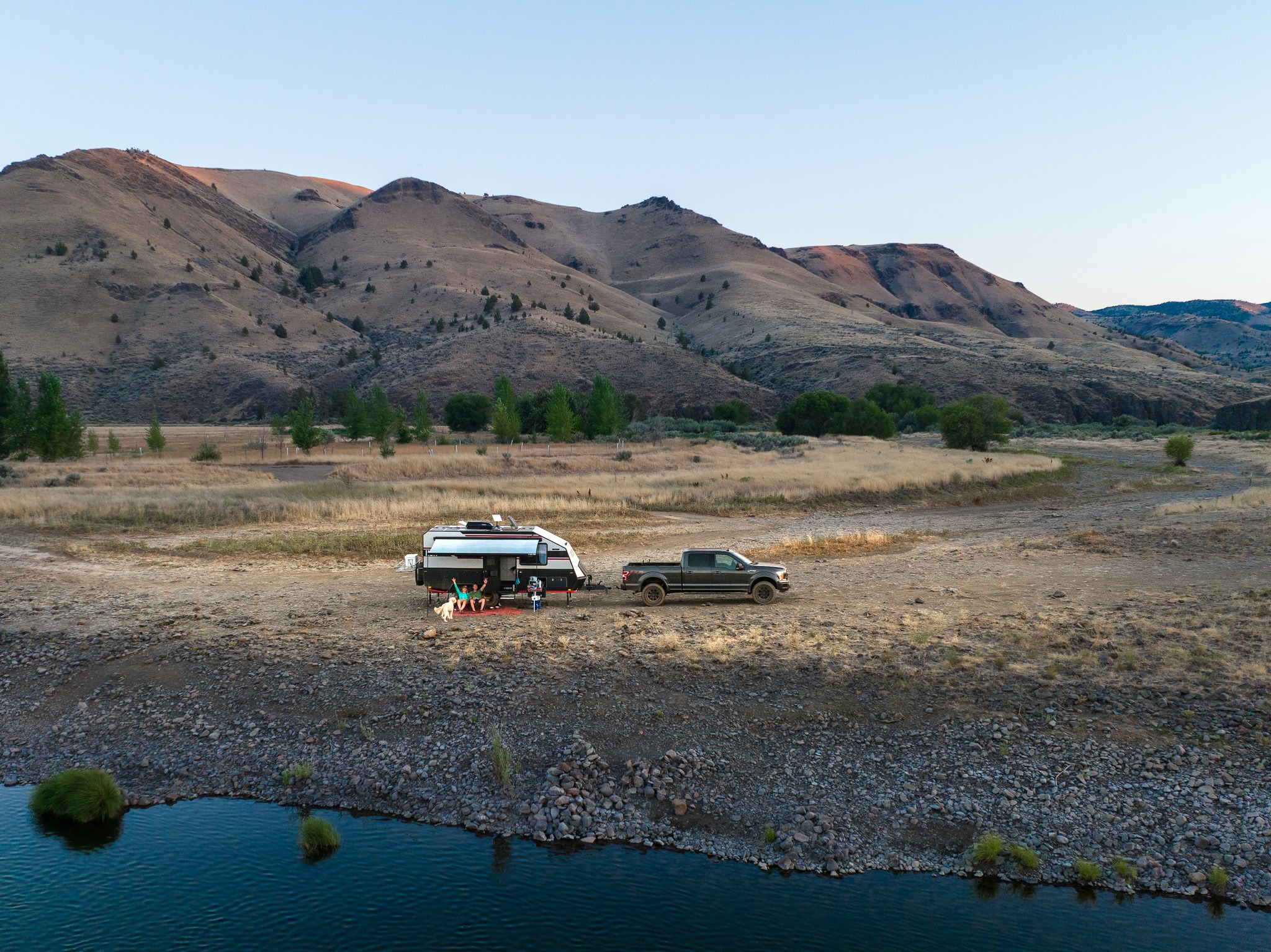
A high-end adventure trailer is a premium off-road vehicle engineered for extreme durability and long-term comfort in remote locations. Unlike standard travel trailers, these are built with reinforced chassis, independent suspension, and high-capacity off-grid systems for exploring BLM land and National Forests across the USA. Think of it as the difference between a sedan and a Land Cruiser: both get you places, but only one is built to live out there for weeks at a time.
What Defines a High-End Adventure Trailer?
Not every trailer with knobby tires qualifies as “high-end adventure.” The real deal is built on three non-negotiable pillars:
Engineering & Durability means a reinforced chassis that can take a beating on washboard roads, independent suspension that keeps your wine glasses intact on rocky trails, and a monocoque construction (or fully welded aluminum body) that won’t rattle apart after 10,000 miles of dirt roads. These trailers are designed to handle the abuse that would destroy a standard RV in a single season.
Comfort Without Compromise is about living well, not just surviving. We’re talking residential-style queen beds (not cramped RV bunks), full kitchens with real counter space, and climate control that actually works. The best models include vibration-dampening systems so your cabinets don’t sound like a drum solo every time you hit a pothole.
Self-Sufficiency separates weekend warriors from true overlanders. High-end adventure trailers pack serious lithium battery banks (200–400Ah is common), robust solar arrays, diesel heaters for winter camping, and water filtration systems that let you refill from streams. The goal? Stay out there as long as you want, not as long as your propane lasts.
Why High-End Adventure Trailers Are Popular in the USA
The American landscape is basically built for this. With millions of acres of BLM land, National Forests, and remote desert access, dispersed camping culture has exploded. You’re no longer limited to crowded RV parks: you can literally park wherever you find a clearing (within regulations, of course).
Remote work changed everything too. When your “office” can be anywhere with cell signal or Starlink, why not make it a canyon in Utah or a forest in Montana? The 2026 market reflects this shift: more buyers are looking for trailers that can handle months-long trips, not just weekend getaways.
Long-distance overland travel is the third driver. Cross-country road trips that span different climate zones (desert heat to mountain snow) require trailers that can adapt. A high-end adventure trailer doesn’t just survive these conditions: it thrives in them.

Premium Features to Look For
Off-Road Capability
Independent suspension is the gold standard. Unlike traditional leaf-spring setups, independent systems keep each wheel moving freely over obstacles, reducing body roll and improving ground contact. Pair that with high ground clearance (12+ inches is ideal) and all-terrain tires, and you’ve got a trailer that can follow your truck almost anywhere.
Chassis armor matters too: skid plates, rock sliders, and reinforced underbody protection prevent expensive damage on technical trails. If you’re serious about off-road travel trailers, don’t skip these basics.
Interior Comfort
Residential-style sleeping means a real mattress on a solid platform, not a fold-out couch that feels like cardboard. Full kitchen layouts with three-burner stoves, deep sinks, and 12V compressor fridges (not absorption fridges that quit working at altitude) make meal prep actually enjoyable.
Noise and vibration control might sound boring, but after your third week on gravel roads, you’ll appreciate cabinets that don’t rattle and walls that actually dampen sound. High-end models use marine-grade latches and soft-close hardware: small details that add up.
Power & Off-Grid Systems
Large lithium battery banks (200Ah minimum, 400Ah+ for extended trips) are non-negotiable. Lithium weighs less, charges faster, and lasts longer than old-school lead-acid batteries. Most premium trailers now include solar arrays (400–800W) and DC-to-DC charging from your vehicle’s alternator, so you’re constantly topping off while driving.
Inverter capacity matters if you want to run home appliances. A 2000W–3000W pure sine wave inverter lets you use a microwave, coffee maker, or power tools without compromise. For a deep dive on upgrading your power setup, check out our guide on RV lithium power upgrades.
Four-Season Readiness
Advanced insulation (closed-cell foam, not fiberglass) keeps you warm in winter and cool in summer. Dual-pane windows and insulated floors prevent heat loss. Heating and AC integration: usually a diesel or propane heater paired with a rooftop AC: means you can camp comfortably year-round.
How to Choose the Best High-End Adventure Trailer
Tow vehicle matching is critical. While the average weight of camper might suggest a light tow, high-end off-road travel trailers are built heavy-duty. A 30 foot RV weight in this category can be significantly higher than average travel trailer weights because of reinforced frames, armor, and battery banks.
Let’s break it down by size:
- A 16 ft camper weight typically ranges from 2,200–3,000 lbs dry, but add gear, water, and batteries, and you’re looking at 3,500–4,200 lbs loaded.
- An 18 ft camper weight usually sits around 2,800–3,800 lbs dry (4,500–5,500 lbs loaded).
- A 24 ft camper weight can hit 4,500–6,000 lbs dry, pushing 7,000–8,500 lbs fully loaded.
The 30 ft camper weight (or 30 ft RV weight) in the adventure trailer class often exceeds 7,000 lbs dry: sometimes reaching 9,000–10,000 lbs with water, gear, and optional upgrades. Compare that to the average weight of a standard 30-foot camper (around 5,500–7,000 lbs), and you can see why tow vehicle selection matters.
Payload margin is your safety buffer. If your truck is rated for 8,000 lbs towing capacity, don’t max it out with an 8,000 lb trailer. Leave 20% cushion for safety and performance. Understanding travel trailer weight considerations will save you from costly mistakes.
Trip duration planning also matters. Weekend warriors can get away with smaller battery banks and water tanks. But if you’re planning 30+ day trips, you need the capacity to match. A 40-gallon fresh water tank sounds big until you realize it’s gone in 4–5 days with two people.
Maintenance accessibility vs complexity is the final trade-off. Premium systems (lithium batteries, diesel heaters, electronic suspension) are amazing when they work. But if something breaks in the backcountry, can you fix it? Choose trailers with standard components and accessible service points. If you’re considering an upgrade, our off-road RV trade-in program can help you move into a better-equipped model.
High-End Adventure Trailer Setup Checklist
Pre-Trip Inspection:
- Check tire pressure (including spare) and inspect for damage
- Test all lights, brakes, and trailer brake controller
- Inspect hitch connection, safety chains, and breakaway cable
- Verify suspension components and chassis integrity
Power & Water Readiness:
- Charge lithium batteries to 100%
- Test solar panel output and connections
- Fill fresh water tank and verify pump operation
- Check grey/black tank levels and dump if needed
- Inspect water filtration system if installed
Recovery & Redundancy Planning:
- Pack recovery boards, tow straps, and a shovel
- Bring tire repair kit and 12V air compressor
- Carry backup fuses, relays, and basic electrical supplies
- Load extra food, water, and fuel for extended off-grid stays
For more detailed setup tips, check out our off-road trailer maintenance guide.
High-End Adventure Trailers vs Luxury RVs
Luxury RVs prioritize comfort and amenities but struggle off pavement. High-end adventure trailers sacrifice some square footage for serious capability. If you want both, you’re looking at the top-tier models like Bowlus or premium off-road trailer RVs.
FAQ
Are high-end adventure trailers worth the cost?
If you’re planning frequent trips to remote locations, absolutely. The durability, comfort, and off-grid capability save money long-term by avoiding repairs, extending camping seasons, and eliminating RV park fees. Budget $50,000–$120,000 for a quality U.S.-built model.
Can you live full-time in an adventure trailer?
Many people do, especially remote workers and retirees. The key is choosing a model with enough water capacity (40+ gallons), battery power (300Ah+), and climate control. Full-time living requires more maintenance but is entirely feasible with the right setup.
What vehicles can tow high-end adventure trailers?
At minimum, you need a half-ton truck (F-150, Ram 1500, Silverado 1500) with the Max Tow package for smaller models. For trailers over 6,000 lbs loaded, consider a 3/4-ton truck (F-250, Ram 2500). Always check your vehicle’s specific towing capacity and payload rating.
How long can you stay fully off-grid?
With proper planning, 7–14 days is standard. Factors include water capacity, battery size, solar input, and how conservative you are with resources. Some overlanders stretch it to 30+ days using water filtration and generator backup. Learn more about extending your off-grid capability with off-grid power systems.
High-end adventure trailers represent a significant investment, but for serious explorers, they’re the only tool built for the job. Whether you’re chasing remote desert sunsets or escaping to alpine meadows, these trailers deliver the durability, comfort, and independence to make it happen. If you’re ready to upgrade your adventure game, explore our 2026 buying guide or check out current RV upgrade deals.

