The American camper trailer market has experienced unprecedented growth, with over 11.2 million households now owning RVs according to the RV Industry Association’s 2024 report. This surge reflects a fundamental shift toward adventure-focused travel, with families increasingly seeking off-road capable and lightweight camper trailers that can access remote destinations while providing four-season comfort. BlackSeries has emerged as a premium manufacturer in this space, combining Australian outback engineering with American-specific adaptations to deliver expedition-grade trailers built for durability, off-road capability, and extended backcountry exploration.
What Is a Camper Trailer?
Understanding the distinction between camper trailers and travel trailers is crucial for making an informed purchase decision. A camper trailer typically refers to a more compact, lightweight towable unit designed for active outdoor enthusiasts who prioritize mobility and access to remote locations. These units generally range from 12-21 feet in length and emphasize essential amenities over luxury features.
In contrast, travel trailers are broader category that includes larger, more amenity-rich units (often 25+ feet) designed primarily for developed campgrounds with hookups. While travel trailers prioritize comfort and space, camper trailers focus on ruggedness and self-sufficiency.
Off-Road Camper Trailer Definition
An off-road camper trailer represents a specialized subset engineered specifically for challenging terrain access. These units feature high ground clearance (typically 12+ inches), independent suspension systems, reinforced chassis construction, and protective underbody armor. Unlike conventional trailers designed for paved roads and established campgrounds, off-road models can safely navigate forest service roads, desert trails, and mountain passes.
Lightweight Camper Trailers
Lightweight camper trailers typically range from 2,500-4,500 pounds dry weight, making them towable by mid-size SUVs and trucks without requiring heavy-duty vehicles. This weight range allows for better fuel economy and easier maneuverability while still providing essential camping amenities.
Essential Terminology
GVWR (Gross Vehicle Weight Rating) represents the maximum safe loaded weight of the trailer, including cargo, water, propane, and gear. Tongue weight should typically represent 10-15% of the trailer’s loaded weight for proper handling and stability. Off-grid features include solar power systems, lithium battery banks, freshwater storage, and waste management systems that enable extended camping without hookups.
Types of Camper Trailers
Off-Road Camper Trailers
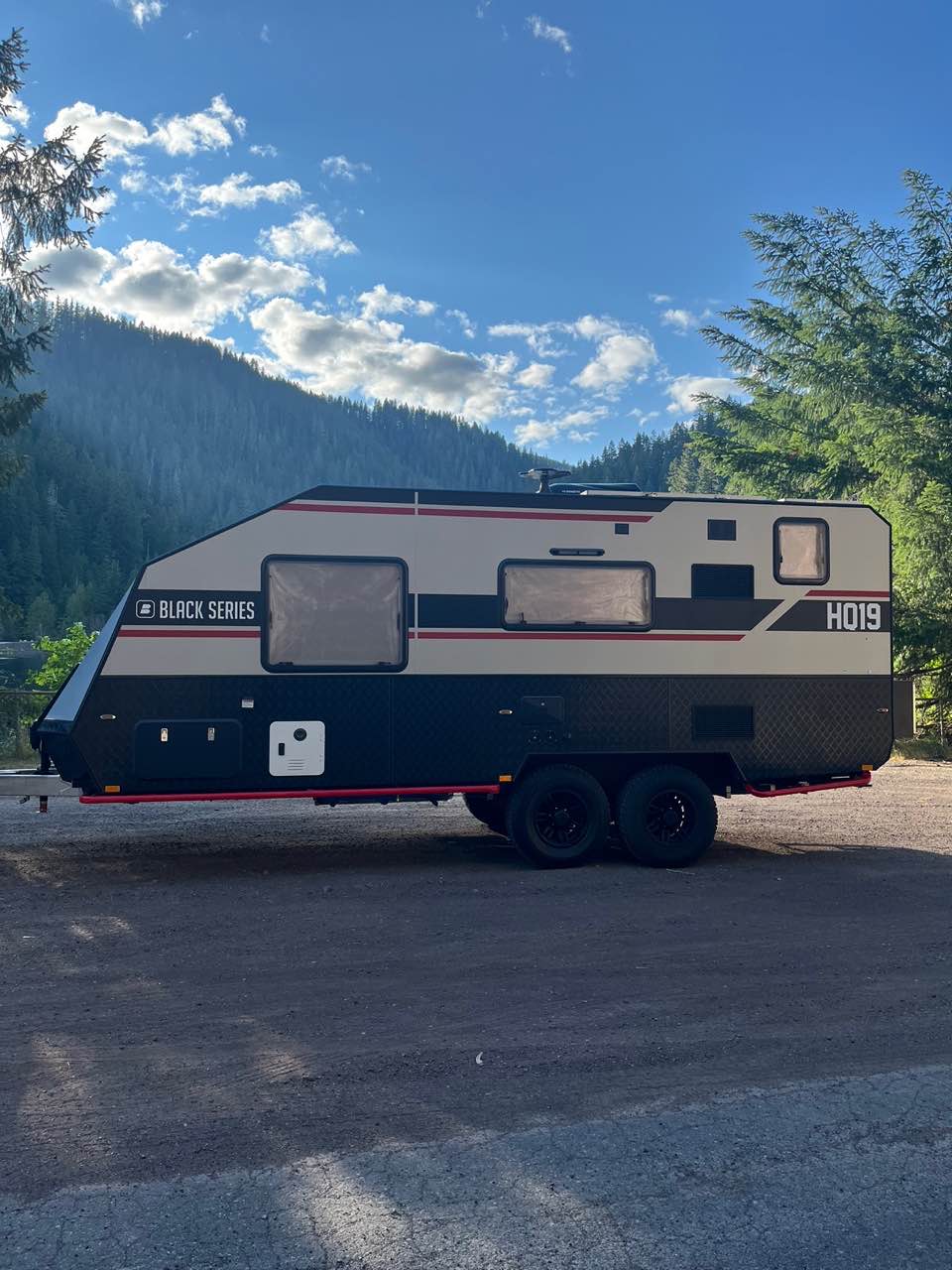
Off-road camper trailers represent the pinnacle of expedition capability, engineered specifically for accessing remote destinations across America’s diverse wilderness areas. These units feature high ground clearance, independent suspension systems, and reinforced metal protection to handle everything from Rocky Mountain forest roads to Mojave Desert trails.
Key characteristics include independent suspension allowing each wheel to articulate over obstacles while maintaining stability, galvanized steel chassis construction for long-term durability, and protective features like rock sliders and skid plates. The suspension systems typically provide 8-12 inches of wheel travel, crucial for maintaining tire contact on uneven terrain while protecting cargo inside the trailer.
These trailers excel in America’s western states where accessing prime camping locations often requires navigating unpaved forest service roads, creek crossings, and steep mountain passes. Understanding proper suspension systems becomes critical for safely accessing these remote destinations.
Lightweight Camper Trailers
Lightweight camper trailers serve the growing segment of outdoor enthusiasts who prioritize fuel efficiency and vehicle compatibility without sacrificing essential camping capabilities. These units typically weigh between 2,500-4,000 pounds dry weight, making them compatible with mid-size trucks and larger SUVs.
The lightweight category focuses on maximizing functionality within weight constraints. Manufacturers achieve weight savings through aluminum framing, composite wall construction, and efficient space utilization. However, buyers must balance weight savings against durability and feature sets, as ultra-lightweight construction can compromise longevity in demanding conditions.
Family Camper Trailers
Family-oriented camper trailers emphasize safety, space efficiency, and comfort for multi-generational camping adventures. These units typically feature multiple sleeping configurations, expanded galley areas, and enhanced safety equipment including carbon monoxide detectors, smoke alarms, and emergency egress windows.
Design priorities include bunk bed configurations for children, expandable dining areas that convert to sleeping spaces, and additional storage for family gear including sporting equipment, outdoor toys, and extended-stay provisions. Safety features become paramount with young passengers, requiring robust construction and comprehensive safety systems.
Best Camper Trailers for Different Needs
The Best Off-Road Camper Trailers

Premium off-road camper trailers must incorporate several non-negotiable features for serious backcountry access. Independent suspension remains the gold standard, allowing each wheel to move independently over obstacles while maintaining cargo protection inside the trailer. Quality units feature hot-dip galvanized steel chassis construction, marine-grade aluminum framing, and comprehensive underbody protection.
BlackSeries exemplifies these principles through their Australian-developed engineering adapted specifically for North American conditions. Their independent trailing arm suspension provides exceptional articulation over technical terrain while the reinforced chassis handles the stresses of corrugated forest roads that destroy conventional trailers.
Solar power integration becomes essential for extended off-grid adventures. Quality systems include 300+ watts of solar panels, lithium battery banks providing 3-4 days of autonomy, and integrated inverter systems supporting essential electronics and appliances.
Best Camper Trailers for Families
Family-focused camper trailers prioritize safety, space efficiency, and comfort for extended adventures with children. Essential features include multiple sleeping configurations with dedicated children’s spaces, expanded galley areas for meal preparation, and comprehensive safety equipment.
Successful family trailers incorporate convertible dining areas that transform into sleeping spaces, adequate storage for extended-stay provisions, and climate control systems ensuring comfort in varying weather conditions. Outdoor living spaces including awnings and external kitchens extend usable space beyond the trailer’s interior footprint.
Safety considerations become paramount with family units, requiring robust construction, emergency egress systems, and comprehensive monitoring equipment for carbon monoxide, smoke, and propane detection.
Best Lightweight Camper Trailers (USA Market)
The optimal lightweight camper trailer for American conditions balances weight restrictions with essential capabilities. Target weight under 3,500 pounds enables compatibility with popular mid-size trucks and SUVs while maintaining reasonable towing dynamics and fuel economy.
Successful lightweight designs achieve durability through intelligent engineering rather than brute-force construction. This includes aluminum framing with strategic reinforcement, composite wall panels providing insulation without weight penalties, and efficient space utilization maximizing functionality within compact footprints.
However, buyers must carefully evaluate build quality in the lightweight segment, as some manufacturers achieve weight targets through construction shortcuts that compromise long-term durability.
How to Choose the Right Camper Trailer
Based on Usage Scenarios
Your intended camping style fundamentally determines trailer requirements. Weekend warriors accessing developed campgrounds can prioritize comfort and amenities over extreme durability. However, serious backcountry adventurers require robust construction, comprehensive off-grid systems, and proven reliability in remote conditions.
National park access increasingly demands self-sufficient systems as reservation requirements intensify and dispersed camping gains popularity. This trend drives demand for solar power, lithium batteries, and extended freshwater capacity enabling multi-day independence from hookups.
Based on Towing Vehicle Capability
Vehicle compatibility represents a critical but often overlooked consideration. Your towing vehicle’s payload capacity, tongue weight rating, and overall towing capacity must accommodate not just the trailer’s dry weight but its loaded configuration including water, gear, propane, and provisions.
Mid-size trucks typically handle 4,000-6,000 pound trailers effectively, while half-ton trucks can manage 7,000-9,000 pounds depending on configuration. However, engine power, transmission type, and axle ratios significantly impact towing performance, particularly in mountainous terrain.
Based on Family Size and Configuration
Family size directly influences space requirements and sleeping configurations. Two-person households can optimize for compact efficiency and enhanced off-road capability, while families with children require dedicated sleeping spaces, increased storage, and enhanced safety systems.
Consider not just current family size but anticipated needs over the trailer’s service life. Quality trailers often serve families for 10-15 years, during which family composition and camping preferences may evolve significantly.
Based on Budget Considerations
The American camper trailer market spans from $25,000 entry-level units to $100,000+ expedition-grade trailers. However, initial purchase price represents only one component of total cost of ownership. Quality construction, comprehensive warranties, and dealer support networks significantly impact long-term value.
Budget considerations must include essential accessories like weight distribution hitches, brake controllers, and extended warranties. Many buyers underestimate these additional costs, which can add $3,000-5,000 to the total investment.
Based on Durability Requirements
Durability assessment requires evaluating construction methods, material quality, and manufacturer reputation. Hot-dip galvanized chassis, marine-grade aluminum framing, and stainless steel hardware indicate serious construction quality designed for long-term service.
Component quality matters significantly in demanding conditions. Premium trailers incorporate heavy-duty axles, adjustable shock absorbers, and reinforced mounting points that handle years of rough road punishment without failure.
The Role of Off-Road Capability
America’s western wilderness areas present unique challenges that distinguish genuine off-road capability from marketing claims. Forest service roads in Colorado, Utah, and Montana often feature sustained grades, loose rock surfaces, and significant elevation changes that test trailer durability and suspension performance.
Desert environments throughout the Southwest subject trailers to extreme temperature cycling, abrasive sand infiltration, and extended periods without service access. These conditions demand robust construction and proven reliability that exceeds recreational camping requirements.
BlackSeries trailers incorporate Australian outback engineering principles adapted specifically for North American conditions. Their independent suspension systems provide 12+ inches of wheel travel, essential for maintaining tire contact over challenging terrain while protecting cargo. The trailing arm design offers superior articulation compared to leaf spring systems while maintaining load carrying capacity for extended expeditions.
Camper Trailer Maintenance Checklist
Proper maintenance ensures reliability during remote adventures and protects your investment over years of service. This comprehensive 10-step checklist covers essential systems requiring regular attention:
1. Tire Inspection and Pressure: Check tire pressure monthly and before each trip, including the spare. Inspect for uneven wear patterns indicating alignment issues or suspension problems.
2. Brake System Maintenance: Test electric or surge brakes regularly. Inspect brake pads, drums, and hydraulic lines for wear or damage. Clean and lubricate brake components annually.
3. Hitch and Coupling Service: Lubricate ball mount and weight distribution components. Inspect safety chains, breakaway cables, and electrical connections for corrosion or damage.
4. Chassis and Frame Inspection: Examine the chassis for stress cracks, corrosion, or damage. Pay particular attention to welds and mounting points experiencing high stress loads.
5. Suspension Component Check: Inspect shock absorbers for leaks or damage. Check suspension mounting points and bushings for wear. Verify proper suspension travel and alignment.
6. Electrical System Testing: Test all lighting systems including running lights, brake lights, and turn signals. Inspect wiring for damage from road debris or rodents.
7. Plumbing System Maintenance: Sanitize freshwater systems quarterly. Inspect water lines for leaks or freeze damage. Test pump operation and pressure switch function.
8. Solar and Battery Maintenance: Clean solar panels regularly for maximum efficiency. Test battery capacity and charging systems. Inspect electrical connections for corrosion.
9. Exterior Sealing Inspection: Check all seals around windows, doors, and roof penetrations. Replace degraded sealant to prevent water intrusion and structural damage.
10. Interior System Verification: Test all appliances including refrigerator, furnace, and water heater. Inspect propane connections and carbon monoxide detectors.
Data & Statistics from the U.S. Market
The Recreation Vehicle Industry Association reports that RV ownership reached 11.2 million American households in 2024, representing a 7.5% increase over 2023 levels. This growth trajectory reflects fundamental shifts in travel preferences accelerated by pandemic-era camping adoption and sustained by rising interest in outdoor recreation.
Significantly, the off-road trailer segment demonstrates above-average growth, with specialized manufacturers reporting 15-20% annual increases in demand. This trend correlates with increased interest in overlanding, dispersed camping, and accessing remote destinations beyond traditional campground infrastructure.
Geographic analysis reveals strongest growth in western states where public land access drives demand for self-sufficient camping systems. Colorado, Utah, Arizona, and Montana lead in per-capita trailer ownership, reflecting both terrain demands and cultural preferences for outdoor adventure.
Demographic trends show expansion beyond traditional RV demographics, with younger families (ages 25-45) representing the fastest-growing segment. These buyers prioritize capability over luxury, driving demand for off-road capable units with comprehensive self-sufficiency systems.
Why Choose Blackseries
BlackSeries differentiates itself through Australian expedition heritage adapted specifically for North American conditions, regulations, and user preferences. Their engineering philosophy prioritizes durability and capability over luxury features, reflecting decades of outback experience where reliability means survival.
The structural advantage begins with hot-dip galvanized chassis construction providing superior corrosion resistance compared to painted steel alternatives. Marine-grade aluminum framing eliminates the stress fracture problems common in aluminum monocoque designs while maintaining weight efficiency.
Suspension technology represents a core competitive advantage. BlackSeries independent trailing arm systems provide exceptional wheel travel and articulation while maintaining proper geometry under load. This design excellence translates directly to improved ride quality, reduced cargo stress, and enhanced off-road capability compared to conventional leaf spring systems.
System integration sets BlackSeries apart from competitors assembling aftermarket components. Their electrical, plumbing, and climate systems are designed as integrated packages, ensuring compatibility and reliability while simplifying troubleshooting and service.
Four-season capability extends beyond marketing claims to genuine winter performance. BlackSeries trailers incorporate comprehensive insulation, heating systems, and freeze protection designed for sustained sub-zero operation. This capability opens year-round adventure opportunities unavailable with seasonal equipment.
The dealer network provides crucial support for remote adventures. When problems occur hundreds of miles from civilization, responsive technical support and parts availability become essential. BlackSeries maintains dedicated support teams experienced in off-grid camping challenges.
FAQs
What is the best camper trailer for off-road use?
The best off-road camper trailer combines independent suspension, reinforced chassis construction, high ground clearance (12+ inches), and comprehensive protection systems. Look for hot-dip galvanized steel frames, marine-grade aluminum construction, and proven suspension designs with substantial wheel travel.
Are lightweight camper trailers safe for long trips?
Quality lightweight camper trailers can safely handle extended adventures when properly matched to towing vehicles and maintained according to manufacturer specifications. However, buyers must carefully evaluate construction quality, as some manufacturers achieve weight targets through shortcuts that compromise durability.
How much towing capacity do I need for a camper trailer?
Your towing capacity requirement depends on the trailer’s loaded weight including water, gear, and provisions. Generally, your vehicle’s towing capacity should exceed the trailer’s gross vehicle weight rating (GVWR) by at least 20% to ensure safe handling and mechanical longevity.
What features matter most for family camper trailers?
Family trailers should prioritize safety systems, multiple sleeping configurations, adequate storage, and climate control. Essential safety features include carbon monoxide detectors, smoke alarms, emergency egress systems, and robust construction protecting occupants during travel.
What maintenance does an off-road camper trailer need?
Off-road trailers require more intensive maintenance due to harsh operating conditions. Essential maintenance includes regular suspension inspection, brake system service, chassis examination for stress damage, electrical system protection from debris, and comprehensive seal inspection preventing water intrusion. Following a structured maintenance schedule prevents costly failures during remote adventures.

