Introduction: America’s Offroad Adventure Revolution
The U.S. offroad trailer market is experiencing unprecedented growth as overlanding, boondocking, and national park adventures surge in popularity. With over 85 million Americans participating in camping activities annually, there’s a growing demand for trailers that can handle everything from desert sand dunes to rocky mountain trails.
Modern American adventurers aren’t satisfied with campground-only experiences. They want the freedom to explore remote locations, set up camp beside pristine lakes, and access those Instagram-worthy spots that standard RVs simply can’t reach. This shift has driven explosive growth in the offroad trailer segment, with sales increasing 40% year-over-year in key western states.
Blackseries leads this evolution with military-grade steel chassis, heavy-duty independent suspension systems, and comprehensive off-grid electrical setups. Born from Australia’s harsh Outback conditions, these trailers bring proven durability to America’s diverse terrain, from Utah’s slickrock to Colorado’s high-altitude trails.
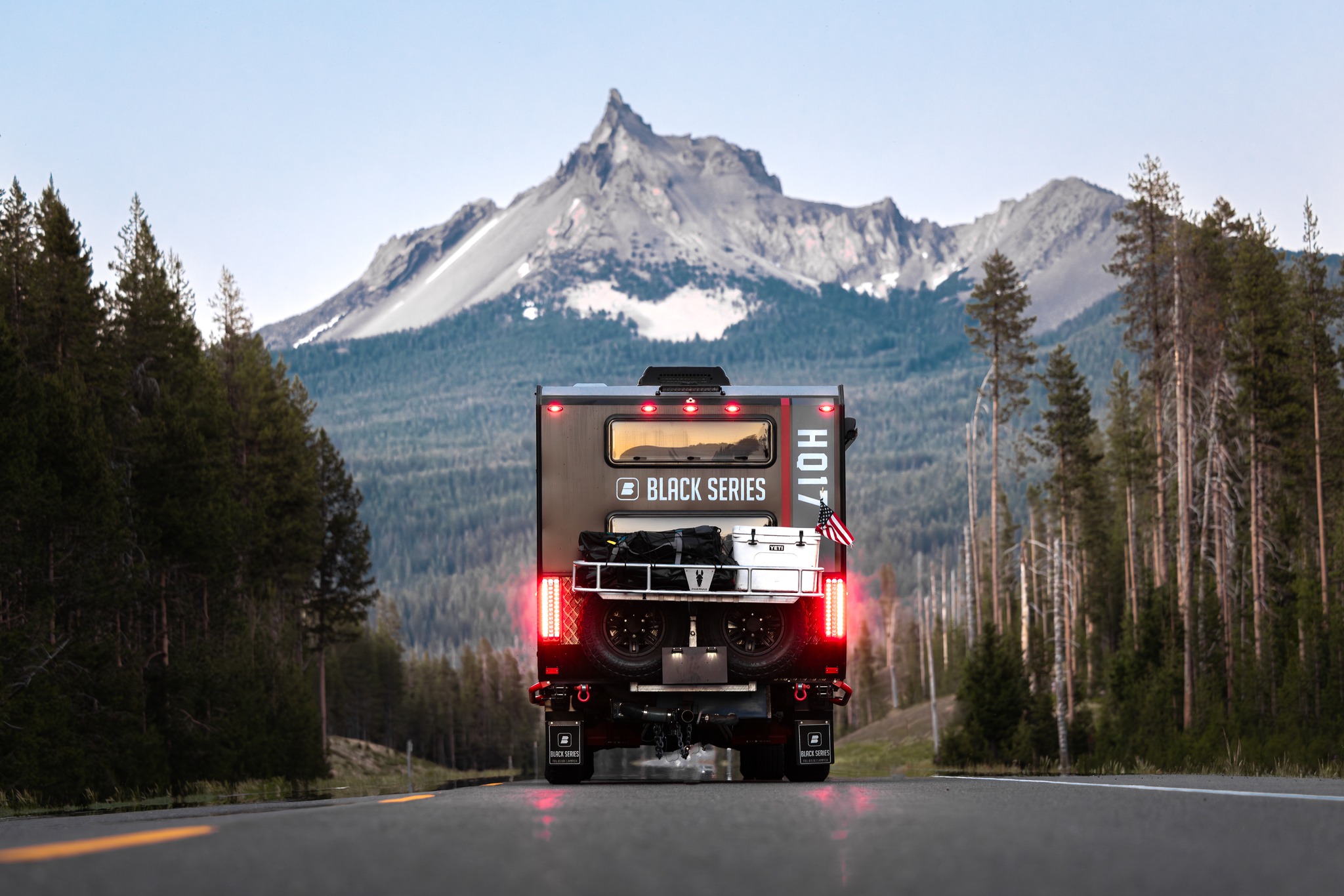
What Is an Offroad Trailer?
Core Construction Elements
An offroad trailer differs fundamentally from standard travel trailers through purpose-built construction designed for rough terrain. Key components include:
Reinforced Steel Chassis: Heavy-duty galvanized steel frames provide structural integrity when traversing rocks, ditches, and uneven surfaces. Unlike lightweight aluminum frames used in park-model RVs, steel construction handles repeated stress from articulation and impacts.
Independent Suspension Systems: Advanced suspension technology allows each wheel to move independently, maintaining tire contact with uneven ground while protecting the trailer body from damage.
All-Terrain Tires: Aggressive tread patterns and reinforced sidewalls handle sand, mud, rocks, and snow. Most offroad trailers come equipped with 15-16 inch wheels and oversized tires for improved ground clearance.
Protective Armor: Stone guards, skid plates, and reinforced panels protect vulnerable components like water tanks, electrical systems, and propane equipment from trail damage.
Essential Terminology
GVWR (Gross Vehicle Weight Rating): Maximum safe weight including trailer, cargo, water, and gear. Critical for matching trailer capacity to your vehicle’s towing limits.
Articulation Hitch: Specialized coupling allowing the trailer to flex and twist independently from the tow vehicle, essential for maintaining stability on uneven terrain.
Off-Grid Electrical System: Solar panels, lithium batteries, and inverters providing power independence for extended backcountry stays without hookups.
Departure Angle: Measurement of how steep an incline the trailer can navigate without scraping. Higher angles (typically 25-35 degrees) indicate better offroad capability.
Ground Clearance: Distance between the lowest point and ground, typically 12-18 inches for serious offroad trailers versus 6-8 inches for standard RVs.
Types of Offroad Trailers in the U.S. Market

Compact Offroad Campers
Perfect for SUV owners and weekend warriors, compact trailers weigh 1,500-2,500 pounds and feature minimalist designs focused on sleeping and basic cooking. Popular with solo travelers and couples, these trailers prioritize maneuverability and fuel economy while maintaining genuine offroad capability.
Full-Size Offroad Travel Trailers
Weighing 3,000-6,000 pounds, these family-friendly options include full kitchens, bathrooms, and multiple sleeping areas. They require half-ton or larger pickup trucks but provide comfort comparable to traditional RVs with added terrain capability.
Expedition-Style Offroad Trailers
The premium category weighing 4,000-7,000 pounds, engineered for extreme conditions and extended off-grid living. These feature massive battery banks, large solar arrays, extensive water storage, and bulletproof construction for serious overlanders.
Best Offroad Trailers for Different Adventures
Best Offroad Trailers for Rough Terrain
For tackling extreme conditions like Moab’s slickrock or Colorado’s alpine passes, prioritize trailers with 15+ inches of ground clearance, independent suspension with long travel, and reinforced underbodies. The Blackseries HQ19 exemplifies this category with 16 inches of clearance, 10-inch suspension travel, and military-spec construction.
Best Offroad Trailers for Families
Family-focused offroad trailers need multiple sleeping configurations, adequate storage for gear and food, and safety features for children. Look for models with bunk beds, exterior storage, and childproof latches. The HQ21 offers spacious interiors without sacrificing offroad capability.
Best Offroad Trailers for SUV Towing
SUV-towable models under 3,500 pounds provide offroad access without requiring a pickup truck. These lightweight builds use aluminum construction and compact layouts while maintaining essential offroad features like increased ground clearance and all-terrain tires.
How to Choose the Right Offroad Trailer
Step 1: Confirm Towing Capacity
Calculate your vehicle’s actual towing capacity by subtracting cargo weight from the manufacturer’s rating. Remember that payload includes passengers, fuel, and gear. A general rule: your trailer’s GVWR should not exceed 80% of your vehicle’s towing capacity for safe mountain driving.
Popular vehicle towing capacities:
- Jeep Grand Cherokee: 6,200-7,400 lbs
- Toyota Tacoma: 6,400 lbs
- Ford F-150: 8,000-13,200 lbs
- Chevrolet Silverado 2500HD: 14,500+ lbs
Step 2: Evaluate Construction Quality
Chassis Design: H-frame steel construction provides superior strength compared to traditional ladder frames. Look for galvanized or powder-coated finishes to prevent rust in harsh environments.
Suspension Systems: Independent suspension dramatically improves ride quality and tire contact on uneven surfaces compared to solid axles. Quality systems feature adjustable shock absorbers and heavy-duty springs.
Build Materials: Zero-wood construction eliminates rot concerns, while aluminum siding resists dents better than fiberglass. Internal frameworks should use steel rather than wood framing for longevity.
Step 3: Assess Off-Grid Capabilities
Solar Power: Minimum 200W for weekend use, 400W+ for extended boondocking. Lithium batteries provide more usable capacity and faster charging than traditional lead-acid.
Water Systems: 20-30 gallons fresh water for weekend trips, 40+ gallons for extended adventures. Include filtration systems for refilling from natural sources.
Electrical Systems: 12V DC systems work best for offroad applications. Include USB charging ports, LED lighting, and 110V inverter capability for AC appliances.
Step 4: Consider Layout and Comfort
Evaluate sleeping configurations, kitchen functionality, and storage solutions based on your typical group size and trip duration. Outdoor kitchens extend living space while keeping cooking odors outside.
Step 5: Budget Planning
Entry-level offroad trailers: $35,000-$50,000
Mid-range models: $50,000-$80,000
Premium expedition trailers: $80,000-$120,000+
Factor in additional costs for options, delivery, and essential gear like weight distribution hitches and trailer brake controllers.
10-Step Offroad Trailer Maintenance Checklist
- Inspect Suspension Components: Check for loose bolts, worn bushings, and shock absorber leaks. Independent suspension systems require more attention than solid axles.
- Monitor Tire Condition: Verify proper pressure, check for uneven wear patterns, and inspect sidewalls for cuts or bulges from rock contact.
- Examine Chassis and Frame: Look for stress cracks, corrosion, and damage from rocks or debris. Touch up paint chips immediately to prevent rust.
- Service Articulation Hitch: Lubricate pivot points and check for wear. Properly functioning hitches are critical for offroad stability.
- Test Brake System: Verify electric brakes engage properly and adjust as needed. Clean brake drums and inspect pads for wear.
- Assess Battery Health: Check lithium battery management systems and clean terminals. Test charging rates from solar and shore power.
- Clean Solar Panels: Remove dust, dirt, and debris that reduces charging efficiency. Inspect mounting hardware for security.
- Inspect Water Systems: Check tanks for cracks, test pump operation, and sanitize lines regularly. Verify filter condition.
- Examine Seals and Gaskets: Check all exterior penetrations, windows, and doors for water intrusion points.
- Address Dust and Debris: Clean accumulated dirt from wheel wells, undercarriage, and storage compartments that can cause premature wear.
U.S. Market Data & Trends
The American offroad trailer market reflects broader outdoor recreation trends. Overlanding search volume has increased 300% since 2020, with peak interest in western states. California leads in offroad trailer registrations, followed by Texas, Colorado, and Utah.
Key demographic shifts include younger buyers (ages 25-40) prioritizing experiences over possessions, driving demand for adventure-capable trailers. The COVID-19 pandemic accelerated outdoor recreation participation, with many families purchasing their first trailers for safe, socially-distanced vacations.
Regional preferences vary significantly: Pacific Northwest buyers favor compact, maneuverable trailers for forest service roads, while Southwest customers choose larger expedition models for extended desert travel. Mountain states show strong demand for cold-weather packages and higher payload capacities.
Why Choose Blackseries for Offroad Adventures?
Blackseries brings decades of Australian Outback engineering to American adventures. While many manufacturers add “offroad” features to standard RV platforms, Blackseries designs from the ground up for extreme conditions.
Military-Grade Construction: Steel chassis welding meets defense industry standards, providing strength that exceeds recreational requirements. This over-engineering translates to confidence on challenging trails.
Proven Suspension Technology: Multi-link independent suspension systems provide 10+ inches of wheel travel while maintaining trailer stability. This advanced suspension design outperforms traditional solid axle configurations.
Comprehensive Off-Grid Systems: Standard equipment includes substantial solar capacity, lithium battery banks, and water filtration – features often optional on competing brands.
American Adaptation: While maintaining Australian ruggedness, Blackseries incorporates American preferences for interior comfort, entertainment systems, and familiar appliance brands.
Real-world validation comes from customers tackling demanding routes: Death Valley’s washboard roads, Moab’s sandstone, and Rocky Mountain high-altitude passes. These trailers deliver performance where others fail.
Frequently Asked Questions
What makes an offroad trailer different from a regular travel trailer?
Offroad trailers feature reinforced chassis construction, independent suspension systems, higher ground clearance, protective armor plating, and enhanced off-grid capabilities designed for rough terrain access.
Can an SUV tow an offroad trailer?
Many compact offroad trailers under 3,500 pounds work with full-size SUVs, but verify your specific vehicle’s towing capacity and consider factors like tongue weight and payload limits.
How much does an offroad trailer cost in the USA?
Entry-level models start around $35,000, mid-range trailers cost $50,000-$80,000, and premium expedition units range from $80,000-$120,000+ depending on features and construction quality.
What off-grid features should I prioritize?
Essential systems include adequate solar power (400W minimum), lithium batteries for reliable energy storage, sufficient fresh water capacity (30+ gallons), and quality filtration for water independence.
Are offroad trailers suitable for families with children?
Yes, many offroad trailers offer family-friendly layouts with bunk beds, safety features, and adequate storage. Models like the HQ21 provide spacious interiors while maintaining serious offroad capability.

