
Your cart (0)
Your cart is empty
Tax included and shipping calculated at checkout
Your cart is empty
Tax included and shipping calculated at checkout

A pop-up camper is a lightweight, foldable towable trailer that expands into a full-size camping unit, offering affordability, low towing weight, and easy storage.
Perfect for American users who need:
Key limitations:
BlackSeries, while not a traditional pop-up, provides a more durable off-road alternative for serious adventurers.
Pop-up camper trailers feature a unique collapsible design with:
Unlike standard hard-sided campers, pop-ups prioritize portability over durability, making them ideal entry points into the RV lifestyle.
The appeal centers on accessibility and affordability:
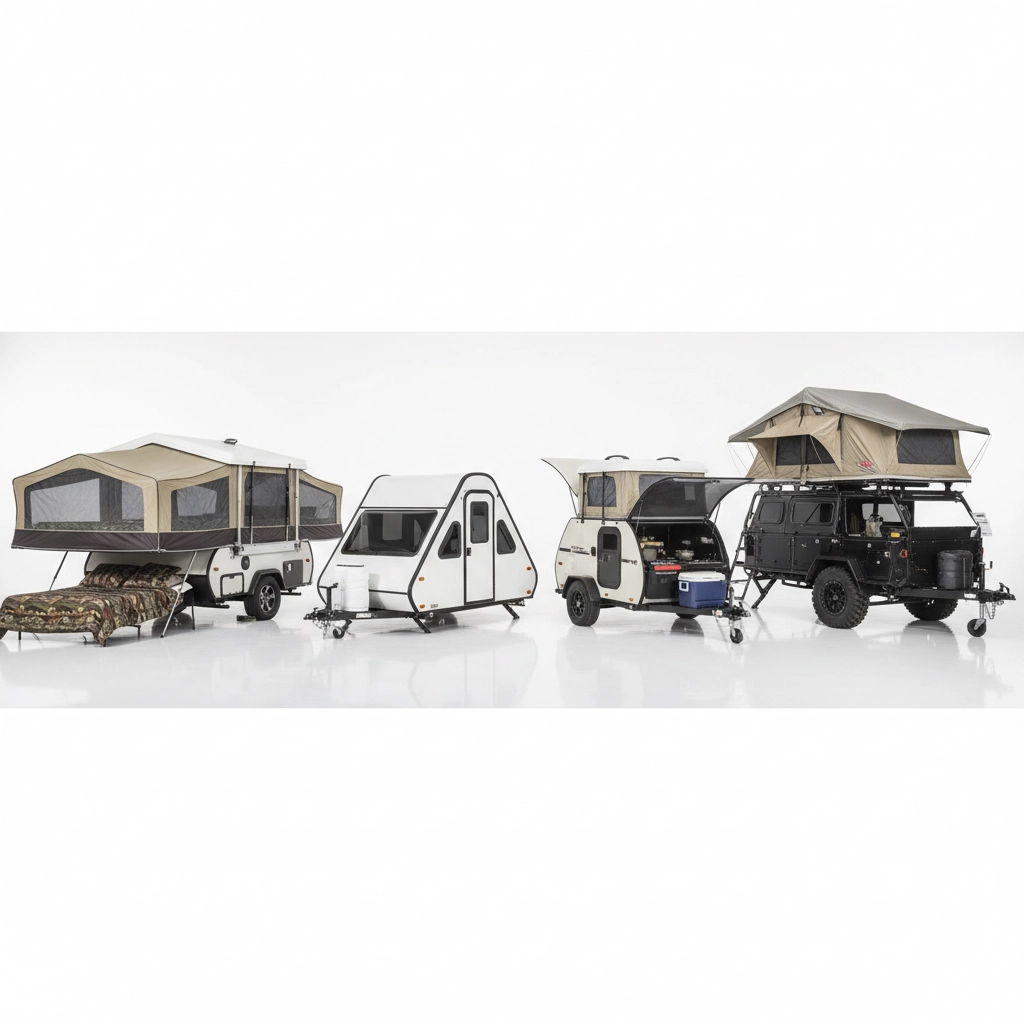
The most common type features canvas walls that provide maximum interior space when deployed. Popular models like the Rockwood Tent Series range from 11’10” to 19’3″ with weights between 1,299-3,058 pounds. These offer excellent value for family camping at state parks and KOA campgrounds.
Rigid fiberglass or aluminum construction replaces canvas, offering better weather protection. The Aliner Evolution 15 exemplifies this category with its 18′ hard-sided fiberglass body and 3,500 lbs GVWR, suitable for light off-road adventures.
These triangular designs deploy quickly and provide excellent aerodynamics while towing. TrailManor’s 3124 Series represents the largest option at 31′ length while maintaining under 3,200 pounds dry weight.
Enhanced with reinforced chassis and upgraded suspension, models like the OPUS OP4 feature dual-layer polycotton construction and inflatable tent technology that deploys in under two minutes.
✔ Lift system (manual vs electric)
✔ Sleeping capacity (bunks, queen, king beds)
✔ Canvas vs hard-side walls
✔ Weather resistance rating
✔ Kitchen layout (sink, stove, refrigerator)
✔ Water system (fresh/grey tank capacity)
✔ Power options (12V, shore power, solar compatibility)
✔ Weight vs your vehicle’s towing capacity
For those needing superior off-road performance, consider reviewing off-road trailer suspension systems to understand why independent suspension matters.
Budget-conscious families seeking weekend getaways to established campgrounds. Pop-ups excel for:
Serious adventurers planning extended trips or challenging terrain need the durability of hard-sided units. Consider upgrading if you want:
Learn more about dispersed camping requirements to understand why hard-sided trailers perform better in remote locations.
Entry-Level: $8,000-$12,000
Mid-Range: $12,000-$17,000
High-End Pop-Up: $17,000-$25,000
Off-Road Pop-Up: $25,000-$35,000+
✔ Verify your vehicle’s towing capacity
✔ Ensure proper hitch class installation
✔ Check tongue weight limits
✔ Consider brake controller requirements for heavier models
Step 1: Park on level ground and engage parking brake
Step 2: Activate manual or electric lift system
Step 3: Extend sleeping bunks to full position
Step 4: Connect electrical and water hookups
Step 5: Secure canvas tension and check zipper operation
Step 6: Deploy awnings and stabilizer jacks
Step 7: Test all systems before settling in

Weather Vulnerabilities:
Maintenance Requirements:
Usage Restrictions:
Many pop-up owners eventually seek more robust solutions for:
While BlackSeries doesn’t manufacture traditional pop-up campers, our trailers represent the logical upgrade path for adventurous families outgrowing pop-up limitations.
Superior Construction:
All-Weather Capability:
Off-Grid Excellence:
True Off-Road Performance:
What is the difference between a pop-up camper and a hard-sided camper?
Pop-up campers use canvas or soft walls that fold out from a compact base, while hard-sided campers have rigid walls. Pop-ups offer lower cost and weight but less weather protection and durability.
How much does a pop-up camper cost in the US?
Entry-level models start around $8,000, mid-range units cost $12,000-$17,000, and premium off-road capable pop-ups range from $25,000-$35,000+.
Can a pop-up camper go off-road?
Basic pop-ups have limited off-road capability due to lightweight construction and basic suspension. Specialized off-road pop-ups exist but still can’t match the capability of purpose-built trailers like BlackSeries.
Are pop-up campers good for families?
Pop-ups work well for families doing light recreational camping at established campgrounds. However, families planning extended adventures or challenging terrain often upgrade to more robust hard-sided trailers.
What tow vehicle do I need for a pop-up camper?
Most pop-ups can be towed by SUVs, crossovers, and even some sedans with proper hitches. Check your vehicle’s towing capacity against the pop-up’s loaded weight, typically ranging from 1,200-3,500 pounds.
Is BlackSeries considered an upgrade from a pop-up camper?
Yes, BlackSeries represents a significant upgrade in durability, weather protection, off-road capability, and off-grid systems. While the investment is substantially higher, the long-term value and capability far exceed traditional pop-up limitations.
Pop-up campers serve as excellent entry points into the RV lifestyle, but serious adventurers eventually require the superior capability and durability that only purpose-built off-road trailers can provide.
Best Pop-Up Camper USA: Family Off-Road Features & Buying Guide最先出现在Black Series RV | Off-Road Travel Trailers, Toy Haulers & Camper Trailers | Off road rv | Off grid rv | Overland rv | Off road trailer | Off road travel trailer | Overland travel trailer。