A heavy duty camper trailer is designed to survive harsh U.S. terrain: rocky trails, washboard desert roads, mud, snow, and long-distance off-grid camping. Core standards include steel reinforced chassis, independent suspension, off-road tires with high ground clearance, anti-twist construction with reinforced axles, and long-term off-grid support capabilities (solar, water, battery). BlackSeries represents the gold standard in this category.
What is a Heavy Duty Camper Trailer?
Heavy Duty vs Standard Camper Structural Differences
Heavy duty camper trailers fundamentally differ from standard RVs through their construction philosophy. While standard campers use bolted light aluminum frames designed for highway travel, heavy duty camper trailers feature welded steel chassis engineered for punishment. The distinction extends beyond materials: articulated independent suspension replaces basic torsion axles, composite panels substitute thin aluminum skin, and all-terrain tires replace highway-focused rubber.
This isn’t just about being “tougher”: it’s about surviving conditions that would destroy conventional trailers. The welded steel frame distributes stress across the entire structure, while independent suspension allows each wheel to move independently, maintaining stability on uneven terrain.
Why Lightweight Doesn’t Equal Off-Road Ready
A common misconception equates lightweight construction with off-road capability. In reality, lightweight often means compromised durability. Heavy duty construction prioritizes structural integrity over weight savings, recognizing that American off-road conditions demand robust engineering over minimal towing weight.
Why American Users Demand Heavy Duty Campers
Geographic Reality and Terrain Challenges
American geography creates unique demands for heavy duty off road camper construction. The Rocky Mountains present sharp rock impacts and steep grades. Utah’s Moab region delivers extreme articulation challenges that snap torsion bars. Southwest desert conditions combine high temperatures with endless washboard roads that shake trailers apart. Pacific Northwest trails demand suspension articulation through wet, slippery terrain.
These aren’t occasional challenges: they’re daily realities for serious overlanders. Standard RV construction simply cannot withstand the repeated stress of BLM dispersed camping and National Forest access roads. For comprehensive guidance on navigating these challenging environments, check out our 2025 dispersed camping guide.
Overlanding Culture Integration
America’s overlanding culture emphasizes self-sufficiency and remote access. This cultural shift demands trailers capable of weeks-long off-grid operation combined with the ability to reach previously inaccessible locations. Heavy duty construction enables this lifestyle by providing reliability in conditions where failure means serious inconvenience or danger.
Heavy Duty Camper Trailer Essential Features
These specifications aren’t arbitrary: each addresses specific failure points experienced in real-world off-road use. Ground clearance prevents frame damage on rocky approaches, while substantial water capacity reduces dependency on resupply points during extended backcountry trips.

Heavy Duty Camper Types in the U.S. Market
Full-Size Heavy Duty Off-Road Campers
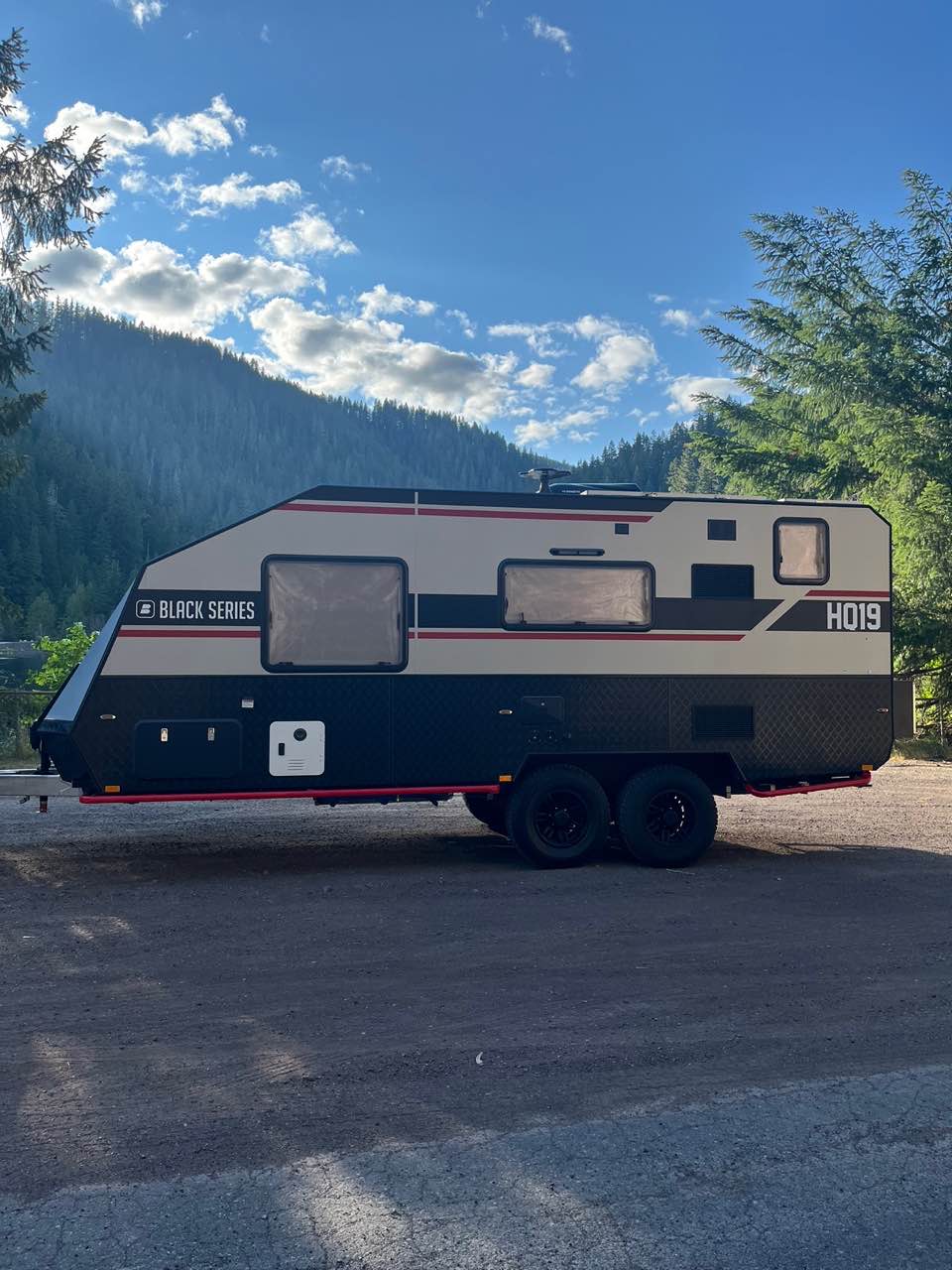
These represent the flagship category, exemplified by BlackSeries HQ19 and HQ21 models. Full-size units provide complete living facilities while maintaining serious off-road capability. They’re designed for families or couples requiring extended off-grid operation with comfort amenities.
Hybrid Heavy Duty Trailers
Combining hard-shell construction with expandable sections, hybrid heavy duty trailers offer increased interior space when stationary while maintaining compact dimensions for technical trail navigation. These units balance living space with trail accessibility.
Expedition Heavy Duty Trailers
Smaller but extremely durable, expedition trailers prioritize gear hauling and basic shelter over living amenities. These units excel at technical trail access and minimal-impact camping while providing essential protection and storage.
Family-Sized Heavy Duty Units
The largest category, family-sized heavy duty campers provide comprehensive amenities while maintaining off-road capability. BlackSeries HQ21 exemplifies this category, offering full kitchen and bathroom facilities without compromising trail performance.
Heavy Duty Camper Trailer Suspension Systems
Understanding heavy duty camper trailer suspension is crucial for making informed purchase decisions. The suspension system determines whether your trailer survives challenging terrain or becomes an expensive liability.
Independent Trailing Arm Suspension
The gold standard for off-road trailers, independent trailing arm suspension allows each wheel to move independently. This design maintains tire contact on uneven surfaces while reducing stress transfer to the trailer frame. BlackSeries utilizes dual-shock independent suspension that provides superior articulation through rocky terrain while maintaining stability at highway speeds.
For a detailed technical breakdown of suspension systems, read our comprehensive off-road trailer suspension guide.
Coil Spring and Shock Systems
Advanced heavy duty trailers incorporate coil springs paired with quality shock absorbers. This combination provides controlled wheel movement while absorbing impact energy that would otherwise transfer to the trailer structure and contents.
Why Torsion Axles Fall Short
While adequate for light off-road use, torsion axles cannot provide the articulation and durability demanded by serious off-road conditions. They offer limited suspension travel and transfer more stress to the trailer frame during extreme articulation.
Heavy Duty Camper Trailer Buying Guide
Essential Checklist
Structural Requirements:
- ✓ Welded steel chassis construction
- ✓ Independent suspension system
- ✓ Minimum 14-inch ground clearance
- ✓ Rock protection plating
- ✓ Load Range E all-terrain tires
Off-Grid Capability:
- ✓ 400W+ solar panel system
- ✓ Lithium battery bank (200Ah minimum)
- ✓ 40+ gallon fresh water capacity
- ✓ Grey and black water tank systems
- ✓ Propane system with exterior access
Tow Vehicle Compatibility:
- ✓ GVWR within 80% of tow vehicle rating
- ✓ Tongue weight 10-15% of trailer weight
- ✓ Brake controller compatibility
- ✓ Proper hitch class rating
Price Range Analysis
$30,000-$45,000: Entry-level heavy duty trailers with basic independent suspension and minimal amenities. Suitable for weekend warriors prioritizing durability over comfort.
$45,000-$65,000: Mid-range heavy duty campers featuring quality suspension systems, substantial off-grid capability, and comfortable amenities. This range includes most BlackSeries HQ series models.
$65,000-$90,000+: Premium heavy duty trailers with maximum capability, luxury amenities, and cutting-edge technology. These units provide resort-level comfort with extreme off-road capability.
Heavy Duty vs Regular Off-Road Camper Comparison
The heavy duty vs off road camper trailer distinction often confuses buyers. Regular off-road trailers handle light trail conditions and improved roads but lack the structural integrity for serious backcountry use. Heavy duty trailers withstand repeated punishment from extreme conditions while providing long-term reliability.
Heavy duty construction costs more initially but provides superior value through reduced maintenance, increased capability, and longer service life. BlackSeries exemplifies this philosophy by engineering trailers that excel in extreme conditions while providing daily usability.
Why BlackSeries Represents Heavy Duty Excellence
BlackSeries earned its reputation through uncompromising engineering focused on American off-road conditions. Military-grade steel chassis construction provides the foundation, while patented independent suspension systems deliver superior articulation and durability.
Honeycomb composite wall construction resists impact damage while providing excellent insulation. The dual-shock trailing arm suspension system handles extreme articulation while maintaining highway stability. Solar and battery systems support extended off-grid operation, while substantial water capacity reduces resupply requirements.
Real-world testing in locations like Moab, Death Valley, and Colorado’s alpine trails validates BlackSeries engineering. The comprehensive dealer network provides parts and service support across America, crucial for equipment used in remote locations.
Frequently Asked Questions
What makes a camper trailer truly heavy duty?
Heavy duty camper trailers feature welded steel chassis, independent suspension systems, reinforced construction, substantial ground clearance, and comprehensive off-grid capability. These features distinguish them from standard trailers designed primarily for highway travel.
How much should I expect to spend on a heavy duty camper trailer?
Quality heavy duty camper trailers range from $45,000-$65,000 for mid-range models, with premium units reaching $90,000+. Initial cost reflects superior construction and capability that provides long-term value.
What suspension system is best for heavy duty off-road use?
Independent trailing arm suspension with dual shock absorbers provides the best combination of articulation, durability, and road manners for heavy duty off-road trailers.
Can a half-ton truck safely tow a heavy duty camper?
Modern half-ton trucks can tow many heavy duty campers, but payload capacity often becomes the limiting factor. Verify both towing capacity and payload ratings before purchasing.
Do heavy duty trailers require special maintenance?
Heavy duty trailers require standard maintenance plus attention to suspension components, brake systems, and off-road equipment. Quality construction actually reduces maintenance requirements compared to lighter trailers used in similar conditions.

