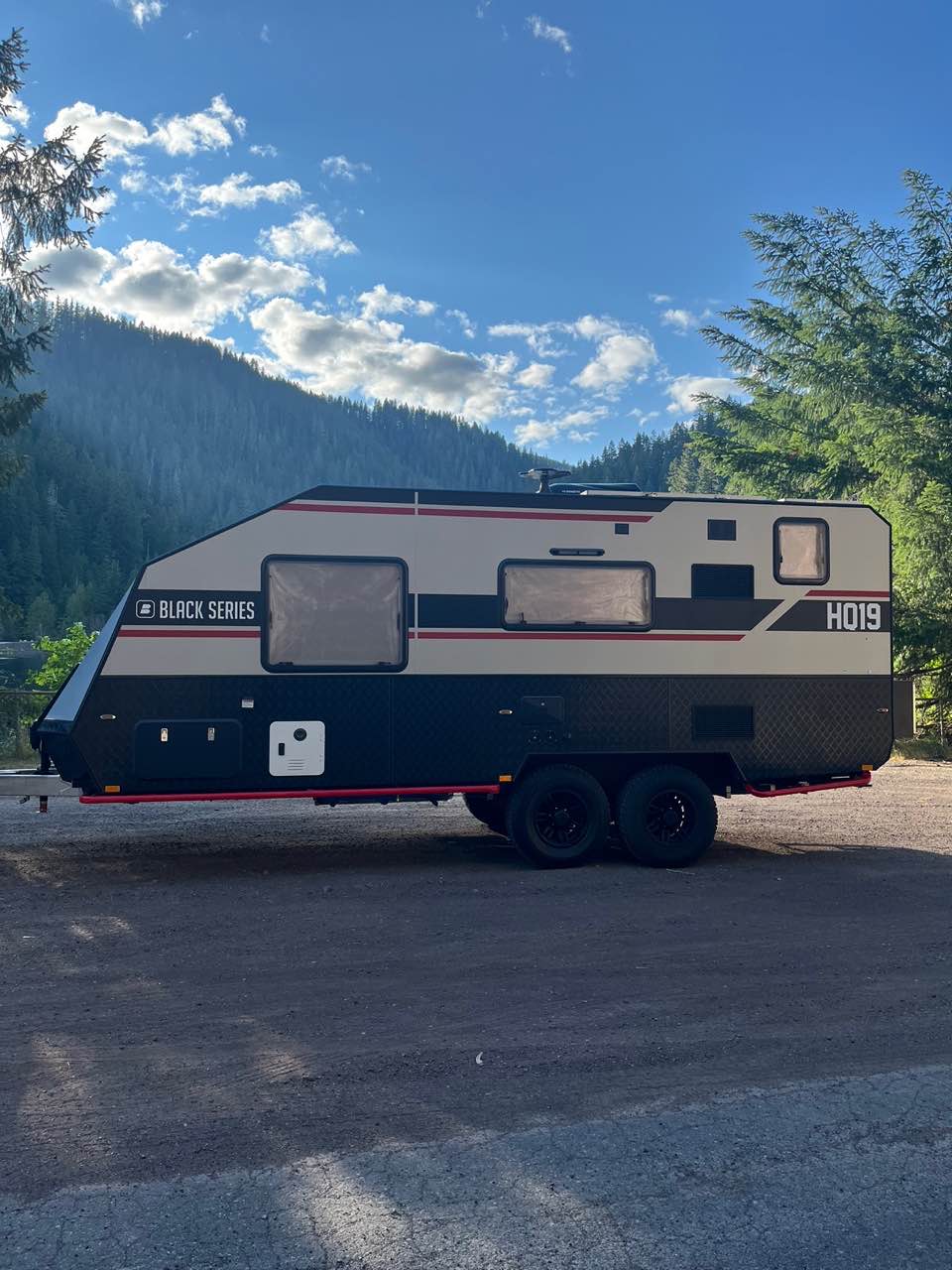
Body Construction Protection refers to the materials, structural design, and protective features that keep an off-road trailer strong, safe, and durable. BlackSeries trailers use reinforced chassis, advanced composite panels, and rugged exterior protection to survive the toughest American terrain: from Moab’s red rocks to the Pacific Northwest’s forest trails.
What Is Body Construction Protection?
Core Definition
Body construction protection encompasses every engineering decision that determines how well your trailer withstands real-world punishment. It’s not just about thick walls or heavy frames: it’s about intelligent design that balances strength, weight, and long-term reliability.
Four principles define quality body construction:
- Structural integrity – The frame and body work together as a unified system
- Impact resistance – Panels and guards absorb hits from rocks, branches, and debris
- Weather protection – Seals, coatings, and materials block water, dust, and UV damage
- Long-term durability – Components resist fatigue, corrosion, and wear over thousands of miles
Key Components
A properly protected off-road trailer integrates these critical elements:
Each component must work in harmony. A strong frame means nothing if panels crack under vibration. Quality insulation fails if water penetrates weak seals.
Why Body Construction Matters for Off-Road Trailers
Challenges of Real Off-Road Use
Highway-designed trailers fall apart when pushed beyond pavement. Understanding the stresses helps explain why body construction protection demands serious engineering.
Vibration and Fatigue
Off-road trails generate constant high-frequency vibration that loosens fasteners, cracks welds, and separates bonded materials. Standard trailer construction often uses rivets and adhesives that fail after repeated stress cycles.
Rock Impacts
A single rock strike can puncture thin aluminum, crack fiberglass, or dent steel. Wheel-thrown debris hammers underbody components relentlessly. Without proper skid plates and stone guards, critical systems: including tanks, axles, and electrical lines: take direct hits.
Extreme Temperatures
Desert trails push exterior surfaces past 150°F while mountain mornings drop below freezing. This thermal cycling expands and contracts materials at different rates, stressing joints and seals.
Water and Dust Intrusion
River crossings, heavy rain, and fine desert dust test every seal and seam. Water infiltration causes rot, mold, and electrical failures. Dust penetrates vents and openings, fouling bearings and mechanisms.
Long-Distance Stress
Extended overlanding trips multiply every problem. A small vibration crack becomes a structural failure. Minor water intrusion becomes interior damage. Body construction must survive not just single trips, but years of accumulated stress.
BlackSeries Approach to Heavy Duty Construction
Reinforced Structural Design
BlackSeries trailers start with engineering fundamentals that separate expedition-grade equipment from mass-market campers.
Welded Steel Chassis
Unlike bolt-together frames that loosen over time, BlackSeries uses fully welded steel construction. Welds distribute stress across larger areas than individual fasteners, preventing the fatigue failures common in off-road use.
Cross-Member Support
Strategic cross-members connect frame rails at engineered intervals, creating a rigid structure that resists twisting on uneven terrain. This torsional stiffness keeps doors, windows, and cabinets properly aligned even after severe articulation.
Load Distribution Engineering
Weight placement matters as much as total capacity. BlackSeries engineers optimize heavy component locations: water tanks, batteries, appliances: to maintain proper tongue weight and prevent frame stress concentration.
Advanced Exterior Protection
Beyond the frame, exterior protection addresses the impacts and exposure of real trail use.
Stone Guards
High-impact areas receive dedicated guards that deflect debris before it reaches body panels. These sacrificial components can be replaced far more economically than structural repairs.
Reinforced Corners
Corner impacts cause the most expensive damage on conventional trailers. BlackSeries reinforces these vulnerable points with additional material and strategic radius designs that deflect rather than absorb impacts.
Protective Underbody Plating
Custom-fit skid plates protect tanks, suspension components, and underfloor systems. Unlike universal solutions, integrated protection covers actual vulnerable points without creating new stress points.
Anti-Corrosion Treatment
Every exposed surface receives corrosion protection appropriate to its material and exposure. Steel gets multi-stage treatment. Aluminum receives anodizing or coating. Fasteners use appropriate galvanic isolation to prevent dissimilar-metal corrosion.

Materials Used in Premium Trailer Construction
Modern Composite Panels
Today’s best off-road trailers use aluminum composite materials that outperform traditional single-material construction.
Structure: Two aluminum skins bond to an insulating core: typically high-density foam or honeycomb material. This sandwich construction delivers remarkable strength-to-weight ratios while providing thermal insulation.
Advantages:
- Lightweight strength reduces towing stress
- Built-in insulation improves climate control
- Corrosion-resistant aluminum surfaces
- Uniform flatness eliminates flex points
Comparing Common Trailer Materials
Each material serves specific purposes. The best trailers combine materials strategically rather than using one material everywhere. Steel handles structural loads. Aluminum resists corrosion on exposed surfaces. Composites provide insulated body panels.
Best Materials for Off-Road Trailers – Buyer Guide
When evaluating trailer body construction, examine these critical factors:
Strength-to-Weight Ratio
Heavier isn’t always stronger. Modern composites often outperform solid materials while reducing overall trailer weight. Lower weight means better fuel economy, easier towing, and less stress on suspension components.
Corrosion Resistance
Dissimilar metals corrode when in contact. Quality trailers isolate different materials properly and use appropriate fasteners. Ask about galvanic corrosion prevention.
Repairability
Even the best construction eventually needs repair. Proprietary materials or exotic composites may perform well but prove impossible to fix in the field. Consider whether damage can be addressed with common materials and techniques.
Insulation Value
Body panels contribute significantly to thermal performance. Composite panels with foam cores provide better insulation than solid materials, reducing heating and cooling demands.
Real-World Durability
Marketing claims mean less than actual performance. Look for evidence of long-term use in conditions similar to your planned adventures. Check the BlackSeries 2025 Off-Road Travel Trailer Buying Guide for detailed model comparisons.
How-to: Inspect Trailer Body Protection Before Buying
Step-by-Step Checklist
Before committing to any off-road trailer, conduct this systematic inspection:
- Check chassis weld quality – Look for consistent, penetrating welds without gaps, porosity, or cold joints. Quality welds show smooth transitions without excessive spatter.
- Inspect panel thickness – Tap panels and listen for solid response versus thin, resonant sounds. Ask for material specifications and compare across brands.
- Look for underbody guards – Get underneath and verify skid plate coverage. Identify what’s protected and what’s exposed. Check mounting hardware for security.
- Examine corner reinforcements – Inspect corner construction from inside and outside. Look for additional material, radius designs, and impact-absorbing features.
- Test door and hinge strength – Open and close all doors and compartments. Quality hinges operate smoothly without flex or misalignment. Latches should engage positively.
- Verify corrosion protection – Check visible steel surfaces for coating quality. Examine fasteners for appropriate plating. Look for dissimilar metal isolation.
Real-World Testing and Durability
Proven Performance in Extreme Conditions
BlackSeries trailers earn their reputation through actual performance, not laboratory simulations.
Desert Environments
Moab’s slickrock and Arizona’s rocky washes test impact resistance and thermal stability. BlackSeries owners regularly report thousands of miles on technical trails without structural issues.
Rocky Mountain Trails
Colorado’s high-altitude passes combine steep grades, tight switchbacks, and constant vibration. The torsional rigidity of welded chassis construction maintains alignment where bolt-together frames fail.
Pacific Northwest Forest Roads
Wet conditions, fallen debris, and narrow passages test sealing, exterior protection, and maneuverability. Corrosion-resistant materials prove essential in maritime climates.
Long-Distance Expeditions
Extended trips across multiple terrain types: the real test of construction quality: reveal weaknesses that single-environment use might hide. BlackSeries owners complete transcontinental overlanding journeys with confidence in their equipment.
Explore the complete BlackSeries trailer lineup to see how these construction principles translate into specific models.
Frequently Asked Questions
Q1: What is body construction protection in trailers?
A: Body construction protection is the combination of structural design, materials, and protective features that keep a trailer durable and safe in off-road conditions. It includes the chassis, body panels, insulation, corner guards, skid plates, and protective coatings working together as an integrated system.
Q2: Why is heavy duty protection important for off-road trailers?
A: Off-road travel creates vibration, impacts, extreme temperatures, and weather exposure that standard trailers cannot survive. Without reinforced frames, impact-resistant materials, and proper sealing, components fail rapidly under real trail conditions.
Q3: What are the best materials for off-road trailers?
A: The best off-road trailers combine materials strategically: welded steel chassis for structural strength, aluminum composite panels for lightweight durability, and appropriate protective coatings for corrosion resistance. No single material works best everywhere.
Q4: How does BlackSeries protect trailer bodies?
A: BlackSeries uses fully welded steel frames, aluminum composite body panels, dedicated stone guards, reinforced corners, protective underbody plating, and multi-stage anti-corrosion treatments. Every component is engineered specifically for expedition-grade durability.
Q5: Can I upgrade body protection on an existing trailer?
A: Some upgrades are possible; skid plates, stone guards, and protective coatings can often be added. However, fundamental construction quality cannot be retrofitted. Frame design, panel construction, and integrated protection must be built in from the start.

