Off-Grid Utility Design is the planning and integration of power, water, and energy systems that allow trailers and campers to operate independently without external connections. BlackSeries builds complete off-grid systems engineered for real American overlanding conditions.
Whether you’re camping in Utah’s remote desert, exploring Pacific Northwest forest roads, or setting up a mobile workstation far from civilization, true off-grid capability means freedom. This guide breaks down everything you need to know about off-grid utility design, from core components to sizing calculations to real-world implementation.
What Is Off-Grid Utility Design?
Core Definition
Off-grid utility design refers to the complete integration of independent energy, water, and electrical management systems that allow a trailer or camper to operate without hookups to external power grids, water supplies, or campground facilities.
The goal is simple: sustainable outdoor living anywhere.
This means designing systems that capture energy from the sun, store it efficiently, manage power distribution safely, and provide clean water, all while withstanding the demands of off-road travel.
Key Elements of an Off-Grid System
A complete off-grid setup includes these essential components:
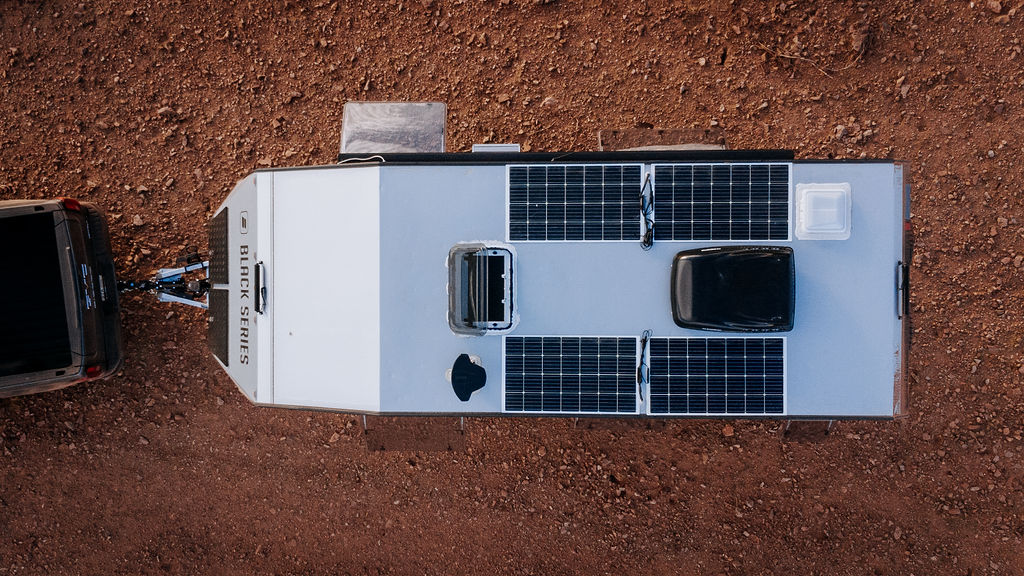
- Solar power – Photovoltaic panels that convert sunlight to DC electricity
- Battery storage – Deep-cycle batteries that store energy for nighttime and cloudy conditions
- Power inverters – Convert DC battery power to 120V AC for standard appliances
- Charge controllers – Regulate battery charging to prevent damage
- Water storage – Freshwater tanks with adequate capacity for extended trips
- Pump and filtration – Deliver clean water on demand
- Lighting and appliances – Energy-efficient systems designed for off-grid use
Why Off-Grid Design Matters for Overlanding
For serious overlanders, off-grid capability isn’t a luxury, it’s essential. Here’s why:
Freedom from campgrounds. Reservations, crowds, and hookup fees disappear when your trailer is fully self-sufficient. You choose where to camp based on adventure, not availability.
Remote travel capability. The best trails, views, and experiences are often miles from the nearest power outlet. Off-grid design opens access to places most campers can’t reach.
Emergency preparedness. Natural disasters, power outages, and unexpected situations become manageable when you have independent power and water systems ready to deploy.
Long-term sustainability. Modern off-grid systems are designed for efficiency and longevity, reducing environmental impact while extending your range.
Off-Grid Power System Design Basics
Understanding off-grid power system design starts with knowing your components and how to size them correctly.
Main Power Components
Every functional off-grid power system includes:
- Solar panels – Modern monocrystalline panels typically rate at 400-415 watts each with 19-20% efficiency
- Deep-cycle batteries – Lithium batteries provide 6,000+ charge cycles and superior performance
- DC-DC chargers – Keep batteries topped off while driving
- Inverters – Convert stored DC power to usable AC power for household appliances
- Charge controllers – MPPT controllers are approximately 30% more efficient than older PWM technology
Sizing Your Power System
Proper sizing prevents both underpowered frustration and expensive over-engineering. Follow this process:
Step 1: Calculate daily power use. List every appliance and device. Record wattage and daily usage hours. Multiply to get watt-hours per day.
Step 2: Add a safety buffer. Include 20-50% additional capacity for unexpected loads and cloudy days.
Step 3: Match battery capacity. Design for 3-5 days of autonomy to handle extended weather events without solar input.
Step 4: Plan solar input. A typical 400-600W solar array handles most trailer needs. Larger systems may require 800W+ for heavy usage.
Step 5: Select inverter size. Match peak power demand, accounting for simultaneous appliance usage.
Electrical Setup for Off-Road Trailers
A proper off-grid trailer electrical setup combines performance with safety and reliability.
Typical Electrical Layout
BlackSeries trailers feature integrated electrical systems that include:
- Solar input terminals – Easy connection for rooftop and portable panels
- Battery bank housing – Protected, ventilated compartments for lithium cells
- Fuse and safety systems – Circuit protection throughout the system
- 12V DC circuits – Power lights, pumps, fans, and USB charging
- 110V AC outlets – Standard household outlets via inverter
Safety and Reliability
Off-road conditions stress electrical systems. Critical safety features include:
- Proper circuit protection – Fuses and breakers sized correctly for each circuit
- Quality wiring – Marine-grade, tinned copper wiring resists vibration and corrosion
- Heat management – Ventilation prevents battery and inverter overheating
- Waterproof components – Sealed connections survive dust, rain, and river crossings

Best Off-Grid Camping Power Solutions
When evaluating the best off-grid camping power solutions, consider these proven options:
Top Options for Modern Campers
Lithium battery systems – Superior energy density, longer lifespan (6,000+ cycles), and faster charging make lithium the clear choice for serious off-grid use.
Portable solar panels – Supplement rooftop arrays and allow optimal sun positioning without moving your trailer.
Integrated power hubs – All-in-one units combining inverter, charger, and monitoring simplify installation and troubleshooting.
Smart monitoring systems – Real-time tracking of power production, consumption, and battery status via smartphone apps.
Why BlackSeries Systems Stand Out
BlackSeries power systems are engineered specifically for American off-road conditions:
- Pre-engineered integration – Components are matched and tested together, eliminating compatibility issues
- Rugged components – Military-grade construction survives vibration, dust, and temperature extremes
- Easy expandability – Add solar capacity or battery storage without system redesign
- Real-world testing – Every system is proven on actual trails before reaching customers
Explore our complete lineup of off-road travel trailers to see these systems in action.
Off-Grid Water and Energy Systems
Complete off-grid water and energy systems address both power and water independence.
Water System Design
Effective water systems include:
- Freshwater tanks – 40-80 gallon capacity depending on trailer size and trip duration
- Filtration systems – Multi-stage filters ensure clean, safe drinking water
- 12V water pumps – On-demand pressure for sinks and showers
- Grey water solutions – Proper collection and disposal for environmental responsibility
Energy Efficiency Tips
Maximizing system performance requires smart usage:
- LED lighting – Uses 75% less power than incandescent bulbs
- Efficient appliances – Energy Star refrigerators and inverter-driven models consume 30-50% less power
- Smart power usage – Stagger appliance loads; avoid running microwave, coffee maker, and toaster simultaneously
- Thermal management – Proper insulation reduces heating and cooling demands
How-to Guide: Designing Your Off-Grid Setup
Follow this step-by-step planning checklist to design your ideal off-grid configuration:
Step-by-Step Planning Checklist
- Estimate power needs – Document every device, its wattage, and daily usage hours
- Choose battery type – Lithium offers best performance; AGM provides budget alternative
- Plan solar capacity – Calculate minimum wattage based on daily consumption and location
- Design water storage – Match tank size to trip duration and crew size
- Select inverter size – Ensure adequate capacity for peak simultaneous loads
- Add monitoring systems – Include battery monitors and solar production tracking
Pro tip: Design for your worst-case month rather than average conditions. Winter brings shorter days and higher heating loads.
Real-World BlackSeries Off-Grid Examples
BlackSeries trailers prove their off-grid capability across America’s toughest terrain:
Desert camping – Multi-week trips through Nevada and Arizona backcountry with zero hookups. Solar systems maintain full battery banks even during peak summer air conditioning use.
Long overland trips – Cross-country adventures spanning months. Integrated systems provide reliable power and water from coast to coast.
Remote work setups – Digital nomads running laptops, monitors, and communication equipment from trailheads and dispersed camping sites.
Family travel scenarios – Multi-day stays in national forest and BLM land with full kitchen, lighting, and entertainment capabilities.
Frequently Asked Questions
Q1: What is off-grid utility design?
A: It is the design of independent power, water, and electrical systems that allow a trailer or camper to operate without external hookups. This includes solar panels, batteries, inverters, water tanks, and filtration systems working together as an integrated unit.
Q2: How much solar power do I need for off-grid camping?
A: The required solar capacity depends on daily power consumption, battery size, and climate. Most setups require 200W to 600W, with heavier users needing 800W or more. Calculate your daily watt-hour consumption and add a 30-50% buffer.
Q3: Can BlackSeries trailers operate fully off-grid?
A: Yes. BlackSeries trailers are engineered with integrated solar, battery, and water systems for complete off-grid independence. Our systems are tested in real-world conditions across desert, mountain, and forest environments.
Q4: What are the best batteries for off-grid systems?
A: Lithium batteries are the best option due to long lifespan (6,000+ cycles), fast charging capability, superior energy density, and high efficiency. While more expensive upfront, they provide better long-term value than lead-acid alternatives.
Ready to experience true off-grid independence? Explore BlackSeries travel trailers engineered for real American overlanding, or visit our technical support page to discuss your specific off-grid requirements.

