A camper trade-in is the fastest, simplest route to upgrading your camping setup, and in 2026, more owners than ever are trading their standard rigs for high-capability off-road travel trailers. Whether you’re tired of being limited to paved campgrounds or you’ve outgrown your current setup, understanding the trade-in process can save you thousands of dollars and weeks of hassle compared to selling privately.
In this comprehensive guide, we’ll walk you through exactly how camper trade-ins work, what factors determine your trade-in value, and why so many adventure-seekers are making the switch to purpose-built overland trailers. By the end, you’ll know precisely how to maximize your current camper’s value and upgrade to the off-road luxury you’ve been dreaming about.
What Is a Camper Trade-In?
A camper trade-in is a structured dealer process that allows you to apply the assessed value of your current camper toward the purchase of another camper or RV. Instead of navigating the complexities of private sales, listing, negotiating, meeting strangers, handling paperwork, you simply bring your rig to a dealership and let them handle everything.
Key points to understand:
- Trade-in ≠ private sale. A trade-in is a standardized, dealer-managed transaction with built-in protections and tax advantages.
- Almost any camper qualifies. Travel trailers, pop-ups, lightweight campers, and off-road travel trailers can all be traded.
- Financing status doesn’t disqualify you. Whether your camper is paid off or still has a loan balance, you can still trade it in.
- It’s the standard upgrade path. The majority of camper upgrades in the U.S. happen through dealer trade-ins because of the convenience and financial benefits.
For owners looking to step up to a more capable rig, especially those eyeing overland-ready trailers, the trade-in process eliminates the friction that keeps many people stuck with campers that no longer fit their lifestyle.
How Does a Camper Trade-In Work?
The trade-in process is straightforward once you understand the steps. Most transactions complete within one to three days at the dealership, compared to weeks or months for private sales.
Step 1: Gather Your Camper Information
Before approaching any dealer, compile your camper’s essential details:
- Year, make, and model
- Current mileage (if motorized) or usage history
- Maintenance records and repair documentation
- Title and registration paperwork
- Loan payoff information (if applicable)
Having organized documentation signals to dealers that you’ve maintained your rig properly, and maintained campers command better offers.
Step 2: Get a Trade-In Value Estimate
Dealers use multiple data points to assess your camper’s worth:
- NADA Guides provide the baseline wholesale and retail values
- Current market demand for your specific type and size
- Physical condition assessment (typically 30-60 minutes)
- Regional inventory needs
Pro tip: Research your camper’s value using NADA and RVTrader before visiting dealerships. This gives you negotiating leverage and realistic expectations.
Step 3: Choose What You’re Trading Into
This is where your upgrade vision comes to life. Are you:
- Staying in the same category but getting newer features?
- Upgrading capability from a standard trailer to an off-road travel trailer?
- Right-sizing based on your actual usage patterns?
Many owners discover that understanding travel trailer weight and towing dynamics helps them choose a rig that’s actually more capable while being easier to tow.
Step 4: Apply Your Trade-In Credit
Once you accept the dealer’s offer, your trade-in value is deducted from the new camper’s price. In most states, you only pay sales tax on the difference, a significant financial advantage over private sales.
Step 5: Complete Paperwork and Transfer
The dealer handles title transfer, registration, and loan payoff (if applicable). You drive away with your new rig while they manage the administrative burden.
Camper Trade-In Value: What Affects It?
Understanding what drives trade-in valuations helps you maximize your offer and set realistic expectations. Here are the primary factors dealers consider:
Camper Type and Configuration
Not all campers hold value equally. Off-road capable trailers, those with independent suspension and all-terrain tires, typically retain value better than standard models because demand consistently outpaces supply. Lightweight campers that fall below the average weight of camper in their class also command premiums due to towing compatibility with popular midsize trucks.
Brand Reputation and Market Demand
Some brands are known for quality construction and longevity, while others have reputations for premature failures. Dealers factor in how easily they can resell your specific make and model.
Age and Depreciation Curve
Campers depreciate most steeply in the first three years, then level off. A five-year-old well-maintained trailer may hold value better than a two-year-old neglected one.
Structural and Mechanical Condition
This is the make-or-break factor. Dealers prioritize:
- Frame integrity (rust, cracks, or damage)
- Roof and seal condition (water intrusion is a deal-killer)
- Suspension and running gear
- Appliance functionality
Water damage from failed seals can reduce your trade-in value by thousands, or make your camper essentially worthless for trade.
Weight and Size Considerations
The average travel trailer weights in specific size categories affect resale demand significantly. For example:
- 16 ft camper weight typically ranges 2,800-3,500 lbs, highly towable by most vehicles
- 18 ft camper weight averages 3,200-4,200 lbs, the sweet spot for many families
- 24 ft camper weight runs 4,500-6,500 lbs, requires a capable tow vehicle
- 30 foot rv weight or 30 ft camper weight often exceeds 7,000 lbs, limiting your tow vehicle options
Campers that fit the “lighter and more capable” profile consistently trade higher in 2026’s market, where fuel efficiency and towing accessibility matter more than ever.
Off-Grid and Overland Features
Solar systems, lithium batteries, upgraded suspensions, and off-grid water systems add measurable value. Document any upgrades with receipts, dealers will pay more when they can verify enhancements.
Where to Trade In a Camper
You have three primary options for converting your current camper to value. Each has distinct advantages depending on your priorities.
The verdict: If your goal is upgrading to a more capable rig, especially a BlackSeries or similar overland trailer, dealer trade-in is almost always the optimal path. The tax savings alone often close the gap with private sale prices, and you avoid months of listing, showing, and negotiating.

Can I Trade In a Camper With a Loan?
Yes, absolutely. Having an outstanding loan doesn’t disqualify you from trading in your camper. Here’s how it works:
Understanding Equity Position
- Positive equity: Your camper is worth more than you owe. The dealer pays off your loan and applies the remaining equity to your new purchase.
- Negative equity (being “upside down”): You owe more than the camper is worth. The difference gets rolled into your new financing.
The Payoff Process
When you trade in a financed camper:
- The dealer contacts your lender for the exact payoff amount
- They deduct this from your trade-in value
- Net equity (or deficit) is applied to your new purchase
- The dealer handles the title transfer once the loan clears
When to Wait on Trading
Consider holding off if:
- You’re significantly upside down and adding that debt to a new loan creates payment stress
- You’re within a few months of positive equity
- Your current camper still meets your needs and the upgrade is purely “want” rather than “need”
However, for owners whose current camper genuinely limits their adventures, keeping them on paved roads when they want remote wilderness, the freedom upgrade often justifies the financial math.
Is Trading In a Camper Worth It?
This question requires honest self-assessment. Here’s the framework:
Evaluate Your Usage Patterns
- How often do you actually camp? If it’s 20+ nights per year, investing in capability makes sense.
- Where do you want to go? If you’re bypassing dream destinations because your trailer can’t handle the roads, you’re losing value through non-use.
- Has your family or group size changed? Right-sizing matters for both comfort and towing efficiency.
Calculate Total Cost of Ownership (TCO)
A more expensive camper isn’t always more costly when you factor in:
- Maintenance requirements (all-aluminum vs. wood-frame construction)
- Resale trajectory (quality rigs depreciate slower)
- Campground costs eliminated by boondocking capability
- Trip frequency enabled by easier towing and setup
The Upgrade Value Equation
Here’s an insight most dealers won’t tell you: For high-frequency campers, a “more expensive but better-suited” trailer often costs less per use than keeping an inadequate rig.
If you camp 30 nights annually and your current trailer limits you to $40/night campgrounds, that’s $1,200/year in fees. An off-grid capable trailer that lets you boondock pays for the upgrade over time.
Why Many Owners Trade In Their Camper for BlackSeries
We see a consistent pattern: owners who’ve experienced the limitations of standard travel trailers reach a decision point. They either keep accepting those limitations or upgrade to something purpose-built for the adventures they actually want.
All-Aluminum Construction
Unlike traditional wood-framed trailers that deteriorate from moisture exposure, BlackSeries trailers use fully welded aluminum frames and composite panels. No wood means no rot, no delamination, and no structural degradation over time. This directly impacts long-term trade-in value, aluminum trailers simply last longer.
Independent Suspension Systems
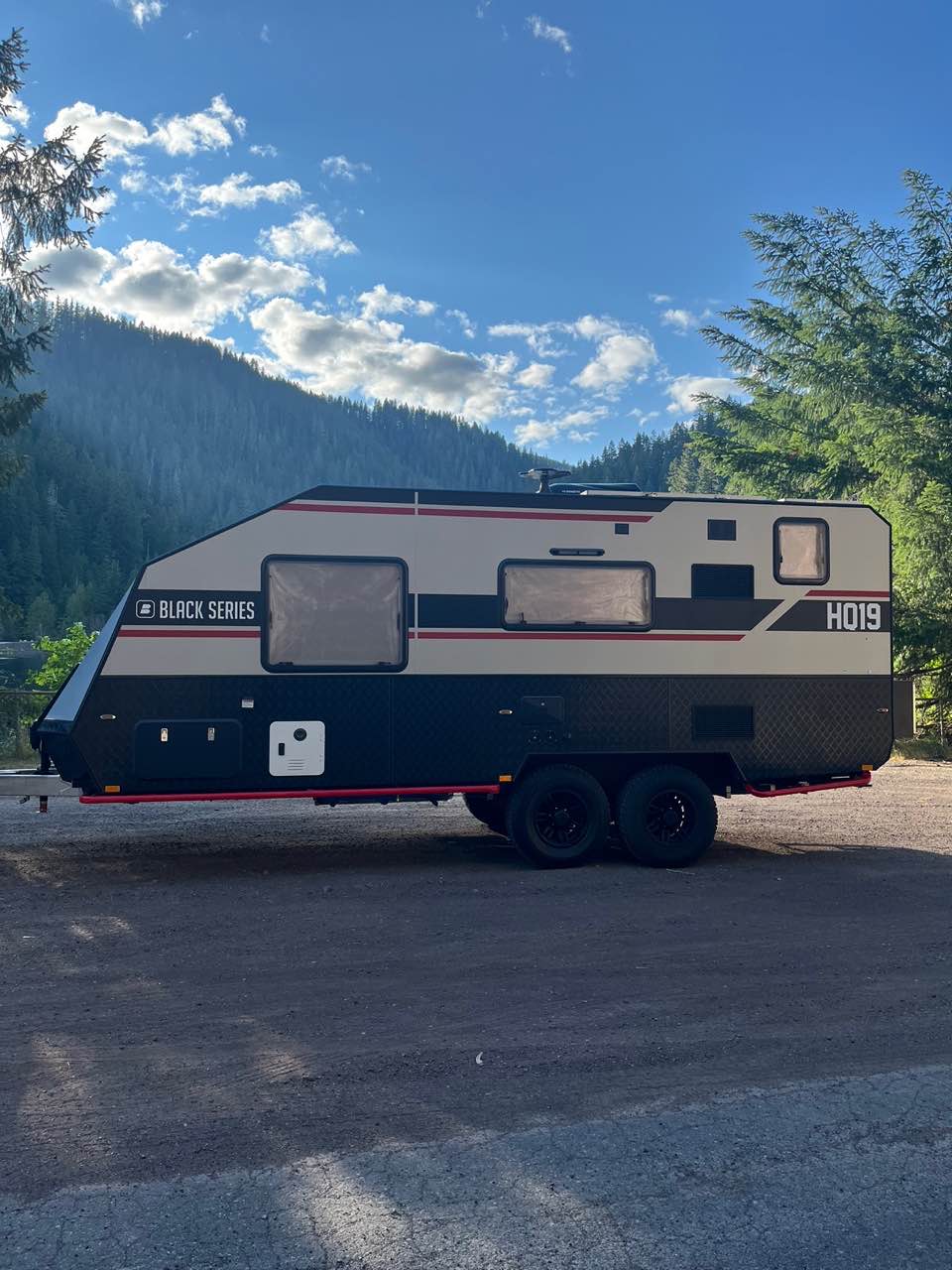
Standard trailers use leaf spring suspensions designed for highway driving. BlackSeries models like the HQ17, HQ19, and HQ21 feature independent trailing arm suspension that handles rough terrain while improving highway stability and reducing wear on your tow vehicle.
Standard Off-Grid Systems
Rather than treating solar and lithium as expensive add-ons, BlackSeries trailers come standard with off-grid power systems. This means you can camp where you want, not just where hookups exist.
Designed for Overland Use
Every design decision, from ground clearance to departure angles to storage configuration, serves the overlanding mission. These aren’t standard trailers with off-road tires bolted on; they’re purpose-built adventure platforms.
Resale and Future Trade-In Potential
Used BlackSeries trailers are genuinely scarce on the secondary market because owners tend to keep them. When they do appear, they command premium prices. This means your next trade-in (when you’re ready for your third or fourth rig) starts from a position of strength.
Common Camper Trade-In Mistakes to Avoid
Even savvy buyers make these errors. Avoid them to maximize your outcome:
1. Focusing Only on the Trade-In Offer
A higher trade-in offer means nothing if the dealer inflates the new unit’s price to compensate. Evaluate the total transaction cost, not just individual line items.
2. Ignoring Tax Advantages
In most states, you pay sales tax only on the difference between your trade-in value and new purchase price. This can mean thousands in savings compared to selling privately and buying separately.
3. Trading In During the Wrong Season
Spring (March through June) yields the best trade-in offers as dealers stock up for summer buying season. Trading in October or November might get you a deal on your new purchase, but your trade-in will be valued lower.
4. Upgrading Size Instead of Capability
Many owners trade their 24 ft camper weight trailer for an even larger rig, thinking more space equals better camping. Often, they’d be better served by a smaller, more capable off-road trailer that actually reaches the destinations they dream about.
5. Not Getting Multiple Quotes
Different dealers have different inventory needs. One might desperately need your exact model while another has three in stock. Get at least three quotes before accepting an offer.
6. Skipping the Deep Clean
Dealers budget $200/hour or more for cleaning and detailing. Every hour they anticipate spending comes out of your offer. A weekend of thorough cleaning can add hundreds to your trade-in value.
Frequently Asked Questions
How does a camper trade-in work?
A camper trade-in works by bringing your current camper to a dealer, receiving an assessed value based on NADA guides and market conditions, and applying that value as credit toward another RV purchase. The dealer handles all paperwork, title transfer, and loan payoff if applicable.
What is the average camper trade-in value?
Trade-in values typically run 10-20% below retail prices due to dealer reconditioning costs and margins. Actual values depend heavily on age, condition, type, and current market demand. Well-maintained off-road capable trailers often trade at the higher end of the range.
Can I trade in an older camper?
Yes, older campers can absolutely be traded in. While age affects value, a well-maintained older trailer in good structural condition can still provide meaningful trade-in credit. Water damage and frame issues matter far more than model year.
Does BlackSeries accept non-BlackSeries campers for trade-in?
Yes, BlackSeries dealers accept trade-ins of any brand and type when you’re upgrading to a BlackSeries model. Many owners trade standard travel trailers, pop-ups, and other manufacturers’ off-road trailers toward their BlackSeries purchase.
Is it better to trade in my camper or sell it privately?
If you’re planning to purchase another RV, trade-in is usually better due to tax advantages, convenience, and time savings. Private sales might yield slightly higher prices but require significant time investment and carry more risk. For upgrade-focused owners, trade-in wins.
Ready to Explore Your Trade-In Options?
The path from your current camper to off-road freedom is shorter than you might think. Whether you’re towing a 16 ft camper weight trailer that can’t handle forest roads or a 30 foot rv weight rig that limits your destinations, understanding the trade-in process puts you in control of your upgrade journey.
Start by researching your current camper’s value, then explore the BlackSeries lineup to find the model that matches your adventure ambitions. The roads you’ve been dreaming about are waiting.

