A cold weather RV insulation rating indicates how well an RV can retain heat in freezing temperatures. Understanding R-values, four-season claims, and real-world performance is critical, especially for off-road and long-term travel. BlackSeries sets the benchmark in this category with engineered solutions that go beyond standard industry ratings.
What Is a Cold Weather RV Insulation Rating?
A cold weather RV insulation rating refers to the thermal resistance measurement that indicates how effectively an RV’s insulation system can maintain interior temperatures in freezing conditions. Unlike residential construction, the RV industry lacks standardized mandatory testing protocols, leaving manufacturers to self-report their insulation capabilities.
In 2026, U.S. consumers increasingly scrutinize these ratings due to rising winter camping popularity and disappointing experiences with inadequately insulated RVs. The absence of federal oversight means buyers must understand the difference between marketing claims and actual thermal performance.
Traditional RV interiors often rely on thin wall construction with minimal insulation, designed primarily for fair-weather camping. Modern cold weather RVs incorporate multi-layer thermal barriers, sealed construction techniques, and comprehensive heating systems that extend usable seasons into harsh winter months.
The key distinction lies in thermal envelope integrity, how well the entire RV structure prevents heat loss through walls, floors, ceilings, windows, and connection points. A properly rated cold weather RV maintains comfortable interior temperatures down to -10°F to -20°F with standard heating systems.
Understanding RV Insulation Ratings: R-Value Explained
What Is R-Value in RV Insulation?
R-value measures thermal resistance, the higher the number, the better the insulation performance. For RVs, different areas require varying R-values:
- Ceiling/Roof: R-18 to R-26 minimum for true four-season performance
- Walls: R-10 to R-15 for adequate thermal protection
- Floor: R-7 to R-32 depending on underbelly design
However, R-value alone doesn’t guarantee winter performance. A poorly sealed RV with high R-values can lose more heat than a well-constructed unit with moderate insulation ratings.
Why R-Value Alone Is Not Enough
The primary challenge in RV construction involves thermal bridging, heat transfer through structural components that bypass insulation. Common thermal bridges include:
- Aluminum framing that conducts heat directly through walls
- Window frames and door assemblies
- Plumbing and electrical penetrations
- Floor attachment points to the chassis
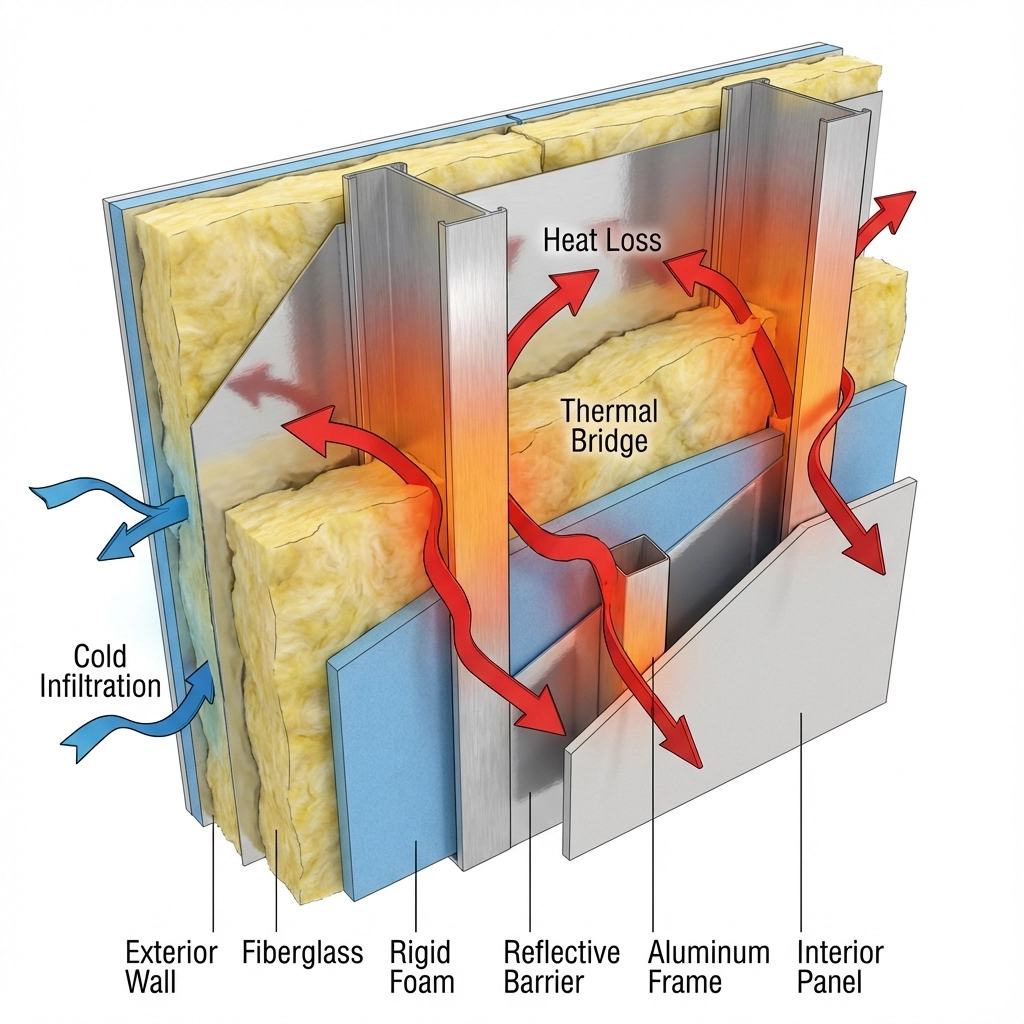
Additionally, air infiltration through gaps and seams can negate high R-value insulation. Wind-driven air movement removes heated air faster than insulation can retain it, making construction quality more critical than raw insulation thickness.
Professional winter RV users recognize that continuous thermal barriers and vapor management systems matter more than peak R-values in isolated areas. This understanding drives demand for RVs engineered as complete thermal systems rather than assemblies of high-rated components.
Four Season RV Insulation Rating: Marketing vs Reality
The term “four season RV” has become a powerful marketing tool, but actual capabilities vary dramatically between manufacturers. True four-season RVs must function reliably in sub-freezing temperatures, not just survive them.
Genuine four-season construction requires:
- Heated holding tanks to prevent frozen plumbing systems
- Enclosed heated underbellies with R-6+ rigid insulation
- 30,000+ BTU furnaces with ducted heating to all areas
- Dual-pane windows to reduce condensation and heat loss
- Insulated hatch covers over access panels
Many RVs marketed as “winter packages” include superficial upgrades like thicker curtains or additional vents while omitting expensive thermal improvements. The result: disappointed owners discovering their “four-season” RV fails at 20°F.

BlackSeries HQ19 demonstrating true four-season capability in harsh winter conditions
In 2026, consumer awareness has grown regarding these deceptive practices. Buyers now demand specific technical specifications rather than trusting marketing labels. This trend favors manufacturers like BlackSeries who publish detailed construction specifications and real-world testing data.
RV Insulation Rating for Winter: What Really Matters
For reliable winter RV insulation, these six elements prove essential:
1. Comprehensive Underbelly Protection
- Fully enclosed heated space beneath the RV
- R-6+ corrugated insulation panels
- Heat ducting to plumbing areas
- Moisture barrier to prevent condensation damage
2. Multi-Layer Wall Construction
- Vacuum-bonded panels combining multiple insulation types
- Rigid foam boards for structural thermal breaks
- Reflective barriers to reduce radiant heat transfer
- Continuous vapor barriers properly sealed at joints
3. Heated Holding Tank Systems
- Tanks located within heated interior space
- Individual tank heating elements for extreme conditions
- Insulated tank covers and plumbing runs
- Low-point drain heating to prevent freeze damage
4. High-Performance Window Systems
- Dual-pane acrylic or glass construction
- Thermal break frames to reduce condensation
- Insulated window coverings for night use
- Proper sizing to balance light and heat loss
5. Adequate Heating Capacity
- Minimum 45 BTUs per square foot of floor space
- Ducted distribution to all areas including underbelly
- Multiple heating zones for energy efficiency
- Backup heating systems for critical areas
6. Verified Low-Temperature Performance
- Factory testing at sub-zero temperatures
- Real-world user testimonials and data
- Independent verification of thermal claims
- Warranty coverage for cold weather operation
The combination of these elements determines true winter capability more accurately than any single insulation rating. For comprehensive winter preparation, consider reviewing our detailed guide on winterizing off-road campers.
Off-Road RV Cold Weather Insulation: A Different Standard
Off-road rv cold weather insulation faces unique challenges beyond standard winter camping requirements. Vibration, extreme temperature cycling, and remote location operation demand superior construction integrity.
Traditional RV insulation systems often fail under off-road stress. Fiberglass batts settle and compress, creating thermal gaps. Adhesive-mounted rigid foam panels can detach from vibration. Vapor barriers develop tears that allow moisture infiltration and subsequent mold growth.
BlackSeries addresses these challenges through Australian-derived engineering principles developed for extreme outback conditions. The key differences include:
- Structural integration where insulation becomes part of the load-bearing wall system
- Continuous thermal barriers that maintain integrity under chassis flex
- Moisture management systems designed for condensation-prone environments
- Serviceable construction allowing field repairs in remote locations
Off-road winter camping often occurs in locations where RV failure creates safety risks. Standard “four-season” RVs may work adequately in developed campgrounds with electrical hookups but fail catastrophically in dispersed camping scenarios. For insights into safe dispersed camping practices, reference our comprehensive BLM and USFS camping guide.
The thermal demands of off-grid winter camping require RVs that function as complete environmental systems rather than shelters requiring external infrastructure support. This distinction separates true expedition-capable RVs from recreational camping trailers.
Best RV Insulation for Cold Climates: What to Look For
When evaluating best rv insulation for cold climates, construction methodology matters more than material specifications. Superior cold climate RVs incorporate multiple insulation strategies:
Insulation Material Comparison
Construction Quality Indicators
Vacuum-bonded wall systems represent the current standard for premium RV construction. This process bonds multiple layers under pressure, creating stronger, more thermally efficient assemblies than mechanical fastening methods.
Aluminum framing provides superior durability compared to wood construction, though it creates thermal bridges requiring careful insulation design. Quality manufacturers address this through thermal break techniques and strategic insulation placement.
Factory sealant application during assembly creates better moisture barriers than field-applied systems. Look for manufacturers who emphasize factory sealing processes and provide detailed vapor barrier specifications.
Premium interior construction with thermal-efficient windows and insulated ceiling design
Testing and Verification
Reputable manufacturers provide specific temperature testing data rather than general “four-season” marketing claims. Look for:
- Actual temperature differentials maintained during testing
- Duration of testing periods (24+ hours preferred)
- External temperature conditions during tests
- Energy consumption data for heating systems
Independent testing by third-party organizations adds credibility, though few RV manufacturers invest in this expensive verification process.
Why BlackSeries Excels in Cold Weather RV Insulation
BlackSeries cold weather performance stems from fundamental engineering philosophy differences compared to mainstream RV manufacturers. Rather than designing RVs to “pass tests,” BlackSeries engineers for long-term habitability in extreme conditions.
The Australian heritage brings proven outback engineering where RV failure creates survival situations. This background drives conservative design approaches with extensive safety margins rather than minimum compliance strategies.
Structural Thermal Design
BlackSeries employs galvanized steel chassis construction that provides superior thermal mass and structural integrity compared to aluminum alternatives. The galvanized chassis construction approach addresses both corrosion resistance and thermal bridging concerns through engineered mounting systems.
The chassis design integrates heated underbelly systems from the engineering phase rather than as aftermarket additions. This integration creates superior heat distribution and eliminates the thermal gaps common in retrofit installations.
Advanced Moisture Management
Winter camping generates significant interior moisture through cooking, breathing, and temperature differentials. Poor moisture management leads to condensation, mold growth, and insulation degradation, problems that plague standard RV construction.
BlackSeries addresses moisture through engineered ventilation systems and continuous vapor barriers designed for high-humidity environments. For detailed moisture control strategies, review our guide on preventing mold in campers.
Real-World Testing Standards
BlackSeries conducts extensive field testing in actual winter camping conditions rather than controlled laboratory environments. This testing includes:
- Multi-day exposure to sub-zero temperatures
- High-wind condition performance evaluation
- Heating system efficiency measurements
- Structural integrity verification under thermal cycling
The testing philosophy emphasizes worst-case scenario preparation rather than ideal condition performance, reflecting the safety-critical nature of winter RV systems.
BlackSeries RV demonstrating capability in challenging winter forest conditions
FAQ – Cold Weather RV Insulation Rating
Q1: What is a good cold weather RV insulation rating?
A good cold weather RV should have minimum R-18 ceiling, R-10 walls, and R-7 floor insulation, combined with heated holding tanks and 30,000+ BTU heating capacity. However, construction quality and thermal envelope sealing matter more than peak R-values.
Q2: Are four season RV ratings standardized in the U.S.?
No, the U.S. lacks mandatory four-season RV standards. Manufacturers self-report capabilities, making buyer education essential. Look for specific technical specifications rather than marketing terms like “winter package” or “four-season ready.”
Q3: Can RVs with high R-values still fail in winter?
Yes, thermal bridging, air leaks, and inadequate heating systems can negate high insulation ratings. Poor construction quality creates cold spots and condensation problems regardless of insulation thickness. Complete thermal system design proves more important than individual component ratings.
Q4: Is BlackSeries suitable for sub-freezing temperatures?
BlackSeries RVs are engineered for extreme winter conditions based on Australian outback testing standards. The integrated heated underbelly systems, galvanized chassis construction, and comprehensive moisture management enable reliable operation in sub-zero temperatures with proper preparation and maintenance.
Ready to experience superior cold weather RV performance? BlackSeries combines proven engineering with real-world testing to deliver RVs that excel in extreme conditions. Whether you’re planning winter adventures in the Rockies or year-round off-grid living, BlackSeries provides the thermal performance and structural integrity your family deserves. Contact our team to discover which BlackSeries model matches your cold weather camping requirements.

