Mold in campers is caused by trapped moisture, poor ventilation, and temperature swings. The most effective prevention strategy combines airflow, humidity control, routine checks, and proper storage habits.
Why Mold Is a Serious Problem in Campers
Mold is a type of fungus that thrives in moist environments, while mildew is a surface-level form of mold that appears as a powdery coating. Both pose significant threats to RV owners because campers create perfect breeding conditions through their compact, enclosed design.
RVs and campers are far more susceptible to mold than traditional homes due to several factors. The smaller interior volume means moisture accumulates faster, while frequent temperature changes between day and night create condensation on windows, walls, and ceilings. Additionally, many campers lack the sophisticated HVAC systems that regulate humidity in residential buildings.
The health risks are substantial. Mold exposure can trigger respiratory issues, allergic reactions, and worsen asthma symptoms. From a structural standpoint, mold damages flooring, wall panels, insulation, and cabinetry, repairs that can cost thousands of dollars and significantly reduce your camper’s resale value.
At BlackSeries, we view mold prevention differently. It’s not about perfect cleanliness, it’s about systematic humidity management. When moisture control fails, mold becomes inevitable regardless of how clean you keep your camper.
What Causes Mold in Campers?
Moisture Sources Inside an RV
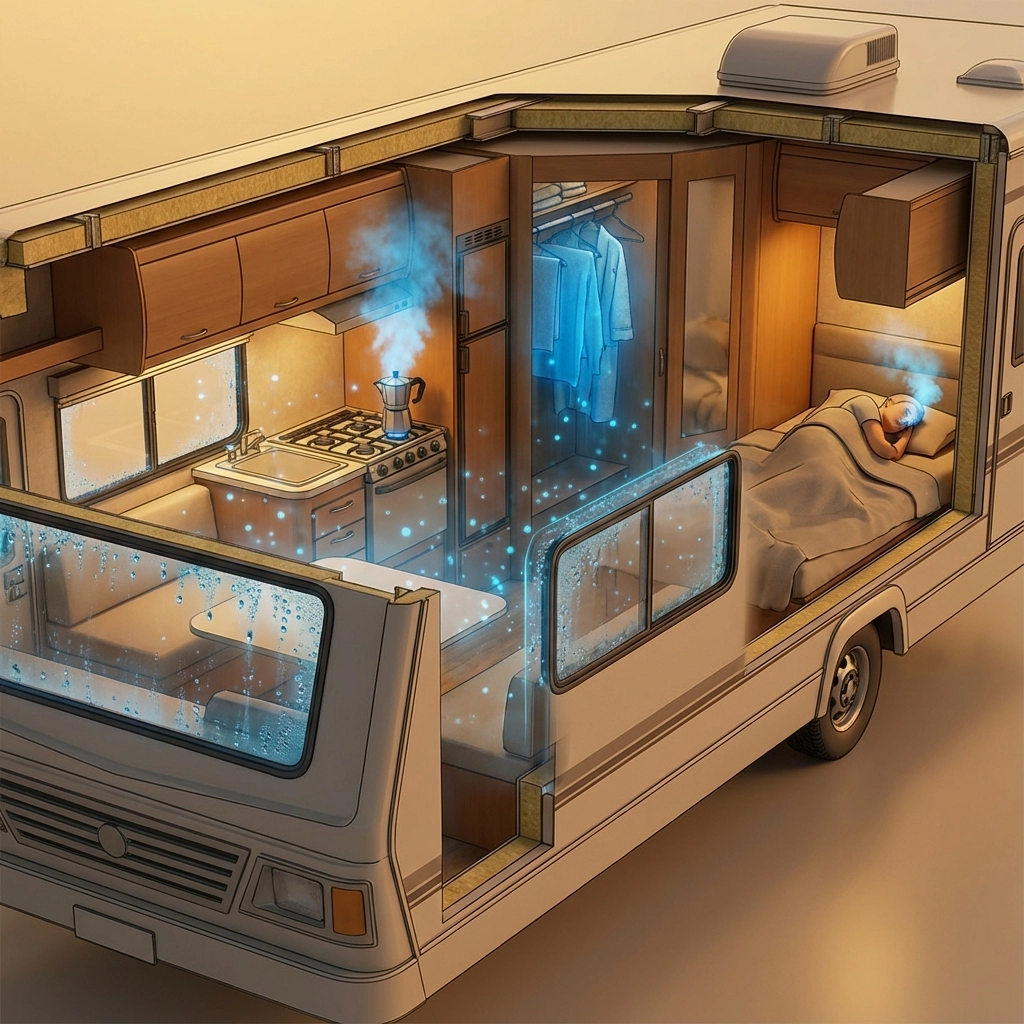
Every activity you perform in your camper generates moisture. Breathing alone produces nearly a pint of water vapor per person over eight hours of sleep. Cooking releases steam from boiling water, simmering sauces, and even making coffee. A single hot shower can dump several cups of moisture into your camper’s air.
Beyond daily activities, wet clothing from rain or swimming creates ongoing humidity problems when hung inside to dry. Pet ownership adds another moisture source through breathing, drinking, and accidents that aren’t immediately discovered.
Structural & Environmental Factors
Cold bridges occur where interior warm air meets cold exterior surfaces, causing condensation to form on windows, vents, and poorly insulated wall sections. This process happens continuously during cool nights, even in dry climates.
Aging seals around windows, doors, and roof penetrations allow rain infiltration that may go unnoticed for weeks. Winter storage in humid climates like Florida or the Pacific Northwest accelerates mold growth when campers sit closed for months without ventilation.
How-to: Preventing Mold in Campers Step by Step
Step 1 – Control Humidity (Most Critical Variable)
Maintain indoor humidity between 30-50% using a digital hygrometer. Below 30%, you’ll experience dry skin and respiratory irritation. Above 50%, mold growth accelerates rapidly.
Deploy dehumidifying equipment when humidity exceeds 55% for more than 24 hours. Electric dehumidifiers work best for occupied campers with shore power, while desiccant products like DampRid or Dry-Z-Air handle seasonal storage effectively.
Regional considerations matter significantly. Florida’s year-round humidity requires constant vigilance and potentially permanent dehumidifier installation. Pacific Northwest winters demand aggressive ventilation strategies to combat condensation from rain and fog.
Step 2 – Improve Ventilation
Roof vents and bathroom exhaust fans should run continuously during cooking, showering, and sleeping. Many RV owners mistakenly turn off fans to conserve battery power, but this creates stagnant air pockets where mold thrives.
Create cross-ventilation by opening windows or vents on opposite ends of your camper. This airflow pattern prevents moisture from settling in corners and under furniture where you can’t easily inspect for problems.
Winter ventilation myths cause serious issues. Keeping everything sealed “to stay warm” traps moisture from breathing and cooking. Instead, crack a window or ceiling vent slightly to allow moisture escape while maintaining reasonable interior temperatures.
Step 3 – Inspect & Seal
Monthly visual inspections of window frames, skylights, and exterior seams catch problems before major damage occurs. Use a flashlight to check behind furniture and in storage compartments where mold often starts unnoticed.
Distinguishing condensation from leaks requires systematic observation. Condensation appears as uniform moisture on cold surfaces and disappears when you improve ventilation. Leaks create localized wet spots that persist despite airflow and often show water staining or mineral deposits.

Camper Mold Prevention Checklist
Daily / Weekly
- Open windows and vents for 2+ hours during mild weather
- Wipe down condensation from windows and walls immediately after waking
- Run bathroom exhaust fan for 15 minutes after showers
- Never store wet towels or clothing inside closed compartments
Monthly
- Inspect all exterior seals and caulking for cracks or gaps
- Clean and check operation of all exhaust fans and vents
- Test hygrometer accuracy and replace batteries if needed
- Deep clean areas behind appliances and furniture
Seasonal / Storage
- Remove all fabric items, food, and personal belongings before extended storage
- Place multiple desiccant containers throughout interior
- Partially open cabinets and drawers to promote air circulation
- Position camper to minimize rain exposure and maximize natural airflow
For winter storage lasting more than 30 days, consider professional moisture monitoring systems that alert you to humidity spikes requiring intervention.
Best Gear That Helps Prevent Mold in Campers
Best Dehumidifier Options: Electric units like the Frigidaire 30-pint model work excellently for full-time RV living with adequate power supply. For seasonal use or boondocking, Eva-Dry renewable units require no electricity and handle moderate humidity effectively.
Moisture Absorbers: DampRid hanging bags target specific problem areas like closets and bathrooms, while larger containers handle general living spaces. Replace every 30-60 days depending on humidity levels and container size.
Vent Covers and Airflow Accessories: Maxxair vent covers allow ventilation during rain, solving the common problem of moisture buildup during storms. Adding 12V computer fans to dead air spaces under beds or in storage compartments prevents stagnation.
At BlackSeries, we emphasize that equipment assists but never replaces proper system design. No amount of gear compensates for fundamental problems like inadequate sealing, poor insulation, or chronic leaks that require structural solutions.
Real-World Scenarios
Scenario 1: Winter Condensation Crisis
Full-time RV couple experiences severe window condensation every morning despite running a small heater. Solution: Install rigid foam insulation panels over windows at night, add a small exhaust fan near the bed area, and crack a roof vent 1-2 inches to allow moisture escape without major heat loss.
Scenario 2: Storage Season Mold Discovery
After six months of winter storage in Florida, owner discovers black spots throughout bathroom and bedroom areas. Solution: Remove all affected materials immediately, treat with antifungal cleaner, improve storage ventilation with solar-powered fans, and establish monthly inspection schedule during storage periods.
Scenario 3: Coastal Camping Challenges
Pacific Northwest camping exposes RV to constant high humidity from ocean air and frequent rain. Solution: Run dehumidifier continuously, position camper to maximize cross-breeze, use desiccant packs in all enclosed spaces, and inspect/dry any moisture accumulation twice daily.
For detailed guidance on high-wind camping situations that often coincide with moisture challenges, proper preparation prevents multiple problems simultaneously.
FAQ – Preventing Mold in Campers
Why does my camper get mold even when it looks dry?
Mold grows in areas you can’t easily see, behind wall panels, under flooring, inside ductwork. Visible dryness doesn’t guarantee absence of hidden moisture sources like small leaks or poor insulation creating condensation zones.
Is mold common in RVs and campers?
Yes, mold affects approximately 60-80% of RVs at some point due to their inherent design challenges with moisture control. However, systematic prevention reduces this risk to nearly zero.
Should I leave vents open when storing my camper?
Absolutely. Closed storage without ventilation guarantees moisture problems. Use vent covers to prevent rain entry while maintaining airflow, or position your camper in covered storage with multiple vents cracked open.
What humidity level prevents mold in campers?
Maintain 30-50% relative humidity. Invest in a quality digital hygrometer and check levels daily during high-risk periods like rainy weather or coastal camping.
Can mold permanently damage a camper?
Yes, extensive mold growth can destroy flooring, wall panels, cabinetry, and insulation requiring complete renovation. Early intervention and prevention cost far less than structural repairs.
Understanding proper dispersed camping techniques includes moisture management in remote locations where professional help isn’t available, making prevention skills essential for serious RV enthusiasts.

