Winter camping in Yellowstone is possible but extremely limited, only Mammoth Campground remains open for frontcountry camping, most park roads close to standard vehicles from mid-October through late April, and accessing interior areas requires snowcoach or snowmobile transport.
What “Winter Camping in Yellowstone” Really Means
Winter camping in Yellowstone isn’t like your typical summer RV adventure. The National Park Service distinguishes between two primary types: frontcountry campground camping and backcountry winter camping. Frontcountry refers to developed campgrounds accessible by vehicle, while backcountry involves hiking or skiing to designated winter camping areas.
The term “oversnow travel” becomes critical here, this refers to the specialized snowcoach and snowmobile transportation that operates from mid-December through March, providing the primary means of accessing Yellowstone’s interior during winter months.
From BlackSeries’ perspective, successful winter camping requires understanding that this isn’t about comfort, it’s about creating a reliable supply and access loop in one of America’s most challenging winter environments.
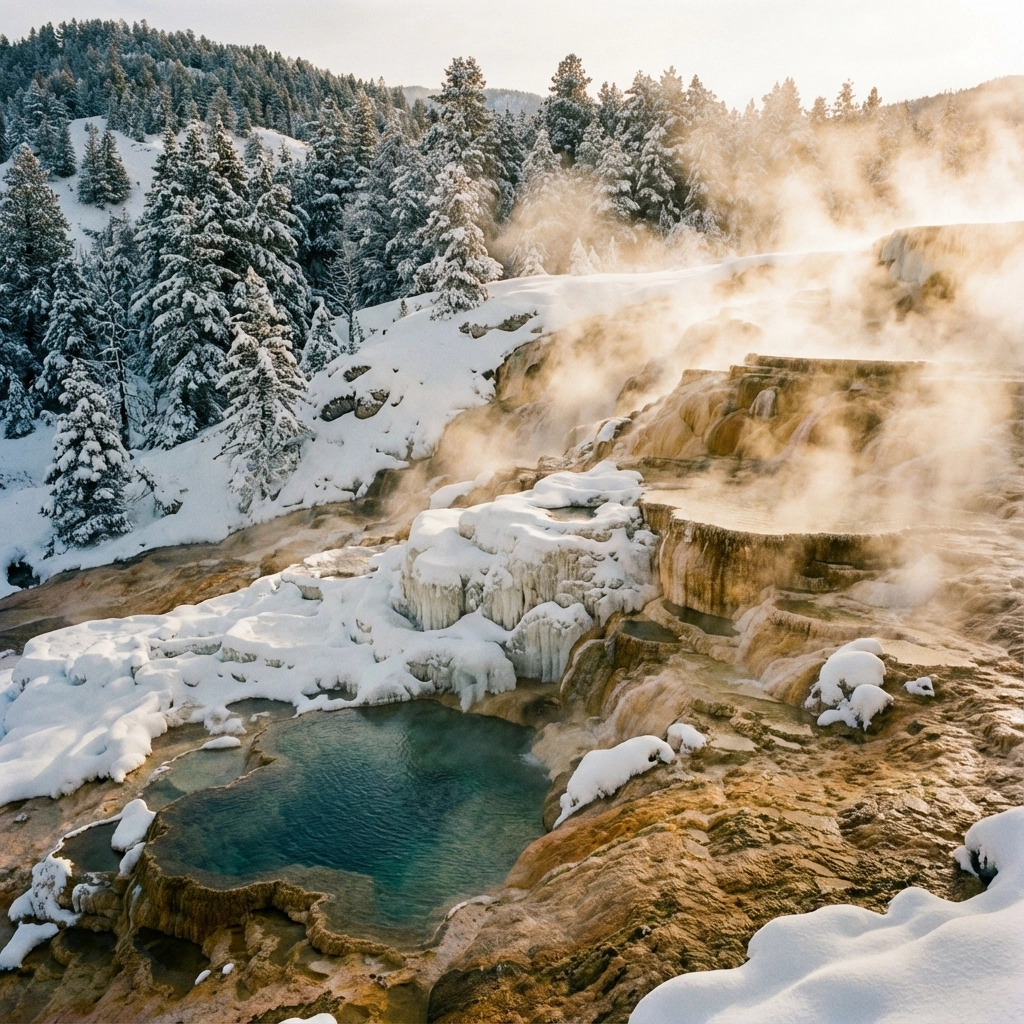
Where You Can Camp in Winter
Inside the Park: Mammoth Campground
Mammoth Campground is the only developed campground open year-round in Yellowstone. Located near the North Entrance at Gardiner, Montana, this campground operates on a first-come, first-served basis during winter months. However, winter facilities are limited, water spigots may be turned off, electrical hookups can be unreliable, and the dump station typically closes for the season.
The campground sits at 6,200 feet elevation, where temperatures regularly drop below zero. Despite these challenges, Mammoth’s location near the park headquarters means you’ll have access to visitor services, restrooms, and the Albright Visitor Center year-round.
Backcountry Winter Camping Options
For experienced winter campers, Yellowstone offers nearly 300 backcountry campsites accessible during winter. These designated camping areas require permits and strict adherence to food storage regulations due to bear activity. The park typically sees usable snowpack beginning in mid-December, with optimal conditions from January through March.
Winter backcountry camping demands advanced planning, you’ll need to designate specific camping zones and follow Leave No Trace principles adapted for snow conditions. Food must be stored in bear-proof containers or hung properly, even in winter.
Outside the Park: Gateway Town Strategy
Many winter visitors base themselves in gateway communities like Gardiner, Montana, or West Yellowstone, Montana. This strategy offers reliable utilities, dining options, and consistent road access while still allowing day trips into accessible park areas.
West Yellowstone provides the closest access to Old Faithful via snowcoach, while Gardiner offers year-round road access to Mammoth Hot Springs and the Lamar Valley via the North Entrance.
How to Plan Access When Roads Close
Road Access Basics
Most of Yellowstone’s roads close to regular vehicle traffic from mid-October through late April or early May. The North Entrance road from Gardiner to Cooke City typically remains the only route accessible to standard vehicles year-round, though conditions can change rapidly.
The park’s interior becomes accessible primarily through guided snowcoach tours or permitted snowmobile travel, with the winter season generally running from mid-December through mid-March.
3-Step Winter Access Planning
Step 1: Choose Your Target Area
Determine whether you want to stay near Mammoth Hot Springs, explore the Lamar Valley, or venture toward Old Faithful. Each area has different access requirements and available services.
Step 2: Match Your Transportation Method
- Standard vehicles: Limited to North Entrance corridor
- Snowcoach: Guided tours to Old Faithful, Grand Canyon, and other interior locations
- Snowmobile: Permitted access with guide requirements on designated routes
Step 3: Verify Service Availability
Check current operating dates for fuel stations, dining facilities, and visitor centers, as these vary annually based on weather conditions and staffing.

Winter Camping Yellowstone Checklist
Shelter & Sleep System
- Four-season tent with snow skirts or winter RV with proper insulation
- Sleeping bag rated to -20°F minimum (temperatures can drop to -40°F)
- Insulated sleeping pad with R-value 6 or higher for ground insulation
- Emergency bivy or backup shelter for redundancy
Vehicle Readiness
- Fresh antifreeze rated to -40°F and battery load test
- Tire chains or winter tires with emergency traction aids
- Snow shovel, ice scraper, and tow straps for self-recovery
- Extra fuel containers as gas stations may be limited
Safety & Communication
- Satellite communication device (cell service is extremely limited)
- Offline maps and GPS units with extra batteries
- First aid kit specialized for cold injuries including hypothermia treatment
- Emergency food and water for 72 hours minimum
Food Storage Requirements
For backcountry camping, bear-proof containers remain mandatory even in winter. Carry 50 feet of rope for proper food hanging if containers aren’t available. All scented items must be stored according to park regulations.
Best Cold-Weather Gear for Yellowstone Winter Camping
Layering System Strategy
Base layer: Merino wool or synthetic moisture-wicking materials
Mid layer: Insulated jackets with down or synthetic fill rated for sub-zero temperatures
Shell layer: Windproof, waterproof outer shell with full-zip ventilation
Essential Traction Gear
Microspikes or crampons for icy trails around thermal features
Snowshoes or cross-country skis for deeper snow exploration
Gaiters to prevent snow from entering boots
Cooking and Fuel Strategy
Liquid fuel stoves perform better in extreme cold than canister stoves
Bring 25% more fuel than summer calculations due to cold weather inefficiency
Insulated mug and thermal food storage to maintain warmth
BlackSeries builds our off-road trailers with extreme weather capability in mind, the same principle applies to your gear selection. Choose proven, redundant systems over lightweight or cutting-edge equipment when winter survival is at stake.
Real-World Winter Scenarios
Scenario 1: Unexpected Road Closure
You arrive at the North Entrance to find the road to Mammoth closed due to avalanche conditions. Solution: Have backup accommodations identified in Gardiner, and maintain flexible itineraries during winter travel.
Scenario 2: Extreme Cold and Condensation Management
Nighttime temperatures drop to -25°F, causing severe condensation inside your shelter. Solution: Increase ventilation even in extreme cold, use vapor barriers in sleeping systems, and keep clothing dry through proper layering.
Scenario 3: Communication Blackout
Your satellite device fails in the backcountry during a winter storm. Solution: Always travel with redundant communication methods, inform others of detailed trip plans, and carry emergency signaling devices like mirrors or flares.
FAQ – Winter Camping in Yellowstone
Is winter camping allowed in Yellowstone National Park?
Yes, but options are severely limited. Only Mammoth Campground remains open for frontcountry camping year-round, while backcountry winter camping requires permits and specialized equipment.
What’s the only campground open in winter at Yellowstone?
Mammoth Campground near the North Entrance is the sole developed campground operating year-round, though winter services are reduced and utilities may be limited.
Can I drive to Old Faithful in winter?
No, the road to Old Faithful closes to regular vehicles from mid-October through late April. Access requires guided snowcoach tours or permitted snowmobile travel during the winter season.
Do I need a backcountry permit for winter camping?
Yes, all backcountry camping in Yellowstone requires advance permits year-round. Winter permits include additional safety requirements and designated camping zones to minimize environmental impact.
What should I expect for winter RV camping near Yellowstone?
Winter RV camping near Yellowstone requires cold-weather rated systems, proper insulation, and backup heating sources. Most RV parks outside the park remain open with limited services, while interior access depends on road conditions and oversnow transportation.
Winter camping in Yellowstone represents one of America’s most challenging and rewarding outdoor experiences. Success depends on thorough preparation, flexible planning, and respect for the harsh realities of winter in the world’s first national park. Whether you choose the relative security of Mammoth Campground or venture into the backcountry, proper preparation and equipment can turn this extreme environment into an unforgettable adventure.

