A galvanized chassis rust protection uses a zinc coating to prevent corrosion at the steel level. For RVs and off-road trailers exposed to salt, moisture, and rough terrain, galvanization offers significantly longer-lasting protection than paint or powder coating. BlackSeries builds its chassis with this principle in mind.
What Is Galvanized Chassis Rust Protection?
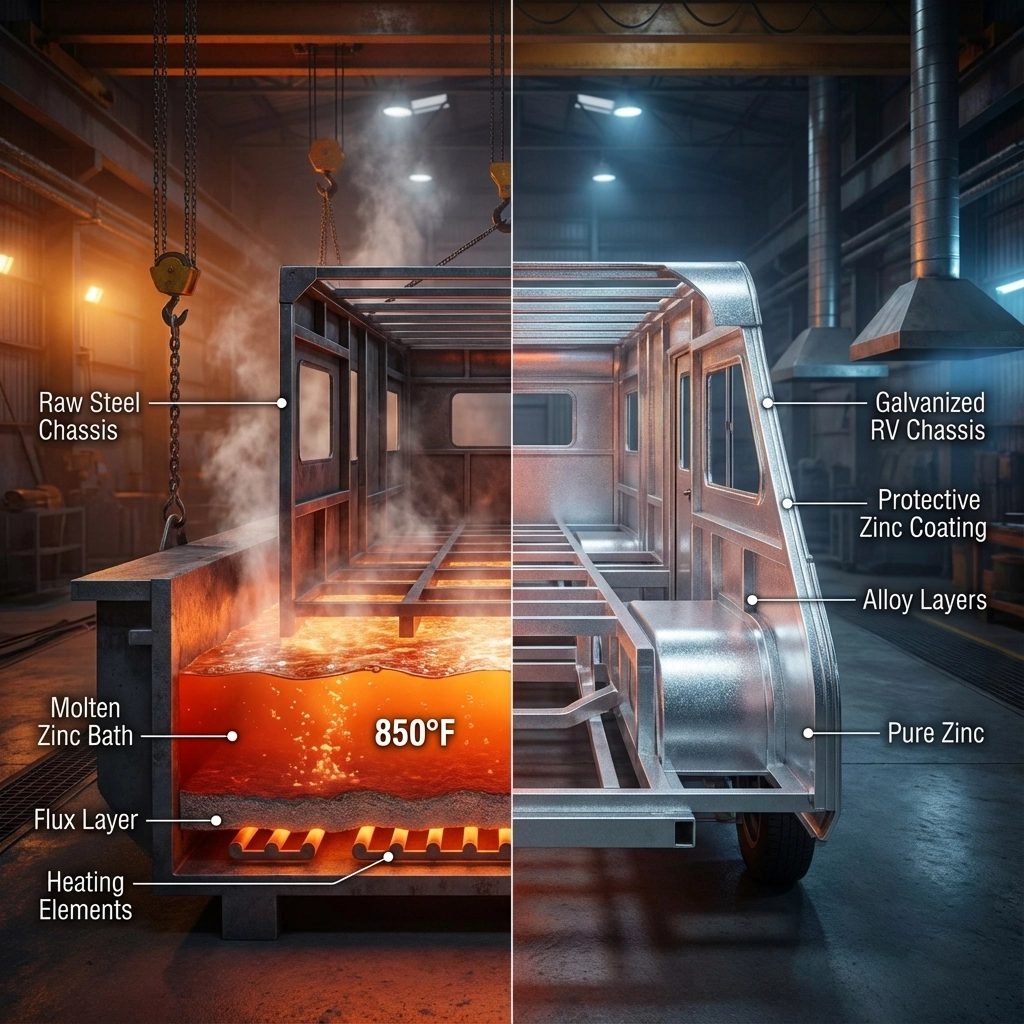
Galvanized chassis rust protection is a process where steel RV frames are dipped in molten zinc at approximately 850°F, creating a metallurgical bond that forms a protective barrier against corrosion. This hot-dip galvanizing process differs fundamentally from paint or powder coating, instead of sitting on top of the steel, the zinc actually becomes part of the metal structure.
The zinc coating works through “sacrificial protection,” meaning it corrodes first before the underlying steel is affected. When scratched or damaged, the zinc continues to protect exposed steel edges through electrochemical action, making it far superior to surface coatings that fail completely once breached.
For U.S. RV buyers in 2026, understanding galvanized chassis has become critical as more Americans pursue year-round camping, coastal travel, and off-road adventures that expose trailers to harsh environmental conditions.
Why RV Chassis Rust Is a Serious Problem in the U.S.
American RV owners face unique corrosion challenges that make chassis protection essential:
Winter road salt remains the biggest threat to RV longevity across northern states. Department of Transportation data shows over 24 million tons of road salt used annually, creating a corrosive environment that can destroy unprotected steel chassis within 3-5 years of regular winter travel.
Coastal exposure affects RV owners from Maine to California, where salt air penetrates even covered storage areas. Marine environments accelerate oxidation rates by 400-600% compared to inland locations.
Off-road adventures increasingly popular among U.S. buyers expose trailers to stream crossings, muddy conditions, and rock strikes that compromise protective coatings. High-clearance designs for off-road adventures must withstand conditions that would destroy conventional RV chassis.
Common failure points include frame joints, suspension mounts, and tongue assemblies, areas where conventional paint systems crack and peel, exposing bare steel to rapid deterioration.
Galvanized vs Painted RV Chassis: What’s the Difference?
The fundamental difference lies in failure mode. When painted chassis get scratched, exposed steel begins rusting immediately. Galvanized RV chassis corrosion resistance continues even with surface damage, as zinc provides electrochemical protection to nearby steel areas.
Independent testing shows galvanized coatings can self-heal minor scratches and provide protection for exposed areas within several inches of intact zinc coating.
Galvanized RV Chassis Corrosion Resistance Explained
True corrosion resistance requires understanding how galvanized protection works in real-world conditions. The zinc coating typically measures 2-4 mils thick (compared to paint at 1-2 mils), providing both barrier and sacrificial protection.
Coating thickness matters significantly, thicker zinc layers last proportionally longer. Quality manufacturers specify minimum 2.0 mil average thickness with 1.8 mil minimum at any point, ensuring consistent protection across the entire chassis.
Post-galvanizing treatment becomes critical for welded assemblies. BlackSeries ensures all welding occurs before galvanizing, then applies zinc-rich repair compounds to any post-galvanizing modifications, maintaining seamless protection.
The most vulnerable areas include internal cavities, overlapped joints, and bolt holes where moisture can collect. Premium galvanized chassis feature sealed internal spaces and proper drainage design to prevent trapped moisture, the primary cause of internal corrosion even in galvanized structures.

Off-Road Trailer Galvanized Chassis: Why It Matters More
Off-road trailer galvanized chassis protection becomes even more critical due to environmental extremes and mechanical stresses that accelerate normal wear patterns.
Rock strikes, stream crossings, and muddy conditions create constant coating challenges. While painted surfaces chip and expose bare metal with each impact, galvanized coatings resist penetration and continue protecting damaged areas through sacrificial zinc action.
Vibration and flex cycles that destroy painted finishes have minimal effect on metallurgically-bonded zinc coatings. This explains why BlackSeries off-road capabilities rely on galvanized chassis as a foundation for long-term durability.
Australian design standards, where BlackSeries originated, specify galvanized chassis for extreme outback conditions involving dust, moisture, salt air, and temperature cycling that mirrors the harshest U.S. environments from desert Southwest to coastal Alaska.
Galvanized Steel Chassis for RV: Is It Worth the Cost?
Return on investment analysis strongly favors galvanized steel chassis for RV applications, particularly for buyers planning long-term ownership or frequent use.
Initial cost premium typically ranges 15-25% over painted chassis, adding $2,000-4,000 to trailer prices. However, maintenance cost comparisons show dramatic long-term savings:
- Painted chassis: $300-800 annual rust prevention/repair costs after year 3
- Galvanized chassis: $50-150 annual inspection/touch-up costs throughout lifespan
Resale value protection provides additional ROI. Industry data shows RVs with galvanized chassis retain 12-18% higher resale values after 5-7 years compared to equivalent painted models, often exceeding the initial cost premium.
Insurance companies increasingly recognize galvanized chassis value, with some offering premium reductions for improved loss prevention in coastal and winter regions.
Best RV Chassis Rust Protection Methods (Checklist)
Comprehensive rust protection requires multiple integrated approaches:
✓ Full hot-dip galvanized steel construction – Primary structural protection
✓ Closed-section frame design – Eliminates internal moisture collection
✓ Post-welding zinc repair – Maintains protection at joints
✓ Strategic drainage points – Prevents water accumulation
✓ Quality hardware selection – Stainless or galvanized fasteners only
✓ Professional assembly techniques – Proper torque and sealing procedures
Avoid common compromises like “galvanized coating” (zinc-rich paint) or partial galvanizing that leave vulnerable areas exposed. True protection requires complete hot-dip galvanizing of the entire chassis assembly.
Why BlackSeries Uses Galvanized Chassis by Design
BlackSeries commitment to galvanized chassis stems from Australian engineering heritage where extreme conditions demand maximum durability. Unlike manufacturers who offer galvanizing as an option, BlackSeries treats chassis protection as fundamental to trailer integrity.
The company’s design philosophy prioritizes long-term ownership over minimum initial cost. BlackSeries HQ19 and HQ21 models feature fully galvanized chassis because the target customer, serious adventure travelers, demands equipment that performs reliably for decades, not just seasons.
Engineering specifications exceed typical RV standards, with thicker zinc coatings, sealed internal cavities, and post-galvanizing quality control that ensures complete protection coverage. This approach reflects Australian “build it once, build it right” mentality adapted for demanding U.S. market conditions.
For U.S. buyers, this translates to trailers capable of withstanding everything from Alaskan winters to Baja desert crossings without chassis deterioration that sidelines conventional RVs.
FAQ – Cold Weather RV Insulation Rating
Q1: How long does galvanized chassis rust protection actually last?
Hot-dip galvanized chassis typically provide 15-30 years of protection in normal use, with some installations lasting 50+ years in ideal conditions. Lifespan depends on zinc coating thickness, environmental exposure, and maintenance quality.
Q2: Is galvanized steel really better than high-quality powder coating?
Yes, significantly. Powder coating provides only barrier protection that fails completely when scratched. Galvanized coatings continue protecting damaged areas through electrochemical action and can self-heal minor scratches.
Q3: Can galvanized chassis still develop rust problems?
Galvanized chassis can experience internal corrosion if water becomes trapped in hollow sections, or coating damage from severe impacts. However, these issues develop much slower and are easier to repair than painted chassis failures.
Q4: Does BlackSeries use fully galvanized RV chassis on all models?
Yes, BlackSeries uses complete hot-dip galvanized chassis construction across their entire lineup as standard equipment, not an optional upgrade. This reflects their commitment to long-term durability for serious adventure travel.
Ready to invest in long-term trailer durability? BlackSeries galvanized chassis protection offers proven performance for U.S. adventure travelers who demand equipment built to last decades, not seasons. Explore BlackSeries models and experience the difference that professional-grade chassis protection makes for your next off-road adventure.

