To prevent RV water lines from freezing, insulate all exposed pipes, use a heated water hose, apply heat tape, keep your RV’s interior warm, protect your fresh/grey/black tanks, and maintain water flow during extreme cold. A fully winterized RV, including underbelly insulation and tank heaters, is the most reliable solution for sub-freezing temperatures.
BlackSeries off-road campers provide reinforced insulation and robust plumbing protection designed for harsh winter environments.
Why RV Water Lines Freeze & U.S. Winter Camping Trends
Why Pipes Freeze
RV water lines are particularly vulnerable because most plumbing runs through unheated areas like floor cavities and exterior walls, unlike home plumbing buried below frost lines. Water freezes rapidly at 32°F (0°C), with critical freezing typically occurring at exposed connection points, unsealed underbelly areas, and overnight unused water lines.
Growing Winter RV Usage in America
According to the Recreation Vehicle Industry Association (RVIA), over 27% of RV users continue traveling during winter months. The most searched winter RV topics include “how to keep RV pipes from freezing,” “RV heated hose,” and “winterize RV water system”, indicating that practical freeze prevention guidance is essential for the growing winter RV community.
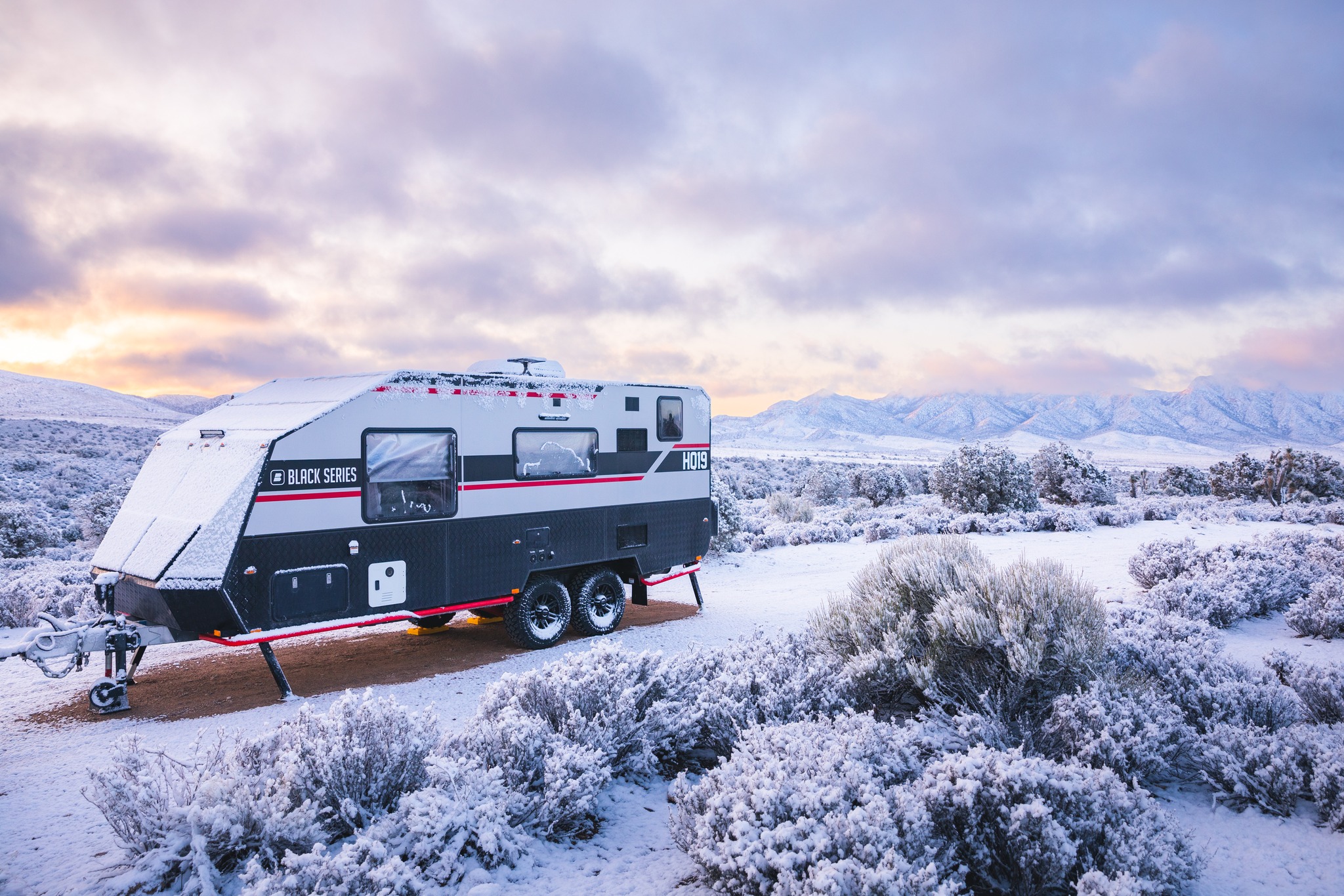
How to Prevent RV Water Lines From Freezing
Insulate Your Water Lines
Foam Insulation and Heat-Reflective Wrapping
- Apply foam insulation sleeves around all exposed pipes
- Use heat-reflective aluminum wrap for additional protection
- Install pipe enclosures for black water and grey water lines on older RVs
- Focus on connection points where pipes enter and exit the RV
For comprehensive maintenance strategies, our travel trailer maintenance checklist covers year-round preparation techniques.
BlackSeries Advantage: Our trailers feature independent suspension structure with reinforced underbody protection, concentrating water lines in less exposed areas compared to conventional RVs, making them naturally more freeze-resistant.
Use a Heated Water Hose
Installation Tips:
- Ensure GFCI-protected electrical outlet usage
- Wrap connection points with additional insulation material
- Use NSF-certified hoses with built-in thermostats
Keep Your RV Interior Warm
Maintain interior temperatures at 50°F (10°C) minimum, ideally 65°F for optimal protection. Open cabinet doors under sinks to allow warm air circulation around plumbing fixtures. Never close bottom ventilation vents, as this disrupts heat distribution throughout the RV.
Protect Your Tanks and Underbelly
Tank Protection Strategies:
- Install tank heating pads with individual switches
- Keep tanks at least 1/3 full in extreme cold to slow freezing
- Apply RV skirting to reduce heat loss by 15-20%
BlackSeries Innovation: Our aluminum honeycomb construction with composite wall systems provides superior thermal stability. The enclosed underbody design minimizes exposure to wind and cold air circulation.

Maintain Flow During Severe Cold
- Allow slight water dripping during overnight freezing
- Use pump-cycling techniques to keep water moving
- Utilize onboard water tanks rather than city water connections when possible
For off-grid winter camping techniques, explore our guide on off-grid setup strategies.
Complete Checklist: How to Keep RV Water Lines From Freezing
Before Trip
✓ Inspect all pipes for existing cracks or damage
✓ Prepare heat tape and insulated fittings
✓ Ensure adequate propane supply
✓ Test all heating systems
✓ Pack emergency repair materials
During Winter Camping
✓ Connect and monitor heated hose systems
✓ Keep cabinet doors open for air circulation
✓ Maintain continuous furnace operation
✓ Monitor and empty black/grey water tanks regularly
✓ Check exterior temperatures and adjust protection accordingly
Emergency Preparedness
✓ Portable heat gun for thawing
✓ Space heater backup
✓ Pipe insulation repair kit
✓ Non-toxic RV antifreeze (propylene glycol only)
Best Tools & Products for RV Freeze Protection
Recommended Heated Hoses: Camco and K&H models offer reliable performance with built-in thermostats.
Insulation Materials: Foam pipe sleeves, reflective aluminum wrap, and spray foam for permanent installations.
Tank Heaters: Individual heating pads with separate circuit controls provide targeted protection.
Portable Heaters: Ceramic and electric models for supplemental warming in extreme conditions.
Common Mistakes to Avoid
- Relying solely on furnace heat without addressing local pipe heating needs
- Leaving city water connected overnight without heated hose protection
- Using non-heated hoses in sustained freezing weather
- Incomplete drainage leading to frozen valve mechanisms
- Using automotive antifreeze instead of non-toxic RV antifreeze
Why BlackSeries Campers Excel in Winter Conditions
BlackSeries trailers are engineered with winter performance in mind:
- Independent Suspension: Provides more stable water line routing compared to leaf spring systems
- Military-Grade Chassis: Offers higher tolerance for harsh conditions with reduced maintenance needs
- Enhanced Insulation: Aluminum honeycomb structure delivers superior thermal retention
- Sealed Underbody: Minimizes cold air infiltration around plumbing systems
- Off-Grid Capability: Advanced electrical systems support heating accessories without compromising battery performance
Our robust construction makes the transition from standard RV camping to off-grid winter adventures more accessible for users seeking year-round outdoor lifestyles.
Frequently Asked Questions
What temperature will RV pipes freeze?
RV pipes typically begin freezing when exterior temperatures reach 20°F (-7°C) for extended periods, though well-insulated systems may withstand temperatures down to 10°F (-12°C).
Should I leave my RV water running during freezing weather?
A slight drip can prevent freezing, but this method works best combined with interior heating and pipe insulation. Running water continuously wastes resources and may not prevent freezing in severe conditions.
Are heated water hoses worth the investment?
Yes, heated hoses provide the most reliable city water connection protection in freezing weather, especially for extended winter camping. Quality heated hoses typically cost $100-200 but prevent thousands in potential damage.
Can I use antifreeze in my RV freshwater system?
Only use non-toxic, propylene glycol-based RV antifreeze designed for potable water systems. Never use automotive antifreeze containing ethylene glycol, which is toxic and damages RV plumbing components.
What’s the safest way to thaw frozen RV pipes?
Use a portable hair dryer or heat gun on low settings, working from the faucet toward the frozen area. Never use open flames or excessive heat that could damage pipes or create fire hazards.
Protecting your RV’s water system during winter requires proactive planning and the right equipment. By following these comprehensive protection strategies and choosing a well-engineered RV like BlackSeries models, you can enjoy comfortable winter camping without the stress of frozen pipes and costly repairs.

