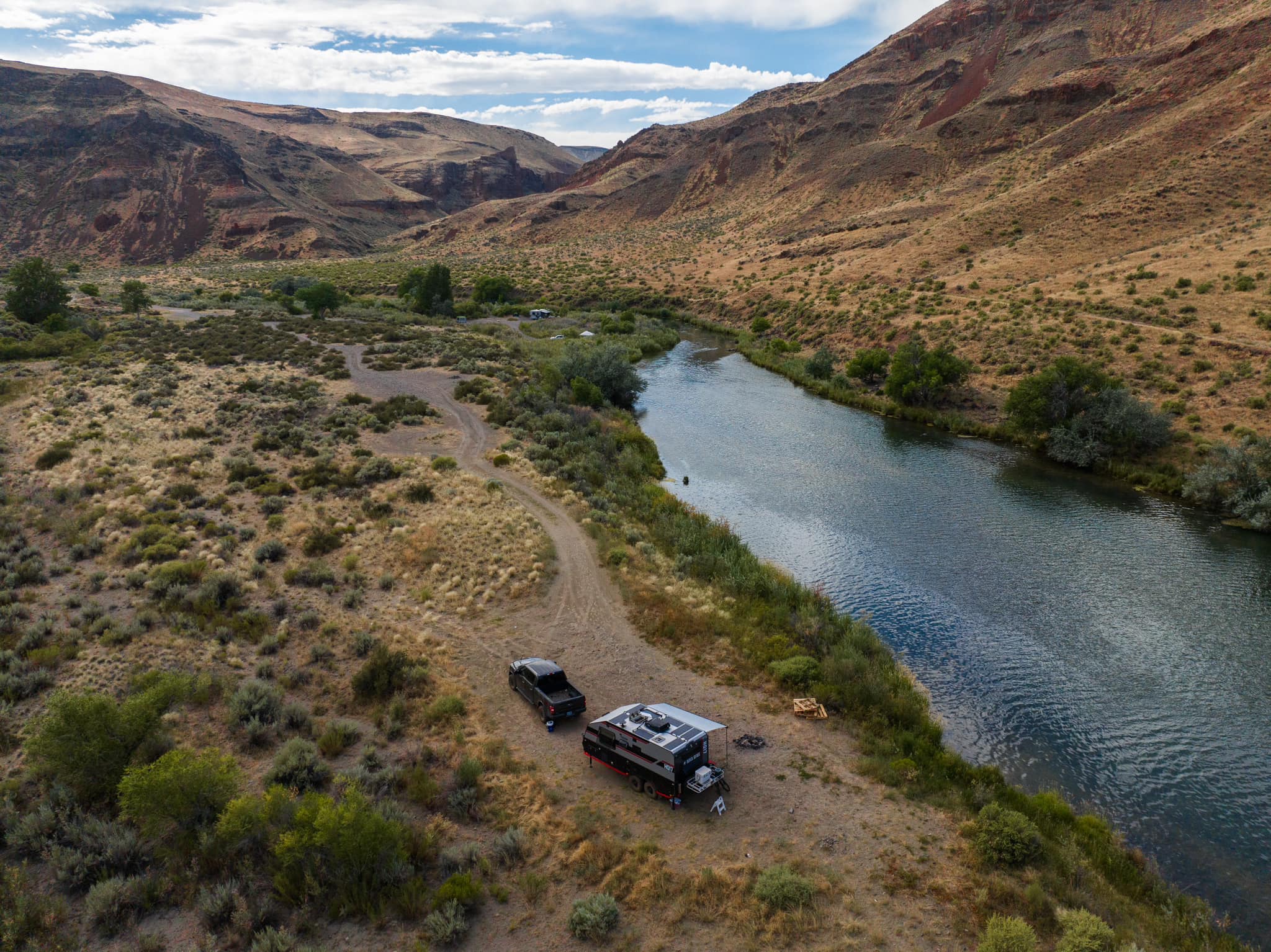
An off road camper is a specialized recreational vehicle designed with heavy-duty chassis, independent suspension, and enhanced ground clearance to handle rough terrain while providing self-sufficient living capabilities for extended wilderness adventures. These rugged trailers are perfectly suited for overlanding and off-grid travel, offering the durability and autonomy needed to explore remote destinations across diverse global terrains from desert trails to rocky mountain passes.
The global travel trailer and camper market is experiencing remarkable growth, expanding from approximately $105.9 billion in 2024 to a projected $150.7 billion by 2029, with a compound annual growth rate of 7.4%. This surge reflects increasing demand for outdoor recreation and self-sufficient travel experiences worldwide.
Key highlights:
• Definition: Purpose-built trailers engineered for rough terrain and off-grid autonomy
• Target users: Overlanders, adventure travelers, and outdoor enthusiasts seeking remote experiences
• Core benefits: Unmatched durability, comprehensive off-grid systems, and multi-terrain capability
What Is an Off Road Camper?
Basic Definition
An off road camper fundamentally differs from regular travel trailers through its specialized construction and enhanced capabilities. While standard campers are designed for maintained campgrounds and paved roads, off road campers feature reinforced chassis, advanced suspension systems, increased ground clearance, and comprehensive off-grid power and water systems.
The key distinctions include:
- Heavy-duty welded steel frames versus lightweight aluminum construction
- Independent suspension systems instead of basic leaf spring setups
- High ground clearance (typically 14-20 inches) for obstacle navigation
- Integrated protection including rock guards and underbody shielding
- Self-sufficient systems for extended periods without hookups
Off Road Camper, Overlanding, and Off-Grid – What’s the Difference?
Overlanding represents vehicle-based adventure travel where the journey itself becomes the primary goal, emphasizing self-reliance and exploration of remote areas over multiple days or weeks. Off-grid camping specifically refers to camping without access to traditional utilities like electricity, water, or sewer connections.
An off road camper serves as the essential platform enabling both activities, providing the rugged capability to access remote locations while maintaining comfortable living conditions away from civilization.
Global User Profiles
Different regions have developed distinct off road camping cultures:
- North America: Emphasizes long-distance road trips combining highway travel with serious off-road exploration, supported by extensive public land access
- Europe: Focuses on compact, lightweight designs suitable for narrow country roads while maintaining off-grid capability
- Australia & New Zealand: Features the most hardcore off-road requirements, with campers designed for true outback conditions and corrugated roads
- Asia: Rapidly growing market driven by urban professionals seeking outdoor experiences, with emphasis on modern amenities and social aspects
Global Market Overview for Off Road Campers
North America
The North American market leads global off road camper adoption, with the camping trailer segment valued at approximately $7.2 billion in 2024 and projected to reach $11.65 billion by 2032. This growth is fueled by high pickup truck and SUV ownership rates, extensive Bureau of Land Management lands, and a mature RV culture that increasingly values off-road capability.
Europe
European off-road camper markets prioritize lightweight construction and regulatory compliance, with strict towing license requirements and road width restrictions influencing design. The focus remains on accessing remote mountain and coastal areas while maintaining highway maneuverability.
Australia & New Zealand
These markets represent the most demanding off-road environments globally, where expedition-grade campers must withstand extreme outback conditions. The expedition vehicle market segment shows strong growth with a 7.7% CAGR through 2030, reflecting increased interest in remote travel.
Asia & Emerging Markets
Asian markets, particularly China, South Korea, and Japan, are experiencing rapid adoption of outdoor recreation and RV culture. Urban middle-class families drive demand for off-road capable campers that combine adventure capability with modern design and social media appeal.
Off road campers now sit at the intersection of booming RV, camping trailer, and off-road vehicle markets worldwide, representing a mainstream rather than niche segment.
Key Features of a True Off Road Camper
Heavy-Duty Chassis & Frame
Authentic off road campers utilize fully welded steel frames with reinforced connection points and stress distribution designed for extreme conditions. This construction handles the constant stress of washboard roads, rock impacts, and severe articulation that would destroy conventional trailer frames.
Quality frames feature:
- Hot-dip galvanized steel for corrosion resistance
- Reinforced drawbar connections rated for emergency recovery loads
- Integrated mounting points for recovery gear and protection systems
Suspension & Ground Clearance
Independent suspension systems represent the most critical distinction between true off-road campers and standard trailers. While leaf spring systems may handle maintained forest roads, independent suspension provides the articulation and control necessary for technical terrain navigation.
Recommended specifications:
- Ground clearance: 14-20 inches minimum
- Wheel travel: 6+ inches each direction
- Tire size: 31-33 inches for optimal clearance and durability
Global terrain examples demonstrate these requirements: Australian outback corrugations, American Western desert trails, and European Alpine passes all demand superior suspension performance.
Off-Grid Systems (Power & Water)
Modern off road campers integrate comprehensive systems supporting extended autonomous operation:
Electrical Systems:
- Battery capacity: 200-400Ah lithium phosphate for weight efficiency
- Solar charging: 400-800W panels for daily energy renewal
- Inverter systems: 2000-3000W pure sine wave for appliance operation
Water Systems:
- Fresh water: 20-50 gallon capacity depending on trailer size
- Grey water: Matching capacity with easy dump access
- Filtration: Multi-stage systems for water source flexibility
Different regions require varying approaches: desert environments demand maximum water capacity, while forest areas allow for natural source utilization with proper filtration.

Exterior Durability & Protection
Off-road environments demand comprehensive protection systems:
- Stone guards: Prevent impact damage to critical components
- Underbody protection: Shield water tanks, wiring, and plumbing
- Heavy-duty bumpers: Integrate recovery points and approach angle optimization
- All-terrain tires: Provide traction across varied surfaces while maintaining highway capability
Interior Built for Rough Roads
Off road camper interiors require specialized design for mobile environments:
- Secure furniture mounting using aircraft-grade hardware and reinforced attachment points
- Shock-absorbing latches preventing cabinet contents from shifting
- Flexible storage solutions accommodating gear reorganization based on trip requirements
- Durable materials resistant to dust, moisture, and temperature extremes
Best Off Road Camper Types for Global Travel
Compact Off Road Campers
Ideal for: Mid-size SUVs and pickup trucks, weekend adventures, narrow mountain roads
Advantages:
- Lightweight (typically 3,000-5,000 lbs)
- Excellent fuel economy impact
- Easy storage and maintenance
- Ferry and border crossing friendly
Limitations:
- Limited living space for extended trips
- Reduced water and power capacity
- Fewer amenities for comfort
Full-Size Off Road Campers
Ideal for: Full-size pickup trucks, extended overland journeys, family travel
Advantages:
- Spacious interiors with full amenities
- Large water and power systems
- Enhanced comfort for long-term travel
- Better weather protection
Limitations:
- Higher towing vehicle requirements
- Increased fuel consumption
- Restricted access to narrow trails
Expedition-Grade Campers
Ideal for: Round-the-world travel, extreme environments, professional expedition use
These represent the pinnacle of off-road camping technology, featuring:
- Military-grade components for maximum durability
- Extreme climate capability from Arctic to tropical conditions
- Extended autonomy supporting months of off-grid operation
- Global service networks for international travel support
The expedition vehicle market’s 7.7% CAGR reflects growing interest in this premium segment among serious adventure travelers and full-time nomads.
How to Choose an Off Road Camper
Step 1 – Define Your Travel Style & Regions
Weekend trips: Prioritize setup speed and basic amenities
Multi-month overlanding: Focus on durability, storage, and system redundancy
Round-the-world travel: Emphasize global parts availability and service networks
Regional considerations vary significantly:
- European travel: Compact designs for narrow roads and weight restrictions
- Australian outback: Maximum ground clearance and dust protection
- North American backcountry: Balanced capability for both highway and trail use
- Asian markets: Modern amenities with robust construction
Step 2 – Match Camper Weight to Tow Vehicle
Calculate your vehicle’s true towing capacity using this formula:
Available towing capacity = Rated capacity – (vehicle curb weight + passengers + cargo + tongue weight)
Maintain a 20% safety margin for steep grades and adverse conditions. Consider payload impact on your tow vehicle’s suspension and braking systems.
Step 3 – Choose Suspension and Ground Clearance
Essential questions for dealers and manufacturers:
- What type of suspension system is installed?
- What is the actual ground clearance at the lowest point?
- How much wheel travel does the system provide?
- Are replacement parts available internationally?
User inspection checklist:
- Examine frame construction quality and welds
- Verify shock absorber mounting and protection
- Check tire clearance at full compression
- Assess approach and departure angles
Step 4 – Evaluate Off-Grid Autonomy
Calculate your power and water requirements using realistic consumption patterns. For example, a two-person, four-day desert trip typically requires:
Power: 150-200Ah daily consumption (refrigeration, lighting, devices)
Water: 8-10 gallons fresh water, 6-8 gallons grey water capacity
Food storage: 8+ cubic feet refrigerated space
Plan for 30% additional capacity to handle unexpected situations or extended stays.
Step 5 – Think About Climate & Seasons
Four-season capability requires:
- Insulation: R-value ratings for floor, walls, and ceiling
- Ventilation: Multiple fans for air circulation and humidity control
- Heating: Efficient systems with outside air combustion
- Condensation management: Vapor barriers and drainage systems
Consider extreme scenarios: European winter camping, high-altitude conditions, or tropical humidity management.
Step 6 – Check Brand Support & Service Network
For international travel, verify:
- Global dealer and service networks
- Parts availability timelines
- Warranty coverage territories
- Technical support accessibility
This consideration becomes critical during extended overseas travel where local service may be limited.
Real-World Use Cases & Mini Case Studies
Case 1 – Europe to Asia Overland Trip
Route: Germany through Central Asia to Southeast Asia
Requirements: Compact design for border crossings, fuel efficiency, reliable systems
Key lessons: Parts availability and service networks prove more valuable than maximum capability
Case 2 – Australia Big Lap
Challenge: 15,000+ mile circumnavigation of continental Australia
Demands: Maximum dust protection, vibration resistance, extreme heat capability
Outcome: Independent suspension and quality filtration systems essential for completion
Case 3 – North America Pan-American Highway
Scope: Alaska to Patagonia via Central and South America
Considerations: Altitude capability, security features, fuel system compatibility
Experience: Robust construction and comprehensive spare parts inventory critical for success
Off Road Camper FAQs
What is the difference between an off road camper and a regular camper?
Off road campers feature heavy-duty construction, independent suspension, higher ground clearance, and comprehensive off-grid systems, while regular campers prioritize comfort and weight savings for maintained campground use.
Is an off road camper necessary for overlanding?
While not strictly necessary for all overlanding, off road campers significantly expand accessible destinations and provide reliable shelter and systems for extended remote travel.
What makes a camper suitable for world travel?
Global travel requires robust construction, international parts availability, comprehensive off-grid systems, and compliance with varying international towing regulations.
How much ground clearance does a real off road camper need?
Minimum 14 inches, with 16-20 inches preferred for serious off-road capability. Measure at the lowest point, typically axles or water tanks.
How long can an off road camper stay off grid?
With proper systems, 7-14 days is typical for two people, with some expedition models supporting 30+ days through water recycling and expanded battery capacity.
What tow vehicle do I need for an off road camper?
Mid-size pickup trucks or SUVs handle compact models, while full-size models require heavy-duty trucks with sufficient payload and towing capacity.
Are off road campers safe to use on highways?
Yes, quality off road campers are designed for highway speeds with appropriate suspension tuning, though fuel economy may be reduced compared to standard trailers.
Can I use an off road camper in extreme climates?
Four-season models handle temperature extremes from -20°F to 120°F, while three-season models work best in moderate climates with proper preparation.
What maintenance is required after off-road trips?
Post-trip inspection should include suspension components, bearings, seals, and thorough cleaning of systems exposed to dust and debris.
What is the typical price range of an off road camper globally?
Compact models start around $40,000-60,000, mid-size range $60,000-100,000, and expedition-grade models exceed $100,000-200,000+ depending on specifications and global market positioning.

