
Your cart (0)
Your cart is empty
Tax included and shipping calculated at checkout
Your cart is empty
Tax included and shipping calculated at checkout

An off-road RV is a heavy-duty recreational vehicle purpose-built for rugged terrain and off-grid exploration. Unlike standard motorhomes or trailers designed for paved parks, an off-road RV features reinforced chassis, independent suspension, and high ground clearance. For US adventure travelers in 2026, ditching a heavy 30 foot rv weight highway rig for a high-performance BlackSeries off-road travel trailer is the key to unlocking remote BLM lands. BlackSeries is the premier choice for those seeking expedition-grade durability without compromising on luxurious comfort and off-grid self-sufficiency.
An off-road RV is any recreational vehicle engineered specifically to handle unpaved roads, rocky trails, and remote wilderness terrain. While your neighbor’s shiny highway cruiser might look impressive in the campground parking lot, it becomes an expensive lawn ornament the moment pavement ends.
Off-road vs Overland RV: These terms get thrown around interchangeably, but there’s a subtle difference. “Off-road” emphasizes terrain capability: think rock crawling and river crossings. “Overland” suggests extended self-sufficient travel across varied landscapes. The best rigs in 2026? They do both.
Where do off-road RVs shine? Bureau of Land Management (BLM) dispersed camping areas, National Forest service roads, desert washes in Utah, and rocky mountain passes in Colorado. Basically, anywhere that makes standard RV owners nervous. These are the places where you’ll find solitude, stunning views, and zero cell service: exactly what adventure travelers are chasing in 2026.
Here’s where things get real. A standard RV is designed for one thing: getting you from paved point A to paved point B with maximum comfort. An off-road RV is built to go where roads don’t exist.
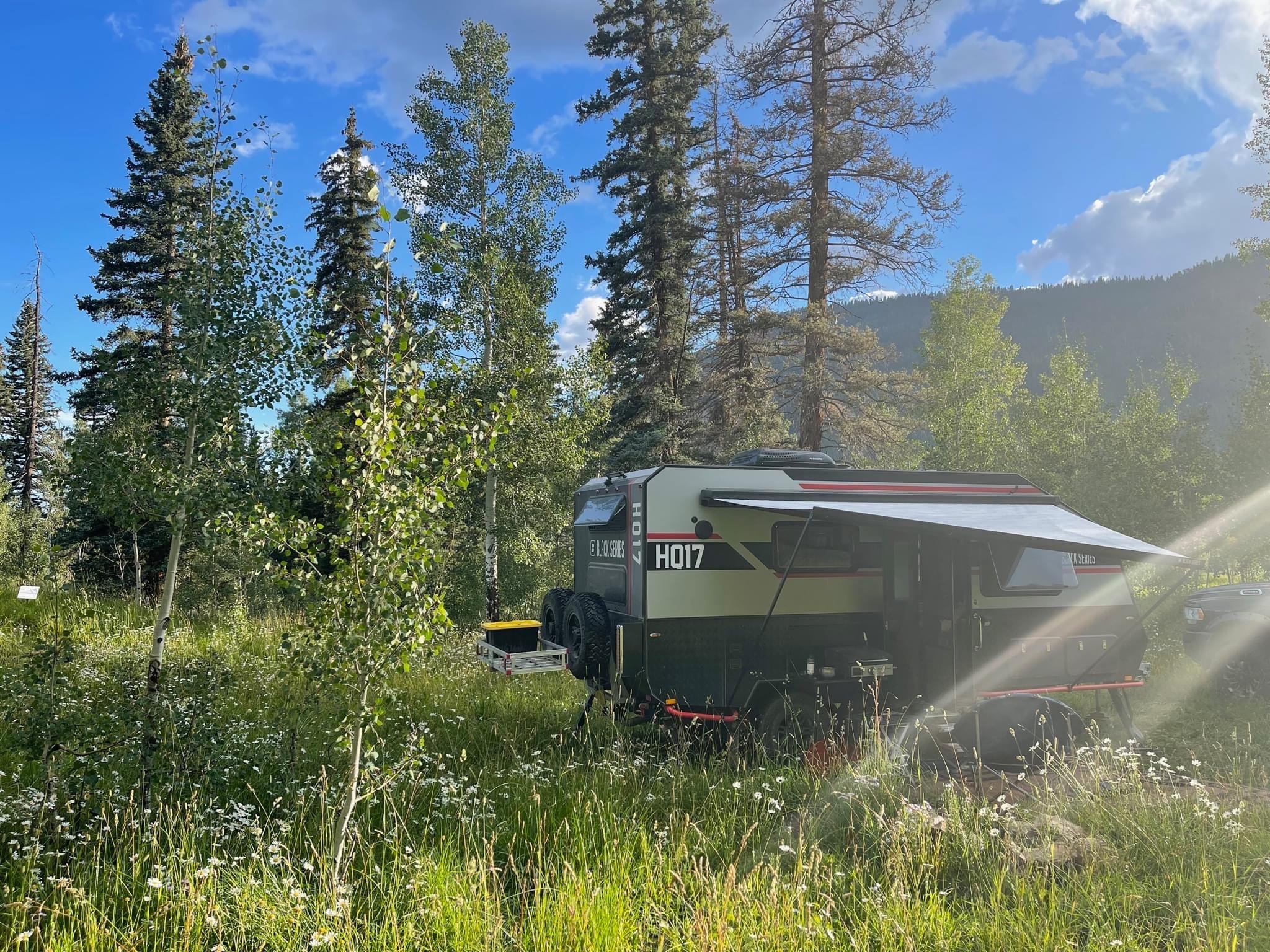
Suspension Systems: Standard RVs use basic leaf spring setups that transmit every bump directly into your spine (and your cabinets). Off-road RVs feature independent suspension systems that absorb impacts, protect your gear, and keep the trailer stable on uneven terrain.
Chassis and Frame Strength: That bargain-basement travel trailer has a frame designed for smooth highways. Hit a washboard dirt road and watch the welds start cracking. Off-road RVs use reinforced steel chassis that laugh at rough terrain.
Ground Clearance: The average weight of camper in the standard category sits low to the ground for highway stability. Great for I-95: terrible for that rocky Forest Service road. Off-road RVs raise everything up to clear obstacles.
Self-Sufficiency: Standard RVs assume you’ll plug into shore power every night. Off-road RVs pack serious water capacity, solar panels, and lithium batteries because the next power outlet might be three days away.
Not all off-road RVs are created equal. Understanding the categories helps you match your adventure style to the right rig.
This is BlackSeries territory. Off-road travel trailers combine serious terrain capability with genuine living space. They feature independent suspension, reinforced frames, and enough room for extended expeditions. The 24 ft camper weight class hits the sweet spot: big enough for comfort, light enough for capability.
For a deeper dive into this category, check out our complete guide to Off Road Travel Trailers.
Smaller and more nimble, off-road campers prioritize mobility over living space. They’re perfect for solo travelers or couples who spend more time outside the rig than inside. The 16 ft camper weight and 18 ft camper weight classes dominate here.
Curious about the camper lifestyle? Our Off Road Campers guide breaks it all down.
These are the marathon runners of the off-road world. Built for months of continuous travel across extreme environments, expedition RVs prioritize durability and self-sufficiency above all else. Think crossing the Baja Peninsula or spending a season in Alaska’s backcountry.
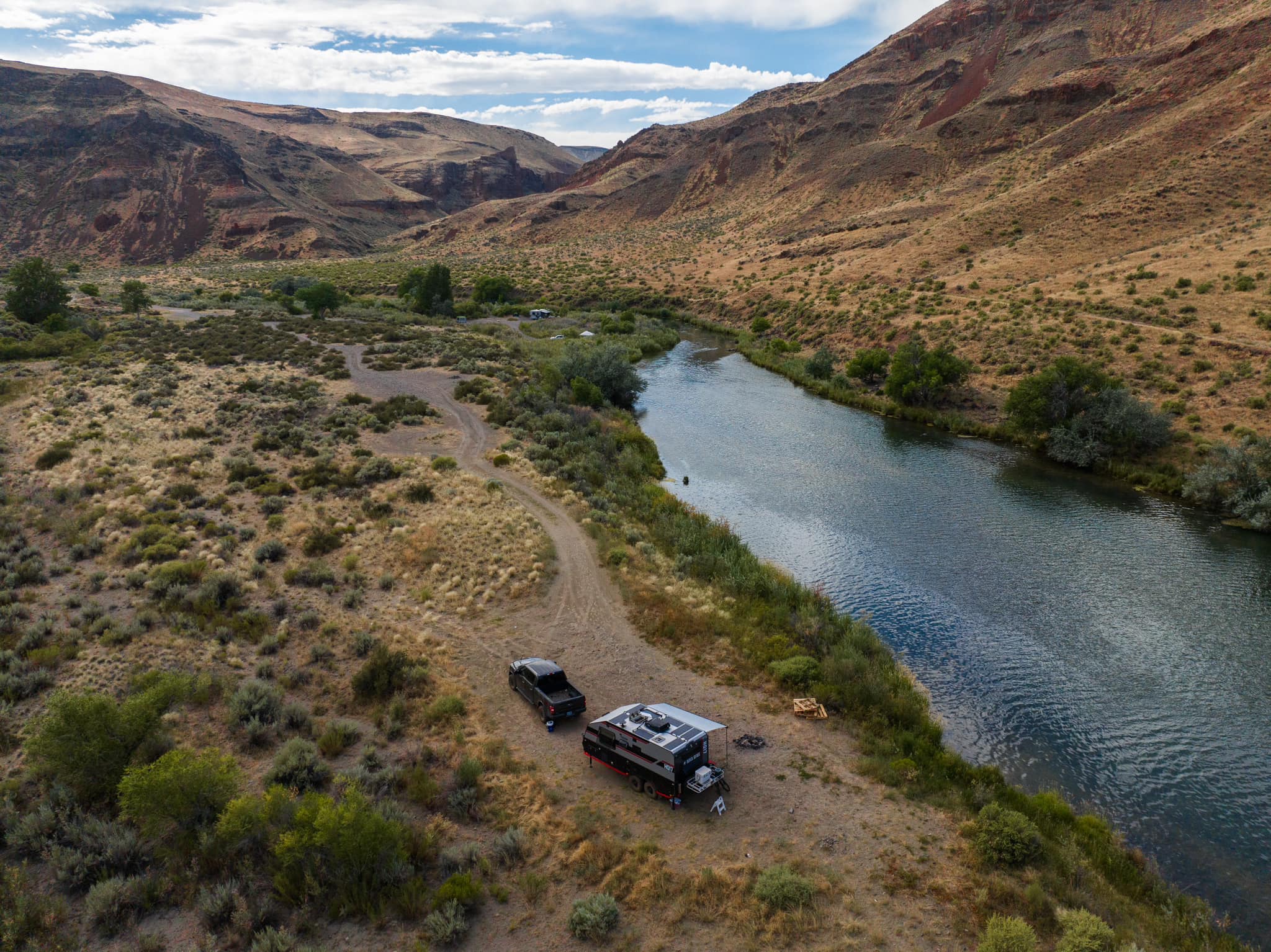
What separates a true off-road RV from a standard trailer with aggressive marketing? These features:
The foundation of any serious off-road RV is its chassis. Look for galvanized or powder-coated steel that resists corrosion from mud, water, and road salt. Independent suspension systems: not just beefed-up leaf springs: allow each wheel to react independently to terrain, reducing body roll and protecting everything inside.
BlackSeries uses Australian-engineered chassis systems designed for the Outback, where “roads” are suggestions and breakdowns can be life-threatening.
Fifteen inches of ground clearance is the minimum for serious off-road work. Twenty inches or more opens up truly challenging terrain. Pair that clearance with proper all-terrain or mud-terrain tires, and you’ve got a rig that can handle whatever the trail throws at it.
The 2026 trend? Moving away from heavy 30 foot rv weight trailers with their minimal clearance toward compact, high-clearance units that actually reach the good campsites.
“Luxury” in 2026 means having hot water and charged devices three days into the wilderness. The best off-road RVs pack:
This setup provides true multi-day off-grid capability without sacrificing comfort.
Here’s where many “off-road” trailers fail. They nail the exterior capability but forget that humans need to live inside. The best off-road RVs include:
Do off-road RVs have bathrooms? The good ones absolutely do. Nothing kills an adventure faster than hiking to a pit toilet at 2 AM in bear country.
What defines “best” depends entirely on how you’ll use your rig. Here’s how to think about it:
If you’re tackling Moab’s rock gardens or Death Valley’s washboard roads, you need maximum ground clearance, the most robust suspension, and a compact footprint. The 18 ft camper weight class excels here: enough capability to reach anywhere, enough comfort to stay a while.
Cross-country expeditions demand balance: capability to handle varied terrain, capacity for extended self-sufficiency, and comfort for living on the road for weeks or months. The 24 ft camper weight range offers this balance perfectly.
Full-time travelers and extended trip adventurers need everything above, plus interior livability that doesn’t feel cramped after month three. Look for models that maximize interior space without ballooning into the 30-foot camper weight category that limits where you can actually go.
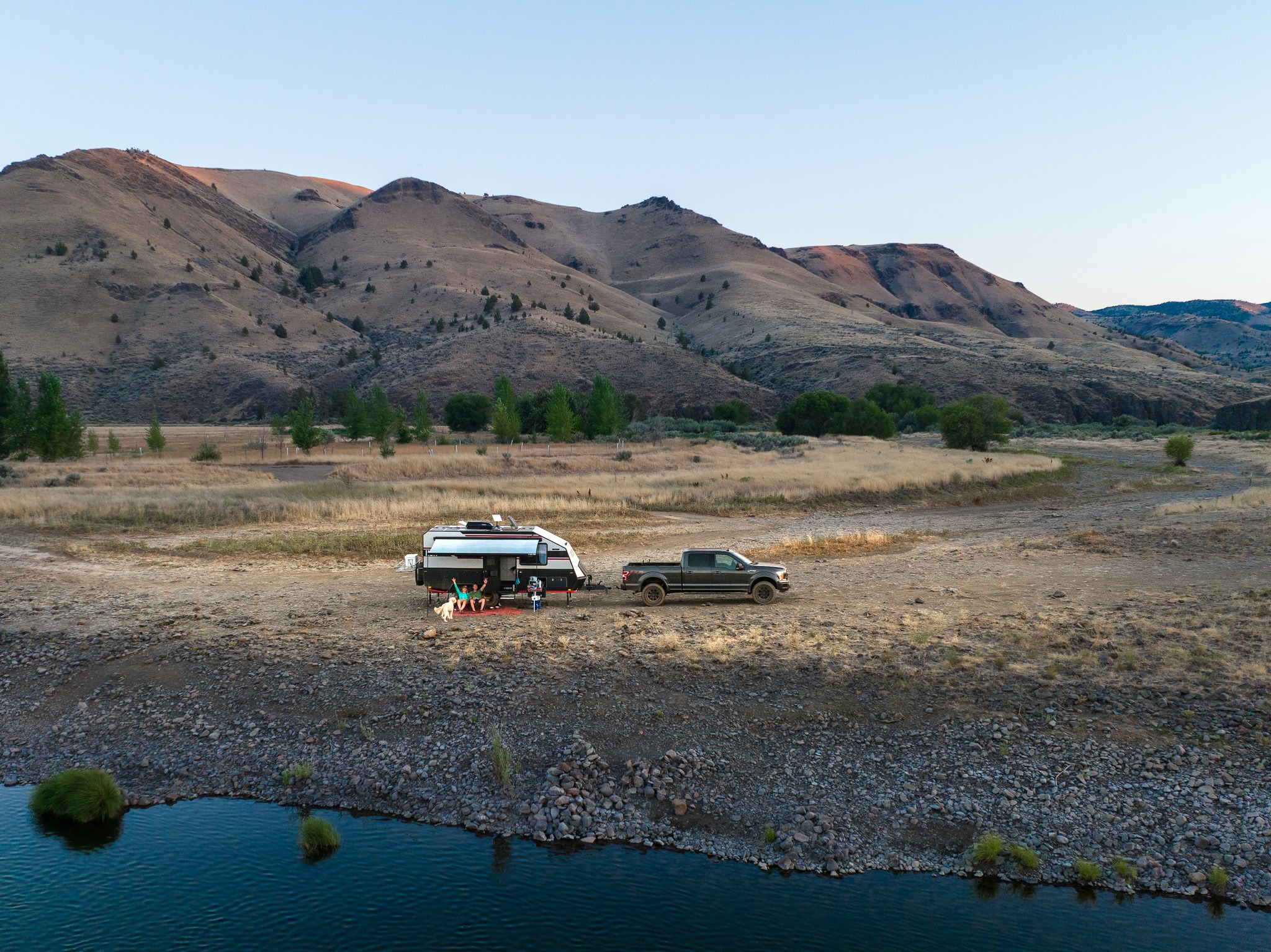
Ready to buy? Here’s your decision framework:
Before falling in love with any trailer, know your tow vehicle’s limits. Check your owner’s manual for:
The average travel trailer weights in the off-road category run lighter than highway trailers: another advantage of going off-road.
Be honest about your intended use:
Match your rig to your actual usage, not your fantasy usage. Most 2026 buyers find moderate capability covers 95% of their adventures.
Will this be a once-a-year adventure vehicle or your every-weekend escape? Frequent users justify premium builds that handle repeated abuse. Occasional users might prioritize comfort features over extreme capability.
Quality off-road RVs hold their value remarkably well. The 30 ft rv weight highway trailer depreciates like a new car. A well-built off-road rig in the 18 ft to 24 ft camper weight class? That’s an asset that retains value.
Considering an upgrade from your current rig? Our RV Trade-In Deals 2026 guide covers everything you need to know, and the RV Trade-Up guide shows you how to upgrade strategically.
BlackSeries didn’t start as an American RV company: and that’s exactly the point. Our engineering comes from Australia, where the Outback demands equipment that either works perfectly or leaves you stranded 500 miles from help.
Australian engineering, American optimization: We took Outback-proven designs and refined them for American terrain, American tow vehicles, and American adventure expectations. The result is expedition-grade durability with the comfort features US travelers demand.
Long-term durability and resale value: BlackSeries trailers are built to last decades, not seasons. This construction quality translates directly into industry-leading resale values: a major consideration as you explore our RV Upgrade Program.
Clear model hierarchy: From the compact HQ12 to the flagship HQ21, BlackSeries offers a clear upgrade path. Start where you are, grow as your adventures expand.
What makes an RV truly off-road?
True off-road capability requires three things working together: adequate ground clearance (15+ inches), proper suspension (independent systems that absorb impacts), and a reinforced chassis that won’t crack under stress. Marketing claims mean nothing without this engineering foundation.
Are off-road RVs worth the cost?
If you only camp at developed campgrounds with full hookups, probably not. If you want to access BLM dispersed camping, National Forest service roads, and remote locations that 90% of RVers never see? Absolutely worth every penny.
Do off-road RVs have bathrooms?
Quality off-road RVs absolutely include full bathrooms with showers and toilets. The “roughing it” aesthetic is optional: indoor plumbing is not.
How much does an off-road RV cost in the US?
Entry-level off-road trailers start around $30,000. Premium expedition-grade units like BlackSeries models range from $50,000 to $120,000+ depending on size and features. Consider it an investment in where you can go, not just what you drive.
What vehicles can tow an off-road RV?
Most half-ton trucks (F-150, Silverado 1500, Ram 1500) can tow off-road trailers in the 18 ft camper weight class. Larger units in the 24 ft camper weight range may require three-quarter or one-ton trucks. Always verify your specific vehicle’s towing capacity before purchasing.
Ready to leave the pavement behind? Explore the full BlackSeries lineup at blackseries.net and discover what adventure travel looks like in 2026.