An off-road trailer is a ruggedized recreational vehicle engineered with heavy-duty components to handle terrain that would destroy a standard highway camper. Unlike typical rigs, these trailers feature reinforced steel chassis and independent suspension systems designed for washboard roads and rocky trails. For US travelers in 2026, the shift is clear: moving away from bloated 30 foot rv weight models toward agile 18 ft or 24 ft camper weight off-road trailers. BlackSeries leads the premium market, offering the perfect blend of Australian-tested durability and high-end luxury for those exploring the deepest corners of the USA.
What Is an Off Road Trailer?
An off-road trailer is specifically engineered to venture where standard trailers fear to tread. We’re talking BLM land in Utah, backcountry National Forest roads in Colorado, desert washes in Arizona, and rocky trails throughout the Pacific Northwest.
The term gets thrown around loosely in 2026, so let’s set the record straight. A true off-road trailer isn’t just a regular camper with bigger tires slapped on. It’s a ground-up engineering exercise featuring reinforced frames, articulating suspensions, and components rated for thousands of miles of abuse.
Off-road vs. Overland: These terms overlap but aren’t identical. “Off-road” emphasizes terrain capability: the raw ability to traverse difficult ground. “Overland” implies self-sufficient, long-distance travel that may include off-road sections. Think of off-road as the capability and overlanding as the lifestyle. The best off-road travel trailers deliver both.
Typical use cases include dispersed camping on federal lands, accessing remote fishing and hunting spots, exploring fire roads and forest service routes, and reaching pristine campsites that highway-bound RVers will never see.
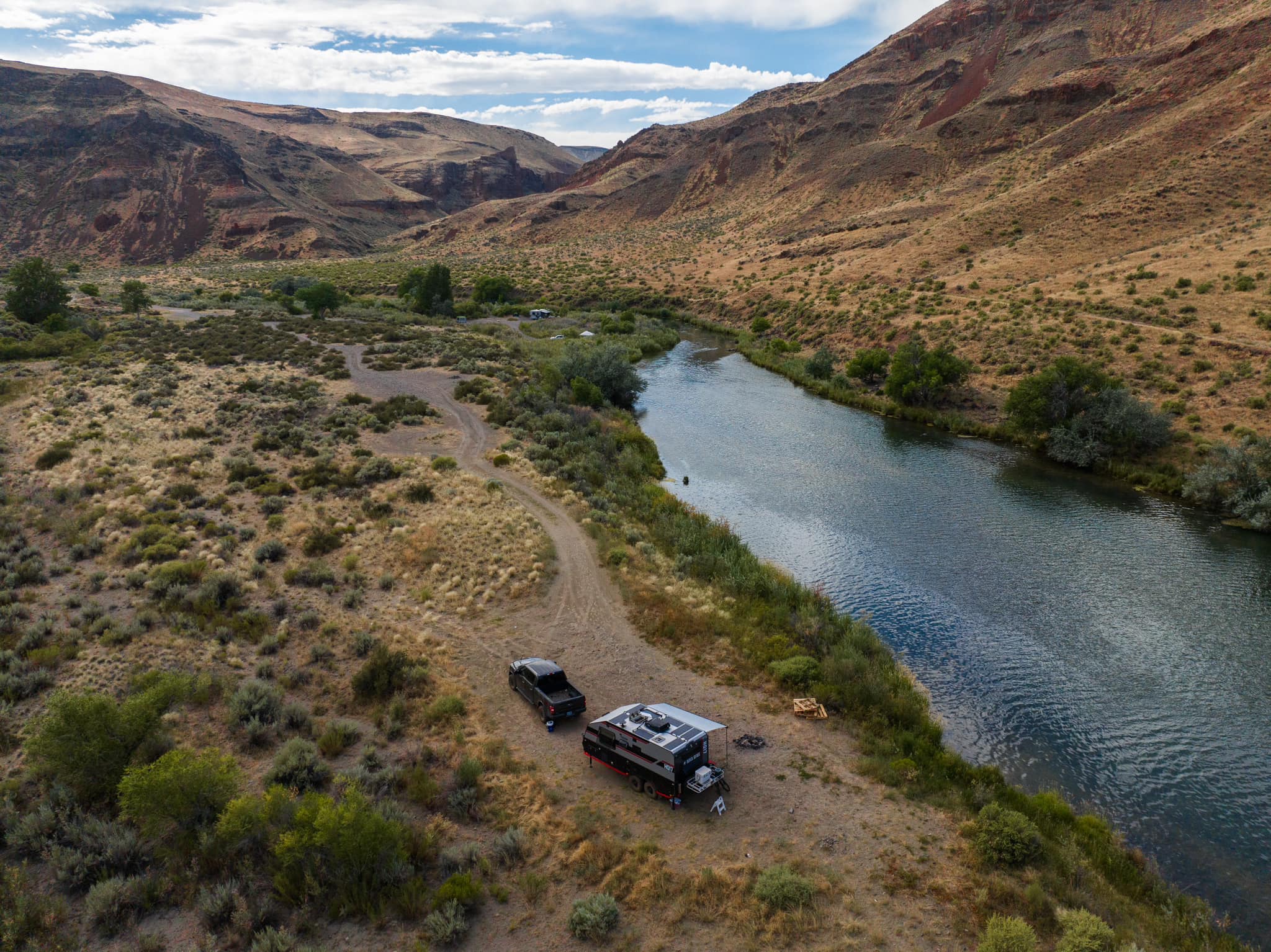
Off Road Trailer vs Standard Trailer
The differences between off-road and standard trailers run deep, literally down to the frame rails. Here’s what separates the wheat from the chaff:
Suspension Systems: Standard trailers use leaf spring suspensions designed for smooth highways. Off-road trailers feature independent suspension with coilover shocks that absorb impacts independently at each wheel. This means better tracking, less body roll, and components that survive repeated punishment.
Chassis Construction: A typical trailer uses lightweight materials optimized for the average weight of camper calculations. Off-road trailers use reinforced steel frames with strategic welding patterns and gussets at stress points. The frame alone can weigh 30-40% more than standard construction.
Ground Clearance: Standard trailers often have 8-10 inches of clearance. Off-road trailers start at 14 inches and can exceed 20 inches, with protected undercarriages and raised components.
Off-Grid Capability: While a standard trailer might have a small battery and shore power hookup, off-road trailers pack serious independence: 200-400Ah lithium batteries, 280-480W solar arrays, and water tanks ranging from 32-52 gallons.
Types of Off Road Trailers
Off Road Travel Trailers
These are the workhorses of the off-road world: fully enclosed trailers with complete living quarters. They offer indoor sleeping, full kitchens, and bathrooms while maintaining serious trail capability. For families or couples wanting comfort without sacrificing adventure, this category dominates.
The average travel trailer weights for off-road models typically range from 3,500-5,500 lbs, significantly less than their highway counterparts. Compare that to a 30 ft rv weight of 8,000+ lbs, and you understand why maneuverability matters. Models in the 18 ft camper weight to 24 ft camper weight range offer the sweet spot of livability and capability.
Overland / Expedition Trailers
These stripped-down, purpose-built machines prioritize terrain capability over creature comforts. Often featuring rooftop tents instead of interior sleeping quarters, expedition trailers excel at reaching genuinely remote locations. They’re popular with serious overlanders who already have camping gear and want maximum flexibility.
Hybrid Off Road Trailers
Splitting the difference, hybrid trailers combine hard-sided protection with pop-up or fold-out sections. They offer better wind resistance while towing and expand for camping, though they typically can’t match the full amenities of enclosed travel trailers.

Key Features of the Best Off Road Trailers
Chassis & Suspension
The foundation of any legitimate off-road trailer is its chassis. Look for hot-dipped galvanized steel frames resistant to corrosion: essential when crossing streams or camping in humid environments. Independent suspension systems with adjustable coilovers allow tuning for load and terrain. BlackSeries trailers feature Australian-engineered suspension geometry specifically designed for the punishment of outback conditions, now adapted for American trails.
Ground Clearance & Tires
High clearance isn’t just about big tires (though 33″ all-terrain rubber is common, with options up to 40″ for extreme builds). It’s about raising axles, protecting tanks, and ensuring approach and departure angles that let you tackle obstacles without scraping. The best off-road campers integrate clearance into overall design rather than treating it as an afterthought.
Off-Grid Systems
True independence requires power and water. In 2026, the standard for premium off-road trailers includes:
- Solar: 300-400W panels standard, expandable to 600W+
- Batteries: Lithium iron phosphate (LiFePO4) in 200-400Ah configurations
- Water: 40+ gallon fresh tanks with filtration options
- Inverters: 2000W+ pure sine wave for running real appliances
These systems support 5-7+ days of completely independent camping: no hookups required.
Interior & Living Comfort
Gone are the days when “off-road” meant “uncomfortable.” Modern off-road trailers with bathroom facilities rival hotel rooms. Four-season insulation handles desert heat and mountain cold. Vibration-resistant cabinetry and mount points prevent the rattling destruction that kills standard trailers on rough roads. The 16 ft camper weight class offers surprising interior space, while 24 ft camper weight models deliver genuine home-on-wheels comfort.
Best Off Road Trailers in the USA (2026 Buyer Perspective)
Defining “best” requires understanding your priorities. Here’s how the market segments in 2026:
Best for Extreme Terrain: Trailers with 18+ inches ground clearance, full-articulating suspension, and maximum durability ratings. These machines sacrifice some interior amenities for unmatched go-anywhere capability. Expect dry weights under 3,000 lbs and prices from $60,000-$85,000.
Best for Overlanding: The sweet spot balancing capability and comfort. Independent suspension, 15-17 inches clearance, full bathrooms, and comprehensive off-grid systems. The off-road RV category here serves adventurers wanting extended trips without roughing it. Weights typically fall in the 4,000-5,500 lb range with prices from $75,000-$110,000.
Best for Long-Term Adventure: Full-time living capability with maximum storage, redundant systems, and premium finishes that hold up to daily use. BlackSeries positions strongly here, with Australian engineering standards that expect years of hard use, not just occasional weekend trips. These flagship models run $95,000-$130,000+.
Off Road Trailer Buying Guide
Towing Capability & Vehicle Matching
Your tow vehicle determines what you can pull. A 30-foot camper weight of 8,000+ lbs requires a serious truck. But an 18 ft camper weight off-road trailer at 4,200 lbs opens possibilities for mid-size trucks and larger SUVs.
Calculate your vehicle’s payload capacity (not just towing capacity) and subtract passengers, gear, and tongue weight. Leave a 15-20% margin for safety.
Off-Road Rating Selection
Match trailer capability to your actual use:
- Light: Graded gravel roads, maintained forest service routes
- Moderate: Washboard roads, rocky two-tracks, moderate water crossings
- Extreme: Technical trails, deep sand, serious rock crawling
Most buyers overestimate their needs. Honest self-assessment saves money and prevents purchasing capability you’ll never use.
Frequency vs. Budget
Weekend warriors might prioritize lower purchase price over ultimate durability. Full-time travelers should invest in systems that handle daily use. Consider that premium trailers hold value better: a factor to explore through our RV Trade-In Value vs Private Sale analysis when upgrade time comes.
Maintenance & Resale Value
Quality off-road trailers require maintenance: suspension service, bearing repacking, seal inspections. Budget $1,000-$2,000 annually for preventive care. However, well-maintained premium trailers command strong resale values: our RV Trade-In Process guide shows how BlackSeries models consistently outperform market averages.
Why Choose a BlackSeries Off Road Trailer?
BlackSeries trailers originate from Australian engineering: a country where “off-road” means something serious. The outback doesn’t forgive weak components, so every system gets designed for worst-case scenarios.
US Terrain Optimization: While the engineering is Australian, BlackSeries has specifically adapted models for American conditions: higher ground clearance for Rocky Mountain trails, enhanced cooling for desert heat, and suspension tuning for varied terrain from Moab to Michigan.
Durability & Resale: The premium market recognizes quality. BlackSeries trailers maintain exceptional resale values, making them smart investments. When you’re ready to upgrade, our RV Trade-Up and RV Exchange Program options make moving up the lineup straightforward.
Model Hierarchy: From the compact HQ12 to the flagship HQ21, BlackSeries offers configurations matching different adventure profiles. Each model shares core engineering DNA while targeting specific use cases.
FAQ – Off Road Trailer
What makes a trailer truly off road?
True off-road capability requires independent suspension, reinforced chassis construction, adequate ground clearance (14+ inches), protected undercarriage components, and all-terrain tires. Marketing claims aside, these engineering fundamentals separate real capability from pretenders.
Are off road trailers worth the investment?
For adventurers accessing remote locations regularly, absolutely. The access to uncrowded camping, reduced campground fees, and superior build quality that lasts longer than standard trailers justify the premium. Our RV Trade-In Deals 2026 guide shows how these trailers also hold value better long-term.
Do off road trailers have bathrooms?
Premium off-road travel trailers include full wet baths or dry baths with toilets and showers. Models like the BlackSeries HQ series feature indoor bathrooms that rival residential quality: no roughing it required.
How much do off road trailers cost in the US?
Entry-level cargo-style trailers start around $15,000-$25,000. Capable mid-range models run $49,000-$75,000. Premium expedition-grade trailers with full amenities range from $85,000-$130,000+.
What vehicles can tow an off road trailer?
Depends on trailer weight. Lightweight models (under 3,500 lbs) work with mid-size trucks and capable SUVs like the Toyota 4Runner or Ford Bronco. Heavier full-featured trailers require half-ton or three-quarter-ton trucks. Always verify both towing capacity and payload ratings before purchasing.

