An off-road trailer camper is a specialized, heavy-duty recreational vehicle designed to survive the rigors of unpaved trails while providing a luxury basecamp for off-grid living. Ideal for overlanders and adventure-seeking families, these rigs trade the highway-only limitations of a heavy 30 foot rv weight unit for the agile, go-anywhere capability of an 18 ft or 24 ft camper weight off-road build. BlackSeries sits at the pinnacle of this market, delivering Australian-engineered toughness paired with premium amenities for the modern 2026 US adventurer who refuses to settle for standard campgrounds.
What Is an Off Road Trailer Camper?
An off-road trailer camper combines the mobility of a towable trailer with the rugged engineering necessary to handle unpaved, remote, and challenging terrain. Unlike standard campers built exclusively for asphalt highways and developed campgrounds, these machines feature reinforced chassis, independent suspension systems, and substantial ground clearance.
The distinction between an “off-road trailer” and an “off-road trailer camper” often comes down to living amenities. While some off-road trailers focus purely on gear hauling, an off-road trailer camper prioritizes comfortable, extended living, think full bathrooms, climate control, and gourmet-ready kitchens.
These rigs thrive on BLM land, National Forest dispersed camping areas, desert washes, and rocky mountain trails where standard RVs simply cannot venture. For a deeper dive into the broader category, check out our Off Road Campers: The Complete Guide for US Adventure Seekers.
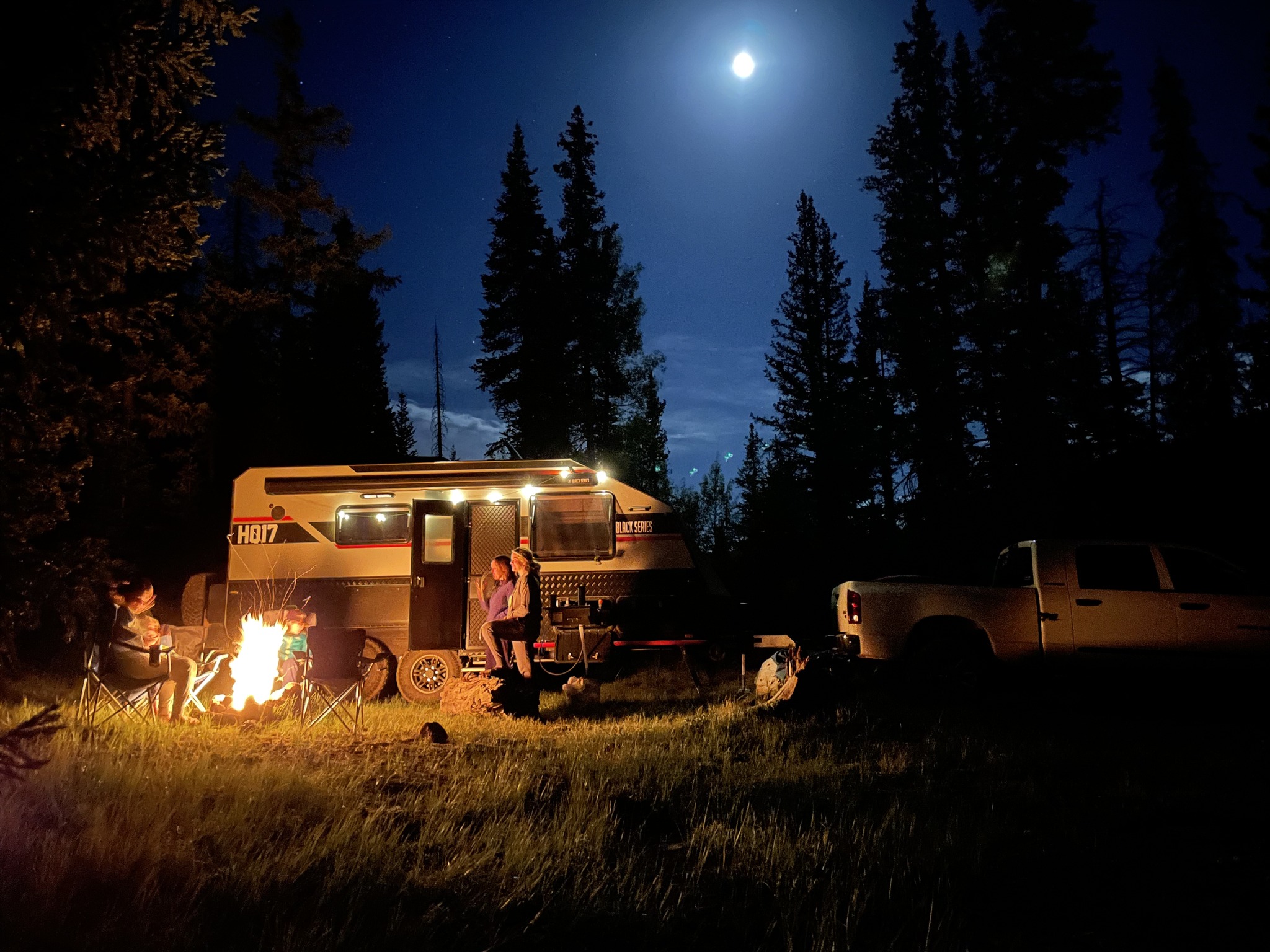
Off Road Trailer Camper vs Standard Camper
The gap between a standard camper and an off-road trailer camper isn’t just marketing, it’s engineering. Here’s where they diverge:
Suspension Systems: Standard campers use basic leaf-spring suspensions designed for smooth highways. Off-road trailer campers employ independent suspension with dual gas shocks and coil springs, absorbing washboard roads and boulder gardens without rattling your fillings loose.
Chassis Construction: A typical camper sits on a lightweight frame optimized for fuel economy. Off-road builds feature hot-dipped galvanized steel or military-grade aluminum frames welded to survive impacts that would crumple a standard unit.
Ground Clearance: Standard campers often have 8-12 inches of clearance. Off-road trailer campers push 15+ inches, preventing belly scrapes on rocks and ruts.
Off-Grid Capability: While standard campers assume you’ll plug into shore power nightly, off-road builds integrate 400W+ solar arrays, lithium battery banks, and 50+ gallon freshwater tanks for multi-day self-sufficiency.
For more detailed comparisons, our Off Road RV: The Ultimate Guide for US Adventure Travelers breaks down the full RV category.
Types of Off Road Trailer Campers
Hard-Shell Off Road Trailer Campers
Hard-shell models represent the premium tier of off-road trailer campers. These fully enclosed units feature composite walls, insulated roofs, and sealed construction that delivers true four-season capability. Whether you’re facing Arizona’s summer inferno or Colorado’s January freeze, a hard-shell keeps you comfortable.
BlackSeries specializes in this category, with models like the HQ21 offering the perfect balance of 18 ft camper weight agility and expedition-grade durability. These rigs work for long-haul overlanding, family adventures, and full-time nomadic living.
Hybrid / Pop-Up Off Road Campers
Hybrid and pop-up designs prioritize weight savings and towing flexibility. With sections that expand or unfold at camp, they reduce your average weight of camper while still providing reasonable living space.
These models suit moderate off-road use, think forest service roads and maintained BLM access routes rather than rock crawling trails. They’re excellent entry points for adventurers testing the off-road lifestyle before committing to a full hard-shell investment.

Key Features of the Best Off Road Trailer Campers
Chassis & Independent Suspension
The chassis is your trailer’s skeleton, and in off-road environments, weak bones break. Top-tier off-road trailer campers use reinforced steel frames with strategic gusseting at stress points. Independent suspension systems (rather than solid axles) allow each wheel to react independently to terrain irregularities, dramatically improving stability and reducing interior rattling.
BlackSeries employs Australian-engineered independent trailing arm suspension with dual shock absorbers per wheel, technology refined over decades on the Outback’s punishing tracks.
Ground Clearance & Tires
Ground clearance determines where you can go without dragging your investment across rocks. Premium off-road trailer campers deliver 15-20 inches of clearance, combined with all-terrain or mud-terrain tires rated for aggressive surfaces.
Tire selection matters enormously. BFGoodrich KO2s and similar all-terrain options handle everything from highway cruising to moderate trails. For serious rock crawling, dedicated mud-terrain rubber provides the grip needed to avoid getting stuck miles from civilization.
Off-Grid Power & Water Systems
True off-road capability means true off-grid independence. The best 2026 off-road trailer campers feature:
- 400-900W rooftop solar arrays for continuous charging
- 200-400Ah lithium battery banks (not lead-acid) for weight savings and cycle life
- 2000W+ pure sine wave inverters to run standard household appliances
- 50-100 gallon freshwater capacity with filtration systems
- Tankless water heaters for unlimited hot showers
This setup enables 7-14 day boondocking trips without resupply, perfect for exploring remote BLM land or National Forest dispersed sites.
Interior Comfort & Living Space
Off-road doesn’t mean roughing it. Modern off-road trailer campers with bathrooms feature full wet baths (toilet, sink, and shower), queen beds with premium mattresses, and climate control systems.
Look for vibration-dampened cabinetry, soft-close hardware, and durable yet comfortable interior finishes. Four-season insulation (R-12 or higher) keeps you comfortable from Death Valley summers to Rocky Mountain winters.
Best Off Road Trailer Campers in the USA (2026 Buyer View)
Defining “best” depends on your specific adventure profile. Here’s how the 2026 market segments:
Best for Extreme Terrain: Units with 18+ inch ground clearance, rock sliders, and expedition-grade suspension. These tackle Moab’s slickrock and Baja’s desert washes. Weight typically falls in the 16 ft camper weight to 18 ft camper weight range for maximum maneuverability.
Best for Overlanding: Balanced builds that handle extended highway driving and moderate off-road access. The 24 ft camper weight class offers more living space while remaining agile enough for forest service roads and BLM tracks.
Best for Long-Term Adventure: Full-featured rigs with maximum storage, premium appliances, and robust systems for months on the road. These represent the premium tier where BlackSeries excels.
For those considering upgrading from a standard RV, our RV Trade-In Deals 2026: The Complete Guide for US Buyers explains how to maximize your current unit’s value.
Off Road Trailer Camper Buying Guide
Match Your Tow Vehicle: Off-road trailer campers vary from 2,500 to 5,500 pounds dry weight. A Toyota Tacoma handles lighter models beautifully, while a Ford F-250 or RAM 2500 pulls heavier expedition units with confidence. Never exceed 80% of your vehicle’s rated towing capacity for off-road use.
Choose Your Off-Road Level:
- Light: Gravel roads, maintained forest service routes
- Moderate: Washboard BLM roads, mild rock gardens
- Extreme: Rock crawling, deep sand, technical trails
Frequency vs. Budget: Weekend warriors might justify a hybrid model, while full-time overlanders benefit from the durability investment of a premium hard-shell unit.
Resale Value Matters: Quality off-road trailer campers from established manufacturers retain value significantly better than budget imports. When you’re ready to upgrade, check our RV Trade-In Process: How Does RV Trade-In Work? guide.
Why Choose a BlackSeries Off Road Trailer Camper?
BlackSeries brings decades of Australian Outback engineering to the American market. Our rigs aren’t adapted highway trailers, they’re purpose-built expedition machines refined on some of Earth’s harshest terrain.
Every BlackSeries unit features independent trailing arm suspension, hot-dipped galvanized frames, and premium off-grid systems. We’ve optimized our designs specifically for US terrain, from Mojave sand to Appalachian forest trails.
The average travel trailer weights you’ll find at typical dealerships simply can’t compete with our strength-to-weight engineering. Explore our complete lineup, from the compact HQ12 to the expedition-ready HQ21, to find your perfect adventure partner.
Ready to upgrade? Our RV Trade-Up: How to Upgrade Your RV the Smart Way program makes transitioning from your current rig seamless.
FAQ – Off Road Trailer Camper
What makes a trailer camper truly off-road?
True off-road capability requires independent suspension, reinforced chassis construction, 15+ inches of ground clearance, all-terrain tires, and off-grid power systems. Marketing claims mean nothing without these fundamental engineering elements.
Are off-road trailer campers worth it?
Absolutely, if you actually use them off-road. The premium investment pays dividends in durability, access to remote locations, and significantly better resale value compared to standard campers.
Do off-road trailer campers have bathrooms?
Yes. Premium models like BlackSeries units feature full wet baths with toilets, sinks, and showers. Even mid-range off-road trailer campers typically include at least a cassette toilet and basic washing facilities.
How much does an off-road trailer camper cost in the US?
Entry-level models start around $25,000-$35,000. Mid-range expedition units run $45,000-$70,000. Premium manufacturers like BlackSeries range from $60,000-$120,000+ depending on size and options.
What vehicles can tow an off-road trailer camper?
Mid-size trucks (Tacoma, Colorado, Gladiator) handle lighter models under 4,000 lbs. Full-size trucks (F-150, Silverado 1500, RAM 1500) manage most units. Heavy-duty trucks (F-250+, RAM 2500+) tow the largest expedition trailers with ease.

