Off-road trailer travel is the ultimate expression of freedom, allowing adventurers to haul a luxury basecamp into the most remote corners of the American wilderness. Unlike traditional RVing, it targets overlanders and families who crave the solitude of BLM land and National Forests. While standard trailers struggle with terrain, choosing a rig like a BlackSeries determines your adventure’s ceiling. By moving away from a cumbersome 30 foot rv weight towards a nimble 18 ft or 24 ft camper weight, travelers gain access to rocky trails and hidden vistas standard campers can only dream of.
What Is Off Road Trailer Travel?
Off road trailer travel is a style of adventure camping where you tow a purpose-built trailer into terrain that would destroy a conventional RV. We’re talking about washboard roads, rocky creek crossings, sand dunes, and forest service roads that haven’t seen maintenance since the last administration.
The key difference from standard RV travel? You’re not limited to paved campgrounds with electrical hookups. You’re completely self-sufficient, carrying your water, power, and shelter into places most people only see in National Geographic.
And unlike car camping, where you’re sleeping on the ground and hoping the weather cooperates, off road trailer travel means you bring a full kitchen, a real bed, climate control, and often a hot shower. It’s the intersection of rugged capability and civilized comfort.
The core values driving this lifestyle are simple:
- Freedom to go where paved roads don’t
- Depth to explore beyond the tourist crowds
- Self-reliance through true off-grid capability
For a deeper dive into the rigs that make this possible, check out our complete guide to off road trailers.
Why Off Road Trailer Travel Is Growing in the USA
In 2026, off-road trailers represent the fastest-growing segment in the North American RV market, and it’s not hard to understand why.
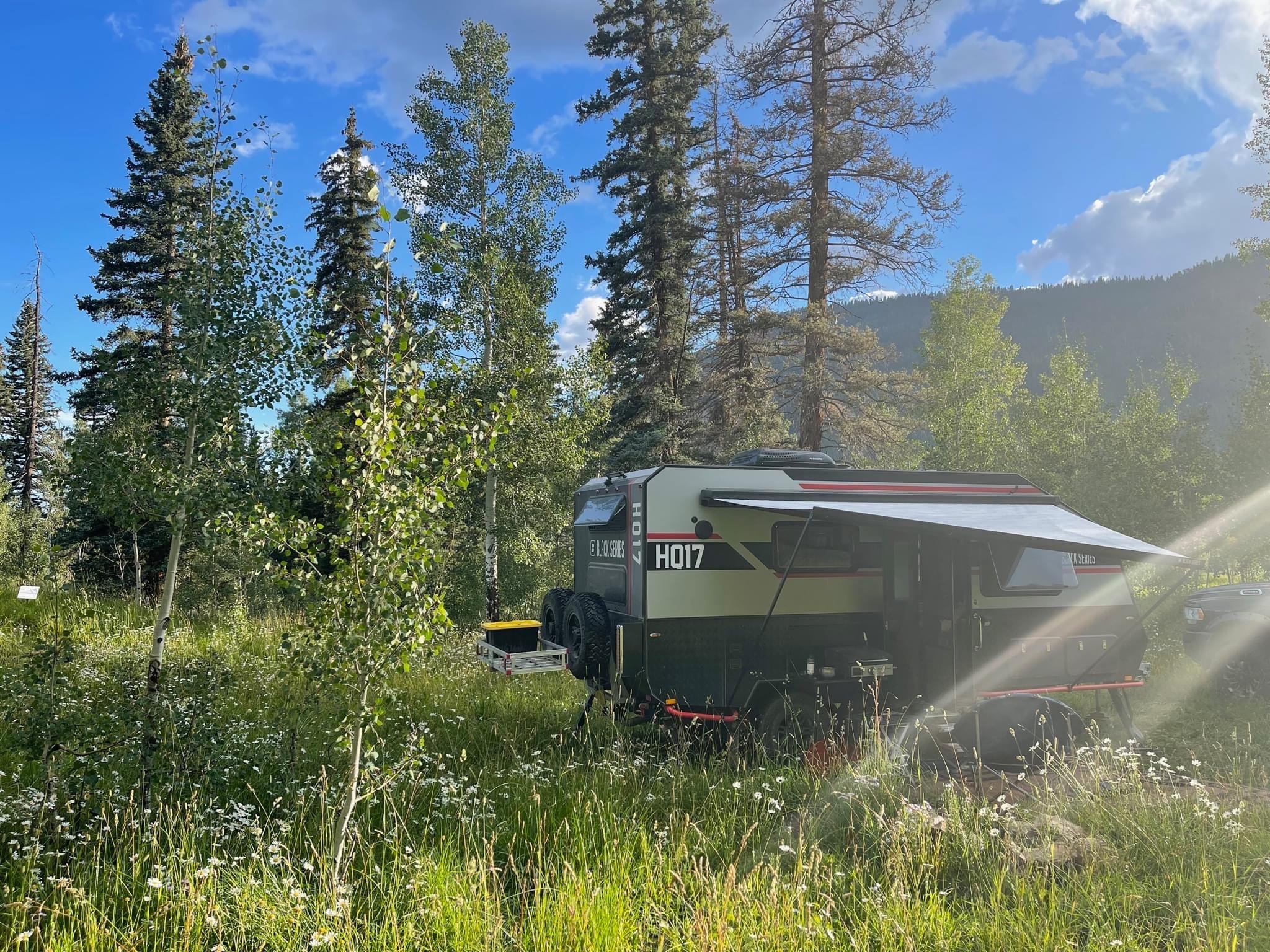
BLM land and National Forest access has exploded in popularity. There are over 245 million acres of BLM-managed public land in the western United States alone, and most of it allows free dispersed camping. The catch? You need a rig that can actually reach these spots.
Dispersed camping trends have shifted dramatically. Post-2020, Americans discovered that crowded campgrounds with noisy neighbors weren’t the escape they were looking for. The demand for solitude, real solitude, has pushed travelers toward rigs that can handle the 15-mile dirt road to that perfect alpine meadow.
Why trailers beat motorhomes for this lifestyle:
- Flexibility: Unhitch and use your truck for day trips
- Weight advantage: A typical average travel trailer weight is far easier to maneuver than a Class A motorhome
- Maintenance simplicity: Separate your living space from your drivetrain
- Access: A 16 ft camper weight rig can squeeze into spots a 40-foot motorhome can’t even dream of
The math is simple: when your goal is reaching remote destinations, the average weight of camper matters enormously. Every pound you shed is another mile of rough road you can conquer.
Best Destinations for Off Road Trailer Travel in the USA
America was made for off road trailer travel. Here’s where 2026’s adventure travelers are heading:
Southwest Desert (Arizona & Utah)
The red rock country of Sedona, Moab, and the Grand Staircase-Escalante offers some of the most dramatic camping on Earth. BLM land is abundant, the weather is predictable, and the terrain rewards capable rigs. Just watch your water consumption, you’ll need every gallon.
Rocky Mountains (Colorado & Montana)
High-altitude adventure with forest service roads that climb above treeline. The Rockies demand a trailer with serious suspension, those washboard roads at 10,000 feet will shake apart anything built for highway cruising.
Pacific Northwest (Oregon & Washington)
Rainforests, volcanic landscapes, and remote coastal access. The PNW requires a four-season rig that can handle wet conditions and muddy forest roads. This is where insulation and water management systems earn their keep.
Southern Backcountry (Texas & New Mexico)
Desert camping with a different character, think Big Bend, Guadalupe Mountains, and the vast emptiness of southern New Mexico. Lower crowds, extreme heat management requirements, and endless exploration potential.
For detailed information on the rigs built for these destinations, explore our off road travel trailer guide.
Best Off Road Trailers for Travel
Not every trailer can handle long-distance adventure. Here’s what separates the capable from the compromised:

What Actually Matters
Suspension System: Independent suspension isn’t optional for serious travel. It’s the difference between arriving with your cabinets intact versus picking up broken dishes at every campsite. BlackSeries builds every trailer with independent suspension rated for the Australian Outback, which makes American trails feel relatively tame.
Ground Clearance: Standard trailers run 8-10 inches of clearance. Off-road travel trailers need 14+ inches to clear rocks, ruts, and the occasional fallen branch that didn’t get the memo about your travel plans.
Off-Grid Capacity: For extended travel, you need:
- 100+ gallons of fresh water storage
- Solar + lithium battery systems capable of 5-7 days without hookups
- Propane capacity for cooking and heating
The Weight Equation: The 30 ft rv weight of a standard travel trailer typically exceeds 8,000 lbs dry, plus it can’t handle rough terrain anyway. Compare that to a well-designed 24 ft camper weight off-road trailer at 4,500-5,500 lbs that can go anywhere your truck can pull it.
For a complete breakdown of trailer types, visit our off road camper guide.
Off Road Trailer Travel Preparation Checklist
Before you hit the dirt, work through this checklist:
Tow Vehicle Inspection
- Confirm towing capacity matches your loaded trailer weight
- Check transmission fluid, coolant, and brake fluid levels
- Inspect tires for proper inflation and tread depth
- Verify trailer brake controller is calibrated
Trailer Technical Check
- Test all running lights, brake lights, and turn signals
- Inspect suspension components for wear
- Check tire pressure (including spare)
- Verify hitch connection and safety chains
Off-Grid Systems
- Fill fresh water tanks completely
- Test solar charging and battery levels
- Check propane tank levels
- Verify water heater and refrigerator operation
Recovery and Safety Gear
- Recovery straps and D-rings
- Tire repair kit and portable compressor
- First aid kit
- Communication device (satellite messenger for remote areas)
Route Planning
- Download offline maps for your destination
- Identify water fill stations along your route
- Research road conditions and recent weather
- Have backup camping locations identified
This checklist applies whether you’re running a 16 ft camper weight pop-up or a full-size expedition trailer.
Off Road Trailer Travel Tips for Long-Term Adventures
Extended travel demands different thinking than weekend trips:
Reduce Wear and Tear: Slow down on rough roads. The suspension can handle it, but speed multiplies impact forces. Dropping from 25 mph to 15 mph on washboard can double the lifespan of your interior components.
Plan Resupply Strategically: Map out grocery stores, propane fill stations, and potable water sources along your route. Running out of water 50 miles from civilization isn’t adventure, it’s a survival situation.
Weather and Terrain Awareness: Flash floods in desert washes, mud season in the mountains, and ice on high-altitude passes all require different responses. Check conditions daily, not just at trip start.
Why Quality Builds Save Money: A budget trailer that needs suspension repairs every season costs more than a premium rig over five years. The average travel trailer weights of quality off-road models reflect heavier-gauge steel, better welding, and components that last. That’s not expense, it’s investment.
Considering an upgrade? Our RV trade-in process guide explains how to maximize your current rig’s value.
Why BlackSeries Is Built for Off Road Trailer Travel
BlackSeries trailers originate from Australian engineering standards, a country where “off-road” means hundreds of miles of Outback tracks that would swallow American trails whole.
Long-Distance DNA: Every BlackSeries is designed for extended travel, not occasional weekend use. The frame geometry, suspension travel, and storage capacity reflect thousands of miles of testing in conditions far harsher than most American adventures.
Durability That Compounds: Higher-quality construction means higher resale values. A BlackSeries holds its value because buyers know exactly what they’re getting, a rig that’s been proven in the harshest conditions on Earth.
The Model Lineup: From compact expedition trailers perfect for solo adventurers to family-sized rigs with full bathrooms, BlackSeries offers purpose-built solutions. Explore our off road RV guide for detailed model comparisons.
Ready to upgrade from your current rig? Check out our RV trade-in deals for 2026 or explore our RV exchange program.
FAQ – Off Road Trailer Travel
Is off road trailer travel safe?
Yes: with proper preparation, appropriate equipment, and realistic route planning. The biggest safety risks come from overestimating capability or skipping pre-trip inspections, not from the terrain itself.
What’s the difference between off road trailer travel and overlanding?
Overlanding typically emphasizes the journey and multi-day expeditions. Off road trailer travel is broader: it includes overlanding but also encompasses weekend trips to remote campsites. The equipment requirements are similar.
How long can you travel off grid with an off road trailer?
With proper systems: large water tanks, solar power, lithium batteries: seven to fourteen days is achievable. BlackSeries trailers are designed for extended off-grid capability as standard equipment.
What’s the best trailer size for off road travel?
It depends on your tow vehicle and intended terrain. A 18 ft camper weight offers excellent balance of capability and comfort. Larger 24 ft camper weight models provide more living space but require more powerful tow vehicles.
Can beginners do off road trailer travel?
Absolutely. Start with moderate terrain, practice towing skills in safe environments, and gradually increase difficulty. The learning curve is manageable with patience and proper equipment.

