What You Need to Know About Off Road Trailers
An off-road trailer is a reinforced, all-terrain towable RV built with heavy-duty chassis, independent suspension, high ground clearance, and off-grid systems for rugged camping. These trailers serve overlanders, boondockers, and winter campers who need reliable shelter in remote locations. U.S. prices range from $18,000 for compact models to $110,000+ for expedition-grade units. Unlike regular travel trailers designed for campgrounds, off-road models feature steel frames, articulating suspension, and four-season insulation for challenging terrain and extreme weather conditions.
What Is an Off Road Trailer?
Off-road trailers represent a specialized category of recreational vehicles engineered specifically for challenging terrain and self-sufficient camping. These units combine the mobility of traditional travel trailers with the durability and capability needed for serious adventure travel.
The core differentiator lies in their construction philosophy. Where standard travel trailers prioritize weight savings and cost efficiency, off-road models emphasize structural integrity and terrain capability. This means reinforced steel or aluminum frames, independent suspension systems, and protective underbody armor that can withstand impacts from rocks, stumps, and rough trails.
Primary Use Cases in America
Boondocking represents the largest segment of off-road trailer users. These campers seek free camping on public lands: BLM areas, national forests, and dispersed camping sites: often accessible only via dirt roads and requiring complete self-sufficiency for days or weeks.
Overlanding attracts adventure travelers who prioritize the journey itself, crossing varied terrain from desert washes to mountain passes. These expeditions demand trailers capable of handling everything from soft sand to rocky climbs while providing comfortable base camps.
Winter camping creates unique demands that regular RVs cannot meet. Four-season insulation, robust heating systems, and protected plumbing become essential for comfortable cold-weather adventures.
National parks and remote destinations often require trailers that can navigate narrow, winding access roads while providing off-grid capability in locations without hookups.
Off Road Trailer vs. Travel Trailer: Key Differences
Understanding these distinctions helps identify which type matches your camping style and destinations.
The terrain capability difference cannot be overstated. Regular travel trailers risk serious damage on trails that off-road models navigate confidently. This isn’t just about avoiding obstacles: it’s about maintaining structural integrity when impacts occur.
How to Choose the Right Off Road Trailer
Selecting an off-road trailer requires matching your specific needs with the right combination of features and capabilities.
Step 1: Define Your Camping Style
Weekend warriors typically need basic off-road capability with 2-3 days of off-grid capacity. These users prioritize quick setup and easy towing over maximum self-sufficiency.
Extended overlanders require robust systems supporting 7-14 days of autonomous operation, including larger water tanks, expanded solar arrays, and comprehensive tool storage.
Winter campers need four-season insulation, diesel heating systems, and freeze-protected plumbing regardless of trip duration.
Step 2: Assess Capacity Requirements
Solo travelers can utilize compact 12-16 foot models, while families typically require 17-21 foot trailers for adequate sleeping and storage space. Consider not just sleeping capacity but also gear storage, especially for activities like mountain biking, skiing, or photography that require bulky equipment.
Step 3: Evaluate Suspension Systems
Independent suspension systems provide superior comfort and control on rough terrain compared to traditional leaf springs. Articulating hitches allow the trailer to flex independently from the tow vehicle, crucial for extreme terrain navigation.
Step 4: Four-Season Capability Assessment
True four-season trailers require comprehensive insulation packages, heated tanks, and robust heating systems. Many “off-road” trailers lack adequate cold-weather protection, limiting their use to fair-weather adventures.

Step 5: Off-Grid System Requirements
Calculate your power needs based on planned usage. Basic lighting and water pumps require minimal power, while air conditioning, microwaves, and entertainment systems demand substantial battery capacity and solar generation.
Water storage becomes critical for extended boondocking. Consider both fresh water capacity and gray/black water management for longer stays.
Off Road Trailer Buying Checklist
Use this comprehensive checklist to evaluate any off-road trailer:
Structural Components
- Ground clearance: Minimum 14 inches for serious off-road use
- Frame construction: All-welded steel or marine-grade aluminum
- Suspension type: Independent or articulating systems preferred
- Underbody protection: Skid plates and rock guards essential
Off-Grid Systems
- Solar capacity: 200W minimum, 400W+ for extended use
- Battery type: Lithium preferred for weight and performance
- Water capacity: Fresh (20+ gallons), gray (15+ gallons)
- Heating system: Diesel or propane with adequate BTU rating
Build Quality Indicators
- Welding quality: Clean, consistent welds throughout frame
- Material thickness: 3mm+ steel or equivalent aluminum
- Hardware grade: Stainless steel fasteners and heavy-duty hinges
- Warranty coverage: Comprehensive structural and component coverage
Best Off Road Trailers in the U.S. by Category
Best for Winter Camping
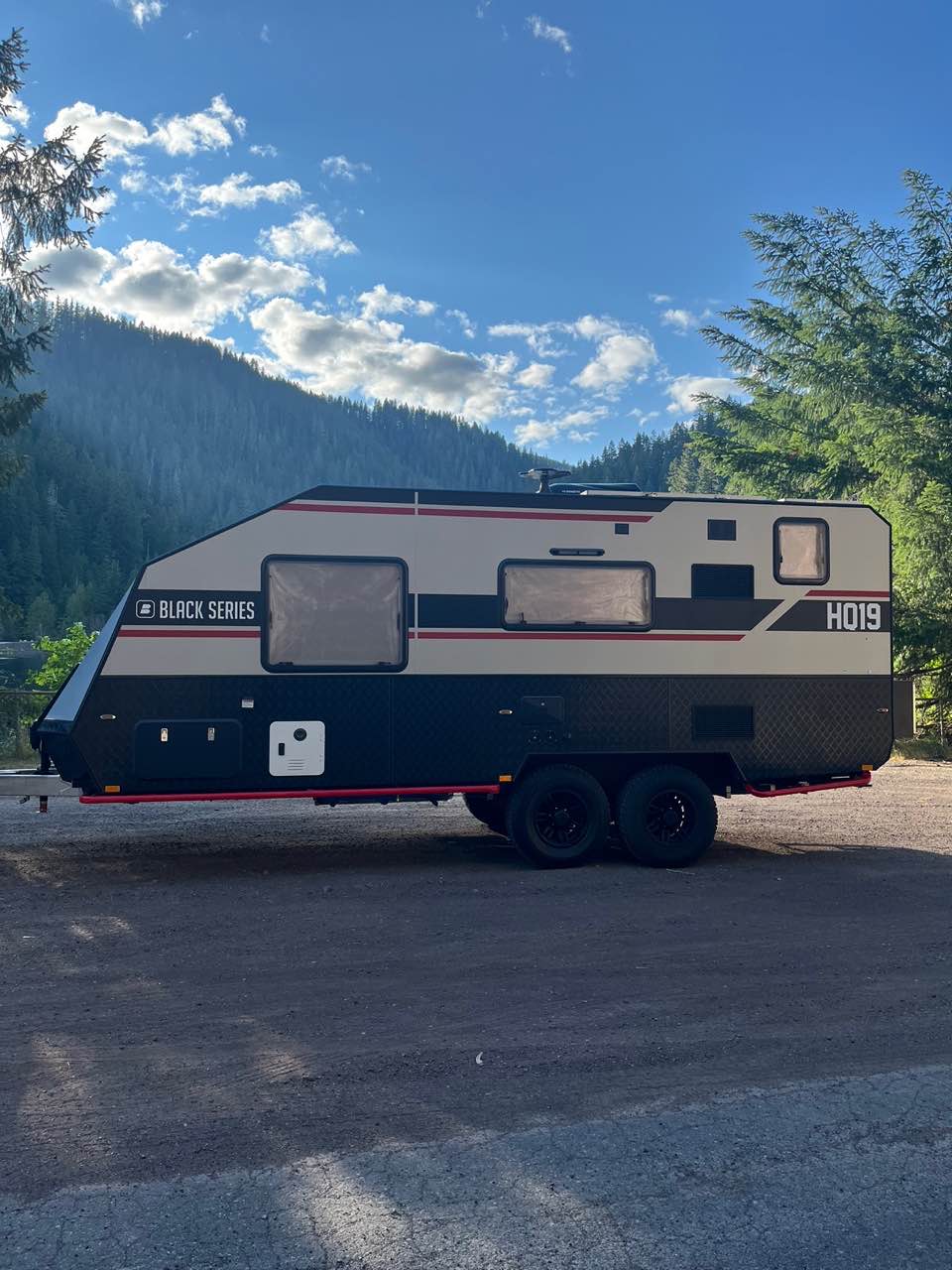
Four-season models like the BlackSeries HQ series excel in cold-weather conditions with comprehensive insulation, diesel heating, and freeze-protected plumbing systems. These trailers maintain comfortable interior temperatures in sub-zero conditions while providing reliable off-grid operation.
Best for Couples
Mid-size trailers (16-19 feet) offer optimal balance of capability and maneuverability. Features like wet baths, comfortable sleeping areas, and adequate storage make extended adventures comfortable without excessive towing requirements.
Best Small Off-Road Trailer
Compact models under 16 feet provide serious off-road capability while remaining towable by mid-size SUVs. Despite size constraints, quality manufacturers pack essential systems into surprisingly capable packages.
Best for Extended Off-Grid Use
Large-capacity trailers with 400W+ solar systems, 400Ah+ battery banks, and 40+ gallon fresh water capacity support weeks of autonomous operation. These expedition-grade units serve serious overlanders and long-term boondockers.
Best Family Off-Road Trailer
Larger models (19-21 feet) accommodate families while maintaining off-road capability. Bunk areas, expanded storage, and robust systems support comfortable adventures with children.
Real-World Use Scenarios
Utah and Arizona Desert Overlanding
Desert terrain demands high ground clearance for rocky washes, robust cooling systems for extreme heat, and substantial water capacity for extended dry camping. Solar systems perform exceptionally well in these sunny environments, often providing surplus power generation.
Colorado Rocky Mountain Adventures
High-altitude camping requires four-season capability even in summer months. Mountain passes demand careful weight distribution and powerful tow vehicles, while variable weather necessitates comprehensive heating and insulation systems.
Montana and Wyoming Winter Camping
Extreme cold-weather camping pushes trailers to their limits. Diesel heating systems, heated tanks, and premium insulation packages become essential rather than optional. Snow loading requires robust roof construction and adequate interior ventilation to prevent condensation.
Long-Term Boondocking on BLM Land
Extended stays on public lands require maximum self-sufficiency. Large water tanks, expanded solar arrays, and comprehensive waste management systems enable comfortable long-term occupation without external services.
Off Road Trailer Maintenance Essentials
Pre-Trip Inspection
Thorough pre-trip inspections prevent field failures. Check tire pressure and condition, bearing lubrication, brake function, and all connection points. Verify electrical systems, test water pumps, and confirm heating system operation.
Suspension and Chassis Care
Independent suspension systems require regular service intervals. Lubricate grease fittings, inspect shock absorbers, and check for loose bolts or damaged components. Frame inspection should identify potential stress cracks or corrosion.
Battery and Solar Maintenance
Lithium battery systems require minimal maintenance but benefit from periodic balancing and connection inspection. Solar panels need cleaning and angle adjustment for optimal performance, especially important during low-sun winter months.
Water System Winterization
Proper winterization prevents expensive freeze damage. Drain all water lines, add RV antifreeze to gray and black tanks, and bypass water heaters during storage. Heated tank systems require operational verification before winter use.
Frequently Asked Questions
Are off-road trailers worth the investment?
For adventurers seeking remote destinations and extended off-grid capability, off-road trailers provide access to locations impossible with standard RVs. The premium pays for durability, capability, and long-term reliability in challenging conditions.
Can off-road trailers handle winter camping?
Four-season rated models excel in winter conditions with proper heating, insulation, and freeze protection systems. However, not all “off-road” trailers include adequate cold-weather capability: verify winter ratings carefully.
What tow vehicle do I need?
Most off-road trailers require at least a half-ton pickup truck or large SUV. Consider not just towing capacity but also payload limits when fully loaded with gear, water, and supplies. Four-wheel drive becomes essential for accessing remote destinations.
How long can an off-road trailer operate off-grid?
Properly equipped trailers support 5-14 days of autonomous operation depending on conservation practices and system capacity. Solar charging extends operation indefinitely in suitable conditions, while battery reserves handle cloudy periods and high-demand situations.
What’s the maintenance cost difference?
Off-road trailers typically require 20-30% higher maintenance costs due to complex systems and challenging operating conditions. However, quality construction often results in lower long-term repair costs compared to inadequately built alternatives.
The off-road trailer market continues evolving rapidly, with manufacturers developing increasingly sophisticated systems for adventure travel. Whether pursuing weekend getaways or extended overlanding expeditions, selecting the right trailer opens access to America’s most spectacular and remote destinations while providing comfortable, self-sufficient base camps for unforgettable adventures.

